ODM TSJA Series Manufacturer & Engineering Company
Pioneering heavy-duty oil-immersed induction voltage regulation systems, custom MV/LV electromagnetic apparatus, and resilient power infrastructure for mission-critical industrial loads globally.
Integrated MV/LV Apparatus & Grid Equipment
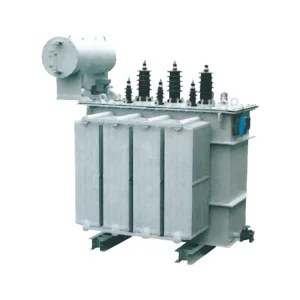
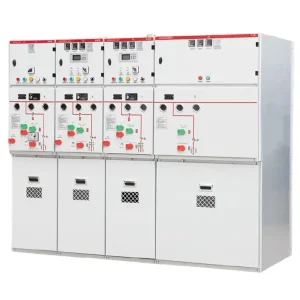
Engineered alongside our flagship TSJA inductive regulators to deliver end-to-end electrical distribution reliability, switching agility, and surge withstand capability across utility networks.
The TSJA Series Architecture: Electromagnetic Continuous Regulation
Unlike mechanical tap-changers or discrete solid-state step switchers that introduce switching transients and harmonic pollution, the TSJA series operates on stepless inductive rotor-stator coupling, delivering pure sinusoidal dynamic stabilization under extreme industrial stresses.
Stepless Inductive Induction Physics
The TSJA Series utilizes a movable rotor within a three-phase wound stator. By rotating the angular displacement between rotor and stator winding vectors through precision servo drive systems, output voltage is modulated smoothly from 0% to 100% or within targeted trimming bands (±20%, ±30%) without carbon brush abrasion, contact spark arcs, or open-circuit waveform disconnections.
Oil-Immersed Thermocycling
Submerged in premium inhibited high-dielectric naphthenic or ester transformer oil (complying with IEC 60296 standards), the TSJA system boasts exceptional natural convection (ONAN) and forced circulation (ONAF) thermal evacuation. This sealed architecture provides hermetic immunity against corrosive chemical fumes, salt spray, heavy abrasive dust, and tropical humidity.
Zero Waveform Distortion (THD < 1%)
Unlike thyristor or SCR phase-angle chopper circuits that introduce extreme total harmonic distortion into upstream switchboards and downstream loads, the pure magnetic induction principle of the TSJA regulator preserves waveform integrity with pristine sinusoidal output, making it irreplaceable for laboratory testing, semiconductor fabrication, and high-frequency induction furnaces.
Global Procurement Drivers & Industry Trends for TSJA Voltage Regulators
As power grids integrate massive renewable generation and industrial complexes deploy non-linear megawatt-scale motor drives, conventional voltage control units face unprecedented operational stresses. Engineering, Procurement, and Construction (EPC) firms increasingly specify robust inductive apparatus.
Grid Instability in Renewable Penetration
Intermittent utility-scale photovoltaic and wind farms create sudden voltage fluctuations, bidirectional power flows, and rapid sag/swell patterns. Overseas grid operators require TSJA systems at substation nodes to decouple critical distribution feeders from volatility, shielding sensitive equipment from damaging brownouts and overvoltage surge conditions.
Electrolysis & Green Hydrogen Scale-Up
Industrial alkaline and PEM electrolyzer stacks require smooth DC power rectifiers that depend on adjustable, ripple-free AC input voltage. The TSJA series delivers continuous, non-stepped voltage regulation upstream of heavy-current rectifiers, avoiding harmonic resonance while maximizing stack cell longevity and electrochemical conversion efficiency.
Electrified Heavy Smelting & Metallurgy
In electric arc furnace (EAF) and submerged arc smelting operations, furnace impedance swings violently during melt-down phases. TSJA regulators absorb intermittent short-circuit surges and provide mechanical and thermal inertia that dry-type or solid-state devices cannot sustain without tripping catastrophic overcurrent shutdowns.
High-Voltage Electrical Testing Benches
Certified transformer, cable, switchgear, and motor testing facilities demand pristine sinusoidal testing voltages with adjustable ramp rates. TSJA units serve as primary variable supply sources for partial discharge testing laboratories, where high-frequency switching noise from electronic inverters would otherwise corrupt measurement accuracy.
Total Cost of Ownership (TCO) Shift in Global EPC Specifications
Procurement directors and chief electrical engineers are moving away from short-life, high-maintenance dry regulators that require carbon brush replacements every 6 to 12 months. The TSJA series eliminates physical sliding brushes completely. Using oil-cooled magnetic induction coupling, standard maintenance intervals extend beyond 5 years, cutting operational overhead by up to 68% over a 25-year plant life cycle.
Comprehensive Solutions Across Industrial Application Sectors
Mingri Electric configures tailored ODM TSJA inductive regulation apparatus matching specific power-grid topological requirements, short-circuit withstand levels, and automation protocols.
| Application Sector | Typical Problem Addressed | TSJA Customization Architecture | Performance Benchmark |
|---|---|---|---|
| Chemical & Electroplating Plants | Corrosive acid fumes degrading contacts; fluctuating line voltage affecting bath bath thickness and chemical plating uniformity. | Hermetically sealed corrugated tank with C5-M marine-grade anti-corrosive polyurethane coating; remote servo transmission drive. | Stabilized plating current within ±0.5%; zero internal winding corrosion over 15 years of continuous acid-room proximity. |
| Mining & Heavy Slurry Extraction | Long cable runs creating severe end-of-line voltage drops during megawatt motor start-up sequences. | Boost-buck wide regulation range (±25%), reinforced electromagnetic clamping to withstand 10x inrush currents. | Direct online motor starts achieved without nuisance breaker trips; terminal voltage recovery within <1.2 seconds. |
| Utility High-Voltage Laboratories | Electronic inverter noise skewing delicate dielectric loss (&tan;δ) and acoustic partial discharge testing. | Zero-contact inductive continuous core design; copper shielding layers between primary and secondary windings. | True sinusoidal wave THD < 0.8%; background partial discharge noise below 2 pC at full rated voltage output. |
| Glass & Silicon Crystal Growing | Thermal shock caused by step-voltage jumps ruining monocrystalline silicon boule structural integrity. | Infinitely variable micro-stepping planetary gear actuator, microcomputer PID closed-loop voltage regulation. | Thermal fluctuation controlled within ±0.2°C; zero crystalline dislocation faults from sudden power jerks. |
Rigorous Engineering Standards & Global Compliance Framework
As an established ODM partner, Mingri Electric implements comprehensive quality governance from cold-rolled oriented silicon steel procurement to automated final factory acceptance testing (FAT).
International Regulatory Alignment
Every TSJA regulator and switchgear unit is engineered in full compliance with IEC 60076 (Power Transformers), IEC 60214 (Tap-Changers/Regulators), IEEE C57.15 (Standard Requirements for Step-Voltage Regulators), and CE Low Voltage and Machinery Directives, enabling seamless integration into European, North American, and Asia-Pacific utility frameworks.
Magnetic Circuit Engineering
We utilize high-permeability, laser-scribed grain-oriented silicon steel laminations (30Q120 / 23Q110 grades) with stepped 45-degree mitered joints. This suppresses core vibration, mitigates no-load magnetizing currents, and reduces acoustic operational noise to under 65 dB(A), complying with stringent municipal and indoor industrial noise boundaries.
Rigorous Type & Routine Verification
Prior to shipment, units undergo dielectric withstand tests, full-load temperature rise trials in calibrated thermal chambers, lightning impulse tests, insulation resistance checks, and oil chromatography (DGA) screening. Full third-party witnessed FAT and certified test certificates are provided for every batch.
Technology Roadmap: Intelligent, Eco-Dielectric & IoT-Connected TSJA
Mingri Electric's R&D center is leading the transition of heavy inductive regulators into connected, intelligent nodes compatible with SCADA, IEC 61850 smart substations, and green industrial mandates.
Predictive AI Health Analytics
Embedded fiber-optic temperature sensors along winding hot spots, dissolved gas sensor probes (H2, CO, C2H4), and vibration accelerometers deliver real-time asset telemetry via Modbus-TCP and IEC 61850 protocols directly into central SCADA or cloud IoT dashboards for prescriptive maintenance scheduling.
Natural Ester Dielectric Adoption
To support carbon neutrality and eliminate fire hazards in metropolitan sub-surface installations, our newest TSJA-E platforms are fully compatible with biodegradable synthetic and natural ester liquids (FR3), offering a high fire point (>300°C) and zero bio-accumulation toxicity in water catchment protection zones.
Hybrid Solid-State Inductive Coupling
Next-gen prototypes combine inductive continuous cores with ultra-fast silicon carbide (SiC) sub-cycle trimming bridges, achieving millisecond-speed response to catastrophic grid voltage dips without sacrificing the infinite continuous power handling and short-circuit sturdiness of oil immersion.
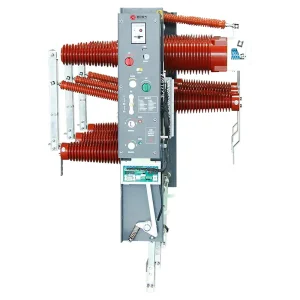
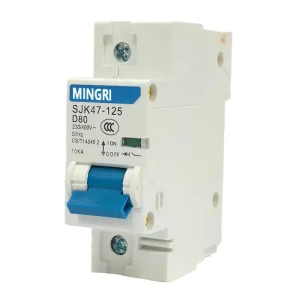
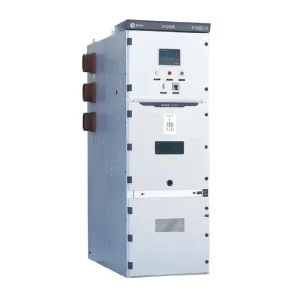
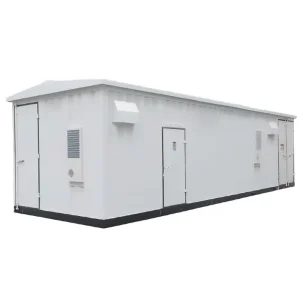
Essential Switchgear, Breakers & Voltage Stabilizers
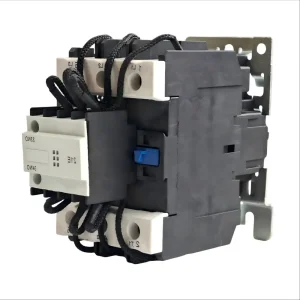
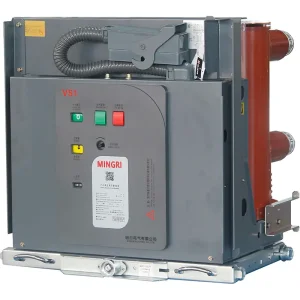
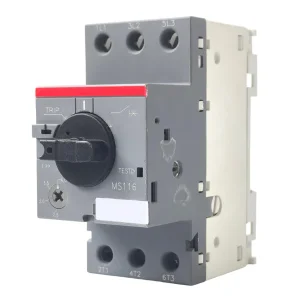
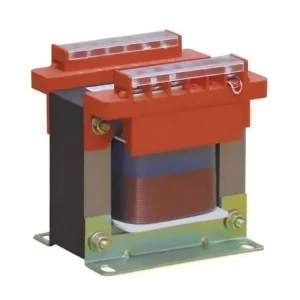
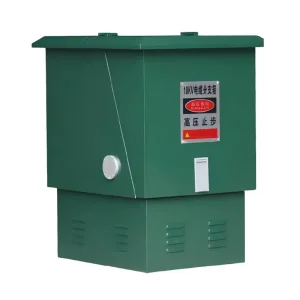
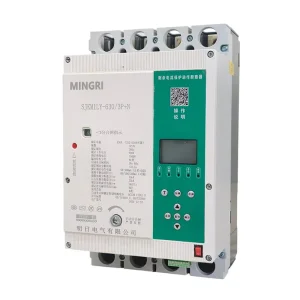
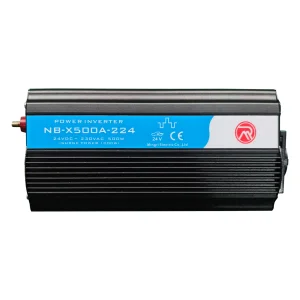
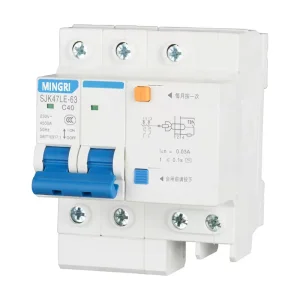
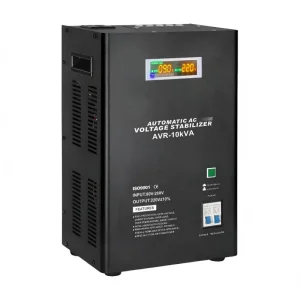
Complete your power distribution layout with our matched portfolio of motor protection breakers, automatic voltage regulators, control transformers, and intelligent feeder solutions.
Frequently Asked Questions (FAQ)
In-depth technical answers addressing selection, customization, and commissioning of TSJA induction voltage regulators and compatible distribution gear.
What is the core working principle of a TSJA series induction voltage regulator?
The TSJA series operates on electromagnetic induction via a movable rotor positioned within a stationary slotted stator, similar to a locked-rotor wound induction motor. By smoothly turning the rotor mechanically via an external servo drive mechanism, the spatial phase angle between the stator primary induced voltage and the rotor secondary winding shifts. This vector addition/subtraction delivers completely smooth, stepless, continuous voltage adjustment across the secondary terminals without physical electrical switching, brush wear, or interruption of load current.
Why choose an oil-immersed TSJA induction regulator over a dry-type servo or electronic AVR?
Dry-type servo regulators rely on carbon brushes physically sliding over exposed copper coil windings. Under heavy industrial environments with dust, corrosive gases, or rapid load surges, these brushes suffer from rapid mechanical erosion, arc sparking, and fire risk. Electronic solid-state AVRs generate high-frequency switching noise and harmonic distortion. The oil-immersed TSJA is completely hermetic, brushless, boasts superior natural dielectric oil cooling, withstands massive starting overcurrents without semiconductor failure, and operates reliably in severe ambient environments (temperatures from -25°C to +50°C, corrosive fumes, 100% relative humidity).
What custom engineering parameters are available under your ODM procurement services?
As an original design manufacturer (ODM), Mingri Electric provides comprehensive tailoring: input/output rated voltages (ranging from low voltages of 220V/380V/440V/690V up to medium voltages of 3.3kV, 6.6kV, 10kV, and 35kV), capacity ratings from 100 kVA up to multi-megavolt-ampere custom builds, specialized voltage adjustment spans (such as 0-650V continuous, or grid stabilizing bands like ±20% or ±30%), cooling modes (ONAN, ONAF), synthetic ester fire-safe fluid fill, C5-M marine anti-corrosion exterior finishes, and smart digital controller integrations supporting RS485, Profibus, Modbus-TCP, and IEC 61850 protocols.
How does the TSJA series protect upstream and downstream systems against harmonic distortion?
Because the TSJA series adjusts output voltage strictly through pure electromagnetic induction and rotational spatial magnetic field orientation rather than high-frequency electronic phase clipping or pulse width modulation, it does not alter the fundamental waveform of the power source. Output voltage total harmonic distortion (THD) remains essentially identical to input source quality (typically THD < 1%). This prevents harmonic heating in upstream transformers and prevents nuisance trips in downstream sensitive electronic controls.
What technical data must an EPC or industrial buyer submit for a rapid equipment proposal?
To deliver an optimized single-line proposal and commercial quote within 24 hours, our engineering team requires: (1) Rated input line voltage, system frequency (50 Hz or 60 Hz), and phase configuration; (2) Required output voltage adjustment range (min/max target values); (3) Rated capacity (kVA/kW) and load duty cycle (continuous or intermittent); (4) Load characteristics (motor direct starting current, rectifier load, inductive test bench, furnace load); (5) Installation environment details (ambient temperature, altitude, indoor or outdoor enclosure rating IP44/IP54/IP55); and (6) Any specific automation or SCADA telemetry interface needs.