Primary Paralleling & Medium-Voltage Systems
Pre-engineered hardware components designed for multi-generator synchronization, high-speed isolating, step-up transformation, and robust contactor switching.
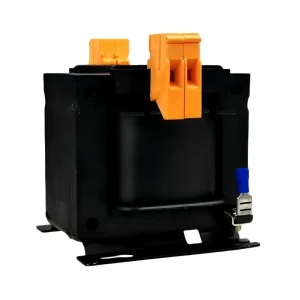
JBK5 Series Control Transformer
Galvanically isolated voltage conversion optimized for synchronizing control panels and dual-circuit machine tool intelligence.
Explore Technical Specs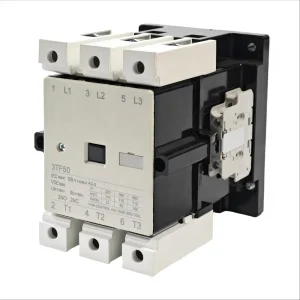
CJX1 (3TF) Series AC Contactors
9-400A 690V heavy-duty switching engineered for rapid motor synchronization, redundant transfer rails, and transient peak endurance.
Explore Technical Specs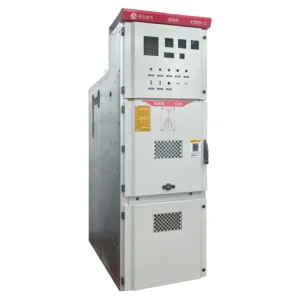
KYN28-12 Armored Switchgear
3.6-12kV air-insulated withdrawable metal-enclosed paralleling switchgear with compartmentalized fault containment.
Explore Technical Specs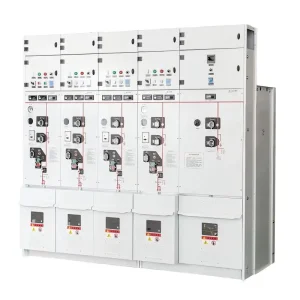
MRHBXGN-12(F) Eco-Friendly GIS
SF6-free hermetically sealed gas-insulated ring network switchgear configured for automated parallel distribution networks.
Explore Technical Specs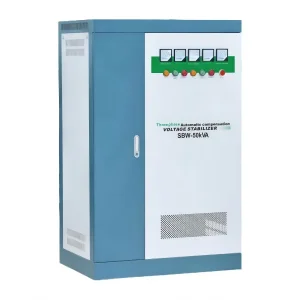
SBW Series Compensated Regulator
High-capacity 3-phase automatic voltage stabilization vital for leveling potential gradients before bus paralleling closure.
Explore Technical Specs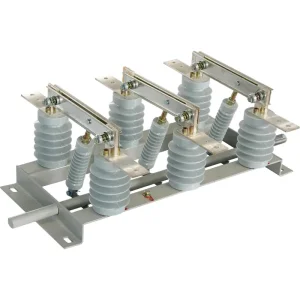
GN19-12 HV Isolating Switch
Visible break air-insulated disconnector providing zero-energy isolation protocols across segmented parallel busbars.
Explore Technical Specs
JBK5 Automation Transformer
Precision stepped potential transformer guaranteeing noise-free synchronizing signals for automated protection relays.
Explore Technical Specs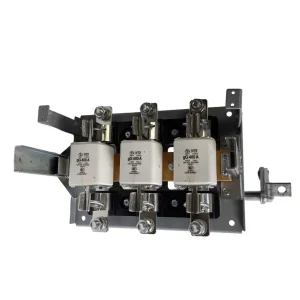
HR3 Fuse-Type Knife Switch
Heavy-current load-break interrupter combining thermal fuse linkage with robust manual clearing for branch bus tying.
Explore Technical SpecsThe Engineering Paradigm of Parallel Operation
Overcoming single-point vulnerability through synchronized multi-source power integration, dynamic droop control, and intelligent fault-limiting topologies.
Active & Reactive Load Sharing
Modern parallel architectures reject static interlocks in favor of automated P-f and Q-V droop governing. When two or more distribution transformers or co-generation sets bridge onto a common bus, slight differentials in terminal output trigger acute circulating currents. Custom ODM switchboards integrate active microcontrollers to calculate relative line impedance, dampening real and imaginary power oscillations in milliseconds.
High-Integrity Bus-Tie Isolation
Tying two energized buses effectively halves system impedance and doubles potential prospective short-circuit currents ($I_{sc}$). ODM manufacturing utilizes vacuum circuit breakers equipped with high-speed micro-gap arc quenching and mechanical interlocking to preserve system continuity under asymmetric fault surges exceeding 40kA to 50kA.
Zero-Interruption Closed Transition
For hyperscale data campuses and petrochemical refining complexes, transfer between independent utility feeds or on-site turbine generators must avoid instantaneous phase-loss drops. Automated closed-transition ATS switches synchronize voltage vectors ($\Delta V < 2\%$, $\Delta f < 0.1\text{ Hz}$, $\Delta \theta < 5^{\circ}$) to perform overlap paralleling in under 100ms.
Macro-Industrial Solutions & Procurement Demands
Enterprise procurement teams across the Americas, Europe, Asia-Pacific, and the Middle East rely on custom ODM solutions to satisfy specialized operational environments.
Data Center & AI Cloud Campuses (Tier III / IV)
Data center electrical topologies demand 2N or distributed redundant ($N+1$) parallel architectures. An interruption of mere milliseconds crashes tensor processors and storage arrays. Procurement requirements specify KYN28-12 and intelligent low-voltage switchboards equipped with dual-redundant PLC paralleling controllers, high-speed fiber-optic bus differential protection (ANSI 87B), and automated synchronizers that enable seamless utility peak shaving and seamless diesel/gas generator co-generation transfer.
Mining, Metallurgy & Extraction Complexes
Heavy motor starts cause devastating voltage dips. By executing transformer parallel operation via specialized KS9 mining oil-immersed transformers and heavy-duty contactor banks, mines distribute inrush surges across parallel windings. Switchgear assemblies must feature explosion-proof enclosures, IP54+ ingress seals, resistance to sulfur dioxide corrosives, and vibration-proof busbar dampening systems engineered directly through ODM custom fabrication.
Utility-Scale Renewables & Microgrid BESS
Solar photovoltaic plants and utility Battery Energy Storage Systems (BESS) require dynamic islanding and parallel grid reconnection. Prefabricated modular substations (European & American types) integrate step-up transformers, solid-insulated or eco-gas ring main units (MRHBXGN-12(F)), and synchrocheck relays (ANSI 25) to bridge localized inverted generation onto national high-voltage transmission grids safely without reverse-current backfeed hazards.
Discrete & Continuous Heavy Manufacturing
Automated automotive welding lines and semiconductor fabrication cleanrooms demand power continuity that standard catalog switchgear cannot deliver. Custom ODM parallel line-ups integrate automatic transfer switchgears (SJKQ2Z), precision JBK5 control transformers, and harmonic-filtered voltage compensators (SBW Series) to eradicate micro-flickers, phase shifts, and voltage sags, ensuring continuous machine tool uptime.
| Evaluation Parameter | Standard Off-the-Shelf Gear | Mingri Electric Custom ODM Paralleling Gear | Direct Operational Benefit |
|---|---|---|---|
| Circulating Current Suppression | Passive overcurrent relays only | Dynamic microprocessor-managed reactive load sharing (ANSI 32R/67) | Eliminates transformer overheating and prevents false trip outages |
| Busbar Electrodynamic Bracing | Standard 25kA - 31.5kA rating | Up to 50kA/3s rated reinforced copper busways with finite element validation | Prevents mechanical destruction during through-fault parallel short circuits |
| Synchronization Logic | Manual or basic external sync relays | Fully integrated automatic synchrocheck (ANSI 25) with zero-crossing logic | Safe closed-transition connection within precise degrees of phase alignment |
| SCADA & Substation Automation | Basic dry contacts and RS485 | IEC 61850 GOOSE messaging, dual-redundant Modbus TCP, Fiber interfaces | Sub-millisecond protection signaling and real-time remote telemetry |
Technical Deep-Dive: The Mathematical Rigor of Paralleling
Parallel operation of power apparatus is governed by rigid electrical boundaries. Failure to honor these parameters results in catastrophic circulating currents, transformer saturation, and switchgear rupture.
1. Identical Vector Groups & Phase Displacement
Two transformers cannot parallel unless their secondary voltage phase vectors coincide exactly. A Dyn11 transformer (-30° phase shift) connected in parallel with a Ynd1 transformer (+30° phase shift) produces a phase divergence of 60°. The resultant phase-to-phase voltage differential ($\Delta U = 2 U \sin(30^\circ) = U_{phase}$) acts across purely internal impedances, generating destructive dead-short fault levels that destroy winding insulation.
2. Equal Voltage Transformation Ratios
Voltage ratios across all paralleled branches must match within a strict tolerance of ≤ ±0.5%. Even a minor transformation delta creates a continuous circulating current:
I_circ = |E_A - E_B| / (Z_A + Z_B)
Because internal impedances $Z_A$ and $Z_B$ are exceptionally low, a 2% mismatch in primary taps can generate continuous circulation equal to 20-30% of full load current, consuming transformer thermal overhead before any external load is supplied.
3. Identical Percentage Impedance (%Z)
Load sharing between paralleled transformers is inversely proportional to their per-unit short-circuit impedance ($Z\%$). For balanced parallel operation:
S_A / S_B = (S_rated,A / S_rated,B) × (Z_B / Z_A)
If unit A possesses a significantly lower percentage impedance than unit B, unit A will absorb an outsized share of total load, tripping on thermal overload while unit B remains underutilized. ODM manufacturing mandates precision-controlled core-to-winding geometry to match impedances within ±7.5% per IEC 60076 standards.
ODM Lifecycle & Strategic Roadmap (2025–2035)
From mathematical modeling to laser-welded fabrication and AI-managed cloud synchronizing, explore how Mingri Electric delivers turnkey engineered assemblies.
System Modeling & SLD Audit
Complete single-line diagram (SLD) simulation, transient recovery voltage (TRV) calculations, and fault-level multiplication analysis using advanced power system CAD platforms.
Electrodynamic Bracing
High-precision CNC busbar bending and laser shearing of 2.0mm–3.0mm aluminum-zinc coated steel enclosures. Bus structures are braced to withstand extreme electrodynamic repulsion forces.
Logic & Relay Programming
Implementation of synchrocheck schemes, interlock trees, reverse power tripping (ANSI 32R), automatic bus transfer sequences, and digital protocol mapping (Modbus/IEC 61850).
Type-Testing & FAT Validation
100% factory acceptance testing including primary current injection, power frequency withstand voltage testing (up to 42kV/1min), and full-scale partial discharge analysis (< 10pC).
The Next Decade in Paralleling Switchgear: Smart Solids & AI Digital Twins
As microgrids evolve into decentralized multi-source architectures containing solar PV, green hydrogen fuel cells, BESS, and variable grid feeds, mechanical air breakers are supplemented by hybrid Solid-State Circuit Breakers (SSCBs). These devices interrupt short circuits in sub-millisecond durations (under 500 microseconds), eliminating arc flash danger and preventing fault voltage collapse on parallel buses. Concurrently, AI Digital Twins integrated into Mingri Electric switchboards process millions of telemetry datapoints per second, forecasting thermal dissipation, estimating remaining contact life, and actively tuning droop constants to optimize facility power factor and efficiency.
Global Regulatory Compliance & Localized Field Support
Our equipment is engineered in accordance with rigorous global consensus standards, ensuring seamless acceptance by municipal grid operators, insurance underwriters, and international EPC authorities.
IEC & IEEE / ANSI Harmonization
Medium-voltage switchboards conform strictly to IEC 62271-200 (Internal Arc Classification IAC AFLR) and IEEE C37.20.2. Low-voltage assemblies fulfill IEC 61439-1/2 and UL 891 testing protocols, ensuring rated temperature rise limits are respected during sustained peak load sharing.
Environmental & Seismic Testing
Prefabricated substations and GIS switchgear undergo seismic shock and vibration validation per IEEE 693 standards, high-altitude dielectric breakdown compensation (up to 4000m ASL), and cyclical salt-spray exposure testing (ASTM B117) for harsh offshore and desert coastal deployments.
Worldwide Commissioning & Field SLAs
We provide 24/7 dedicated engineering hotlines, remote augmented reality (AR) field-guided commissioning assistance, on-site Factory Acceptance Testing (FAT), and rapid-replacement modular sub-assemblies to minimize downtime across international operations.
Low-Voltage Breakers, Substation Cabins & Automation Units
Secondary protection devices, mining-grade transformers, automatic transfer mechanisms, and prefabricated intelligent substations for uninterrupted distribution.
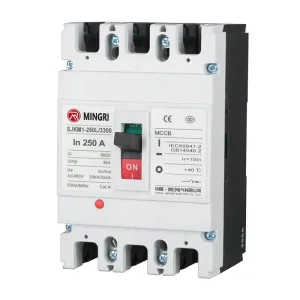
SJKM1 Moulded Case Breaker (MCCB)
High-breaking-capacity MCCB with adjustable thermo-magnetic trips designed for secondary load segregation on paralleled buses.
Explore Technical Specs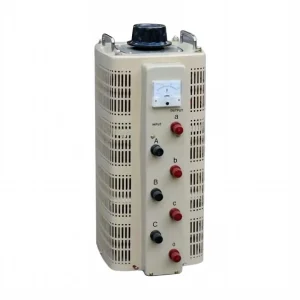
TSGC2J Variac Contact Regulator
Three-phase auto-regulating variac designed for precise test benches and dynamic line-voltage tuning during load testing.
Explore Technical Specs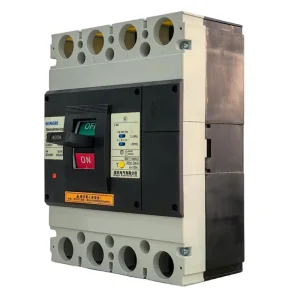
SJKM3L Residual Current Breaker
High-sensitivity earth-leakage circuit interrupter guarding against residual currents and insulation faults across parallel systems.
Explore Technical Specs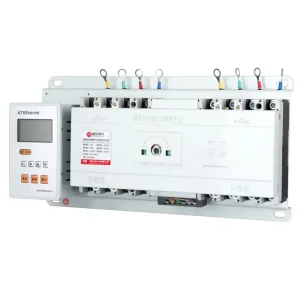
SJKQ2Z Dual-Power ATS Switch
Automated transfer switch designed for rapid transition between dual primary supplies and generator backup channels.
Explore Technical Specs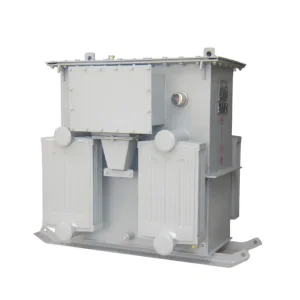
KS9 Series Mining Transformer
6-10kV oil-immersed ruggedized transformer with high thermal inertia and matched per-unit impedance for underground parallel banks.
Explore Technical Specs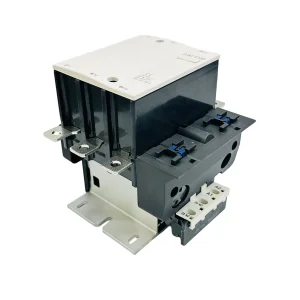
CJX2 (LC1-D) Series AC Contactor
High-endurance contactor rated up to 95A 660V for rapid switching, interlocking bus ties, and secondary bypass automation.
Explore Technical Specs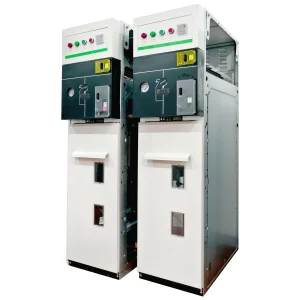
XGN15-24 MV Ring Main Unit
24kV compact gas-insulated switchgear engineered for ring networks requiring segmented busbar coupling and feeder isolation.
Explore Technical Specs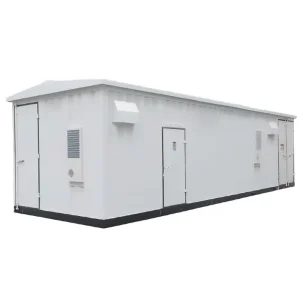
Modular Prefabricated Substation Cabin
All-weather factory-assembled containerized substation housing synchronized MV/LV gear, telemetry, and dry transformers.
Explore Technical SpecsTechnical Clarifications & Engineering FAQ
In-depth insights into common questions faced by consulting engineers, EPC contractors, and plant facility managers when specifying parallel operation equipment.
How does parallel transformer operation affect switchgear short-circuit ratings?
When two identical transformers operate in parallel, the total equivalent impedance ($Z_{eq}$) of the source is halved ($Z_{eq} = Z / 2$). Consequently, prospective short-circuit currents on the downstream busbar approximately double. If each transformer contributes 20kA of fault current individually, the switchgear busbars, circuit breakers, and current transformers must be rated for at least 40kA symmetrical breaking capacity and up to 100kA peak dynamic withstand ($I_p = 2.5 \times I_{sc}$). Mingri Electric custom ODM parallel switchgear reinforces bus supports and employs KYN28-12 withdrawable vacuum breakers rated up to 50kA/3s to ensure full clearing safety.
What occurs if transformers with unequal impedance percentages (%Z) are paralleled?
Transformers with lower percentage impedance will assume an inversely proportional higher share of the common load. For instance, if a 1000kVA transformer with 4% impedance parallels with a 1000kVA unit with 5% impedance, the 4% unit delivers 55.5% of total current while the 5% unit delivers only 44.5%. This can cause the lower-impedance transformer to overheat and trip on overload while the total combined load is well below aggregate nameplate capacity. In such situations, Mingri Electric can integrate series reactors or manufacture custom compensating transformers to equalize effective impedances.
How is inadvertent out-of-phase paralleling avoided in automated transfer systems?
Mingri Electric ODM ATS switchboards and automatic synchronizing panels deploy synchrocheck relays (ANSI device 25) paired with hardware microswitch interlocks and PLC zero-crossing monitors. The controller verifies three electrical criteria simultaneously: voltage difference ($\Delta V < 2\%-5\%$), frequency differential ($\Delta f < 0.1\text{ Hz}$), and phase angle coincidence ($\Delta \theta < 5^{\circ}$) for a verified dwell duration before releasing the close permit to the oncoming breaker. If these limits are breached, closure is locked out instantly.
What is the primary difference between Open-Transition and Closed-Transition paralleling?
Open-transition ("break-before-make") breaks contact with the active power source before closing onto the alternate feed, inducing an unavoidable 20ms to several-second blackout that halts critical computing processes and trips motors. Closed-transition ("make-before-break") parallels both synchronized power sources for an intentional overlap duration (< 100ms) before opening the retiring circuit breaker, guaranteeing absolute zero interruption to connected downstream plant infrastructure.
Why is reverse power protection (ANSI 32R) mandatory in parallel generator configurations?
If one generator in a parallel cluster suffers engine failure, fuel starvation, or governor drift, it will decelerate below synchronous frequency. Rather than supplying energy to the bus, it will absorb electrical power from the remaining healthy units, operating as a synchronous motor driven by the bus. This risks severe mechanical damage to the prime mover and creates rapid overload tripping across the remaining generators. ANSI 32R reverse power relays detect inward power flow and trip the afflicted generator breaker within 1 to 3 seconds.
What project parameters are essential for receiving an ODM quotation for parallel switchboards?
To produce an accurate engineering design and commercial proposal, our engineering team requires: (1) Single-Line Diagram (SLD) depicting bus layout, utility feeds, and generator nodes; (2) System voltage ratings and operational frequency (e.g., 11kV, 50Hz or 480V, 60Hz); (3) Maximum available prospective short-circuit levels from each source; (4) Transformer or generator ratings and per-unit impedance ($Z\%$) datasheets; (5) Required operating modes (e.g., peak shaving, emergency islanding, closed-transition ATS); and (6) Physical enclosure constraints and environmental site metrics.