Precision Power Control, Conversion & Renewable Integration
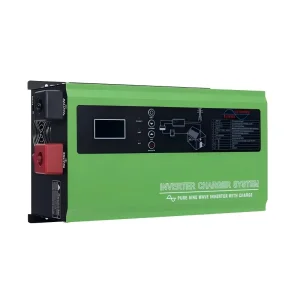
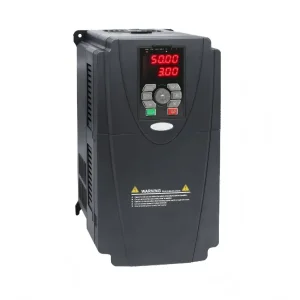
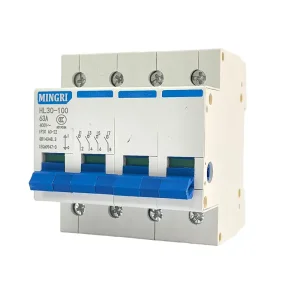
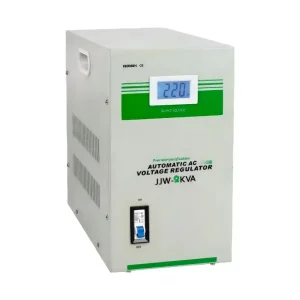
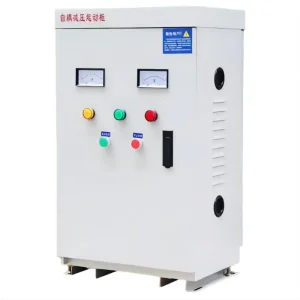
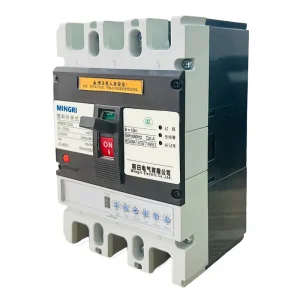
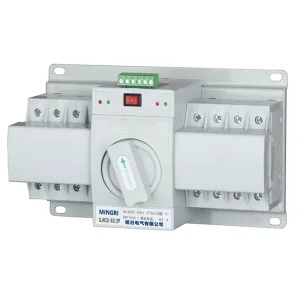
Direct factory supply of high-end hybrid inverters, frequency converters, digital disconnect switches, and automated transfer units designed to integrate seamlessly into modern GIS and smart distribution networks.

The Paradigm Shift in Gas-Insulated Switchgear ODM Ecosystems
Gas-Insulated Switchgear (GIS) represents the technological zenith of medium-to-high voltage transmission and distribution infrastructure. As urbanization intensifies, renewable interconnects expand into extreme environments, and metropolitan real estate premiums escalate, electrical engineers are rapidly deserting cumbersome Air-Insulated Switchgear (AIS) in favor of sealed, pressurized GIS architectures.
Modern Original Design Manufacturers (ODMs) within the GIS sector no longer serve as mere component fabricators. Today’s premier factories function as comprehensive engineering co-developers. Leading global EPC firms, power generation utilities, and heavy industrial conglomerates partner with tier-one Chinese ODM switchgear hubs to capitalize on modular product designs, customized telemetry, accelerated prototyping schedules, and stringent conformity with IEC 62271-200, IEC 62271-100, and IEEE C37 standards.
This technical whitepaper deconstructs the multi-tiered ecosystem of ODM GIS production, analyzing dielectric gas transition roadmaps, Industry 4.0 automated fabrication paradigms, localized compliance verification, and Total Cost of Ownership (TCO) optimization models.
Core Engineering Imperatives for Modern GIS ODMs
To achieve commercial viability and grid resilience, contemporary GIS units must combine hermetic enclosure integrity, arc fault containment (IAC AFLR up to 31.5kA/1s), and low-friction kinetic drive linkages capable of exceeding 10,000 mechanical operations without recalibration.
By leveraging advanced computerized numerical simulation tools such as 3D electrostatic field finite element analysis (FEA) and computational fluid dynamics (CFD) for thermal dissipation, tier-one manufacturers ensure zero localized dielectric breakdown across the entire service envelop—even under critical atmospheric surges and seismic stress profiles.
Physics-Driven Dielectric Design & SF6 vs. Eco-Gas Matrix
Evaluating insulation media, interrupter dynamics, and the operational trade-offs governing next-generation gas-insulated and solid-dielectric switchgear assemblies.
Hermetic Enclosure Mechanics
Utilizing robotic laser-welded 304 or 316L stainless steel tanks with a thickness profile of 3.0mm to 4.0mm. Precision-engineered sealing grooves fitted with dual EPDM O-rings guarantee negligible molecular migration under severe cyclic thermal stress.
- Leakage verification via helium vacuum chamber
- Enclosure protection grade exceeding IP67 internally
- Rupture disc safety venting directed backward
Interrupter & Busbar Topology
Featuring embedded vacuum interrupters (VI) rated for short-circuit interruption currents up to 31.5 kA. Busbar links are encased in epoxy resin or silicone rubber sleeves to eliminate surface tracking and phase-to-phase flashovers under compact spacing.
- Cu-Cr contact materials reduce chopping current
- Compact phase-center distances down to 110mm
- Maintenance-free mechanical spring mechanisms
Smart Primary Sensorics
Eliminating bulky, iron-core current and voltage transformers in favor of Rogowski coils and capacitive voltage dividers. Fully integrated low-power instrument transformers (LPIT) minimize footprint while eliminating core saturation risks.
- Linear wideband measurement from 1A to 40kA
- Direct digital input compliant with IEC 61850-9-2
- Zero ferroresonance risk during line surges
| Insulation Medium | Dielectric Strength vs. Air | Global Warming Potential (GWP) | Operating Temperature Envelop | Target Application & Regulatory Fit |
|---|---|---|---|---|
| Sulfur Hexafluoride (SF6) | 2.5x to 3.0x | 24,300 (High Carbon Tax Vector) | -40°C to +50°C | Legacy utility substations, heavy industrial plants requiring ultra-compact footprints. |
| C4-FN Fluoronitrile Mixture | 2.0x to 2.4x | < 500 (~98% Reduction) | -25°C to +40°C | Urban green substations complying with EU F-Gas 2026/2030 phase-out mandates. |
| Technical Clean Air (Synthetic Air) | 1.0x (requires vacuum or increased gap) | 0 (Zero Climate Impact) | -50°C to +50°C | Sub-zero arctic grid projects, environmentally protected nature reserves, high-ESG tenders. |
| Solid Dielectric (Epoxy Shielded) | 3.5x (Solid Polymer Matrix) | 0 (Completely Gas-Free) | -40°C to +45°C | Underground vaults, coastal flood-prone networks, mining installations requiring no gas tracking. |
Technology Roadmap & Future Outlook (2025–2035)
How tier-one ODM factories are architecting the transition from conventional sealed hardware toward self-diagnosing, autonomous, decarbonized switchgear platforms.
IoT-Enabled Gas Density & UHF PD
Continuous online monitoring of gas pressure, moisture level, and decomposition products using micro-acoustic SAW and capacitive resonant sensors. Ultra-High Frequency Partial Discharge (UHF PD) antennae detect micro-voids prior to internal arc inception.
Digital Twins & Predictive Maintenance
ODM switchgear models now feature dynamic algorithmic twins fed by edge-computing terminal units (RTUs). Real-time telemetry predicts contact erosion, contact resistance drift, and trip coil latency, eliminating scheduled physical outages.
Process Bus & Native IEC 61850 Ed 2.1
Transitioning from complex copper multi-core wiring harnesses to redundant optical Ethernet fibers (GOOSE & SV). Native optical merging units reduce substation commissioning timelines by up to 70% while improving signal transmission fidelity.
China Factory 4.0: Supply Chain Resilience & Efficiency Advantages
Behind the automated lines of Yueqing’s world-renowned electrical manufacturing cluster: precision engineering, automated testing, and unmatched delivery agility.
The manufacturing epicenters of high-end medium and low-voltage electrical apparatus in China—most notably Yueqing, Zhejiang—have evolved far beyond manual assembly workshops. Modern Chinese GIS factories operate state-of-the-art Industry 4.0 smart facilities characterized by fully synchronized manufacturing execution systems (MES), AGV automated logistics, and robotic fabrication cells.
Laser-cutting centers equipped with fiber lasers maintain cutting tolerances within ±0.03 mm. Robotic welding cells execute closed-chamber continuous shielding gas welding on stainless steel gas vessels, eliminating human inconsistencies and micro-porosity defects that historically caused long-term gas leakage.
Furthermore, the hyper-dense industrial supply chain cluster in Yueqing enables unprecedented component availability. Within a 30-kilometer radius, factories source high-purity copper extrusions, silver plating contacts, precision injection-molded DMC/SMC insulation barriers, and specialized CNC mechanisms. This vertical and horizontal integration reduces manufacturing lead times from the typical 24–36 weeks common in Western Europe to just 6–10 weeks for standard customized ODM switchgear assemblies.
End-to-End Quality Validation Protocol
- Automated Helium Mass Spectrometry: 100% of sealed gas tanks undergo evacuation inside automated vacuum chambers and helium back-filling to guarantee leakage rates strictly lower than 0.1% per annum.
- Class 10,000 Cleanroom Enclosures: Primary tank assembly, insulator mounting, and contact alignment occur in cleanrooms with HEPA air filtration to prevent airborne particulate deposition that triggers partial discharge.
- Digital High-Voltage Routine Testing: Power frequency withstand voltage tests (up to 95 kV/1min) and partial discharge measurements (< 5 pC at 1.2 Ur) run via automated test rigs with instant cloud-traceable reports.
- Mechanical Endurance Verification: Automated high-speed camera rigs track opening/closing speeds, contact rebound, and simultaneous three-phase disparity down to 1 millisecond.
Macro-Industry Solutions & Tailored Sector Architecture
Engineered to deliver uninterrupted uptime across high-stress environments, mission-critical infrastructure, and high-penetration renewable nodes.
Renewable Utility Farms
Prefabricated modular step-up substations engineered for large utility solar and wind farms. Resilient to high-frequency harmonic injection, continuous reverse power flows, and desert temperature excursions.
Hyperscale Data Centers
Compact GIS line-ups featuring dual busbar (2BB) schemes, rapid automatic transfer switches (ATS < 80ms), and intelligent circuit breakers ensuring 99.9999% power continuity to server halls with minimal square footage.
Marine & Offshore Wind
IP67 hermetically sealed gas tanks coupled with C5-M high-salinity corrosion-resistant coatings. Resistant to constant marine wave vibration, salt-fog deposition, and seismic acceleration profiles.
Petrochemical & Mining
Class 1 Zone 2 ATEX-compliant explosion containment and solid-insulated busbar extensions preventing ignition of volatile hydrocarbon vapors or ingress of abrasive conductive coal dust.
Localized Support, Standardization & Global Grid Compliance
Navigating complex international certifications to ensure frictionless customs clearance, grid interconnection approval, and long-term utility compliance.
International Type Testing
All flagship GIS and RMU configurations undergo rigorous third-party verification at internationally accredited testing laboratories (such as KEMA-CESI, ASTA, and China National Quality Supervision and Inspection Centers).
- IEC 62271-100 (Circuit Breaker Duty Cycles)
- IEC 62271-200 (Arc Fault IAC AFLR 31.5kA 1s)
- IEC 62271-102 (Alternating & Earthing Switches)
Grid Code Interconnection
Comprehensive compliance with regional grid codes across Europe (EN 50549), North America (IEEE 1547 / UL 1558), and Latin America. Customized protective relay algorithms adapt to variable frequency profiles and low-voltage ride-through (LVRT) events.
- CE Low Voltage & Machinery Directives
- UL/cUL Listed Components upon request
- Seismic Zone 4 testing (IEEE 693 High Profile)
Global Field Engineering Support
Engineering teams provide round-the-clock technical dispatch, remote augmented reality (AR) commissioning support, and comprehensive Single Line Diagram (SLD) optimization to assist local contractors during installation and on-site testing.
- Factory Acceptance Testing (FAT) via live HD streams
- Localized spare parts depot partnerships
- Bilingual technical documentation and CAD/BIM blocks
Global EPC Procurement Matrix & Total Cost of Ownership (TCO)
Balancing CapEx, civil footprint economics, maintenance intervals, and decommission liabilities across a 30-year operational lifecycle.
For international Engineering, Procurement, and Construction (EPC) executives, purchasing medium-voltage switchgear based solely on initial sticker price (CapEx) represents a high-risk liability. Gas-Insulated Switchgear must be assessed through an all-inclusive Total Cost of Ownership (TCO) methodology that factors in civil foundation costs, substation real-estate expenditure, site installation timelines, scheduled maintenance outages, and decommissioning recycling fees.
Because GIS equipment typically occupies only 15% to 25% of the physical footprint required by equivalent Air-Insulated Switchgear (AIS), the resulting savings in metropolitan land acquisition, foundation excavation, building steelwork, and HVAC thermal conditioning frequently offset any component price differential in the very first year of project execution.
Key Variables in the GIS TCO Equation
Total Cost = CapEx + Civil Savings + Downtime Prevention + End-of-Life Stewardship
- Zero Atmospheric Exposure: Sealed contacts are immune to salt spray corrosion, industrial airborne particulates, and humidity condensation, preventing unexpected outage costs.
- Factory Pre-Commissioning: Modular GIS transport bays are pre-gassed and tested before containerization, reducing site erection and commissioning hours by 60%.
- Standardized Interchangeability: Modular design allows seamless future bay additions without dismantling adjacent energized switchgear blocks.
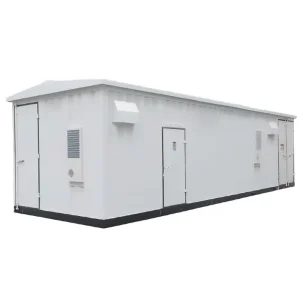
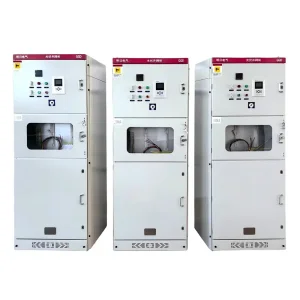
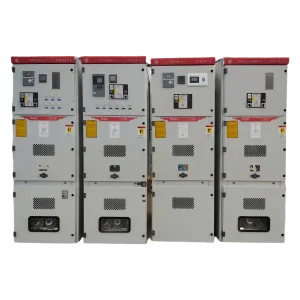
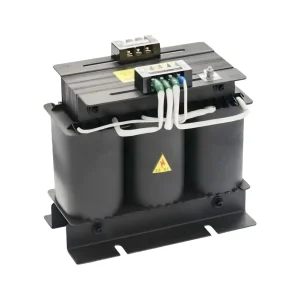
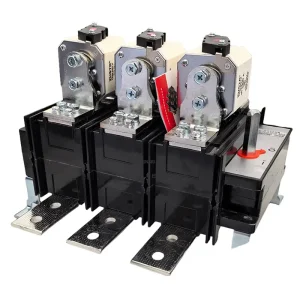
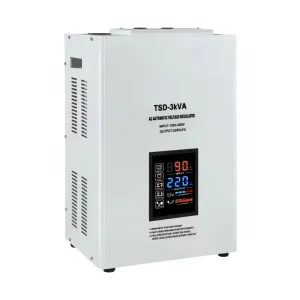
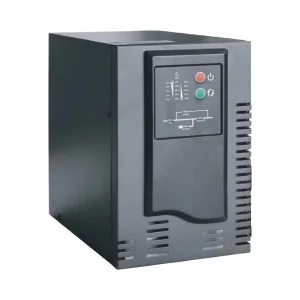
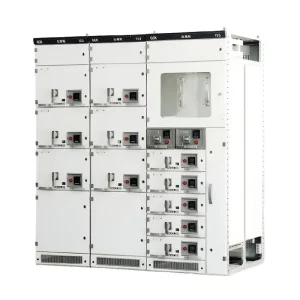
Prefabricated Substations, Switchgear & High-Power Distribution
Robust, type-tested armored switchgear, intelligent prefabricated substations, industrial dry transformers, and high-capacity isolation components for global grid infrastructure.
Frequently Asked Questions: Sourcing & Engineering ODM GIS
Direct answers to the most common engineering inquiries submitted by international procurement teams, EPC project managers, and utility system operators.
Accelerate Your Substation Project with Precision ODM Engineering
Connect directly with our senior medium-voltage application engineers to review your single-line diagrams (SLD), request type-test certificates, or formulate a customized GIS switchgear quote tailored to your local grid parameters.