Featured Autotransformers & High-Reliability Electrical Apparatus
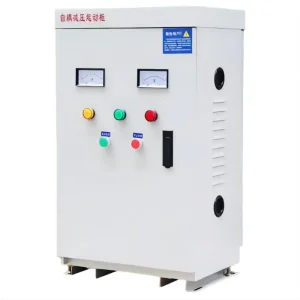
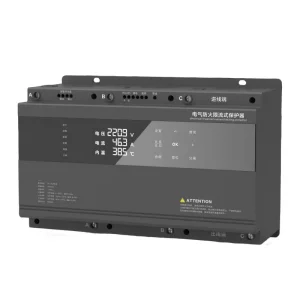
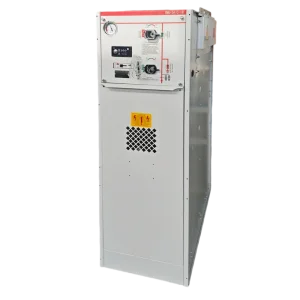
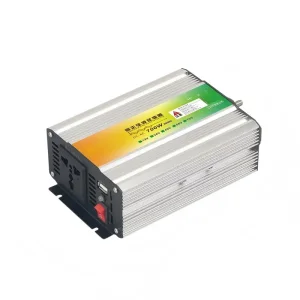
Discover our flagship engineering units—ranging from low-inrush autotransformer motor starters and SF6/gas-insulated switchgear to high-performance current limiters engineered for extreme power densities.
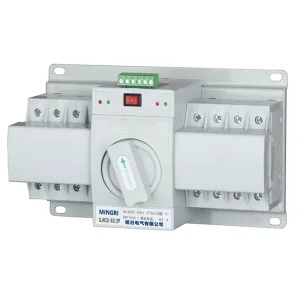
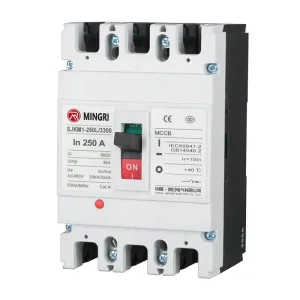
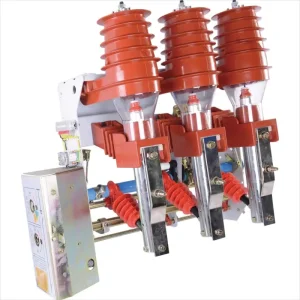
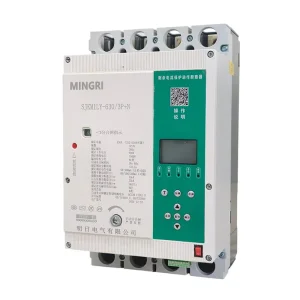
Electromagnetic Principles, Sizing & TCO Advantages of Autotransformers
An in-depth metallurgical and electrical analysis of single-core electrical coupling versus conventional galvanically isolated transformers across modern electrical grids.
Conductive + Inductive Power Transfer
Unlike standard double-wound transformers that transfer 100% of energy through electromagnetic induction, autotransformers utilize a shared common winding. A significant fraction of output power is transferred via direct conduction, shrinking the required core cross-section and yielding substantially smaller footprint requirements.
Reduced Stray Losses & Lower Impedance
Because the primary and secondary circuits share coil turns, the leakage flux is intrinsically constrained. This delivers low leakage reactance, minimal load loss (I²R), and superior voltage regulation during dynamic peak surges, making them the industry standard for regional utility inter-ties and motor soft-starting systems.
Optimized Total Cost of Ownership (TCO)
With 25% to 45% less copper and electrical steel, capital expenditure (CapEx) is minimized. Furthermore, reduced continuous no-load and excitation losses dramatically drop operating expenditure (OpEx), resulting in a payback period of under 24 months in continuous heavy industrial installations.
China Factory 4.0: Supply Chain Agility & Precision Manufacturing
Located within the epicenter of electrical engineering in Yueqing, Zhejiang, our digital manufacturing hub provides unmatched supply chain elasticity, tight metallurgical control, and automated quality assurance.
Automated Foil & Wire Winding
Equipped with multi-axis tension-controlled CNC winding bays that maintain uniform mechanical tension, eliminating air voids and maximizing thermal dissipation in copper and aluminum conductors.
VPI & Epoxy Encapsulation
State-of-the-art Vacuum Pressure Impregnation (VPI) with high-temperature Class H/C solvent-free resin ensures moisture resistance, chemical durability, and high dielectric withstand strength.
Laser-Scribed CRGO Lamination
Utilization of premium Cold-Rolled Grain-Oriented (CRGO) magnetic silicon steel sheets with step-lap miter cutting decreases excitation current, localized magnetic hot spots, and audible decibel hum.
Automated Comprehensive Testing
Full spectrum routine and prototype testing including partial discharge (PD) verification, temperature rise runs, lightning impulse insulation tests, and harmonic tolerance diagnostics.
Macro Industry Solutions: Engineering Reliable Grid & Industrial Systems
From extreme-duty mining soft-starters to multi-megawatt renewable interconnection, our ODM autotransformer systems power critical infrastructure across 40+ countries.
Heavy Motor Starting (MCX01 Series)
Designed specifically for large three-phase squirrel-cage induction motors, our autotransformer starting cabinets provide selectable voltage taps (typically 50%, 65%, and 80%), curbing inrush starting currents down to 2-3x nominal. This mitigates severe voltage dips on weak industrial supply lines and eliminates mechanical shock on drive shafts and pump impellers.
Renewable Energy & BESS Inter-Tie
Connecting large-scale photovoltaic solar parks, utility energy storage systems (BESS), and onshore wind installations to regional transmission grids. Our custom step-up and step-down autotransformers achieve bi-directional power flow efficiency while dampening transient switching spikes from multi-MW solar inverter stages.
Metro Rail & High-Speed Traction Grids
Providing high-current auto-balancing units for single-phase 25 kV AC catenary railway lines. Suppressing ground-return earth currents, mitigating electromagnetic interference with sensitive wayside signaling telecommunication equipment, and ensuring robust power delivery for high-speed train sets.
Autotransformer Technology Roadmap & Future Outlook (2025–2035)
Mingri Electric's R&D pipeline embraces smart edge telemetry, eco-friendly liquid dielectrics, and solid-state power electronic synergies.
Next-Gen Smart Autotransformers with Edge IoT
The convergence of industrial IoT and transformer design enables integrated fiber-optic thermal probes embedded directly within winding sweet-spots, real-time dissolved gas analysis (DGA) sensors, and dynamic load monitoring. Our 2026-compliant digital twins dynamically compute remaining insulation lifespan, predicting thermal degradation long before dielectric breakdown occurs.
Amorphous Metal Cores & Synthetic Ester Fluids
To comply with stringent EU Ecodesign Directive Tier 3 and global zero-carbon standards, we are transitioning high-capacity designs toward high-permeability amorphous alloys—slashing core excitation no-load losses by over 65%. In addition, biodegradable synthetic ester dielectric liquids (K-class fire classification) are replacing conventional mineral oils in our compact substations and transformer housings.
Solid-State Hybrid Autotransformers (SSAT)
Integrating wide-bandgap silicon carbide (SiC) semiconductors with traditional electromagnetic autotransformer windings enables sub-cycle dynamic voltage regulation, active power factor correction, and harmonic isolation without physical on-load tap changers (OLTC). This delivers millisecond-level reaction times for sensitive semiconductor fabrication plants and hyperscale data centers.
Modular Substation Integration (American & European Types)
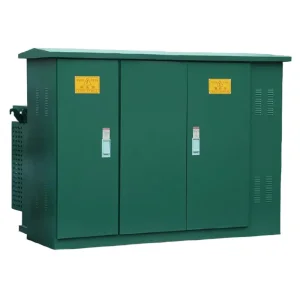
Prefabricated modular units (such as our ZGS11-12 and YB series) combine the autotransformer, medium-voltage ring network switchgear, vacuum interrupters, and low-voltage withdrawable cabinets into a unified, seismically certified, walk-in enclosure for rapid field commissioning.
Global Enterprise Procurement: Specification & Selection Criteria
An actionable RFP technical specification checklist for procurement managers, EPC contractors, and electrical design engineers.
| Technical Parameter | Standard Configuration | Custom ODM Capabilities | Primary Engineering Impact |
|---|---|---|---|
| Rated Capacity (kVA/MVA) | 10 kVA – 5,000 kVA (Low/Medium Voltage) | Scalable up to 50 MVA Custom Enclosed | Determines frame size, mechanical footprint, and thermal heat exchange surface. |
| Voltage Classes & Ratios | 380V/220V, 690V/400V, 10kV/6kV, 35kV/10kV | Any custom ratio down to ±0.5% tolerance | Ensures precise grid matching, neutral floating prevention, and motor tap optimization. |
| Insulation System | Class F (155°C) or Class H (180°C) VPI Dry Type | Class C (220°C) Nomex® or Synthetic Ester | Crucial for fire safety ratings in enclosed underground tunnels and high ambient facilities. |
| Enclosure Protection Class | IP20 (Indoor Open), IP31 (Perforated Sheet) | IP54 / IP55 / NEMA 4X Marine-Grade Stainless | Guarantees resistance against coastal salt spray, desert dust ingress, and chemical fumes. |
| Starting Duty Cycle (Motors) | 3 to 6 consecutive starts per hour | Severe duty (10–15 starts/hr) heavy inertia | Sizing of thermal thermal-mass to prevent cumulative winding insulation charring. |
| Cooling Topology | AN (Air Natural) / AF (Air Forced Fan Assisted) | ONAN / ONAF / Eco-Fluid Liquid Immersed | Balances continuous full-load efficiency with emergency 120-140% overload capacity. |
International Compliance, FAT/SAT Protocols & Localized Support
Guaranteed conformity with worldwide utility standards, backed by third-party type test reports and dedicated international lifecycle engineering support.
Global Standard Certifications
Every custom ODM batch is built in compliance with IEC 60076 (Power Transformers), IEEE C57.12.80, UL 1561 / CSA standards, and the CE Low Voltage Directive (LVD). Complete quality records under ISO 9001, ISO 14001, and ISO 45001 management systems.
Rigorous FAT & SAT Support
Factory Acceptance Testing (FAT) with optional high-definition live video witnessing, full computerized oscillograms of winding resistance, turns ratio, no-load and full-load losses, and insulation resistance. On-site commissioning guidance and SAT documentation provided worldwide.
Rapid Spares & Field Engineering
Our global engineering dispatch network ensures fast turnaround for replacement tap assemblies, protection relays, temperature controllers, and vacuum contactors. Dedicated 24/7 technical hotline access ensures minimal operational downtime for continuous plants.
Engineering & Procurement FAQ
Direct answers to core technical considerations when evaluating autotransformers for utility, marine, and industrial applications.
Q1 When is an autotransformer preferable to an isolation transformer?
Autotransformers are best when electrical galvanic isolation is not strictly mandated by safety codes, and the voltage conversion ratio is relatively close (typically within a 1:3 ratio, such as 480V to 380V, 400V to 230V, or 13.8kV to 11kV). In these situations, the autotransformer provides a dramatically smaller physical footprint, lower capital investment, higher efficiency, and substantially reduced operational losses.
Q2 How does the MCX01 step-down starting cabinet protect induction motors?
Direct-on-line (DOL) starting draws 6 to 8 times nominal full-load current, inducing severe thermal stress on stator windings and voltage sag on the supply bus. The MCX01 utilizes multi-tap autotransformers (50%, 65%, 80%) to drop starting line current proportionally to the square of the voltage ratio (e.g., at the 65% tap, line current drops to only ~42% of DOL). Integrated micro-controllers transition the motor seamlessly to line voltage once rated RPM is reached.
Q3 What are the risks of lacking galvanic isolation and how are they mitigated?
Because the common winding physically couples the high-voltage and low-voltage circuits, a ground fault or surge on the high-voltage side can directly stress the low-voltage network insulation. We mitigate this through robust solid neutral grounding topologies, coordinated surge arresters (MOVs), high-withstand dielectric insulation barriers, and fast-acting MCCB/ACB circuit protection devices.
Q4 What is the standard turn-around time for custom ODM autotransformer prototypes?
Custom electromagnetic design verification and 3D CAD/EPLAN submittal typically take 3 to 5 business days. Once engineering drawings are client-approved, our automated Yueqing production line can wind, impregnate, assemble, and type-test low/medium voltage units in 3 to 4 weeks, significantly beating the 12-to-24-week lead times common in Western markets.
Q5 Can your autotransformers handle non-linear loads with high harmonic content?
Yes. When autotransformers supply Variable Frequency Drives (VFDs), rectifiers, or smelting equipment, severe harmonic currents generate excessive eddy current losses. We provide custom K-factor rated autotransformers (K-4, K-13, up to K-20) featuring transposition-wound transposed conductors, electrostatic shielding, and oversized neutral conductors to avoid excessive overheating.
Q6 What documentation accompanies an export shipment of our custom switchgear/transformer?
Each delivery includes an exhaustive Factory Test Report (losses, insulation resistance, high-potential withstand, ratio check), single-line and schematic wiring diagrams, certificate of origin, warranty certificate (typically 18 to 24 months), spare parts inventory list, and multi-language operation and maintenance (O&M) manuals.
Complementary Power Distribution & Circuit Protection Portfolio
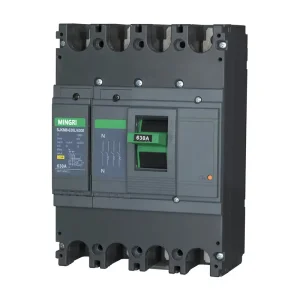
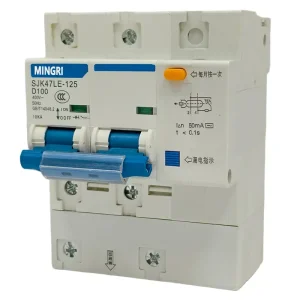
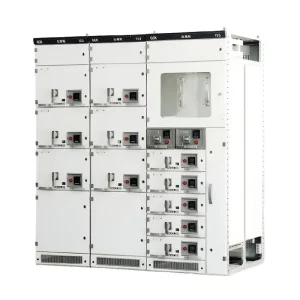
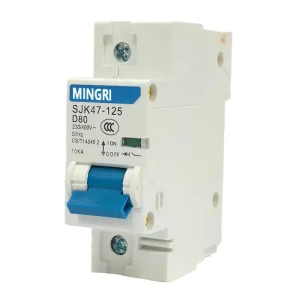
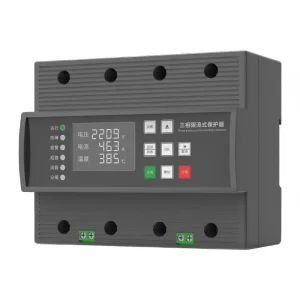
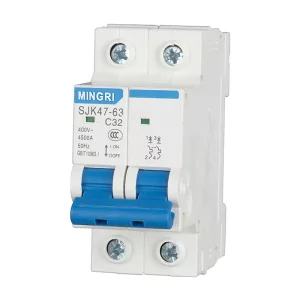
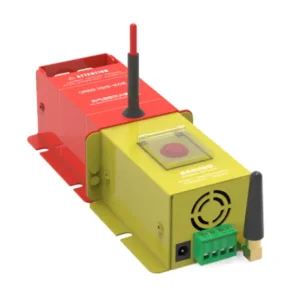
Complete your power distribution architecture with our integrated low-voltage switchgear, prefabricated transformer substations, and intelligent circuit breakers engineered for high-demand industrial environments.