Turnkey Grid Automation & Regulation Assemblies
Integrated MV/LV distribution assets, automated voltage regulators, and heavy-duty switchgear built under certified factory controls for maximum operational reliability.
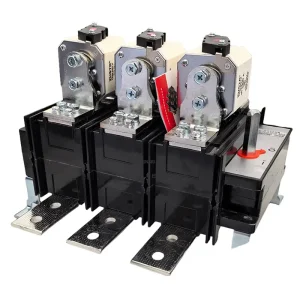
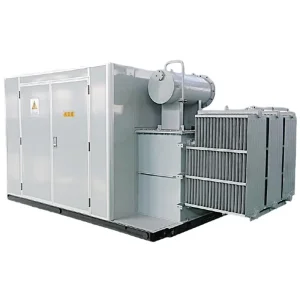
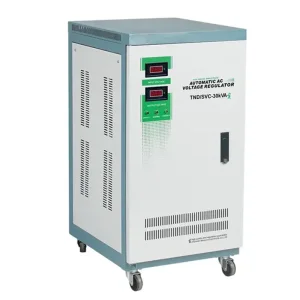
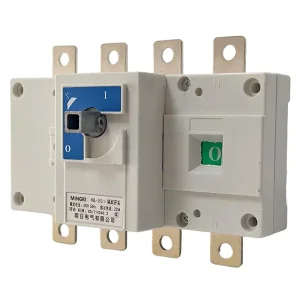
Global Power Quality Volatility & The Industrial AC Regulator Landscape
Analyzing the shift from legacy electro-mechanical compensation to microsecond-response solid-state and servo-loop regulation across evolving transmission topologies.
Grid Stress & Harmonic Resonance
Modern commercial and heavy-industrial grids face unprecedented challenges caused by non-linear loads, high-frequency variable frequency drives (VFDs), electric arc furnaces, and intermittent distributed energy resources (DERs). Such dynamics cause chronic under-voltage sag, over-voltage swell, phase voltage unbalance, and total harmonic distortion (THD) that exceed IEEE 519 compliance limits.
Without continuous automatic AC voltage regulation, automated production cells suffer from logic faults, premature insulation breakdown in winding structures, and high downtime costs.
Renewable Intermittency Dynamics
Utility-scale photovoltaic generation and microgrid wind installations experience extreme ramp rates due to environmental factors such as cloud cover and wind turbulence. These rapid power swings manifest as high-amplitude line-voltage variations across medium-voltage and low-voltage networks.
Original Design Manufacturers (ODM) must build stabilization equipment capable of high-duty-cycle operation, wide input windows (-40% to +25%), and robust thermal management under severe ambient fluctuations.
The ODM Paradigm Shift
Global Engineering, Procurement, and Construction (EPC) contractors and brand owners have moved away from off-the-shelf, standard voltage stabilizers. Instead, they increasingly mandate comprehensive ODM integration. Custom requirements now encompass tailored enclosure footprint dimensions, specialized Class H insulation materials, copper versus aluminum winding configurations, internal bypass topologies, Modbus/Profibus telemetry protocols, and high seismic-withstand certifications.
Comparative Analysis of Industrial AC Voltage Regulation Topologies
Selecting the appropriate internal physical and electrical design based on speed requirements, power density, THD preservation, and capital expenditure.
| Topological Classification | Correction Speed | Output Accuracy | Waveform Distortion (THD) | Load Surge Overload | Primary Industrial Match |
|---|---|---|---|---|---|
| Servo-Electromechanical (Variac / Buck-Boost) | 20 to 50 V/sec | ±1.0% to ±1.5% | 0% Added THD (Pure Sine) | 1000% for 10ms; 200% for 1 min | General Industrial Plants, Large CNC, Substation Feeders |
| Static Solid-State (SCR/Thyristor Tap-Changing) | 10 to 40 ms | ±2.0% to ±3.0% | <1% Switching Transient | 500% for 1 cycle; 150% for 30s | Packaging automation, Commercial HVAC, Printing presses |
| IGBT PWM Matrix / Magnetic Synthesis | <1 to 5 ms | ±0.5% | Filtered THD < 2% | 200% for 10s (Electronic current limit) | Semiconductor lithography, Medical MRI/CT, Scientific R&D |
| Ferroresonant (Constant Voltage Transformer) | Instantaneous (<8ms) | ±1.0% to ±3.0% | Moderate THD (3% to 5%) | Current limiting by saturation | SCADA telemetry nodes, Oil & Gas pipeline valve control |
Servo-Driven Carbon Brush Buck-Boost Regulation
Servo regulators rely on a precision servomotor mechanically linked to an autotransformer (Variac) track, connected in series with a secondary buck-boost transformer. The onboard digital microprocessor continuously samples the output RMS voltage across all three phases. Upon detecting deviations, it drives the servo assembly via closed-loop PID control to adjust the carbon brush contact on the autotransformer windings.
- Zero Phase Shift: Direct electro-magnetic coupling guarantees no alteration to phase angle or harmonic signature.
- Extreme Overload Capacity: High thermal mass supports massive motor inrush currents up to 10x rated current during heavy inductive loads starting.
- Cost-to-Power Ratio: Remains the most cost-effective and dependable methodology for multi-MVA industrial sub-distribution facilities.
High-Speed Static Solid-State Tap Switching
Static voltage regulators eliminate all moving mechanical linkages. Instead, they utilize anti-parallel thyristor pairs (Silicon Controlled Rectifiers or SCRs) operating as zero-crossing switches across predetermined autotransformer taps. Control algorithms switch tap combinations within a quarter to half AC cycle without introducing mechanical wear or arcing.
- Maintenance-Free Design: No brushes, drive belts, bearings, or contact points to inspect or replace annually.
- Sub-Cycle Response: Fully neutralizes deep sags and dynamic swells in 10-20 milliseconds, safeguarding high-speed packaging, PLC logic, and server racks.
- Sealed Architecture: Ideal for harsh operational environments containing conductive dust, chemical vapors, or continuous vibration.
Localized Application Profiles & Environmental Engineering
Power profiles vary across geographic territories, requiring customized ODM manufacturing approaches tailored to specific ambient and grid realities.
Southeast Asia & Tropical Belts
Operational Conditions: Prolonged ambient temperatures exceeding 42°C, relative humidity hovering near 95%, heavy monsoon seasons, and significant industrial feeder voltage drop caused by rapid urban density expansion.
ODM Engineering Adaptation: Impregnation via vacuum pressure (VPI) using high-grade Class H resins to resist tropical moisture and fungal growth. Cabinets are fabricated from powder-coated galvannealed steel or 304 stainless steel with IP54 ingress protection, smart thermal bypass ventilation, and built-in anti-condensation dehumidifiers.
Africa & Extractive Mining Territories
Operational Conditions: Weak transmission infrastructure, frequent complete load shedding, extreme reliance on localized diesel-generator hybrid systems, remote access routes, and pervasive conductive mineral dust.
ODM Engineering Adaptation: Extra-wide incoming voltage tolerance (-45% to +30%) to handle unmanaged generator step-loads. Heavy-duty magnetic cores engineered with low flux density (Bmax < 1.5 Tesla) prevent core saturation during high harmonic frequencies, accompanied by ruggedized heavy-gauge chassis designed to withstand harsh transport logistics.
Europe & North America
Operational Conditions: High baseline grid stability with strict regulatory standards (CE, UL 508A, IEEE 519, IEC 61000-4-11), coupled with dense microelectronics, automated robotics, and hyper-converged data infrastructure.
ODM Engineering Adaptation: Prioritizing ultra-low active electromagnetic emission (EMC/EMI filtering Class A/B), high operating efficiency (>99%), digital power metering integration via Ethernet/IP and BACnet, and dynamic static solid-state architectures designed to preserve pristine waveform integrity.
ODM Factory Manufacturing Standards & R&D Verification
From electrical steel lamination slitting to automated load bank verification, our facilities enforce full traceability across all assembly stages.
Core Magnetics & Winding
Core structures utilize high-permeability, cold-rolled grain-oriented (CRGO) silicon steel sheets cut on automated CNC laser slitting lines. Windings are precision-wound with oxygen-free copper (99.99% conductivity) and insulated with multi-layer Nomex/polyester paper. Every coil undergoes multi-stage vacuum pressure impregnation to eliminate air voids and minimize acoustic noise under load.
PCB SMT & Firmware
Digital controllers are manufactured on automated Surface Mount Technology (SMT) lines. Control microcontrollers feature dual redundant processors for high real-time sampling frequencies. Every board is subjected to automated optical inspection (AOI), multi-gas conformal coating, and extended temperature burn-in (-20°C to +85°C) before final assembly.
Testing & Validation
Factory Acceptance Testing (FAT) complies with IEC 60076, IEC 61000-4, and GB/T 14048 standards. Testing procedures include full-load temperature rise runs, dielectric withstand (3kV to 10kV for 1 minute), partial discharge tests, impulse withstand assessments, acoustic noise measurements (dBA), and dynamic step-load testing (0% to 100% to 0%).
Custom Enclosure Design
In-house sheet metal fabrication incorporates automated laser cutters, CNC punch presses, and robotic welding cells. Structural designs satisfy earthquake-resistant seismic requirements, coastal salt-fog environments (C5-M corrosion rating), and specific dimensional constraints tailored to retrofit aging plant rooms or containerized compact substations.
Macro-Industry Engineering Solutions
Tailoring voltage stabilization architectures to specific operational environments, from semiconductor cleanrooms to heavy continuous manufacturing facilities.
Automated Manufacturing & CNC Machinery
Precision multi-axis CNC machines, laser cutters, and robotic welders are vulnerable to grid voltage drops caused by neighboring heavy machinery start-ups. Even minor phase-to-phase imbalances can trigger spindle drive trip errors, tool gouging, and scrap parts.
Solution: High-capacity servo-regulated or solid-state dynamic stabilizers with independent three-phase control loops. These correct unbalanced line voltages back to within ±1.0% without injecting harmonic noise into the sensitive machine tool controllers.
Medical Imaging & Clinical Laboratories
Advanced diagnostic installations including MRI systems, CT scanners, digital fluoroscopy, and linear particle accelerators demand stable DC buses, which rely heavily on consistent incoming AC feeds. A brief 100-millisecond voltage sag can interrupt a scan, requiring system restarts and reducing patient throughput.
Solution: Medical-grade static solid-state regulators equipped with ultra-low leakage isolation transformers, copper Faraday shielding, and secondary transient voltage surge suppression (TVSS) stages rated up to 100kA.
Renewable Energy & Microgrid Integration
Decentralized energy microgrids that combine solar photovoltaic inverters, battery energy storage systems (BESS), and reciprocating gensets exhibit frequent line-voltage oscillations during transient load steps or solar irradiance fluctuations.
Solution: Bi-directional AC line conditioners with smart Modbus-TCP telemetry that interface with building SCADA systems to smooth microgrid interconnections, reduce tap-changer stress, and maintain tight voltage stability at the distribution coupling point.
Technology Roadmap: The Next Decade in Power Regulation
How edge artificial intelligence, wide-bandgap semiconductors, and real-time network communications are shaping the next generation of industrial voltage regulation systems.
Wide-Bandgap Semiconductors
The implementation of Silicon Carbide (SiC) and Gallium Nitride (GaN) power switches will dramatically alter static regulator architecture. Operating at switching frequencies exceeding 100 kHz, these switches shrink magnetic core volumes by over 60%, trim thermal cooling requirements, and elevate overall system efficiency beyond 99.2% across dynamic load ranges.
Edge AI & Predictive Health
Future ODM units integrate embedded micro-neural processors that analyze voltage waveforms, brush contact vibration signatures, core acoustic hum, and thermal gradients in real time. These algorithms flag brush wear, capacitor aging, or thermal hotspots hundreds of operating hours before an unplanned failure occurs, shifting maintenance to a predictive model.
IEC 61850 & Cloud Telemetry
Modern substations demand native digital bus compatibility. Future industrial regulators feature embedded IEC 61850 GOOSE communications alongside secure MQTT cloud gateways, enabling real-time remote telemetry, synchronized phase tracking, dynamic sag event logging, and coordinated automated load shed orchestration across wide-area networks.
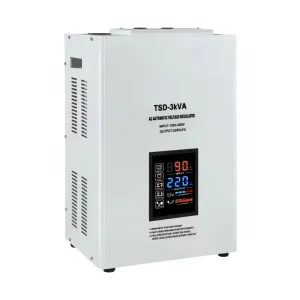
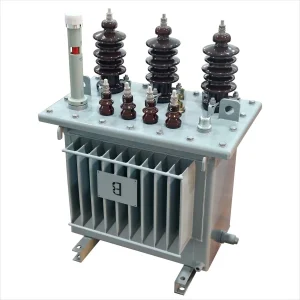
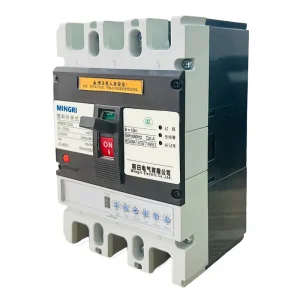
Auxiliary Infrastructure, Power Transformers & Protection
Combining precision automatic voltage regulation with transformers, smart circuit breakers, and fire suppression systems for complete substation and plant protection.
Industrial Engineering & ODM Procurement Q&A
Clarifying technical sizing rules, insulation thresholds, bypass methodologies, and factory customization variables for commercial and utility applications.