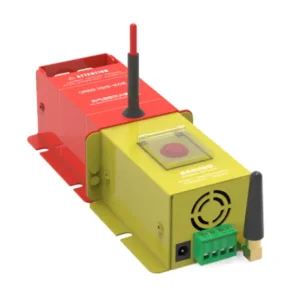
Featured Voltage Protection & Power Switching Systems
Factory-calibrated, high-break-capacity assemblies built to safeguard electrical assets against severe voltage fluctuations, phase asymmetry, and network disturbances.
-
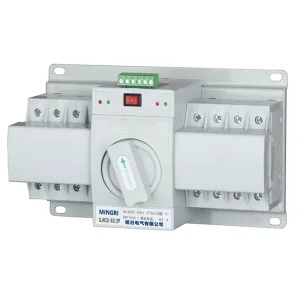
OEM SJKQ1 Manual/Automatic Dual-Use ATS Automatic Transfer Switch Factories, Companies
-
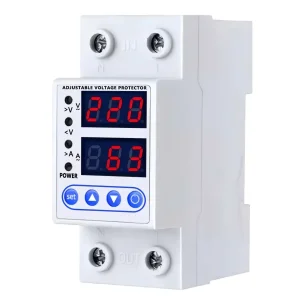
ODM Three-Phase Adjustable Voltage Protector with LED Screen Suppliers, Factory
-
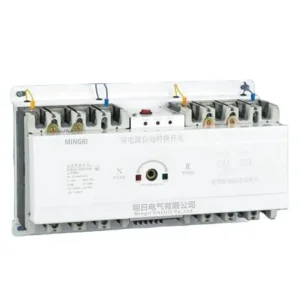
High-Quality SJKQ2 Dual Power Automatic Transfer Switch Factories, Company
-
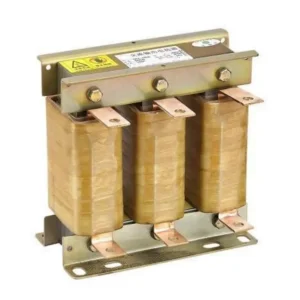
OEM Three-phase incoming and outgoing lines Reactor Factories, Factory
-
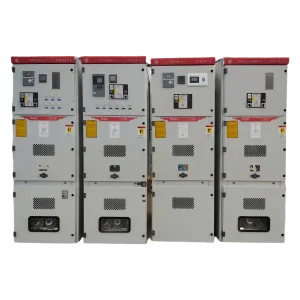
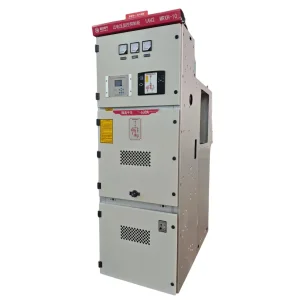
High-Quality KYN28-12 Withdrawable Armored Metal-Enclosed Switchgear Supplier, Manufacturer
-
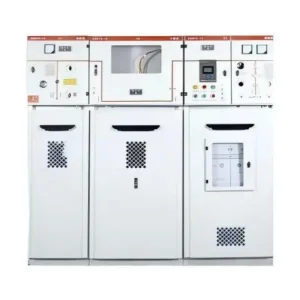
-
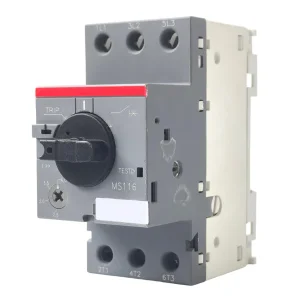
ODM MS116 Low Voltage Motor Protection Circuit Breaker Supplier, Companies
-
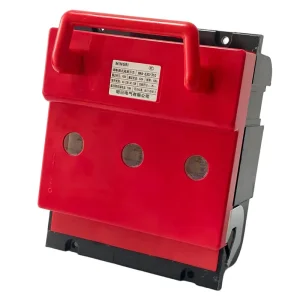
Wholesale HR6 Industrial Fused Knife Disconnect Switch Suppliers, Factories
Engineering Next-Gen Voltage Protection: Microprocessor Precision vs. Legacy Analog Devices
Modern three-phase and single-phase electrical architectures require dynamic trip-curve response times measured in milliseconds. Discover how digital voltage protection systems mitigate transient overvoltage (TOV), harmonic distortion, and sustained phase imbalance.
Electrical distribution systems are undergoing unprecedented stress due to the decentralized integration of renewable sources, non-linear industrial loads, and fast-acting frequency converters. Where conventional surge suppressors and bi-metallic thermal relays fail to react to dynamic swell, sustained brownouts, or phase angle displacements, modern digital voltage protectors bridge the critical gap between line monitoring and immediate physical circuit disconnection.
By utilizing embedded 32-bit ARM-core microcontrollers, our voltage protection systems sample the AC waveform at high frequencies, discriminating between harmless inrush currents and catastrophic sustained neutral disconnection faults (floating neutral). This eliminates nuisance tripping while delivering airtight reliability.
Core Protection Vector Envelope
Our microprocessor-guided units execute continuous multi-parameter surveillance over incoming utility lines:
- ✔ Overvoltage Dynamic Disconnect: Adjustable 230V–300V AC (<0.1s response)
- ✔ Undervoltage Brownout Interruption: Adjustable 140V–210V AC with custom hysteresis
- ✔ Phase Sequence & Asymmetry Guard: Detects reverse phase and >15% imbalance
- ✔ Self-Resetting Intelligence: Automatic load reconnection with configurable recovery delay (1s–600s)
Comparative Architectural Matrix: Protection Technologies
| Performance Characteristic | Digital MCU Voltage Protector | Thermal-Magnetic Breaker (MCB) | Surge Protective Device (SPD / MOV) |
|---|---|---|---|
| Primary Target Anomaly | Continuous Over/Under-Voltage, Neutral Loss, Phase Fault | Short-Circuit & Thermal Overcurrent | High-Voltage Nanosecond Transient Surges |
| Trip Trigger Method | High-Speed True-RMS Digital Waveform Sampling | Bimetallic Heat & Magnetic Flux Induction | Non-linear Varistor Resistance Breakdown |
| Response Duration | Adjustable: 0.1s to 10s (prevents motor stalling) | Milliseconds to minutes depending on trip curve | Nanoseconds (25ns clamping envelope) |
| Automatic Restoration | Yes (Programmable auto-reset upon grid stabilization) | No (Requires manual intervention or motorized module) | Sacrificial degradation (Requires modular replacement) |
| System Health Visibility | Real-time LED/OLED digital readout of line parameters | Mechanical trip flag window only | Visual degradation indicator window |
Global Industry Trends Transforming Voltage Protection
As electrical networks transition toward decentralized microgrids and smart automation, protection hardware must evolve beyond basic isolation into connected, adaptive control nodes.
Microgrid Edge Intelligence
Decentralized photovoltaic installations and EV supercharging hubs cause severe local voltage swell and voltage flicker. Next-gen protectors utilize adaptive thresholding algorithms that dynamically compensate for peak feeding periods, preventing spurious circuit cuts while safeguarding sensitive building management systems (BMS).
IoT & SCADA Modbus Telemetry
Industrial operators no longer accept black-box switches. Modern voltage protection devices feature native RS485 Modbus-RTU, MQTT, and Zigbee/Wi-Fi interfaces. Remote operations teams can monitor real-time phase-to-neutral voltages, log historical fault stamps, and calibrate trip thresholds over the cloud without physical panel access.
Hybrid Solid-State Arc Elimination
Mechanical relay contacts inevitably suffer from contact pitting and erosion caused by electrical arcing during inductive disconnections. The latest engineering frontier pairs high-power triacs with silver-alloy relays for zero-cross switching—extending electrical service life past 100,000 cycles under maximum operational load.
Supply Chain Resilience, Yueqing Industrial Cluster & Direct Manufacturing Agility
Discover how our state-of-the-art production base in Yueqing, Zhejiang leverages fully integrated automation, rigorous quality verification, and complete component traceability to serve global utilities and EPC contractors.
Vertical Supply Integration
Located at the epicenter of China's low-voltage apparatus capital, our manufacturing ecosystem sources copper punchings, flame-retardant PC/ABS housings, and microcontrollers within an immediate 15km logistics radius, yielding unmatched cost-performance and lead-time stability.
Automated SMT & AOI Testing
Every logic board undergoes multi-stage high-precision automated surface mount assembly followed by Automated Optical Inspection (AOI) and in-circuit testing, ensuring zero cold solder joints and flawless component placement density across thousands of units daily.
100% Thermal Load Burn-in
We reject batch sampling. 100% of finished voltage protectors and automatic transfer switches run through high-temperature environmental burn-in test chambers under continuous rated current, forcing early component mortality inside our facility rather than at your job site.
Custom OEM/ODM Engineering
From bespoke firmware parameters (custom tripping tolerances, delay timers, and hysteresis windows) to laser-etched OEM branding and custom packaging, our dedicated R&D team converts engineering specifications into mass-manufactured prototypes within 14 business days.
Navigating Worldwide Commercial & Industrial Grid Vulnerabilities
Unstable distribution networks, rapid urbanization, and grid-tied distributed generation present vastly different power quality threats across key international regions.
Emerging Industrial Hubs (ASEAN, Africa, LATAM)
In rapidly growing economies, transmission lines frequently operate near thermal capacity. Industrial facilities endure persistent brownouts (voltages plummeting below 160V for hours) alternating with sudden night-time load-shedding overvoltages exceeding 280V. Here, our self-resetting protectors prevent repetitive burnout in industrial compressors, pumping stations, and central HVAC units.
Mature Grids & High Harmonic Densities (EU & North America)
While gross voltage drops are rarer, mature markets face extreme 3rd, 5th, and 7th harmonic distortions caused by widespread variable frequency drives (VFDs) and non-linear server power supplies. Standard analog relays trigger false trips or heat up excessively; our True-RMS sampling filters high-frequency noise and accurately detects genuine phase angle asymmetry.
Harsh Marine, Coastal & Mining Environments
Salt spray, conductive coal/mineral dust, and severe ambient heat accelerate insulation breakdown and contact oxidation. Our industrial-grade voltage protectors are housed in self-extinguishing UL94-V0 rated enclosures with conformal-coated PCB assemblies, rated for ambient operating temperatures between -25°C and +70°C.
Field-Tested Industrial & Commercial Application Profiles
Explore how global electrical engineers and EPC project leaders deploy our protective devices across mission-critical topologies.
Data Centers & Edge Telecom
Guards precision cooling units, UPS rectifiers, and redundant switchgear from line disturbances and utility phase reversals, ensuring 99.999% uptime compliance.
Automated Manufacturing & CNC
Prevents expensive multi-axis CNC spindle damage and robotic arm encoder resets caused by microsecond brownouts and instantaneous line dropouts.
Solar Farms & BESS Facilities
Regulates anti-islanding switch points and defends string inverters against grid back-surges, keeping PV combiner boxes protected during high-voltage utility reconnects.
Cold-Chain & Medical Facilities
Eliminates motor burnout in ultra-low-temperature vaccine freezers and agricultural chillers by strictly locking out supply until line voltage normalizes for a full 180 seconds.
Enterprise Buyer's Roadmap: Evaluating Total Cost of Ownership (TCO)
When procuring electrical protection equipment across international supply chains, unit price accounts for only a fraction of lifetime asset expenditure. Factor in downtime liabilities, installation efficiency, and international standards compliance.
Indirect Downtime Calculations
An undetected 20% voltage sag lasting 500ms can shut down an entire semiconductor or bottling line, causing thousands of dollars in lost throughput. Specifying voltage protectors with programmable instantaneous cut-off thresholds mitigates high-impact production interruptions.
Full Standards Certification
Ensure devices comply with IEC 60947-2 (Low-Voltage Switchgear and Controlgear), CE-LVD, and RoHS directives. Verified dielectric test reports, impulse withstand (Uimp up to 6kV), and third-party laboratory documentation are non-negotiable for tender approvals.
Standardized DIN-Rail Modular Formats
Standardized 1P, 2P, 3P, and 4P modular widths (18mm per pole) conform to standard DIN rail distribution boards (DBs), drastically reducing installer assembly labor, panel depth requirements, and subsequent field-service replacement overhead.
Frequently Asked Questions: Technical Engineering & Sourcing
Direct answers to the most common inquiries from power engineers, distributors, and industrial procurement professionals.
What is the difference between a Surge Protective Device (SPD) and a Voltage Protector?
An SPD protects solely against nanosecond or microsecond transient voltage spikes (such as direct or indirect lightning strikes and switching surges) by shunting excess energy to ground via MOVs. It cannot protect against sustained overvoltage (e.g., 280V lasting minutes) or brownouts. A digital voltage protector monitors continuous RMS voltage, physically disconnecting the load when thresholds are breached, and auto-reconnecting once the utility stabilizes.
Why is adjustable recovery delay critical for motor and compressor applications?
When inductive compressors (such as HVAC chillers or refrigeration units) are abruptly shut off, high head pressure remains trapped in the refrigerant loop. If voltage returns immediately and attempts to restart the motor against this head pressure, the rotor can stall, drawing locked-rotor current and burning out windings. An adjustable recovery delay (e.g., 60s to 300s) allows pressures to equalize before power is restored.
How does floating neutral loss impact equipment, and how is it prevented?
In three-phase four-wire distribution grids, a severed or loose neutral line shifts the neutral star point. Depending on line loading balance, single-phase loads on lightly loaded phases can experience severe overvoltages up to 400V AC line-to-neutral. Our four-pole digital voltage protectors actively monitor the neutral voltage potential, initiating an immediate microsecond circuit trip when neutral displacement exceeds safety margins.
Can your voltage protectors be integrated into automated SCADA or BMS networks?
Yes. We supply models equipped with isolated RS485 communication ports operating on standard Modbus-RTU protocol. This allows real-time streaming of phase voltages, load currents, power factor, accumulated kilowatt-hours, and historical trip logs directly to building management systems, centralized SCADA software, or industrial IoT gateways.
What testing procedures are conducted prior to factory shipment?
Every single production unit is subjected to: (1) Dielectric strength and insulation resistance testing at 2,500V AC; (2) High-temperature thermal burn-in under dynamic current loading; (3) Voltage calibration across varying input steps (120V to 320V) to verify MCU reading precision to within ±1%; and (4) Mechanical trip endurance verification on internal latching relays.
What minimum order quantities (MOQ) and lead times apply for OEM orders?
Standard catalog models maintain low MOQs (from 50–100 units) with ex-factory dispatch within 7 to 10 working days. Custom OEM/ODM runs featuring private laser labeling, customized voltage firmware trip curves, and proprietary retail packaging typically require an MOQ of 500 to 1,000 units with an initial production lead time of 20 to 25 days.
Industrial Distribution Transformers, Substations & Breakers
Explore our full-spectrum medium-to-low voltage apparatus portfolio engineered to reinforce grid stability from the utility substation down to final distribution boards.
-
-
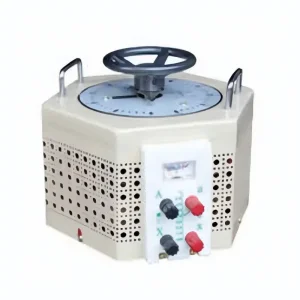
China TDGC2J Series Single Phase Variac Transformer Manufacturer, Factories
-
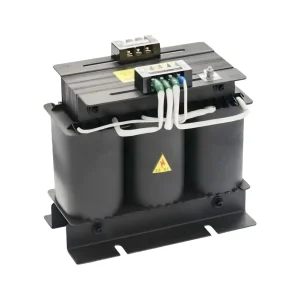
Wholesale JSG Series Three-phase Dry-type Transformer (Servo Transformer) Supplier, Manufacturers
-
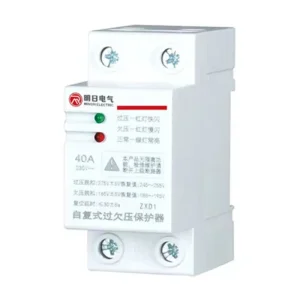
OEM MRGQ-63 Series Self-Resetting Over and Under Voltage Protector Manufacturer, Company
-
-
-
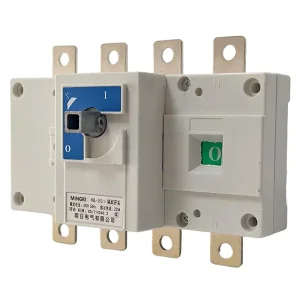
ODM HGL 3/4 Pole Load Isolation Switch Manufacturers, Companies
-