Mission-Critical Power Distribution & Protection Portfolio
Precision-manufactured in our automated facilities, each unit delivers rigorous adherence to international IEC/IEEE standards, safeguarding mission-critical loads from utility transient swings.
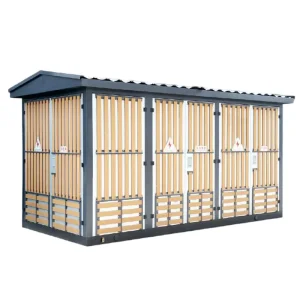
Wholesale China YB□-12 Prefabricated Transformer Substation - 50-1600kVA Power Distribution Solutions
View Technical Specs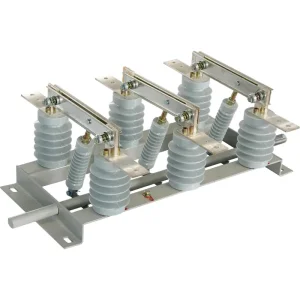
High-Quality GN19-12 Indoor High-Voltage Isolating Switch Factory, Companies
View Technical Specs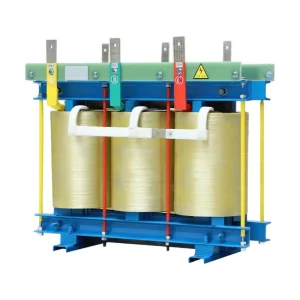
OEM SG(B)10 Type 10kV Series Non-encapsulated Coil Dry Type Transformer Suppliers, Company
View Technical Specs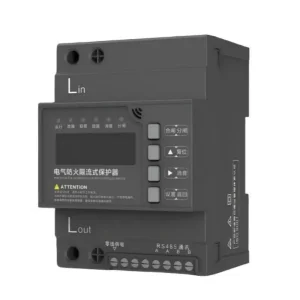
OEM Single Phase Current Limiting Protector - Fire-Resistant, Adjustable Overload China Direct
View Technical Specs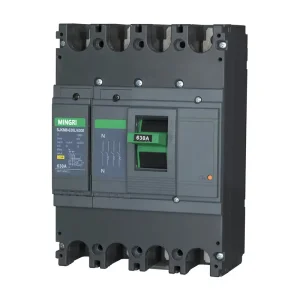
High-Quality SJKM8 Moulded Case Circuit Breaker MCCB Suppliers, Company
View Technical Specs
Wholesale Factory: Single Phase Current-Limiting Protector for Electrical Fire Safety
View Technical Specs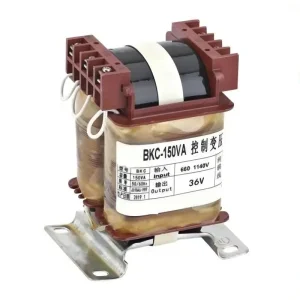
High-Quality BKC Series Control Transformers – Reliable Compact Factory Power Solutions
View Technical Specs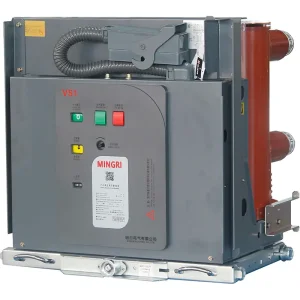
Wholesale VS1-12/24 Withdrawable Indoor High Voltage Vacuum Circuit Breaker
View Technical SpecsThe Paradigm Shift in Uninterruptible Power Supply (UPS) Engineering
In modern industrial manufacturing, multi-tenant hyperscale data centers, and advanced healthcare facilities, the definition of an Uninterruptible Power Supply (UPS) has fundamentally shifted. It is no longer an isolated lead-acid battery bank tied to an analog inverter. Today's mission-critical facilities demand High-Quality UPS Technical Suppliers who can engineer fully integrated, digitally unified power architectures that span from the medium-voltage utility interface down to microsecond chip-level protection.
Power anomalies no longer consist simply of prolonged total blackouts. With the proliferation of non-linear loads, high-frequency variable speed drives (VFDs), arc furnaces, and intensive high-density artificial intelligence compute clusters, power distribution networks suffer from micro-voltage sags, high harmonic distortion (THDv > 8%), sub-cycle transient spikes, and dynamic phase unbalances. An enterprise-grade UPS system serves as an active dynamic power conditioner, bidirectional energy buffer, and galvanic isolation barrier. Working alongside robust switchgear and transformer infrastructure, it maintains total operational continuity regardless of the instability in the upstream utility grid.
Next-Generation Industrial UPS Topology & Componentry
Modern three-phase uninterruptible power systems must resolve the complex operational trade-off between total electrical isolation, thermal dissipation, harmonic mitigation, and ultra-high efficiency.
Industrial Frequency vs. Transformerless
While light commercial data centers have migrated toward high-frequency transformerless modular UPS units to minimize physical footprint, heavy industrial applications strictly mandate Industrial Frequency Online UPS systems (such as the MCL33 Series). Incorporating a low-impedance built-in galvanic isolation transformer at the inverter output completely prevents DC-bus offset injection into critical loads, isolates common-mode electrical noise, and withstands harsh inductive startup surges from motor drives and magnetic solenoids.
Wide-Bandgap Silicon Carbide (SiC) & Multi-Level Inverters
The technical integration of Silicon Carbide (SiC) MOSFETs and three-level Neutral Point Clamped (NPC) inverter topologies enables modern UPS systems to switch at frequencies exceeding 20 kHz without thermal breakdown. This reduces physical magnetic choke volume by 45%, limits input total harmonic distortion (THDi) to under 3%, and achieves operational double-conversion efficiencies upwards of 97.5% across a broad 25% to 100% load profile.
Grid-Interactive UPS & Distributed BESS Convergence
Pioneering UPS technical suppliers are transitioning systems from passive standby assets into active grid-stabilizing virtual power plants (VPPs). Through advanced bi-directional rectifiers and firmware-level fast-frequency response (FFR) algorithms, enterprise UPS equipment seamlessly shifts load between the utility grid, localized Battery Energy Storage Systems (BESS), and on-site renewables (PV/Fuel Cells) to perform peak-shaving and energy arbitrage.
Global Enterprise Procurement Requirements for Industrial UPS Infrastructure
When Tier-1 Engineering, Procurement, and Construction (EPC) conglomerates, utility operators, and hyperscale enterprises qualify a High-Quality UPS Technical Supplier, procurement audits extend far beyond basic nominal kVA/kW capacity ratings. Critical engineering selection criteria include:
1. Dynamic Step-Load Response & Non-Linear Crest Factor Tolerance
Modern semiconductor fabrication equipment, automated robotics, and server blade racks impose instantaneous 0% to 100% step-load variations. A premium technical UPS must maintain the output voltage within ±1% steady-state and ±3% transient deviation, recovering to nominal sinusoidal waveform within less than 10 milliseconds. Furthermore, the inverter stage must safely handle non-linear loads exhibiting high crest factors of 3:1 or higher without derating or prematurely dropping to static bypass.
2. Rigorous Harmonic Mitigation & Input Power Factor Compliance
According to IEEE 519-2022 standards, facilities connected to common utility coupling points must restrict total voltage distortion. Suppliers must implement Active Power Factor Correction (APFC) with dynamic IGBT pulse-width modulation, guaranteeing an input power factor exceeding 0.99 from 20% to full rated load, eliminating harmonic back-feed into upstream power transformers (such as the SC(B)13 and SG(B)10 series) to minimize core eddy-current heating and audible resonance.
3. Galvanic Segregation & Selective Short-Circuit Fault Clearance
Under short-circuit events downstream on branch distribution circuits, industrial-grade UPS architectures must deliver massive short-circuit currents (e.g., 200% to 300% rated current for 200ms). This capability ensures that downstream moulded case circuit breakers (such as the SJKM8) or miniature circuit breakers (such as the SJK47-63) trip selectively before the entire UPS bus voltage collapses, preventing unselective master plant shutdowns.
| Architecture Parameter | Industrial Frequency Online UPS | Modular High-Frequency UPS | Line-Interactive / Standby UPS |
|---|---|---|---|
| Galvanic Isolation | Built-in Heavy-Duty Isolation Transformer | Transformerless (Requires External Unit) | None (Common Neutral/Ground) |
| Fault Clearing Capacity | Superior (300% Inverter Overload for 200ms) | Moderate (150% for 100ms, transfers to bypass) | Low (Relies exclusively on utility breaker) |
| Target Environments | Refineries, Steel Mills, Mining, Heavy Marine | Clean Room Data Centers, Telecom Hubs | SOHO, Small Office, Peripheral IT Terminals |
| Mean Time Between Failures (MTBF) | > 350,000 Operating Hours | > 250,000 Hours (Module Dependent) | < 80,000 Hours |
| Battery Chemistry Support | LiFePO4, VRLA, Ni-Cd, Flow Batteries | Standard Lithium-Ion, High-Rate VRLA | Internal Standard AGM Lead-Acid only |
| Input Voltage Tolerance | Ultra-Wide (-40% to +25% without battery use) | Wide (-25% to +15%) | Narrow (-15% to +10%) |
China Industry 4.0: Vertically Integrated Electrical Ecosystems
Headquartered in Yueqing, Zhejiang—the epicenter of global electrical engineering—Mingri Electric combines state-of-the-art automated manufacturing with complete component-level supply chain control.
End-to-End Vertical Manufacturing Integration
Unlike brand assemblers who outsource primary electrical assemblies, Mingri Electric engineers the critical medium-voltage switchgear (SM6, RM6, KYN28), vacuum circuit breakers (VS1-12/24), cast resin dry-type transformers, and low-voltage protection equipment in-house. This comprehensive capability guarantees absolute electrical coordination and zero integration latency across the entire power distribution chain.
Automated Quality Assurance & AOI Testing
Our smart manufacturing facility implements AI-driven Automated Optical Inspection (AOI), robotic laser welding for gas-insulated stainless steel tanks, and high-voltage partial discharge testing laboratories. Every single UPS inverter module, breaker mechanism, and protective relay undergoes rigorous multi-temperature thermal chamber burn-in testing to completely eliminate infant mortality faults.
Global Engineering Lead-Time Advantages
By leveraging the ultra-dense industrial cluster of Yueqing, Mingri Electric drastically compresses delivery timetables. Custom-engineered prefabricated transformer substations (YB-12) and customized industrial-frequency UPS cabinets that typically require 26 to 40 weeks from European legacy vendors are engineered, type-tested, and shipped within 6 to 10 weeks, ensuring critical project commissioning milestones are strictly achieved.
Global Industrial Deployment & Mission-Critical Environments
Uninterruptible power topologies must be tailored to the harsh realities of specific industrial operational envelopes. Mingri Electric’s systems protect diverse mission-critical infrastructures worldwide:
Oil, Gas & Petrochemical Chemical Processing Plants
Refineries feature extreme concentrations of corrosive gases (hydrogen sulfide, sulfur dioxide), airborne particulates, and broad ambient temperature fluctuations (-25°C to +55°C). In these setups, our industrial-frequency UPS enclosures feature conformal-coated PCBs, redundant cooling fans, IP54/NEMA-3R cabinet ratings, and copper-wound cast-resin transformers (SCB13/SGB10) to deliver unyielding protection to distributed control systems (DCS), emergency shut-off valves, and SCADA networks.
Advanced Semiconductor Fabrication & Cleanrooms
Modern photolithography and wafer-etching equipment cannot endure voltage sags exceeding 10 milliseconds without triggering multi-million-dollar silicon batch scrapping. Our solid-insulated switchgear (GXGN-12) paired with high-capacity three-phase online UPS delivers instantaneous voltage stabilization that strictly complies with the stringent SEMI F47 curve requirements, smoothing micro-disturbances seamlessly.
Utility Substation Protection & Renewable Energy Storage Microgrids
Integrated prefabricated compact substations (YB-12 and American-type combined stations) coupled with VS1-12 vacuum circuit breakers and current-limiting fire-prevention protectors provide comprehensive protection for utility switchyards. Our unified power topologies safeguard remote terminal units (RTUs), protective relay trip coils, and battery management infrastructure against catastrophic lightning impulses and high-voltage grid switching surges.
From Medium Voltage to Critical Chip: Total Electrical Integration
True power resiliency requires seamless coordination across every tier of the electrical network. Here is how Mingri Electric designs end-to-end reliability:
Tier 1: 12–40.5 kV Ingress Switching
Medium-voltage switchgear (SM6 Air-Insulated or SafeRing Gas-Insulated RMUs) coupled with VS1-12 Withdrawable Vacuum Circuit Breakers safely isolates utility line faults and provides robust incoming feeder loop-redundancy.
Tier 2: Step-Down Transformation
SC(B)13 and SG(B)10 cast resin dry-type transformers convert 10kV–35kV grid voltages to 400V 3-phase low-voltage buses. Low partial discharge (<5pC) and Class F/H insulation ensure minimal losses and high fire safety.
Tier 3: Online Conditioning & Backup
The MCL33 Industrial Online UPS conditions raw low-voltage power, eliminating sags, surges, and harmonics. Integrated with DC battery banks and surge arresters (SJKS1D), it delivers zero-transfer-time, pure sine-wave clean power.
Technical Procurement & Engineering Q&A (FAQ)
Detailed answers to critical technical specifications, system sizing, topology trade-offs, and compliance inquiries.
What is the technical difference between industrial-frequency and high-frequency UPS systems?
Industrial-frequency UPS systems (such as the MCL33 series) feature an output low-frequency isolation transformer operating at 50/60Hz. This provides robust galvanic isolation, eliminates direct DC component feed-through to the AC load, and allows exceptionally high fault-clearing surge currents. High-frequency transformerless UPS systems utilize electronic DC-DC boost converters and high-speed IGBT switching to eliminate the heavy transformer, making them smaller and lighter for standard office server rooms, but substantially more sensitive to heavy industrial dynamic motor inrush currents.
How does an online double-conversion UPS maintain 0ms transfer time during utility failures?
In an online double-conversion architecture (VFI - Voltage and Frequency Independent), the incoming AC utility power is constantly converted to an internal regulated DC intermediate bus via an active rectifier. The inverter continuously draws from this DC bus to regenerate a pristine, isolated AC sine wave for the output load. Because the storage batteries are tied directly across this common DC bus via a bi-directional charger/booster, the transfer of energy during a utility blackout occurs instantly with mathematically zero interruption (0 ms transfer time).
Why is the integration of Surge Protection Devices (SPDs) critical directly upstream of a UPS?
While an online UPS effectively conditions ordinary harmonic ripples and moderate voltage sags, atmospheric lightning strikes or grid-switching transients can inject extreme surge voltages (tens of kilovolts) that exceed semiconductor avalanche ratings. Installing robust SPDs (such as the SJKS1D Series) and current-limiting protectors at the upstream switchboard diverts high-energy transient spikes harmlessly to ground, shielding sensitive rectifier IGBTs and DC capacitors from catastrophic dielectric puncture.
Can Mingri Electric UPS and switchgear operate safely under high ambient temperatures and dusty conditions?
Yes. Our industrial-grade UPS and switchgear lines are built specifically for challenging operating environments. Enclosures can be configured up to IP54/NEMA-12 or NEMA-3R ratings with washable dust filters, hermetically sealed gas tanks (for SafeRing/RM6 RMUs), conformal board coatings resisting corrosive chemical agents, and de-rated thermal management margins that guarantee continuous full-load performance at ambient operating temperatures up to +50°C.
What documentation and test certificates accompany global project shipments?
Every commercial order is accompanied by comprehensive engineering documentation, including Factory Acceptance Test (FAT) reports, Type-Test Certifications issued by accredited third-party laboratories (KEMA, ASTA, or CNAS), single-line circuit diagrams, dynamic step-load test data, insulation resistance and partial discharge verification curves, and full ISO 9001/14001/45001 compliance dossiers.
How are selective protection curves coordinated between SJKM8 MCCBs and the UPS static bypass?
Selective tripping coordination is achieved by matching the time-current trip curves of our downstream SJKM8 MCCB devices with the I2t thermal-withstand ratings of the UPS electronic static bypass switch (SCRs). Under downstream branch short-circuits, the MCCB trips instantaneously within 5 to 10 milliseconds, clearing the fault locally while the UPS static bypass maintains full bus stability without dropping power to adjacent healthy parallel feeders.
Medium-Voltage Switchgear, Industrial UPS & Component Range
Explore our complementary switchgear, circuit breakers, and transformers engineered to build a complete, resilient electrical network.
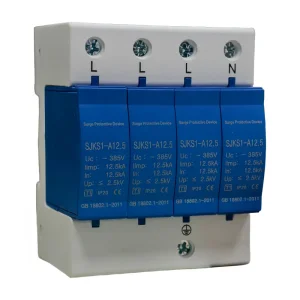
ODM SJKS1D Series Surge Protection Device 1P-4P 50Hz Manufacturers, Company
View Technical Specs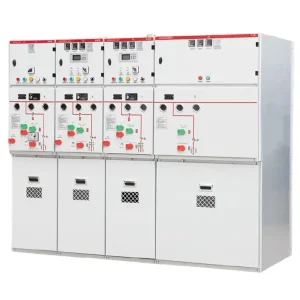
ODM GXGN-12 Solid-Insulated Fully Enclosed Ring Main Unit Switchgear Manufacturers
View Technical Specs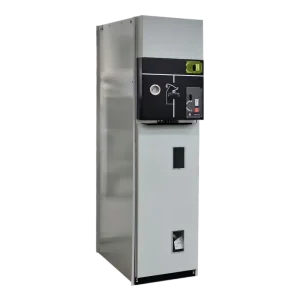
High-Quality SM6 Modular Air Insulated Medium Voltage Ring Main Unit (RMU) Supplier
View Technical Specs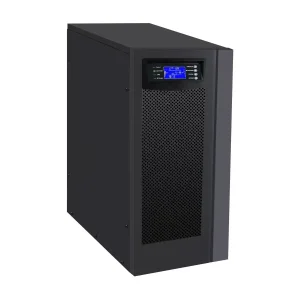
High-Quality MCL33 Series Industrial Frequency Online UPS Technical Manufacturer
View Technical Specs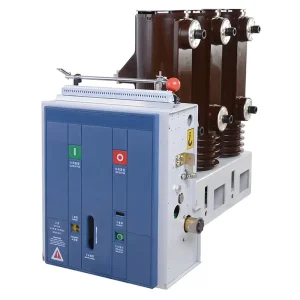
Wholesale VS1-12C Indoor High-Voltage Side-Mounted Vacuum Circuit Breaker Suppliers
View Technical Specs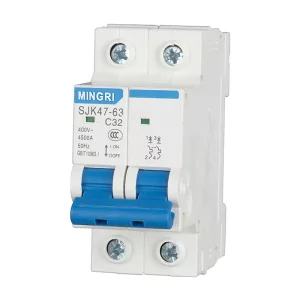
High-Quality SJK47-63 Miniature Circuit Breaker MCB - Premium Quality Protection
View Technical Specs
ODM BKC Series Control Transformers – Reliable Solutions for Industrial Applications
View Technical Specs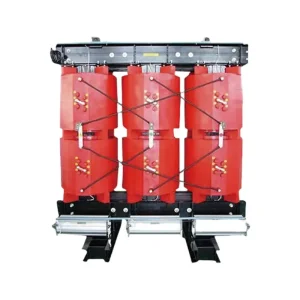
High-Quality SC(B)13 Type 10kV Series Resin Insulation Dry Type Power Transformer
View Technical SpecsDirect Engineering Engagement & Custom Sizing Support
Selecting the optimal uninterruptible power topology and coordinating upstream switchgear requires rigorous calculation of single-line fault parameters, prospective short-circuit currents, harmonic resonance spectrums, and thermal dissipation metrics. Mingri Electric’s engineering team in Yueqing provides complete project consultations, customized single-line diagram (SLD) reviews, and factory direct technical proposals for international clients worldwide.