Engineered On-Load Switching & Distribution Systems
Manufactured under stringent ISO 9001, ISO 14001, and ISO 45001 protocols, our primary line offers unmatched operational continuity, arc containment, and precision load breaking under energized conditions.
The Engineering Physics of On-Load Switching & Regulation
Uninterrupted voltage regulation and fault isolation remain the twin pillars of industrial uptime, renewable integration, and grid modernization.
In medium and high-voltage power distribution, an on-load device—whether an On-Load Tap Changer (OLTC) integrated into a power transformer, an On-Load Disconnector (Load Break Switch - LBS), or an intelligent Ring Main Unit (RMU)—serves as the dynamic nerve center of electrical infrastructure. Unlike off-circuit or no-load devices that require downstream de-energization to prevent severe plasma arcing, on-load apparatus are engineered to interrupt, divert, and modulate current flow under full rated operating capacity, inductive magnetizing conditions, and transient fault states.
1. Arc Quenching Dynamics & Contact Metallurgy
The decisive challenge across all on-load switching operations is thermal dissipation during contact separation. When contacts open under load, a high-temperature electric arc forms, governed by the Cassie and Mayr arc models. Tier-1 manufacturers like Mingri Electric employ vacuum interrupter bottles with sintered copper-chromium (CuCr) contact matrices or hermetically sealed SF6 gas enclosures with auto-puffer nozzles. The vacuum bottle ensures that metal vapor quickly condenses upon current zero, restoring dielectric strength within microseconds and preventing catastrophic restrikes.
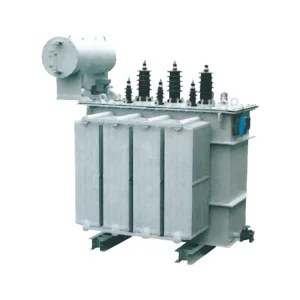
For transformers equipped with on-load tap changers, the transition must bridge adjacent winding turns without causing short circuits across tap steps. This is achieved via high-speed diverter mechanisms using carefully calibrated transition resistors (Jansen principle) or vacuum interrupters. The selector switch pre-selects the winding ratio, while the high-speed diverter switches the load path in under 40 milliseconds, maintaining complete phase continuity.
2. Dielectric Integrity & Environmental Hermeticity
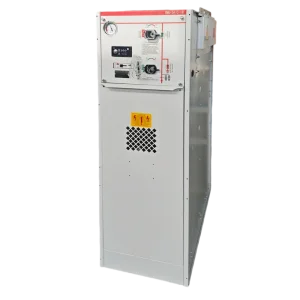
Environmental contamination, saline moisture in coastal substations, and industrial particulate ingress can drastically erode surface creepage resistance. Leading on-load manufacturers address this vulnerability through stainless steel laser-welded gas compartments (rated IP67 for internal active components) and epoxy-resin automatic pressure gelation (APG) bushings. The integration of fully insulated, touch-safe cable terminations allows equipment like the RM6 and KYN61-40.5 to operate continuously across ambient temperatures from -40°C to +50°C and altitudes exceeding 2,500 meters without derating.
Macro Industry Trends Reshaping On-Load Manufacturing
Procurement strategies for EPC contractors, utilities, and large-scale industrial developers are shifting toward sustainability, digital integration, and aggressive life-cycle cost reduction.
High-Penetration Renewable Interconnection
Solar photovoltaic parks and wind corridors exhibit continuous power generation swings. This variability demands on-load tap changers and automatic step-up substations capable of executing up to 150 daily operations without oil degradation or contact pitting, far exceeding traditional utility duty cycles.
SF6-Free and Eco-Gas Transition
With tightening global F-Gas directives, utilities are migrating toward Fluoronitrile gas mixtures, synthetic dry air, and solid-insulated switchgear (SIS). Mingri Electric’s solid-insulated and vacuum-based lines provide carbon-neutral alternatives with equivalent dielectric performance and identical footprint.
Predictive Digitalization & IEC 61850
Modern on-load switchgear functions as an intelligent IoT edge node. Non-intrusive sensors monitor partial discharge (PD), contact temperature via surface acoustic wave (SAW) sensors, and dynamic motor torque during tap changes, transmitting real-time analytics to central SCADA networks via GOOSE protocols.
Internal Arc Classification (IAC AFLR)
Personnel safety is non-negotiable. Modern global standards demand switchgear compliance with IEC 62271-200 IAC AFLR up to 31.5kA for 1 second. Gas expansion channels, pressure relief flaps, and mechanical interlocking prevent catastrophic structural failure during internal arc events.
Technology Benchmarking: On-Load vs. Alternative Systems
Evaluating switching topology, maintenance overhead, operational safety, and network stability across critical distribution assets.
| Parameter | On-Load Tap Changer (Vacuum) | Off-Circuit Tap Changer (DETC) | Gas-Insulated RMU (On-Load) | Air-Insulated Switchgear (AIS) |
|---|---|---|---|---|
| Operational Interruption | Zero Power Interruption | Full Outage Required | Seamless Load Switching | Breaker tripping required for isolation |
| Arc Extinction Medium | Vacuum Bottle (Hermetic) | None (De-energized Only) | SF6 Gas / Eco-Fluoroketone | Atmospheric Air / Vacuum Bottle |
| Mechanical Endurance | 500,000 to 1,000,000 operations | 5,000 operations | 10,000 operations (Class M2) | 10,000 operations (Class M2) |
| Maintenance Cycle | Every 150,000–300,000 ops | Every 3–5 years offline | Maintenance-free for 30 years | Annual visual & contact cleaning |
| Footprint / Volume | Compact Internal Tank Mount | Minimal | Ultra-Compact (0.45 m² per bay) | Standard to Large (1.2 m² per bay) |
| Grid Stabilization Role | Dynamic real-time voltage regulation | Seasonal voltage matching only | Loop reconfiguration & fault clearing | Substation busbar protection & sectionalizing |
Mission-Critical Deployment Scenarios
How high-integrity on-load equipment integrates into complex electrical architectures to guarantee continuous operational power.
Hyperscale Data Centers & Critical Facilities
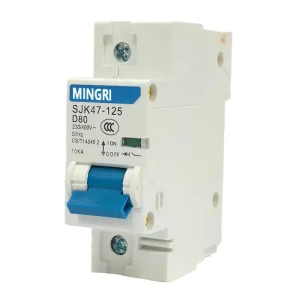
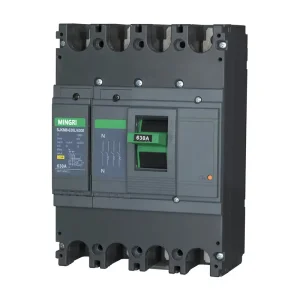
In Tier III and Tier IV data centers, momentary voltage sags trigger server reboot cascades. Incorporating high-speed automatic transfer switchgear and low-voltage distribution assemblies (like Mingri’s GGD and SJKM8 MCCBs) ensures sub-10ms transfer between utility feeds and on-site generation, maintaining 99.999% power availability.
Utility-Scale Photovoltaic & BESS Hubs
Solar farms experience severe reverse power flow and voltage rise during peak solar irradiance. Compact prefabricated European-style (YB-12) and American-style (ZGS11) substations equipped with on-load step-up capability continuously regulate feeder voltage at the inverter connection point, complying with stringent grid code requirements.
Heavy Metallurgy, Chemical & Mining Industries
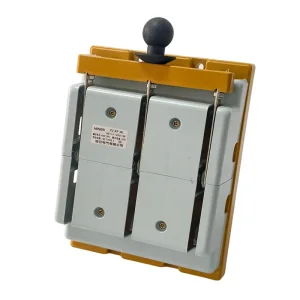
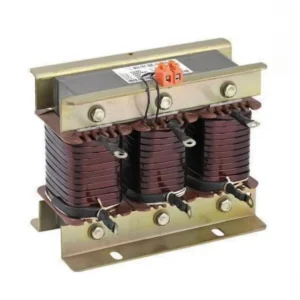
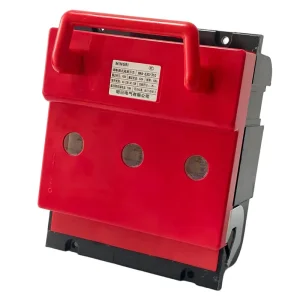
Electric arc furnaces (EAF) and induction mills induce severe harmonics, voltage flicker, and repetitive switching surges. Combining CKSG low-voltage series reactors, heavy-duty HR6 knife disconnects, and KYN61-40.5 switchgear stabilizes power factor, suppresses inrush transients, and isolates localized short circuits safely.
State-of-the-Art Quality Assurance & Testing Rigor
Manufactured in Yueqing, Zhejiang—the global capital of advanced electrical engineering—Mingri Electric enforces multi-tier qualification from raw materials to final Factory Acceptance Testing (FAT).
Every on-load mechanism and switchgear cubicle undergoes rigorous quality validation that satisfies and exceeds IEC 62271-100, IEC 62271-200, IEC 60214-1, and IEEE C37 standards. We operate on a zero-defect manufacturing doctrine supported by automated digital inspection cells:
- Laser Gas Tightness Testing: Automated vacuum chamber helium leak mass spectrometry tests all gas-filled enclosures, ensuring an annual leakage rate of less than 0.05%, guaranteeing a 30-year operational lifespan without gas refilling.
- Partial Discharge (PD) Screening: 100% of medium-voltage bushings, vacuum bottles, and insulation barriers undergo radio-frequency PD testing, rejecting any component exhibiting discharge exceeding 3 to 5 picocoulombs (pC).
- Mechanical Life Cycling: Routine sample verification subjects diverter switches and switchgear mechanisms to 10,000 consecutive open-close-open (OCO) operations under simulated thermal extremes.
- High-Current Temperature Rise Testing: Continuous thermal runs at 1.1x rated continuous current confirm that busbar connection points remain well within IEC thermal limits (temperature rise ΔT < 65K).
Next-Generation Roadmap: The Future of On-Load Apparatus
Anticipating the technological disruptions that will govern power distribution between 2026 and 2035.
Hybrid Solid-State On-Load Tap Changing
The fusion of high-power thyristor/IGBT valves with mechanical selector mechanisms. By shunting the arc electronically during the 10-millisecond step-transition window, mechanical contact wear is entirely eliminated, allowing virtually infinite operational cycles without maintenance.
Intelligent Self-Healing Distribution Automation
Decentralized feeder automation controllers embedded within Ring Main Units communicate peer-to-peer via 5G and fiber GOOSE messaging. Fault detection, isolation, and service restoration (FDIR) occur autonomously within 300 milliseconds, eliminating localized blackouts.
Perfluorohexanone Automated Fire Suppression
Transitioning from legacy deluge and chemical extinguishers to localized, non-conductive, clean-agent Perfluorohexanone micro-capsule systems. Directly embedded in switchgear cable basements and busbar compartments, fires are neutralized instantly without dielectric or structural damage.
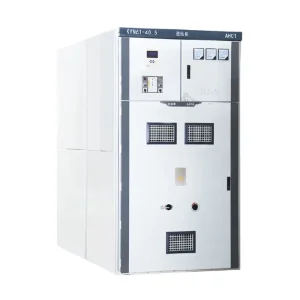
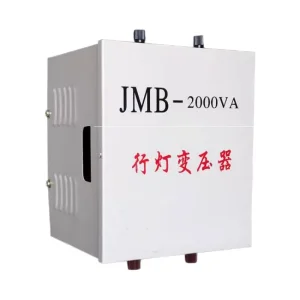
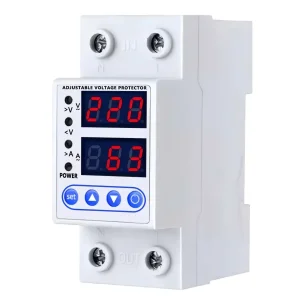
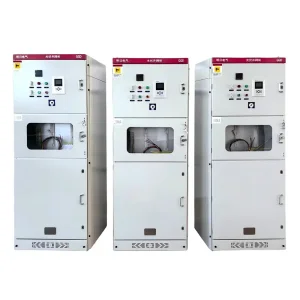
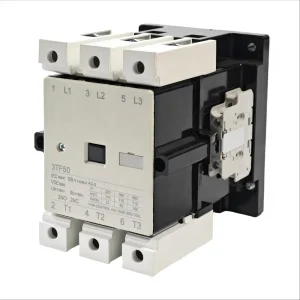
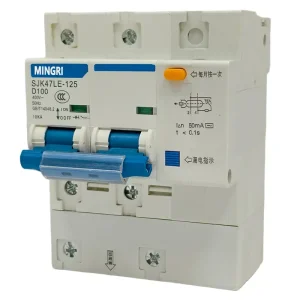
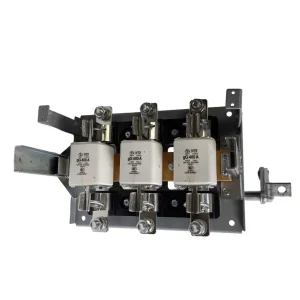
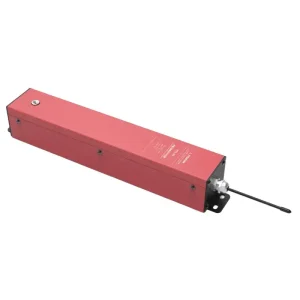
Substation, Enclosure & Protection Apparatus
Comprehensive secondary distribution panels, high-capacity industrial knife disconnects, and smart fire-suppression equipment engineered for total system reliability.
Engineering & Global Procurement FAQ
Comprehensive technical answers addressing engineering evaluations, international logistics, compliance standards, and custom configuration inquiries.
An on-load tap changer (OLTC) alters the transformer winding turns ratio while the transformer is energized and delivering load current, utilizing specialized transition resistors or vacuum diverters to bridge steps without arcing or circuit disconnection. An off-circuit tap changer (DETC/OCTC) requires the transformer to be completely de-energized and disconnected from the grid before manual tap adjustment, rendering it suitable only for seasonal adjustments rather than dynamic real-time voltage stabilization.
Gas-insulated switchgear (such as our RM6 and SafeRing series) encloses all primary live parts—including busbars, vacuum interrupters, and disconnect switches—within a hermetically sealed, robotically laser-welded stainless steel tank filled with SF6 gas at typical gauge pressures between 0.02 and 0.05 MPa. By maintaining a leak rate below 0.05% annually, internal dielectric withstand is completely unaffected by external ambient moisture, dust, chemical pollution, or flood immersion throughout a 30-year operational life.
To receive an exact technical proposal and pricing, procurement teams should provide: (1) The project Single-Line Diagram (SLD); (2) System rated voltage, frequency (50/60 Hz), and short-circuit breaking capacity (e.g., 25kA/3s); (3) Feed configuration (incoming, outgoing, transformer metering); (4) Desired protection relays and instrumentation CT/VT ratios; (5) Environmental constraints (ambient temperatures, altitude if >1000m, indoor/outdoor enclosure rating).
All Mingri equipment complies with international IEC standards (IEC 62271-1, IEC 62271-100, IEC 62271-200, IEC 61439-1/2, IEC 60076) and equivalent GB/T standards. Our manufacturing facilities are certified according to ISO 9001 (Quality Management), ISO 14001 (Environmental Stewardship), and ISO 45001 (Occupational Health & Safety). Complete type-test certificates from accredited third-party laboratories (including KEMA-aligned national test centers) are available for technical audits.
Yes. Mingri Electric’s prefabricated substations (YB series and American combined ZGS11 series) feature custom housing metallurgy, including marine-grade stainless steel (304/316) or aluminum-zinc alloy-coated steel sheets finished with UV-resistant polyurethane electrostatic powder coating (Class C4/C5 anti-corrosion). Thermal insulation, forced ventilation with cyclonic dust filtration, and internal anti-condensation heating are incorporated for high-temperature desert or saline coastal environments.
We offer a comprehensive hybrid commissioning model. For international clients, our Yueqing engineering headquarters provides 24/7 remote video-assisted FAT (Factory Acceptance Testing), real-time tele-guided SAT (Site Acceptance Testing), and complete digital schematic sets with terminal connection blueprints. Furthermore, on-site commissioning engineers can be dispatched for high-capacity utility projects to oversee busbar torquing, secondary relay logic testing, and energization.