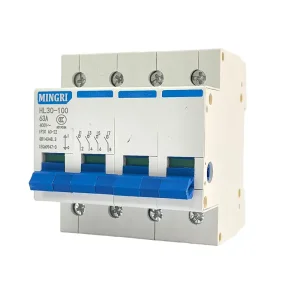
Industrial-Grade Off-Grid Switching & Transformation Hardware
High-performance medium-voltage interrupters, intelligent current limiters, and specialized distribution transformers custom-built to mitigate severe grid instability, extreme harmonics, and remote environmental stress.
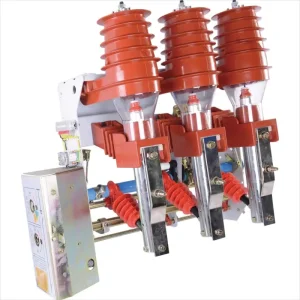
OEM FK(R)N12-12 High Voltage Air Load Breaker Fuse Switch
Explore Specifications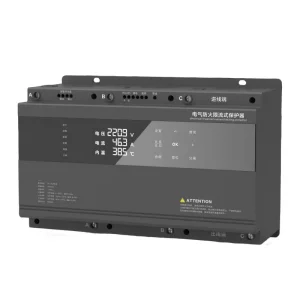
High-Quality 160A Three-Phase Fire Protection Current Limiter
Explore Specifications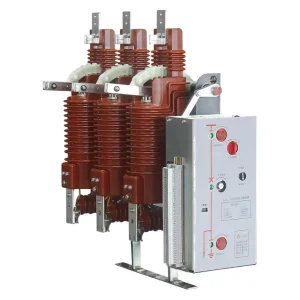
ODM VSY2-12GD Miniaturized Three-Position High Voltage VCB
Explore Specifications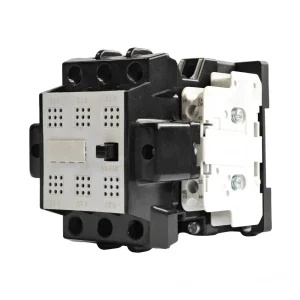
China CJX1 (3TB) Series AC Contactors 9-400A 380V AC-3
Explore Specifications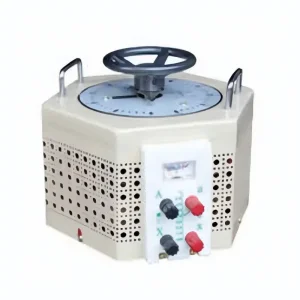
China TDGC2J Series Single Phase Variac Transformer
Explore Specifications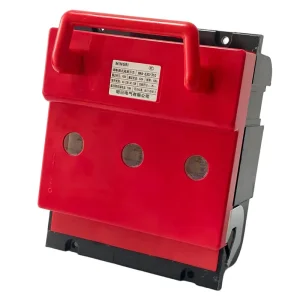
ODM China HR6 Industrial Fused Knife Disconnect Switch (4A-630A)
Explore Specifications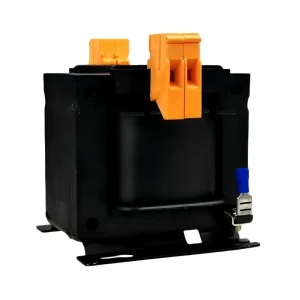
High-Quality JBK5 Series Machine Tool Control Transformer
Explore Specifications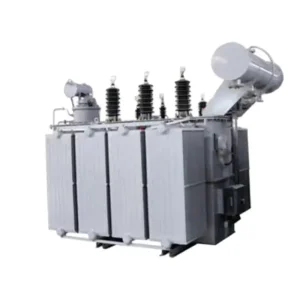
High-Quality China S11 Type 35kV Series Distribution Transformer
Explore SpecificationsNavigating Modern Energy Vulnerabilities with Industrial Off-Grid Infrastructure
Worldwide commercial and industrial operations face rising utility volatility, aggressive carbon abatement targets, and remote geographical frontiers. Decentralized medium-voltage architecture is no longer an alternative—it is the baseline for global operational viability.
Delivered via dual-feed ring main units and millisecond vacuum transfer systems.
Lower annualized energy costs compared to unbuffered peak demand utility tariffs.
Engineered arc-extinction chambers safeguard sensitive localized microgrid nodes.
Turnkey scalability spanning 0.4 kV machine-level controls up to utility-class collection.
In the contemporary global landscape, the reliance on centralized public transmission grids introduces severe liabilities for energy-intensive enterprises. Grid congestion, extreme climate-induced brownouts, volatile per-kilowatt spot pricing, and deferred infrastructure maintenance in remote regions threaten production quotas. A premier off-grid supplier and manufacturer bridges the chasm between raw local generation (photovoltaic arrays, wind turbines, biomass plants, and battery energy storage systems) and heavy industrial consumption.
Executing a true islanded power system demands far more than basic inverters and battery packs. High-capacity induction motors, arc furnaces, CNC machining centers, and mining crushers produce brutal transient surges and high-frequency harmonics. Without precision engineered FKRN12-12 air load break switches, VSY2-12GD vacuum interrupters, and ruggedized S11 35kV step-down distribution transformers, microgrids experience catastrophic cascading trips. Our industrial off-grid equipment portfolio is calibrated to handle asymmetrical load switching, severe reactive loads, and autonomous black-start sequencing under the most stringent international operational conditions.
Application Scenarios: Engineered for Harsh, Remote, & Autonomous Sites
From high-salinity island microgrids to sub-zero high-altitude mining basins, explore how our localized medium and low-voltage configurations guarantee non-stop system stability.
Remote Mining & Heavy Extraction Basins
Off-grid mining operations require localized generation capable of driving mammoth ball mills, hoist motors, and slurry pumps. Rapid motor starts induce voltage drops that trigger conventional protection relays.
- Mitigation: High-withstand VSY2-12GD vacuum breakers and S11 35kV outdoor transformers.
- Dynamic Protection: Custom high-breaking capacity HR6 knife switches isolating branch faults under 10ms.
- Thermal Resilience: Optimized natural oil circulation designed for ambient variations from -30°C to +50°C.
Islanded Coastal Microgrids & Ports
Maritime installations battle aggressive chloride atmospheric corrosion, extreme humidity, and intense storm surges where localized solar-diesel-storage hybrid plants supply all base-load power.
- Enclosure Integrity: IP55-rated hermetically welded stainless steel enclosures with C5-M marine painting.
- Switchgear: SF6 gas-insulated RMU chambers impervious to condensation and salt deposition.
- Automation: Self-synchronizing remote RTUs for instantaneous load shed during marine feeder faults.
Agricultural Irrigation & Agro-PV Grids
Broad-acre farming and agricultural processing centers operating without utility connection rely on expansive solar PV step-up stations and low-voltage variable frequency drives.
- Harmonic Buffering: Specialized SC(B)11 dry-type transformers handling distorted PV inverter outputs.
- Transient Suppression: SJKS1-C series Type 1+2 surge protective devices dampening atmospheric lightning.
- Load Control: JBK5 control transformers and heavy-duty CJX1 contactors operating deep submersible pumps.
Critical Telecom & Data Centers
Off-grid hyper-scale edge computing and military-grade communication repeaters cannot tolerate a microsecond of phase mismatch or voltage dips during battery-to-genset transitions.
- Zero Downtime ATS: Microprocessor-controlled automatic transfer switches with sub-cycle transfer times.
- Fire Prevention: 160A Three-phase fire protection current limiters suppressing thermal runaways.
- Precision Voltage: TDGC2J variac auto-transformers supplying stabilized secondary diagnostic voltage.
Emergency Defense & Mobile Grid Recovery
Rapid-deployment mobile substations and containerized generation modules designed for swift disaster relief and defense staging outposts requiring plug-and-play medium-voltage energization.
- Modular Design: Fully integrated prefabricated cabin substations featuring KYN28 withdrawable switchgear.
- Safety Interlocks: Mechanical five-prevention fail-safe locking preventing operator switching errors.
- Rapid Interconnection: Standardized MV plug-in separable cable terminations up to 40.5kV.
Isolated Eco-Industrial Parks
Specialized manufacturing districts disconnected from regional grids to bypass emissions caps, utilizing closed-loop localized microturbines, rooftop solar, and sodium-ion batteries.
- Busbar Optimization: Double-busbar low-voltage MNS/GCS switchboards handling continuous 4000A bus loads.
- Load Segmentation: SJKM1 molded case circuit breakers with adjustable electronic trip protection units.
- Smart Telemetry: Modbus/IEC 61850 integrated digital meters transmitting real-time active/reactive power metrics.
Supply Chain Resilience & Yueqing Manufacturing Synergies
Positioned at the epicenter of electrical power manufacturing in Yueqing, Zhejiang, our production base capitalizes on unparalleled industrial clustering. Within a 20-kilometer radius, 98% of specialized upstream raw components—from high-permeability grain-oriented silicon steel cores and oxygen-free electrolytic copper busbars to precision epoxy resin vacuum casting systems—are sourced and verified under strict ISO 9001 and ISO 14001 control protocols.
This concentrated ecosystem eliminates logistical bottlenecks that plague European and North American switchgear assembly houses. While overseas lead times for 12kV-40.5kV switchgear frequently stretch from 28 to 52 weeks, our fully integrated manufacturing operations compress production cycles to 4 to 8 weeks—even for fully customized, multi-cubicle prefabricated substations.
Cost-Efficiency Without Compromise: Highly automated CNC turret punch presses, robotic laser welding cells, and computerized vacuum impregnation tanks lower unit assembly costs by 30-45% compared to Western competitors, while matching or exceeding IEC 62271-200 performance criteria.
Every product batch—including vacuum interrupters, air circuit breakers, and oil-immersed transformers—undergoes rigorous in-house routine tests: lightning impulse withstand tests, partial discharge (PD) measurements (<5 pC threshold), temperature rise validation, and high-pressure helium leak detection for pressurized compartments.
Standardized Manufacturing Quality Pillars
Technology Roadmap: Next-Generation Off-Grid Switchgear Architecture
As microgrid control shifts from passive mechanical interrupters to active, edge-computed smart routing, our research initiatives lead the transformation toward SF6-free insulants, solid-state transformation, and automated islanding.
Eco-Gas & Solid Dielectric Switchgear
Transitioning medium-voltage RMUs away from high-GWP fluorinated gases (SF6). Introducing vacuum interrupters combined with dry air, carbon dioxide, or solid epoxy resin insulation that eliminate toxic gas decomposition products while retaining compact panel dimensions.
- Zero global warming potential dielectric matrix.
- No F-gas reporting, handling, or recycling overhead.
- Fully sealed, maintenance-free life cycle surpassing 30 years.
Digital Substation & AI-Driven Edge Telemetry
Embedding smart micro-sensors directly within busbar contacts, breaker operating mechanisms, and transformer oil channels. Real-time vibration, temperature, and partial discharge analytics run through localized micro-edge controllers to forecast thermal runaway.
- Native IEC 61850 Process Bus & GOOSE messaging.
- Predictive maintenance alerts eliminating unplanned blackouts.
- Cloud-agnostic telemetry interfacing with any industrial SCADA.
Solid-State Transformers (SST) & DC Bus Microgrids
Replacing electromagnetic iron-core transformers with high-frequency silicon carbide (SiC) solid-state power electronics. SSTs enable bidirectional AC/DC power flow, seamless medium-voltage DC collection from solar/batteries, and sub-millisecond voltage sag compensation.
- Direct integration with 1500V DC photovoltaic/BESS arrays.
- Elimination of heavy cooling oil and explosion hazards.
- Dynamic real-time reactive power and power factor correction.
International Compliance & Turnkey EPC Technical Backing
Entering international tenders requires absolute conformance to global electrical safety standards and exhaustive project engineering documentation. We ensure frictionless integration from drawing approval to final commissioning.
Standardization Certifications
All equipment families are rigorously benchmarked against the latest international standards to assure global acceptance by utilities and consulting engineering firms:
- IEC 62271-200 / 62271-100: High-voltage AC metal-enclosed switchgear & circuit breakers.
- IEC 60076 / IEEE C57: Power and distribution transformers.
- IEC 61439-1/2: Low-voltage switchgear and controlgear assemblies.
- CE & ISO 9001/14001/45001: Certified environmental and occupational safety management.
FAT & SAT Factory Assurance
We provide comprehensive Factory Acceptance Testing (FAT) with third-party witness inspection support (SGS, TÜV, Bureau Veritas) or real-time remote high-definition streaming tests:
- Power frequency withstand voltage tests up to 95kV.
- Mechanical endurance testing (Class M2 - 10,000 operations).
- Contact resistance measurement (µΩ range verification).
- Interlocking mechanism fool-proofing audits.
Turnkey Field Engineering
Our responsibility extends beyond manufacturing into full project deployment support for international contractors and energy operators worldwide:
- Complete AutoCAD, SolidWorks, and EPLAN design dossiers.
- Relay coordination curves and protection selectivity studies.
- Dedicated multilingual technical service engineers dispatched for on-site Site Acceptance Testing (SAT).
- 10-year spare parts availability guarantee.
Frequently Asked Questions for Off-Grid Electrical Systems
In-depth technical answers addressing critical specification, protection, and operational questions encountered by power engineers and EPC contractors designing off-grid networks.
How do you resolve short-circuit fault clearing in low-inertia off-grid microgrids?
Unlike massive utility grids with abundant synchronous rotational inertia, off-grid systems dominated by inverter-based resources (solar PV and BESS) possess limited fault-current contribution (rarely exceeding 1.2 to 2.0 times rated current). Standard thermal-magnetic trips fail to operate rapidly under these conditions. We resolve this by integrating ultra-fast vacuum circuit breakers (such as our VSY2-12GD series) paired with micro-processor based directional overcurrent and negative-sequence relays capable of detecting low-magnitude faults in <15 ms. Additionally, we integrate specialized fast-acting current-limiting fuses and coordinated busbar interlocks to isolate faulty sub-branches before localized voltage collapse occurs.
When should an off-grid project select Dry-Type (SCB11) versus Oil-Immersed (S11) transformers?
The decision is dictated by installation environment, environmental regulations, and fire safety. SC(B)11 epoxy resin cast dry-type transformers are flame-retardant, self-extinguishing, and maintenance-free, making them mandatory for indoor installations, underground mining caverns, and prefabricated modular cabins where oil leakage poses fire or explosion risks. Conversely, S11 hermetically sealed oil-immersed transformers provide superior cooling efficiency, longer service life in highly contaminated outdoor atmospheres, and lower total purchase cost, making them the gold standard for outdoor rural sub-stations, expansive agricultural solar arrays, and heavy industrial yards.
What neutral grounding philosophy is recommended for autonomous islanded networks?
For critical continuous operations (such as processing plants or marine ports), an ungrounded (IT) system or high-resistance grounded (HRG) system is optimal. In an IT network, an initial single line-to-ground fault produces negligible fault current, allowing equipment to safely continue running while signaling an alarm. For medium-voltage generation loops, low-resistance grounding (LRG) or neutral grounding transformers (zigzag) are implemented to limit transient overvoltages during ground faults while providing sufficient current (typically 100A to 400A) for reliable, selective trip operation by zero-sequence protection relays.
How does your equipment handle the harmonic distortion produced by large VFDs and renewable inverters?
Nonlinear loads in off-grid facilities generate severe total harmonic distortion in voltage (THDv) and current (THDi), creating excessive eddy current losses and overheating in conventional transformers. Our S11 and SCB11 transformers can be customized with K-factor ratings (K-4 to K-20) featuring electrostatic shielding, reinforced neutral conductors rated at 200% phase capacity, and lower magnetic flux densities that suppress harmonic saturation. In addition, our low-voltage switchboards can be pre-configured with active harmonic filters (AHF) and detuned reactor banks to ensure IEEE 519 compliance at the point of common coupling.
What measures are taken to prevent Internal Arc faults inside off-grid medium-voltage switchgear?
Internal arcing is catastrophic in confined off-grid substations. Our medium-voltage switchgear (such as the KYN28 and intelligent modular switch boxes) is engineered and type-tested to meet Internal Arc Classification IAC AFLR up to 31.5kA for 1 second per IEC 62271-200. We incorporate pressure relief flaps that direct superheated gases upward into dedicated exhaust ducts, optical fiber arc flash detection relays that initiate tripping within 5 ms, automatic shutter interlocks, and partition walls manufactured from 2.0mm–2.5mm aluminum-zinc coated steel to prevent arc migration between functional compartments.
How does an overseas client commission and troubleshoot Mingri Electric switchgear remotely?
We deliver complete, bilingual (English/Chinese) documentation packages including secondary schematic diagrams, terminal strip assignment charts, and protection relay parameter setting files. During field installation, our senior engineering group provides real-time augmented-reality video support, step-by-step commissioning verification, and diagnostic log reviews. Every primary unit arrives factory pre-commissioned, routine-tested, and fully wired, minimizing on-site work to external cable termination and final control signal interconnection.
Complete Microgrid Power Conditioning & Low-Voltage Controls
High-performance surge arresters, prefabricated modular cabin substations, precision control transformers, and heavy-duty circuit protection apparatus ensuring total system safety.
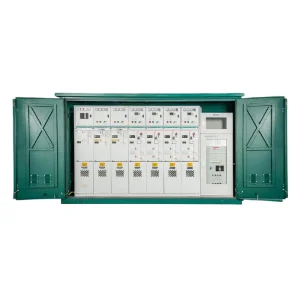
OEM High Voltage Outdoor Intelligent Switch Box
Explore Specifications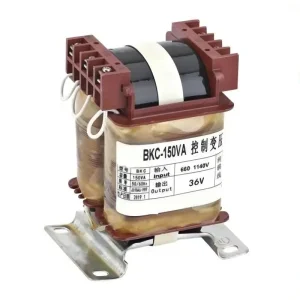
ODM BKC Series Control Transformers
Explore Specifications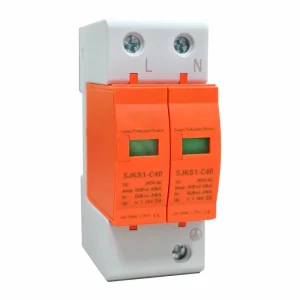
OEM Surge Protection Device SPD SJKS1-C Series 3/4P 25kA
Explore Specifications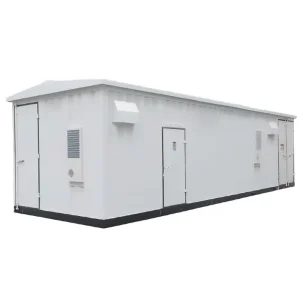
Smart Modular Prefabricated Cabin Substation Solution
Explore Specifications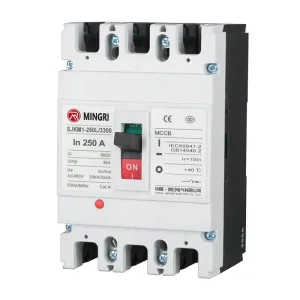
Wholesale SJKM1 Moulded Case Circuit Breaker (MCCB)
Explore Specifications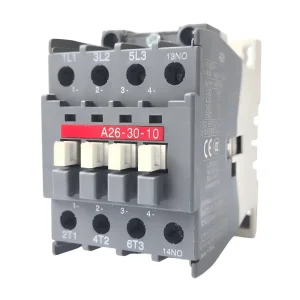
China A9~300 Series AC Contactors 50/60Hz 380V
Explore Specifications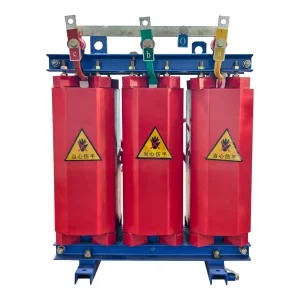
Wholesale China SC(B)11 10kV Resin-Insulated Dry Transformer
Explore Specifications