Certified Power Transformers, Switchgear & Substation Units
Precision-tested heavy electrical assemblies and components fully compliant with national and international power grid specifications.
Global LV Distribution Cabinet Commercial & Engineering Reality
Low-voltage (LV) distribution cabinets serve as the vital neurological core of electrical power distribution networks up to 1000V AC. Driven by hyperscale digital transformation, electrification, and renewable infrastructure, the modern LV switchgear market demands unprecedented standards of safety, modularity, and operational continuity.
Hyperscale Data & Power Density
Artificial Intelligence (AI) compute clusters and Tier III/IV data center facilities demand continuous baseload power with thermal load management exceeding 4000A to 6300A per main incomer. Distribution cabinets must provide fault containment, zero-downtime maintenance, and sub-cycle selective tripping to prevent cascading upstream feeder trip-outs.
Continuous 24/7 RedundancyRenewable Infeed & Harmonics
Utility solar arrays, Battery Energy Storage Systems (BESS), and distributed EV fast-charging corridors introduce bidirectional energy flow, harmonic distortion (THD), and high ambient heat dissipation challenges. LV cabinets must incorporate de-rated copper busbars, active harmonic filters, and reinforced dielectric isolation to handle variable transient profiles.
IEC 61439 Derating ArchitectureArc Flash Mitigation & Safety
Modern engineering procurement specifications (EPC standards) mandate internal arc classification according to IEC/TR 61641 criteria 1 to 7. Industrial operations no longer tolerate open-bus risk; they require fully compartmentalized Form 3b or Form 4b topologies that protect human operators even during extreme short-circuit fault conditions up to 100kA.
Operator Safety VerificationThe Yueqing Electrical Cluster: Manufacturing Precision & Speed
Located in Yueqing, Zhejiang Province—the undisputed global capital of low-to-medium voltage electrical engineering—our manufacturing infrastructure leverages a comprehensive industrial supply chain ecosystem that delivers unmatched capital efficiency, engineering precision, and accelerated project turnarounds.
Automated CNC Enclosure Lines
Enclosure structural integrity begins with multi-axis automated fiber-laser cutting stations and CNC turret punch presses. Utilizing 2.0mm to 2.5mm high-grade cold-rolled aluzinc sheets, panels are formed with robotic bend cells maintaining +/-0.2mm precision tolerances.
Tolerance ±0.2mmE-Cu 99.99% Busbar Metallurgy
Main and distribution busbars are produced from high-conductivity electrolytic oxygen-free copper (Cu-ETP/CW004A). High-speed CNC bending, punching, and automated electroplating (tinning or silvering) prevent oxidation, guarantee thermal stability, and resist dynamic short-circuit electromagnetic stresses.
99.99% Electrolytic Copper30–45% Capital Expenditure Savings
By consolidating raw material procurement, switchgear molding, contactor assembly, secondary wiring, and testing within a localized 15-kilometer supplier radius, overheads are systematically minimized. Global EPCs obtain Western-tier reliability at an optimized total cost of ownership.
TCO OptimizationAgile Lead Times: 4–6 Weeks
While conventional Western OEMs experience lead times stretching from 24 to 36 weeks for low-voltage switchboards, Yueqing’s agile modular supply chain enables customized Form 4 drawout cabinets to complete engineering approval, fabrication, and Factory Acceptance Testing (FAT) within 4 to 6 weeks.
Accelerated CommissioningIndustrial Cabinet Architectures: MNS, GCS, GCK, GGD & XL-21
Low-voltage distribution cabinets must be purpose-engineered to align precisely with site duty cycles, operator maintenance requirements, and ambient environmental conditions. Below are the definitive technical specifications of our industry standard architectures.
| Cabinet Topology | Structural Type | Rated Current (In) | Short-Circuit (Icw) | Form of Separation | Target Applications | Standard Compliance |
|---|---|---|---|---|---|---|
| MNS 3.0 Series | Modular Withdrawable (Drawout) | Up to 6300A | 80kA / 100kA (1s) | Form 3b / Form 4b | Power Plants, Hyperscale Data Centers, Heavy Metallurgy | IEC 61439-1/2 |
| GCS Series | Modular Withdrawable (Drawout) | Up to 4000A | 50kA / 80kA (1s) | Form 3a / Form 4a | Petrochemical Complexes, Pulp & Paper, High-Rise Substations | IEC 60439 / GB 7251 |
| GCK Series | Modular Withdrawable (Drawout) | Up to 3150A | 50kA / 65kA (1s) | Form 3b | Industrial Manufacturing, Mining, Water Treatment Infrastructure | IEC 61439-2 |
| GGD Series | Fixed Installation (Cubicle) | Up to 3150A | 30kA / 50kA (1s) | Form 1 / Form 2b | Municipal Grids, Transformer Sub-distribution, Civil Projects | IEC 61439 / GB 7251 |
| XL-21 Series | Wall-Mounted / Floor Power Box | Up to 630A | 15kA / 30kA (1s) | Form 1 / Form 2 | Secondary Motor Control, Building HVAC, Workshop Machine Tools | IEC 60947 / GB 7251 |
Form 2b Internal Isolation
Separation of the main busbars from functional units (circuit breakers, relays). Terminals are external to functional unit compartments. Ideal for non-critical industrial distribution where periodic complete de-energization during maintenance is permissible.
Form 3b Internal Isolation
Busbars are physically separated from functional units, and all functional units are individually partitioned from one another. Outgoing cable connection terminals are separated from the units, enhancing protection against collateral arc flash escalation.
Form 4b Complete Isolation
The pinnacle of switchgear safety: Busbars are separated from functional units; functional units are isolated from each other; and cable termination points for each functional unit are enclosed in their own dedicated, segregated compartments. Live drawer changeouts occur safely without interrupting neighboring feeds.
Application Scenarios Across Critical Global Industries
Engineered to perform in challenging environments ranging from tropical coastal humidity to corrosive chemical processing and mission-critical server arrays.
1. Hyperscale Data Centers & Co-location
Configured with dual-redundant (2N) incoming feeds, static transfer switches (STS), and integrated branch circuit monitoring systems (BCMS). High-efficiency copper bus ducts link directly with MNS drawout cabinets to guarantee uninterruptible power distribution to IT server rack rows with zero harmonic heating failures.
Availability 99.999%2. Solar Photovoltaic & BESS Step-Up
Coupled with central string inverters or 1500V DC-to-AC power conversion systems (PCS). Our low-voltage AC collector cabinets handle high continuous thermal ambient conditions up to 55°C, feature specialized anti-condensation heaters, and incorporate Class C lightning and transient surge protective devices (SPD).
55°C De-rated Operation3. Petrochemical, Oil & Gas Refineries
Demanding IP54/IP55 sealed enclosures engineered with 2.5mm aluzinc-coated steel, marine-grade polyurethane epoxy coatings, and Form 4b drawout motor control center (MCC) designs. Units withstand corrosive sulfurous environments while ensuring safe isolation during hazardous gas plant operations.
C5-M Marine Coating4. Deep Mining & Heavy Metallurgical Mills
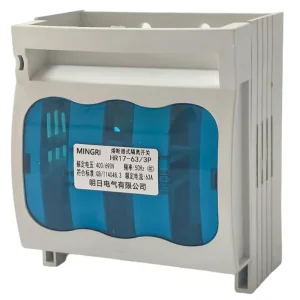
Engineered with high mechanical shock absorption, anti-vibration rubber mounts, and heavy-duty HR3 or HR17 fused switches. Capable of withstanding repetitive heavy motor starting surges, dust ingress, and supply harmonic distortion typical of electric arc furnaces and high-tonnage mining conveyor networks.
Vibration Proof & Dust-Sealed5. Commercial High-Rise & Healthcare Facilities
Integrating dual-source Automatic Transfer Switching (ATS), acoustic sound-dampening baffles, and Type 2 short-circuit coordination. Cabinets guarantee smooth transfer to backup diesel generator sets during municipal blackouts, ensuring uncompromised life-safety and surgical operating room power continuity.
Type 2 Coordination6. Municipal Wastewater & Desalination Plants
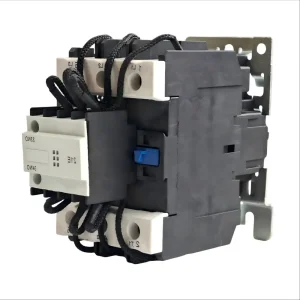
Equipped with variable frequency drive (VFD) bypass units, automatic power factor correction (APFC) capacitor banks (CJ19 series), and tropicalized conformal-coated printed circuit boards. Provides continuous protection against saline humidity and cyclic submersible pump load demands.
Conformal Coating ProtectedTechnological Innovation: The Intelligent Digital LV Cabinet
Modern low-voltage cabinets have evolved from passive mechanical enclosures into highly digitized, IoT-enabled power distribution nodes equipped with automated condition monitoring, edge computing, and real-time cloud diagnostic telemetry.
Fiber-Optic Arc Flash Sensors
Traditional air circuit breakers take between 30 to 60 milliseconds to trip under severe short-circuit faults. Our intelligent cabinets feature distributed point-sensor fiber-optic loops that detect localized light radiation within 1 millisecond, sending a tripping command that isolates the upstream incomer in under 5 milliseconds—mitigating catastrophic arc blast damage.
< 5ms Total Quench TimePredictive Wireless Busbar Thermography
Thermal loosening at bolted busbar joints is the leading cause of internal electrical fires. We embed passive SAW (Surface Acoustic Wave) or micro-power RF thermal sensors directly onto joint intersections. Continuous 24/7 temperature telemetry detects micro-deviations before insulation breakdown occurs, eliminating manual thermal imaging rounds.
Continuous Thermal TelemetryStandard Protocols: Modbus, Profinet & IEC 61850
Seamless edge communication modules bridge our LV cabinets to SCADA, DCS, and cloud energy management software (EMS). Fully compatible with native Modbus TCP/IP, Ethernet/IP, Profinet, and substation automation protocol IEC 61850 MMS/GOOSE for real-time harmonic, current, power factor, and breaker cycle logging.
SCADA & IEC 61850 InteroperableInternational Procurement & Technical RFP Specification Guide
When procuring LV distribution cabinets from global manufacturers, electrical consultants and procurement officers must enforce rigorous type-test verification and explicit architectural criteria to prevent project delays and contractual non-compliance.
1. Single-Line Diagram (SLD)
Supply comprehensive electrical single-line diagrams showing main incomer ratings, transformer impedance (Z%), transfer switches, branch feeder ratings, prospective fault current (Isc), and metering/CT/PT accuracy classes.
2. Type-Test Certification
Demand accredited type-test certificates (DEKRA, KEMA, ASTA, or CNAS) validating all 13 design verifications under IEC 61439-1/2, specifically temperature rise limits (Clause 10.10) and short-circuit withstand (Clause 10.11).
3. Environmental Rating
Specify ambient temperature profiles, altitude derating (>1000m requires insulation coordination), seismic acceleration parameters, and mechanical enclosure ratings (e.g., IP31 for clean indoor electrical rooms up to IP55 for wash-down zones).
4. FAT & SAT Protocol
Mandate rigorous Factory Acceptance Testing (FAT), including 2.5kV power frequency withstand, insulation resistance (>100MΩ), mechanical drawer interlock tests, and primary/secondary current injection testing prior to container dispatch.
Frequently Asked Technical & Engineering Questions
Authoritative answers to critical engineering, manufacturing, and international procurement inquiries regarding low-voltage distribution assemblies.
What is the structural difference between fixed-type (GGD) and withdrawable-type (MNS/GCS) cabinets?
Fixed-type cabinets (like the standard GGD series) mount circuit breakers, disconnect switches, and contactors directly to stationary internal chassis brackets. Maintenance requires de-energizing the main section or the entire switchboard. In contrast, withdrawable-type assemblies (such as MNS 3.0, GCS, and GCK) arrange functional units into standardized modular plug-in drawers equipped with high-conductivity silver-plated tulip isolating contacts. Drawers can be swiftly extracted, replaced, or isolated into 'Test', 'Disconnected', or 'Connected' mechanical positions in under 60 seconds without de-energizing the main busbar, ensuring near-zero downtime for process industries.
How does IEC 61439-1/2 differ from legacy IEC 60439 standards for low-voltage switchgear?
Legacy IEC 60439 categorized assemblies vaguely as TTA (Type-Tested Assemblies) or PTTA (Partially Type-Tested Assemblies), allowing manufacturers to claim compliance via partial calculation without mandatory physical laboratory validation. The modern IEC 61439 standard completely obsoleted the TTA/PTTA concept, introducing strict "Design Verification" across 13 exhaustive parameters. It explicitly mandates laboratory verification of temperature-rise limits, dielectric strength, short-circuit withstand, continuous earth continuity, and internal arc fault containment, holding the assembly manufacturer strictly liable for the verified design rules.
Why is Form 4b internal separation mandatory in heavy process industries and data centers?
Form 4b segregation provides total physical isolation: Main busbars are separated from functional units; individual functional units are isolated from each other; and most critically, the external cable termination lugs for each functional unit are completely segregated within dedicated compartments. This means an electrician or technician can terminate or inspect power cables for a newly added branch circuit while adjacent circuits remain energized under full 400V/690V load, preventing accidental tool contact, eliminating cross-phase short circuits, and preventing flashover migration.
How do environmental factors such as altitude and temperature impact LV cabinet rating?
Standard switchgear ratings are calibrated for an ambient operating temperature of ≤40°C (with a 24-hour average of ≤35°C) and an altitude below 1000 meters above sea level. Operating at altitudes above 1000m reduces air density, diminishing convective thermal heat dissipation and reducing the dielectric breakdown strength of air gaps. Consequently, cabinets installed at 2000m or 3000m require derating factors (typically 0.90 to 0.82 for rated operational voltage and current) or the installation of oversized clearances, enhanced creepage distances, and forced ventilation systems.
What factory quality acceptance tests (FAT) are executed prior to international export?
Every fabricated switchgear section undergoes extensive routine verification in accordance with IEC 61439-1 Section 11: 1) Visual mechanical inspection of frame tolerances, busbar clearances, and IP sealings; 2) Mechanical interlocking and drawer insertion cycling (minimum 200 cycles); 3) Power frequency dielectric testing (typically 2.5kV AC for 1 minute between phases and to ground); 4) Insulation resistance measurement (>100 Megaohms at 1000V DC); 5) Protective circuit continuity verification (<0.1 ohm resistance to main ground bus); and 6) Secondary wiring schematic logic check, relay operational simulation, and communication protocol verification.
Can your factory customize cabinets to accommodate tier-one international breaker brands?
Yes. Our structural framing systems (featuring standard 20mm or 25mm modular pitch holes) and custom copper busbar machining lines are engineered to seamlessly integrate international low-voltage switchgear brands, including Schneider Electric (Masterpact MTZ, Compact NSX), ABB (Emax 2, Tmax XT), Siemens (Sentron 3WL/3VA), and Mitsubishi Electric, as well as premium domestic switchgear lines. All busbar connection risers, flex-bars, and terminal spreader adapters are custom CNC-machined according to the specific manufacturer's terminal pitch.
What surface treatments protect the steel enclosure against industrial corrosion?
Our standard enclosure frames are constructed from high-tensile aluzinc-coated steel sheet (hot-dip zinc-aluminum-silicon alloy), offering exceptional sacrificial galvanic resistance. Exterior panels and doors undergo a 9-stage pre-treatment wash (degreasing, phosphating, deionized rinse) followed by automated electrostatic deposition of thermosetting polyester epoxy powder coat (80–120 microns dry film thickness). For aggressive chemical or coastal installations, we provide C4 and C5-M marine epoxy finishing capable of enduring over 1,000 hours of continuous salt-spray testing according to ASTM B117 / ISO 9227.
How are busbar short-circuit electromagnetic stresses calculated and mitigated?
Under short-circuit faults (e.g., 50kA or 80kA peak values), violent electromagnetic forces (Lorentz forces) act between parallel conductors according to Biot-Savart calculations. To prevent mechanical deformation, our busbar support structures are cast from high-strength, halogen-free, track-resistant SMC (Sheet Molding Compound) with ultra-high mechanical bending resistance (≥120 MPa). Conductor support spans and mechanical bracing intervals are strictly validated using finite element analysis (FEA) and verified by dynamic peak withstand (Ipk) physical laboratory testing.
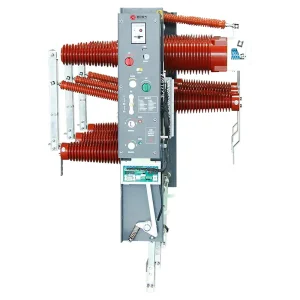
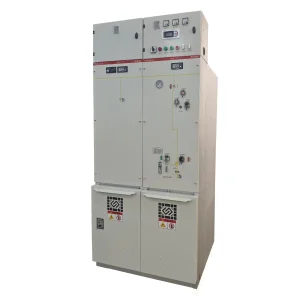
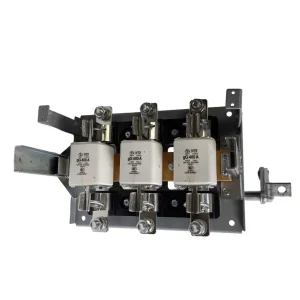
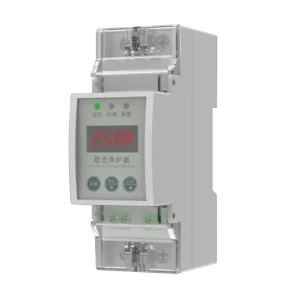
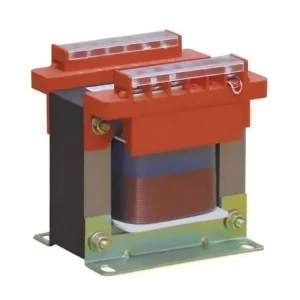
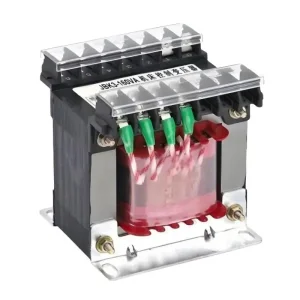
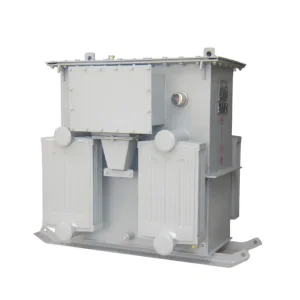
Heavy-Duty Isolation, Ring Main Units & Industrial Transformers
Precision-engineered power components designed for seamless integration within medium-to-low voltage switchboard architectures and industrial electrical substations.
Accelerate Your Electrical Infrastructure Procurement
Submit your single-line diagram (SLD), general arrangement requirements, and technical specifications. Our senior electrical switchboard engineering team will deliver an optimized quotation, component bill of materials (BOM), and CAD panel layout within 24 business hours.