Integrated E-House Protection & Switching Assemblies
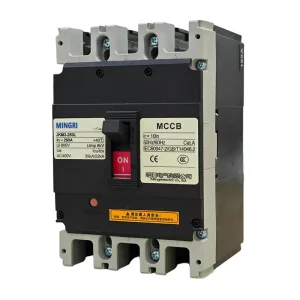
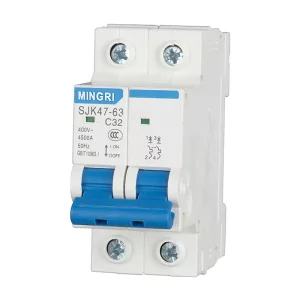
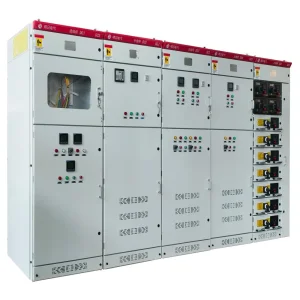
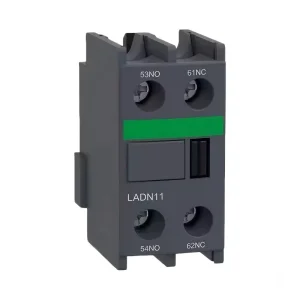
Factory-engineered modular components, molded case breakers, switchgear panels, and auxiliary systems optimized for E-House containerized architectures.
Understanding Modern E-House Architecture: The Paradigm Shift from Stick-Built to Modular Power
An Electrical House (E-House) is a custom-engineered, prefabricated, walk-in or non-walk-in outdoor metal enclosure designed to house mission-critical electrical power distribution assemblies, motor control centers (MCCs), medium-voltage (MV) and low-voltage (LV) switchgear, auxiliary power systems, variable frequency drives (VFDs), and supervisory control and data acquisition (SCADA) systems. Historically, industrial substations were built using traditional on-site civil works ("stick-built" brick-and-mortar buildings). However, stringent execution schedules, harsh installation environments, high regional labor costs, and severe weather bottlenecks have rendered conventional civil construction increasingly unviable for global engineering, procurement, and construction (EPC) contractors.
A factory-integrated E-House consolidates structural engineering, thermal simulation, internal power apparatus layout, busbar routing, protection grading, and Factory Acceptance Testing (FAT) under a single controlled roof. By replacing distributed on-site civil labor with parallel factory automation, project developers achieve dramatic schedule compression, reducing commissioning windows by up to 50% while mitigating financial risks associated with field-welding, on-site wiring faults, and adverse environmental exposure.
Harsh Environment Enclosures
Engineered with self-supporting corrugated or sandwich steel construction, heavy structural base frames for crane or multi-axle transport, and structural integrity certified for high seismic zones (Zone 4) and wind speeds up to 250 km/h. Enclosures feature C3 through C5-M marine anti-corrosion coating systems.
HVAC & Fire Deflagration
Integrated precision HVAC systems provide positive room pressurization to prevent hazardous dust or flammable gas ingress. Designed with redundant HVAC (N+1), automated fire gas suppression (Novec 1230 / FM-200), thermal smoke dampers, and internal arc blast deflagration chimneys compliant with IEC 62271-200 IAC AFLR.
Digital SCADA & IoT Monitoring
Complete convergence of physical switchgear with digital intelligence. Outfitted with IEC 61850 substation bus architectures, optical fiber ring top-level networks, Modbus/Profibus fieldbus connections, real-time wireless contact thermal sensing, and remote automated diagnostic telemetry.
The Yueqing Electrical Cluster: Supply Chain Concentration & Lean Manufacturing Agility
When international EPC contractors, regional power utilities, and industrial developers evaluate an E-House manufacturing partner, procurement success relies fundamentally on two pillars: electrical component pedigree and integrated structural execution. Yueqing, Zhejiang—widely recognized as the global epicenter of low- and medium-voltage electrical manufacturing—presents a hyper-concentrated industrial ecosystem. This geographical density provides Chinese manufacturers like Mingri Electric with unprecedented competitive advantages in raw material availability, specialized metallurgical fabrication, component engineering, and testing velocity.
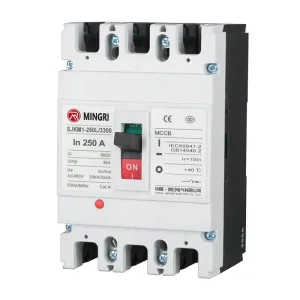
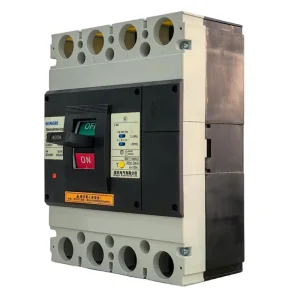
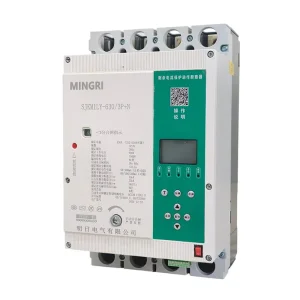
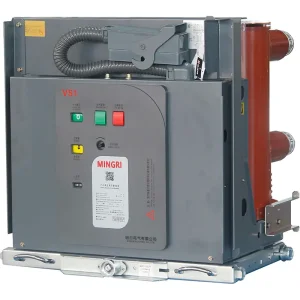
Unlike Western equipment aggregators that must procure sheet metal enclosures from third-party fabricators, breakers from independent component houses, and switchgear from secondary tier-1 vendors, our factory-direct model unites electrical core component production with heavy container fabrication. Components such as withdrawable vacuum circuit breakers (VS1 series), molded case circuit breakers (SJKM3/SJKM1), low-voltage distribution panels (GCS/MNS/GCK), and SF6-insulated or eco-gas ring main units (RM6, SafeRing, SM6) are manufactured, assembled, and validated in-house. This direct engineering integration eliminates inter-company margin stacking, reduces logistical delays by weeks, and guarantees that copper busbar layouts, heat dissipation paths, and secondary terminal blocks match mechanical container tolerances with zero field retrofit necessity.
| Evaluation Parameters | Traditional On-Site Civil Substation | Western Regional Integrator | Mingri Electric Direct E-House |
|---|---|---|---|
| Lead Time (Design to Delivery) | 14 to 22 Months | 9 to 14 Months | 14 to 20 Weeks (Fast-Track) |
| Capital Expenditure (CAPEX) | High (Extreme civil labor & contingency costs) | Very High (High labor costs & margin markup) | Optimized (30–45% Direct Cost Savings) |
| Testing & Commissioning | Fragmented on-site testing subject to weather | Factory testing of aggregated 3rd-party gear | Full-Load Integrated Factory Acceptance Test (FAT) |
| Quality Control Standard | Variable by regional contractor workmanship | IEC/IEEE compliance with multiple supplier splits | Unified ISO 9001 / ISO 14001 / ISO 45001 Ecosystem |
| Footprint & Weight Efficiency | Bulky concrete structure; non-relocatable | Standard shipping container configurations | Custom CAD-Engineered High-Strength Skid or Modular Pod |
Industrial Applications: Where Engineered E-Houses Deliver Uncompromising Value
From extreme desert heat to freezing offshore mining operations, modular E-Houses serve as self-contained nerve centers across critical electrical infrastructures.
Renewable Utility Sub-Stations (Solar & BESS)
Photovoltaic power plants and battery energy storage systems (BESS) require turnkey step-up substations that integrate MV switchgear (such as our KYN28 or XGN15 RMUs), dry-type step-up transformers, inverter interfacing switchboards, and smart power plant controllers (PPC). Integrated E-Houses minimize civil site footprints, accelerate grid interconnection timelines, and withstand extreme solar irradiation.
Mining, Smelting & Metallurgy Operations
Open-pit mines and processing facilities operate in harsh, isolated topographies laden with airborne abrasive particulate matter. Skid-mounted, relocatable E-Houses housing heavy GCS low-voltage withdrawable MCC panels and 12–24 kV vacuum breakers provide reliable, dust-sealed power. The heavy structural skid base enables fast relocation as excavation pits progress.
Oil & Gas / Petrochemical Hazardous Zones
Refineries, LNG transfer terminals, and offshore platforms require strict adherence to NFPA 496 positive-pressure purge systems and explosion-proof containment. Our custom petrochemical E-Houses feature gastight architectural seals, blast-rated construction (up to 0.5 bar blast overpressure), fire and gas monitoring matrix systems, and complete segregation of control electronics from heavy buswork.
Rail Transit, Traction & Modern Utilities
Electrified railways, high-speed rail feeder nodes, and modern urban mass transit substations demand compact switchgear with ultra-fast circuit protection. Utilizing armored withdrawable metal-enclosed switchgear, DC traction switchboards, and auto-reclosing transfer systems ensures high trackside operational uptime and seamless grid synchronization.
Procurement Engineering & International Standards Compliance
For engineering consulting firms and utility procurement managers, equipment compliance is non-negotiable. An E-House is an intricately coupled multidisciplinary system where structural building engineering, HVAC thermodynamics, electro-mechanical design, and transient electromagnetic compatibility must function harmoniously.
Mingri Electric structures every E-House and prefabricated substation build in accordance with rigorous international benchmark standards. Our switchgear assemblies, gas-insulated units, and low-voltage assemblies are rigorously type-tested by accredited laboratories:
Medium Voltage Switchgear
IEC 62271-200 / IEEE C37.20.2: Metal-enclosed switchgear type testing covering temperature rise limits at rated continuous currents, short-time and peak withstand current tests, dielectric insulation withstand (power frequency and lightning impulse BIL up to 125 kV), and Internal Arc Classification (IAC AFLR) verifying operator safety under internal fault conditions.
Low Voltage Assemblies
IEC 61439-1 / IEC 61439-2: Verification of low-voltage switchgear and controlgear assemblies, confirming clearances and creepage distances, short-circuit withstand rating of busbars up to 100 kA, protection against electric shock, and mechanical operation verification of withdrawable functional units.
Prefabricated Substations
IEC 62271-202: High-voltage/low-voltage prefabricated substation standard verifying enclosure class, internal temperature class, sound power level emissions, internal arc containment, and mechanical impact resistance (IK10 enclosure rating).
Enclosure & Structural Building
AISC & EN 1090 Structural Standards: Finite element analysis (FEA) dynamic lifting simulation, roof live load calculations, seismic zone structural modeling according to IBC (International Building Code) and Eurocode 8, and environmental ingress testing verifying IP54 to IP65 sealing per IEC 60529.
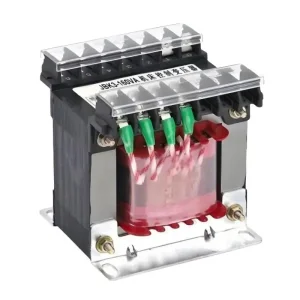
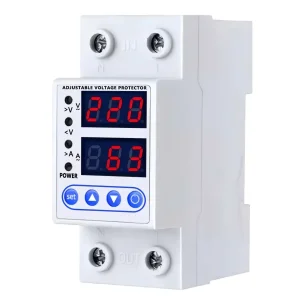
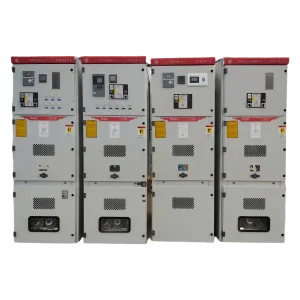
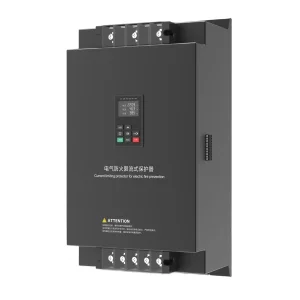
Medium/High Voltage Switchgear, Transformers & Core Protection
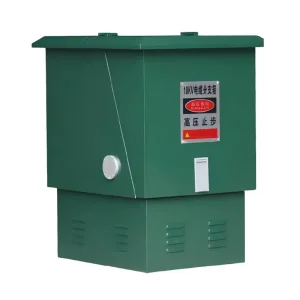
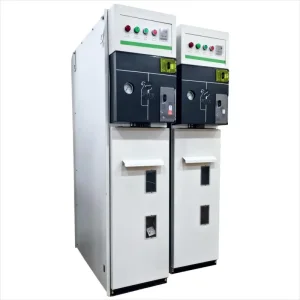
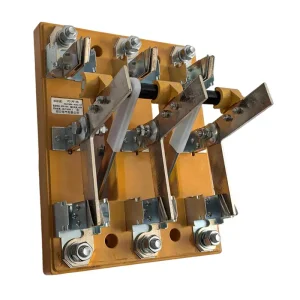
Complete your substation architecture with certified medium-voltage switchgear, control transformers, vacuum breakers, and secondary safety devices.
Future Technological Trajectories in E-House Engineering
The global electrical engineering landscape is undergoing rapid transformation, propelled by the urgent imperative to decarbonize, the phase-out of fluorinated greenhouse gases, and the integration of artificial intelligence into asset performance management. Future-proof E-House designs must proactively integrate these emerging market vectors:
SF6-Free Eco-Gas & Solid Insulation
With global climate mandates strictly regulating sulfur hexafluoride (SF6) due to its high Global Warming Potential (GWP of 23,500), the next generation of Ring Main Units and MV switchgear utilizes dry air, nitrogen, or specialized clean-air matrices combined with vacuum interruption. Our eco-gas HBXGN-12(F) and solid-insulated GXGN-12 units provide complete green compliance without sacrificing compact dimensions.
AI Predictive Maintenance & Digital Twins
Modern E-Houses act as smart digital nodes rather than passive enclosures. Built-in infrared non-contact thermal sensors monitor busbar joints, acoustic partial discharge sensors trace dielectric insulation breakdown in real time, and machine-learning edge processors predict breaker contact wear cycles before unplanned outages occur.
Modular Skid-Mount & Multi-Split Pods
As megawatt capacities for green hydrogen electrolyzers and hyperscale AI data centers surpass 100 MW, singular container architectures give way to modular multi-split E-House complexes. These multi-pod systems can be coupled on-site via quick-connect bus ducts and optical interlinks, providing unlimited scalable power distribution.
Frequently Asked Questions (FAQ) for Engineering & Procurement
Detailed technical answers addressing project feasibility, international compliance, customization capabilities, and logistics management.
1. What core documentation is required from an EPC contractor to initiate a custom E-House quotation?
To produce an exact technical proposal, single-line diagrams (SLD), general arrangement footprint constraints, project environmental criteria (min/max ambient temperature, relative humidity, altitude above sea level, seismic rating, coastal proximity for corrosion category), MV and LV fault withstand levels (kA and duration), required ingress protection class (IP rating), and auxiliary automation requirements (SCADA, DC battery bank backup, fire detection) are necessary. Our engineering team translates these specifications into complete 3D CAD layouts and bill-of-materials within days.
2. How does an integrated E-House manufacturer handle global thermal dissipation and HVAC loads?
We execute detailed Computational Fluid Dynamics (CFD) and thermodynamic simulations during the structural design phase. Every transformer core loss, switchgear coil and busbar heat loss, and inverter thermal signature is quantified in BTU/hr or kW. Based on this thermal envelope and peak ambient summer temperatures (up to +55°C in desert installations), we engineer redundant, duty/standby dual-circuit HVAC systems with motorized air dampers, positive air pressurization, and dehumidification cycles to prevent internal condensation.
3. What types of medium-voltage switchgear can be integrated into your prefabricated substations?
Mingri Electric specializes in integrating withdrawable armored metal-enclosed switchgear (such as our KYN28-12 and KYN28-24 kV series), high-voltage withdrawable vacuum circuit breakers (VS1-12/24), gas-insulated ring network switchgear (RM6, SafeRing-12/40.5), air-insulated modular units (SM6), and environmentally friendly solid-insulated switchgear (GXGN-12). All medium-voltage assemblies are selected and arranged to preserve safe arc-flash blast deflection channels and maintenance clearance per IEC standards.
4. Can E-Houses be designed for harsh marine or high-salinity offshore environments?
Yes. For offshore oil platforms, near-shore wind hubs, or port container cranes, we utilize heavy structural steel frames with ISO 12944 C5-M (Marine High Durability) protective coating regimes. This includes blast cleaning to Sa 2.5, zinc-rich epoxy primers, high-build epoxy intermediate coats, and polyurethane topcoats offering a total dry film thickness (DFT) exceeding 320 μm. Hardware, louvers, and fasteners are upgraded to marine-grade 316L stainless steel, and HVAC units receive Blygold or epoxy micro-channel anti-corrosive coil treatments.
5. How is Factory Acceptance Testing (FAT) conducted for overseas clients?
Prior to shipment, 100% of the internal equipment undergoes comprehensive multi-point FAT. This includes power frequency dielectric withstand tests, secondary wiring continuity and insulation resistance tests, automated relay trip testing via secondary injection, interlock functional validation, HVAC run tests under simulated heat load, and fire damper release sequencing. Overseas clients and third-party inspection agencies (e.g., SGS, TÜV, Bureau Veritas) are welcomed at our Yueqing production line, or can join high-definition remote interactive video FAT sessions with calibrated digital test instrumentation.
6. What are the shipping and logistical limitations for oversized modular E-Houses?
While compact substations fit standard 20ft or 40ft High-Cube shipping container dimensions for rapid maritime transport, larger walk-in E-Houses are custom engineered in modular split sections (transportable shipping splits). Structural lifting lugs, center-of-gravity labeling, and heavy-duty corner castings allow units to be shipped on Breakbulk or Flat-Rack vessels, and transported via multi-axle hydraulic trailers. On site, modular sections are positioned, weather-sealed with elastomeric gaskets, and interconnected via pre-engineered internal bridge wiring harnesses and busbar links.