Engineered Grid Infrastructure & Control Units
High-performance modular distribution systems engineered alongside our low-voltage contactor lines to build resilient, smart medium- and low-voltage industrial power facilities.
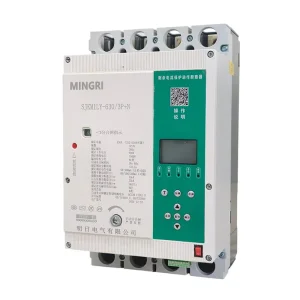
China China SJKM1LY Auto Reclosing Molded Case Circuit Breaker - Reliable Suppliers & Factory for Intelligent Protection Solutions Suppliers, Supplier
Explore Specifications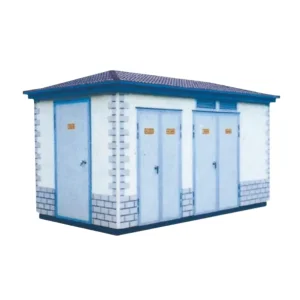
High-Quality YB□12-0.4 Series Prefabricated Substation (European Type Substation) Factory, Company
Explore Specifications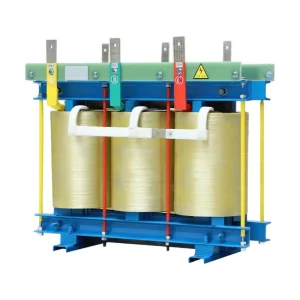
High-Quality China Suppliers Factory SG(B)10 Series 10kV Non-encapsulated Coil Dry Type Power Transformer for Reliable Power Supply Factories, Companies
Explore Specifications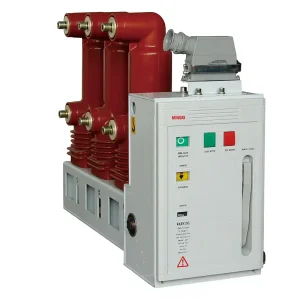
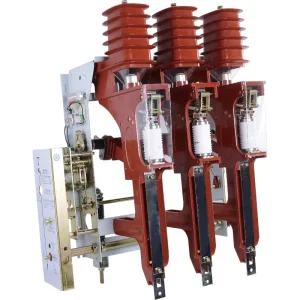
ODM China VSB-12 Indoor High-Voltage Vacuum Circuit Breaker Suppliers - Reliable Factory for 12kV Power Systems Suppliers, Factories
Explore Specifications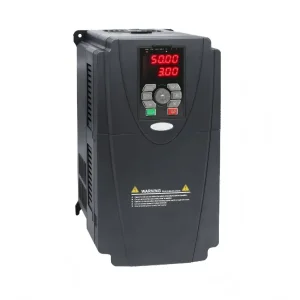
ODM MC9001 Series High Performance Frequency Converter Supplier, Manufacturer
Explore Specifications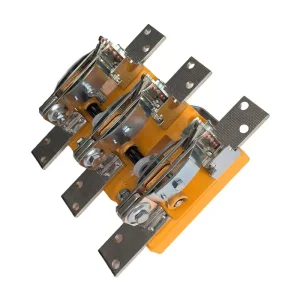
China HD13BX Single Throw Rotary Knife Switch - 100A-2000A, Reliable Circuit Isolation, China Suppliers & Factory Factory, Companies
Explore Specifications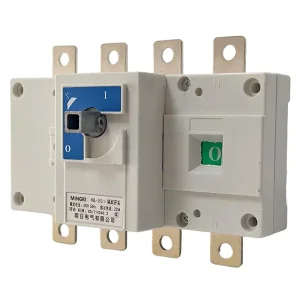
Wholesale HGL Load Isolation Switch 63A-3150A - Reliable China Suppliers & Factory for Industrial Power Solutions Suppliers, Company
Explore Specifications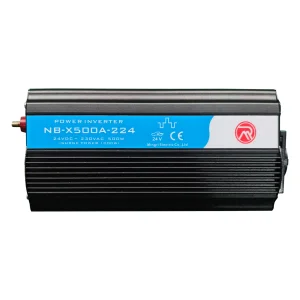
China 500W DC to AC Power Inverter X500 with EU Socket - China Suppliers & Factory for Reliable Power Solutions Manufacturer, Company
Explore SpecificationsExecutive Engineering Overview: A9~300 Industrial Contactor Architecture
In modern electrical distribution and motor control infrastructure, contactors serve as the electro-mechanical heart of frequent switching circuits. The A9 through A300 contactor family represents a standardized, heavy-duty line of 3-pole and 4-pole switching devices spanning nominal current thresholds from 9 Amperes (4 kW at 400V AC-3) up to 300 Amperes (160 kW at 400V AC-3), with resistive AC-1 ratings extending up to 500 Amperes. Designed primarily to govern three-phase induction motors, bypass variable frequency drives (VFDs), switch capacitor banks, and isolate resistive heating batteries, this series establishes an uncompromising baseline for operational reliability under severe switching duties.
Unlike light-duty commercial relays, industrial-grade A9~A300 contactors must withstand extreme electromagnetic forces, high ambient thermal stress, and acute transient overvoltages during inductive interruption. The kinematic mechanics rely on high-grade silicon steel laminations with precision shading rings (for standard AC coils) or solid-state electronic rectifying drivers that deliver vibration-free, hum-less magnetic hold down to 55% of nominal control supply voltage. By decoupling control voltage variations from main contact pressure, contemporary A9~300 platforms prevent premature contact micro-welding and eliminate catastrophic chatter induced by heavy motor starts on weak grid networks.
Arc extinction efficiency directly determines electrical lifespan. The A9~300 design uses custom-formulated Silver Tin Indium Oxide (AgSnO2In2O3) and Silver Nickel (AgNi) alloy tips brazed to electrolytic copper backing plates. Each pole chamber incorporates multi-plate de-ion arc chutes with ferromagnetic splitters that magnetically stretch, cool, and extinguish the electric arc within 8 to 12 milliseconds, drastically limiting thermal dissipation into the insulating housing.
Detailed Technical Parameters & Selection Matrix (A9 to A300)
Selecting the appropriate frame size requires precise alignment between the target utilization category (e.g., AC-1 non-inductive heating, AC-3 squirrel-cage motor starting and stopping, or AC-4 plug-braking and inching) and ambient installation deratings. Below is the comprehensive engineering selection baseline for the standard 50/60Hz product line.
| Model Code | Rated Current Ie (AC-3 400V) | Motor Power Pn (400V AC-3) | Thermal Current Ith (AC-1 40°C) | Electrical Life (AC-3 Ops) | Mechanical Life (Ops) | Terminal Connection Type | Standard Auxiliary Contacts |
|---|---|---|---|---|---|---|---|
| A9 | 9 A | 4.0 kW | 25 A | 1,500,000 | 10,000,000 | Screw Clamp / Faston | 1 NO or 1 NC |
| A12 | 12 A | 5.5 kW | 27 A | 1,500,000 | 10,000,000 | Screw Clamp / Faston | 1 NO or 1 NC |
| A16 | 17 A | 7.5 kW | 30 A | 1,300,000 | 10,000,000 | Screw Clamp M4 | 1 NO or 1 NC |
| A26 | 26 A | 11.0 kW | 45 A | 1,200,000 | 10,000,000 | Screw Clamp M4 | 1 NO or 1 NC |
| A30 | 32 A | 15.0 kW | 55 A | 1,200,000 | 10,000,000 | Box Lug / Screw | 1 NO + 1 NC |
| A40 | 40 A | 18.5 kW | 65 A | 1,000,000 | 10,000,000 | Box Lug / Screw M5 | 1 NO + 1 NC |
| A50 | 50 A | 22.0 kW | 100 A | 1,000,000 | 10,000,000 | Double Clamp Lug | 1 NO + 1 NC |
| A63 | 65 A | 30.0 kW | 115 A | 900,000 | 10,000,000 | Double Clamp Lug | 1 NO + 1 NC |
| A75 | 75 A | 37.0 kW | 125 A | 900,000 | 10,000,000 | Bolted Box Lug M6 | 1 NO + 1 NC |
| A95 | 96 A | 45.0 kW | 145 A | 800,000 | 5,000,000 | Hexagonal Socket Lug | 2 NO + 2 NC |
| A110 | 110 A | 55.0 kW | 160 A | 800,000 | 5,000,000 | Flat Copper Bar M8 | 2 NO + 2 NC |
| A145 | 145 A | 75.0 kW | 250 A | 600,000 | 5,000,000 | Flat Copper Bar M8 | 2 NO + 2 NC |
| A185 | 185 A | 90.0 kW | 275 A | 600,000 | 5,000,000 | Flat Copper Bar M10 | 2 NO + 2 NC |
| A210 | 210 A | 110.0 kW | 350 A | 500,000 | 5,000,000 | Direct Busbar Bolt M10 | 2 NO + 2 NC |
| A260 | 260 A | 140.0 kW | 400 A | 500,000 | 5,000,000 | Direct Busbar Bolt M10 | 2 NO + 2 NC |
| A300 | 305 A | 160.0 kW | 500 A | 450,000 | 5,000,000 | Direct Busbar Bolt M12 | 2 NO + 2 NC |
Supply Chain Resilience: Why China Factory Automation Outperforms
Centering production in Yueqing, Zhejiang—the global capital of low-voltage electrical apparatus—gives our original equipment manufacturing ecosystem unmatched supply velocity, precision quality, and total cost leadership.
Complete Vertical Integration
Every critical tier is controlled in-house: from automated punching of electrical sheet steel cores and robotic high-vacuum silver-brazing of contacts, to multi-cavity injection molding of flame-retardant polyamide bodies (UL94 V-0). Eliminating multi-tier subcontractor markups provides direct 20% to 35% cost efficiencies over European-assembled equivalents.
Automated AOI & End-of-Line Testing
100% of manufactured contactors pass continuous computer-monitored testing benches verifying pick-up voltage (pull-in), drop-out threshold, coil current consumption, contact bounce time (<2 ms limit), and contact synchronization across all three phases. Automated Optical Inspection (AOI) prevents clearance errors and terminal misalignment.
Raw Material Sourcing Agility
Our strategic stockpiling of electrolytic oxygen-free copper (99.99%), refined silver ingots, and virgin engineering polymers guarantees production stability against global commodity shocks. While Western competitors grapple with 16 to 26-week lead times, our factory ships standard A9~300 configurations within 15 to 25 business days.
The Yueqing industrial manufacturing cluster provides unmatched clustering efficiency. Within a 10-kilometer radius, specialized tier-two facilities supply precision-machined springs, anti-corrosive zinc-nickel electroplating services, and automated stamping dies. This deep localized ecosystem enables our factory to prototype custom terminal expansions, alternative coil voltage designs (e.g., 24VDC, 48VAC, 110VAC, 220VAC, 380VAC, 415VAC, 690VAC), and customized auxiliary contact arrays in days rather than months.
Engineered Application Domains Across Global Industries
From extreme-temperature desert photovoltaic farms to high-vibration naval installations, the A9~300 series is engineered to deliver uninterrupted duty across challenging global sectors.
HVAC/R Chillers & Compressors
High starting torque and high locked rotor currents (LRA) demand contactors that endure frequent inrushes up to 6x full-load Amperes. Low-sound hum-free DC magnetic latches satisfy strict commercial noise regulations in hospitals, hotels, and enterprise data facilities.
Solar PV & BESS Step-Up
Integrated inside photovoltaic inverter cabinets and battery energy storage system (BESS) step-up transformer enclosures, A110 through A300 contactors safely manage AC grid-coupling, microgrid isolation, and emergency islanding under severe ambient desert temperatures up to 70°C.
Heavy Mining & Conveyors
Under severe dusty, humid, and vibrating conditions, our IP20 finger-safe terminal designs and optional shock-proof mechanical interlocks protect large ball mills, crushing plants, and continuous bucket conveyors from catastrophic motor cross-phase short circuits.
Intelligent MCC Panels
Fully compatible with withdrawable and fixed Motor Control Centers (MCC) such as MNS, GCS, and KYN28 low-voltage sections. Standardized DIN rail mounting up to A110 and direct backplate bolting from A145 to A300 accelerate panel builder shop-floor assembly.
Thermal Derating at Elevated Altitudes & High Ambiences
At installations higher than 2,000 meters above sea level (e.g., high-altitude mining sites in the Andes or Central Asia), reduced atmospheric density lowers air dielectric strength and convective cooling capacity. For the A9~300 series, when operated between 2,000m and 4,000m, standard engineering design applies a voltage derating factor of $K_u = 1 - (H - 2000)/10000$ and a current derating factor of $K_i = 1 - (H - 2000)/12500$, where $H$ is the elevation in meters. Our engineering team supplies factory-certified altitude adaptation kits with expanded creepage clearances upon request.
Technology Roadmap: Transitioning to Smart, Connected Contactors
The convergence of industrial IoT, predictive maintenance, and energy efficiency directives is fundamentally reshaping conventional electromechanical contactor architectures.
Electronic Wide-Band Coils
Legacy contactor stock required dozens of separate coil SKU configurations for 24V, 110V, 230V, and 400V AC/DC. Our next-generation electronic coils cover entire spans (such as 24V-60V AC/DC and 100V-250V AC/DC) within single SKUs. This cuts panel builder inventory holdings by 70% and lowers coil holding consumption to less than 2 Watts.
Predictive Contact Erosion Sensing
Integrating miniature Hall-effect current sensors and optical wear guides allows real-time telemetry over IO-Link or Modbus RTU. Factory operators monitor cumulative interrupted energy ($\sum I^2t$) and receive scheduled maintenance alerts well before contact material reaches minimum allowable thickness.
Hybrid Solid-State Zero-Crossing
Future A-Series variations combine anti-parallel thyristors (SCRs) with mechanical bypass contacts. By firing the thyristor during voltage zero-crossing and closing the mechanical bypass for continuous conduction, arcing is completely eliminated, boosting electrical service life beyond 10 million cycles for intensive inching applications.
Global Compliance & OEM/ODM Localization Support
Navigating divergent regional certification standards is critical for international machine builders and EPC contractors deploying switchgear across the Americas, Europe, Middle East, and Southeast Asia.
Full Multi-Standard Certification
Every frame size is manufactured under ISO 9001, ISO 14001, and ISO 45001 operating environments, fully certified for IEC/EN 60947-4-1, IEC/EN 60947-5-1, UL 508 / UL 60947-4-1, CE, CCC, and verified RoHS and REACH chemical compliance. Complete type-test reports from independent laboratories (TÜV Rheinland, KEMA, or DEKRA accredited) are readily available.
Turnkey OEM Private Labeling
We provide comprehensive white-label contract manufacturing for regional power brand owners. Tailored offerings include customized housing mold engravings, bespoke laser markings, private labeling of product packaging, distinct housing colorways, and tailored terminal configuration assemblies.
Engineering Dispatch & Technical Support
Our experienced multi-lingual application engineering desk assists panel builders in Type 2 Short-Circuit Coordination calculations with downstream MCCBs, thermal overloads, and semiconductor fuses, delivering verified cascading calculation sheets within 24 hours of inquiry.
Frequently Asked Technical Questions (FAQ)
Authoritative answers to core engineering dilemmas, installation challenges, and operational sizing queries for electrical engineering specifiers.
What is the structural difference between AC-3 and AC-4 duty ratings on A9~300 contactors?
AC-3 duty applies to standard starting, accelerating to full operational speed, and stopping squirrel-cage induction motors while drawing roughly 1x $I_e$ on break. AC-4 duty involves plugging, rapid reversing, and inching/jogging where the contactor breaks currents reaching 6x $I_e$ before the motor achieves steady rotor speed. For AC-4 duty, contactors must be severely derated—often requiring an upsize of 2 to 3 nominal frame steps (e.g., specifying an A50 or A75 contactor to handle an 11 kW motor under continuous jogging).
How does Type 1 versus Type 2 short-circuit coordination affect contactor selection?
Under IEC 60947-4-1, Type 1 Coordination allows that under short-circuit conditions, the contactor or starter may suffer internal damage and necessitate repair or replacement prior to re-commissioning. Type 2 Coordination mandates that after a short-circuit fault cleared by upstream protective circuit breakers or fuses, the contactor shall suffer no damage or alteration of calibration, allowing immediate restart (only light contact tacking that is easily separated is tolerated). Type 2 requires pairing verified contactor-fuse combinations with precise energy let-through ($I^2t$) limits.
Can A-Series contactor coils be controlled directly by PLC transistor outputs?
For smaller frames (A9 through A26) equipped with standard 24V DC low-consumption electronic coils (designated with micro-power control interfaces), the holding power is below 2.5 Watts, allowing direct switching via standard 24VDC 0.5A PLC digital output cards without intermediary interposing relays. For larger frames (A50 through A300), an interposing control relay or contactors with dual electronic driver inputs (logic-level trigger terminal) must be utilized to isolate high inrush pick-up currents.
What causes contact chatter, and how is it suppressed in your design?
Contact chatter occurs when coil voltage drops below holding thresholds, or when mechanical bounce upon closure induces an arc restrike. Our A9~300 units prevent this using precision copper shading rings pressed into the fixed laminated core (for classic AC coils) and tuned counter-acting buffer springs that absorb kinetic strike energy. For wide-band electronic coils, internal microprocessor control buffers brief voltage sags (down to 20ms at zero line volts) without releasing the armature.
When are surge suppressors (RC networks or varistors) required across contactor coils?
Surge suppressors should be mounted in any installation where contactor coils share a control circuit with microprocessors, PLCs, or sensitive communication networks. Disconnecting an inductive coil produces inductive kickback voltage spikes up to $V = -L(di/dt)$, frequently exceeding 2,000V. Varistors (MOVs) clamp overvoltage spikes to safe levels (under 2.5x nominal), while RC snubber blocks damp voltage rise times ($dv/dt$) to eliminate electromagnetic interference (EMI).
How does altitude above 2000m affect dielectric withstand and current ratings?
Air is both an electrical insulator and a cooling medium. Above 2000 meters, reduced air pressure diminishes thermal convective cooling and drops dielectric breakdown voltage. As a guideline under IEC 60947-1: at 3,000 meters, apply a 0.96 current derating and an 0.88 insulation voltage derating; at 4,000 meters, apply a 0.90 current derating and an 0.78 insulation voltage derating. For a 400V circuit at 3,000 meters, specify equipment designed for 690V/1000V rated insulation voltage ($U_i$).
Can the A9~300 series handle DC switching loads (DC-1, DC-3, DC-5)?
Yes, however, because direct current lacks a natural periodic zero-crossing point, extinguishing a DC arc is substantially more strenuous. When switching DC loads, the 3 or 4 poles of an A-Series contactor must be connected in series via external bus jumper links. Connecting three poles in series distributes the total arc voltage across three independent arc chambers, allowing breaking of 220VDC or 440VDC circuits reliably up to specified derated currents.
How should technicians evaluate contact wear and determine replacement intervals?
Periodic maintenance should inspect silver contact erosion and discoloration. Blackening or superficial pitting is normal and caused by arc carbonization—never file or sand contact tips, as removing the outer sintered AgSnO2 layer dramatically shortens contact life. Replacement is necessary when the silver alloy layer has eroded down to roughly 1/3 of its initial thickness, when mechanical over-travel has dropped below 50% of original factory clearance, or if excessive thermal stress has discolored the carrier copper base plate.
Complementary Medium & High Voltage Industrial Equipment
Complete high-efficiency substations, isolating switches, load-break switchgear, and safety equipment built to complete your enterprise power architecture from utility feed to control cabinet.
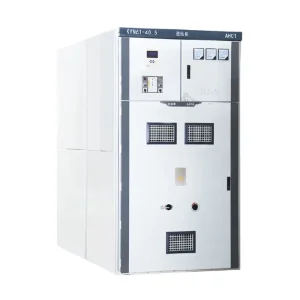
ODM KYN61-40.5 Armoured Moving Type AC Metal Enclosed Switchgear - High-Voltage Solution from China Suppliers and Factory Manufacturer, Factories
Explore Specifications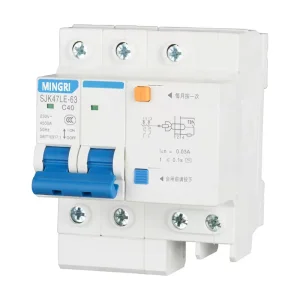
China SJK47LE-63 RCCB: Reliable Earth Leakage Protection - China Suppliers & Factory for 230V/400V AC Systems Manufacturers, Manufacturer
Explore Specifications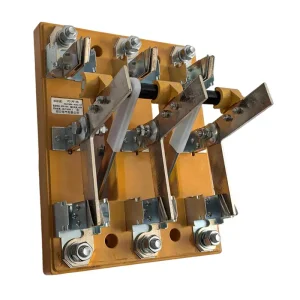
China HS13BX Double Throw Rotary Knife Disconnect Switch - Reliable Circuit Isolation from China Suppliers & Factory Factory, Company
Explore Specifications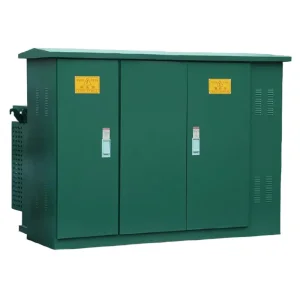
Wholesale ZGS11-12 Combined American Prefabricated Substation for Urban Power Suppliers, Manufacturer
Explore Specifications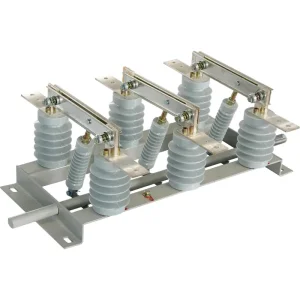
OEM China GN19-12 Indoor High-Voltage Isolating Switch Factory & Suppliers for Reliable Power Solutions Factories, Factory
Explore Specifications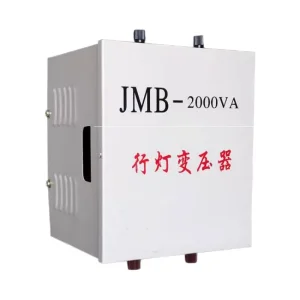
ODM JMB/BJZ/DG/BZ(DM) Series Lighting & Hand Lamp Control Transformer Suppliers, Company
Explore Specifications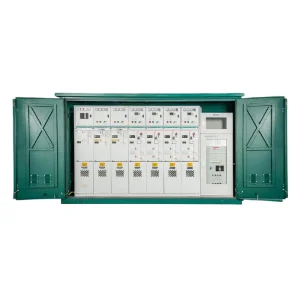
ODM DFW Outdoor High Voltage Cable Branch Box (Cabinet) Suppliers, Factories
Explore Specifications