High Voltage Switching & Distribution Assemblies
Explore tier-1 factory direct high-voltage load break switches, ring main units, dry-type transformers, and precision circuit protection components engineered for global utility compliance.
High Voltage Load Break Switch Engineering Fundamentals
Decoupling the electromechanical physics of load break switches: reconciling active current interruption, short-circuit making capacity, and dielectric recovery in modern power topologies.
Arc Quenching Dynamics & Dielectrics
A Medium/High Voltage Load Break Switch (LBS) bridges the technical gap between an off-load disconnector and an automated circuit breaker. In contemporary Chinese high-voltage switchgear factories, arc quenching is predominantly achieved via three primary media:
- Vacuum Interrupter (VI) Technology: Employs spiral or axial magnetic field (AMF) copper-chromium (CuCr) contacts. When contacts separate, the metallic vapor arc is diffused and extinguished at current zero within 10 milliseconds, preventing restrike under transient recovery voltages (TRV).
- Hermetic SF6 Gas Puffer: Pressurized sulfur hexafluoride (0.04 to 0.15 MPa gauge) leverages exceptional electronegativity to capture free electrons, cooling the thermal arc channel with exceptional dielectric recovery speeds.
- Solid Dielectric & Eco-Gas Mixes: Epoxy resin embedded poles (APG process) eliminate greenhouse fluorinated gases, complying with updated EU F-gas directives while retaining high dielectric withstand capabilities.
LBS-Fuse Combination (Switch-Fuse Units)
In medium-voltage distribution circuits (such as 10kV, 12kV, 24kV, and 35kV networks), pairing a load break switch with high-rupturing capacity (HRC) current-limiting fuses provides an economically optimal and technically robust alternative to full-sized vacuum circuit breakers (VCBs):
- Striker Pin Tripping Mechanism: When a short-circuit fault occurs, the internal fuse element vaporizes, detonating a spring-loaded striker pin that actuates the switch's common trip bar within 3 to 5 milliseconds.
- Three-Phase Gang Opening: Guarantees instantaneous, all-phase disconnection, completely eliminating single-phasing conditions on downstream three-phase power transformers.
- Transfer Current Interruption ($I_{transfer}$): Engineered in strict accordance with IEC 62271-105, ensuring the switch safely interrupts currents up to the critical intersection point where the fuse takes over.
Endurance Classes & IEC Harmonization
Global utility procurement demands compliance with stringent operational benchmarks. Chinese industrial switch manufacturers standardize production to meet or exceed rigorous international codes:
- Mechanical Endurance (M1 vs. M2): Standard systems guarantee M1 rating (1,000 operations without maintenance). Advanced OEM models feature M2 ratings, providing up to 5,000 to 10,000 mechanical operations for frequent switching networks.
- Electrical Endurance (E1, E2, E3): Units achieve E3 certification—the highest level defined by IEC 62271-103—delivering extended switching capacity under rated active load without contact renewal.
- Capacitive & Inductive Currents: Type-tested for de-energizing no-load overhead lines, cable-charging currents (up to 20A–50A), and no-load transformer magnetizing currents without generating destructive overvoltages.
Why Global EPCs Source HV Load Break Switches from China
An in-depth perspective on technical supply chain cohesion, automated manufacturing tolerances, material metallurgy, and rigorous quality assurance ecosystems located in industrial epicenters like Yueqing and Jiangsu.
Vertical Supply Chain Integration
China's medium-to-high voltage switchgear hub in Yueqing (Zhejiang Province) represents the world's most concentrated electrical manufacturing cluster. A 20-kilometer radius contains:
- Direct procurement of ultra-pure copper-chromium (CuCr25/CuCr50) alloys for vacuum contact elements.
- High-precision automated Automatic Pressure Gelation (APG) casting lines for epoxy resin post insulators and embedded poles.
- Integrated fabrication of stainless steel enclosures (SS304/SS316L) utilizing automated robotic fiber laser welding and CNC turret punching.
- Zero-latency raw material pipelines, cutting production lead times by 40% compared to Western counterparts.
Automated Quality Testing & Metrology
Leading Chinese exporters have transitioned from manual workshop fabrication to digitalized Industry 4.0 production environments:
- Helium Mass Spectrometer Leak Detection: SF6 insulated switches undergo vacuum chamber helium leak testing, ensuring annual leakage rates strictly below 0.1% across a 30-year operational lifecycle.
- Partial Discharge (PD) Screening: Solid insulated and gas insulated enclosures are verified in shielded testing chambers to verify partial discharge does not exceed 3 to 5 pico-Coulombs (pC) at 1.2 times rated line-to-ground voltage.
- Lightning Impulse Withstand Testing (BIL): Verification of basic insulation withstand voltages up to 95kV (for 12kV switchgear) and 185kV/200kV (for 40.5kV switchgear).
Modular Customization & Global Approvals
Global tenders rarely conform to a single standard blueprint. Modern Chinese factories provide flexible modular architectures:
- Dual-standard engineering capable of harmonizing with both IEC (International Electrotechnical Commission) and IEEE/ANSI C37 standards.
- Flexible auxiliary equipment integration: Motorized mechanisms (DC 24V, 48V, 110V, 220V), micro-switches, shunt releases, and multi-pin secondary control sockets.
- Comprehensive third-party validation: Type test reports certified by CNAS, KEMA (CESI), ASTA, and independent laboratory test bodies.
| Switch Technology | Dielectric Medium | Typical Voltage Classes | Maintenance Cycle | Environmental Profile | Primary Industrial Use Case |
|---|---|---|---|---|---|
| Vacuum LBS (e.g., FZN25/FVR) | Ceramic Vacuum Interrupter + Air Insulation | 12 kV, 24 kV, 40.5 kV | 10,000 Operations (Minimal) | 100% Eco-friendly, No Greenhouse Gases | Dry Indoor Switchgear, Industrial Distribution Substations |
| Gas-Insulated LBS (e.g., FLN36 / SF6) | Sealed Sulfur Hexafluoride (0.04-0.08 MPa) | 12 kV, 24 kV, 36 kV | Maintenance-free for 20-30 Years | Global Warming Potential (GWP 23,500); Sealed Lifecycle | Ring Main Units (RMU), Compact Urban & Underground Stations |
| Solid-Insulated LBS (SIS) | Epoxy Resin APG Coating + Vacuum Tube | 12 kV, 24 kV | Virtually Zero Maintenance | Zero Toxic Gases, Explosion-Proof, Recyclable | Harsh Coastal, High Humidity, Flooding-Prone & Mining Areas |
| Air-Break Knife LBS (e.g., FN5 / FN7) | Atmospheric Air + Arc Chute Deion Plates | 6 kV, 10 kV, 12 kV | Periodic Contact Greasing & Cleaning | 100% Green, Simple Construction | Budget Industrial Panels, Agriculture & Secondary Substations |
Macro Industry Trends: Decarbonization, Digital Twins & Microgrids
The medium-voltage apparatus landscape is shifting rapidly toward carbon neutrality and autonomous digital telecontrol. Here is how modern Chinese production facilities are driving that transition.
F-Gas Phasing-Out & Eco-Gas Innovation
With international regulations such as the European Union's 2024 revised F-Gas Regulation penalizing the use of SF6, tier-one manufacturers in China have spearheaded the commercial deployment of non-SF6 gas-insulated switchgear (GIS):
- Clean Air / Dry Air Insulation: Synthetic air (80% N2, 20% O2) combined with vacuum interrupters, completely removing fluorinated gas emissions.
- Fluoronitrile / C4-FN Gas Mixtures: Developed in tandem with research institutions to lower GWP by up to 98% while maintaining identical dielectric strength and thermal dissipation properties inside compact switchgear tanks.
IoT-Enabled Smart Grid Integration
Traditional manually operated load break switches are obsolete in automated distribution grids. The current standard incorporates intelligent telemetry architectures directly onto the switch chassis:
- Passive Surface Acoustic Wave (SAW) Thermal Sensors: Wireless temperature monitors embedded at tulip contacts and primary busbar terminals detect abnormal overheating caused by contact oxidation or loose connections.
- Integrated Feeder Terminal Units (FTU): Built-in RTUs support communication protocols including IEC 61850, Modbus-TCP, and DNP3, enabling centralized SCADA centers to perform automated Fault Detection, Isolation, and Service Restoration (FDIR).
Renewable Energy & High-Altitude Topology
Photovoltaic arrays and wind energy generation introduce extreme environmental and electrical demands:
- High DC Voltages & Harmonics: Inverters produce high-frequency harmonic distortions. Chinese manufacturers design LBS gear with oversized creepage distances (up to 25mm/kV or 31mm/kV) to prevent flashovers in dusty environments.
- Extreme Altitude De-rating: Switchgear installed in high-plateau solar projects (such as Tibet or the Andes at 3,000m to 5,000m above sea level) are engineered with expanded inter-phase clearance or elevated factory pressure envelopes to offset reduced atmospheric dielectric strength.
Engineered Field Deployments & Mission-Critical Solutions
Examining the deployment of Chinese medium-to-high voltage load break switches, automatic transfer switches (ATS), and modular RMUs in heavy industries worldwide.
Urban Ring Main Networks
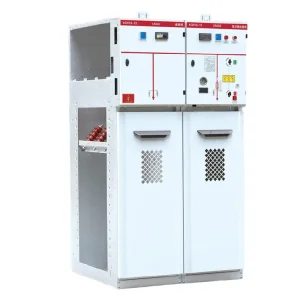
High-density metropolitan zones rely on looped distribution architectures. Compact modular RMUs (such as the XGN15-12 or SM6-type switchgear) integrate three-position SF6 or vacuum load break switches (Closed, Open, Grounded). Interlocked earth switches ensure operator safety during maintenance operations.
Underground Mining & Tunnels
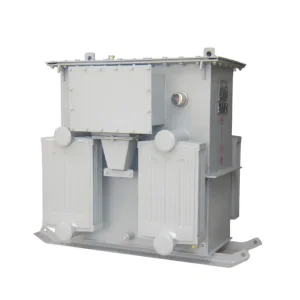
Confined spaces with combustible gases and high humidity demand extreme resilience. Explosion-proof enclosures, combined with oil-immersed transformers (like the KS9 mining series) and vacuum load break disconnectors, isolate faulty branches without generating external sparks or arc flash emissions.
Data Centers & Continuous Power
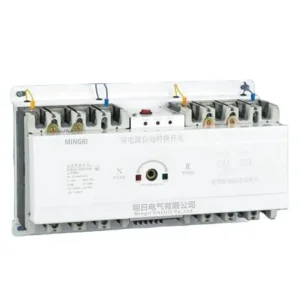
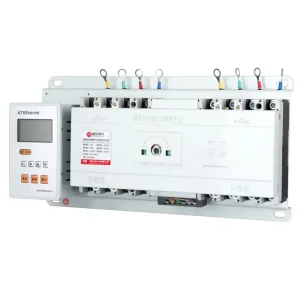
Tier-3 and Tier-4 data infrastructures cannot tolerate even momentary blackouts. Dual-power automatic transfer switches (such as the SJKQ2 series) paired with upstream motorized HV load break switches seamlessly transition loads between primary grid feeds and backup diesel or UPS banks in milliseconds.
Industrial Motor Control Centers
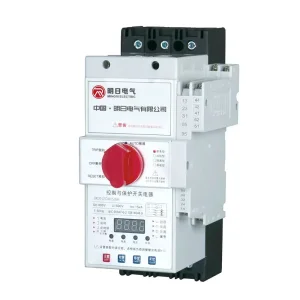
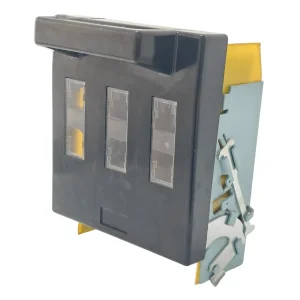
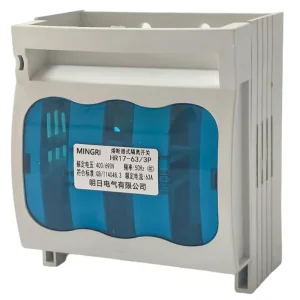
Heavy chemical plants and metallurgical complexes experience extreme inductive motor inrush currents. Utilizing coordinated control and protective switching devices (SJKCPS) alongside fused knife disconnects ensures robust fault containment without damaging upstream step-down transformers.
Global EPC Equipment Sourcing Checklist for HV LBS
To avoid project delays, technical non-compliance, and catastrophic field failures, electrical design engineers and procurement officers must cross-examine these technical parameters before issuing a formal Purchase Order (PO).
1. Baseline Electrical Parameters
Ensure that the vendor's technical submittal perfectly matches your single-line diagram (SLD):
- Rated Voltage ($U_r$): Standard ratings are 7.2kV, 12kV, 24kV, and 40.5kV. Always factor in maximum operating voltage ($U_m$).
- Power Frequency Withstand ($U_d$): 1-minute dry withstand (typically 42kV for 12kV switchgear; 95kV for 40.5kV systems).
- Rated Short-Time Withstand ($I_k$): Verify duration—standard ratings are 20kA/4s or 25kA/4s.
- Peak Withstand Current ($I_p$): Must achieve at least 2.5 times $I_k$ (e.g., 50kA to 63kA peak) to resist dynamic electromagnetic forces during initial fault loops.
2. Interlock Integrity & Safety Mechanisms
Operator safety is paramount under global utility regulations:
- Five-Anti Interlock Systems: Built-in mechanical and key interlocks preventing: (1) closing LBS with ground switch closed, (2) closing ground switch when LBS is on-load, (3) entering live switch cubicles, (4) erroneous operation of isolating blades.
- Gas Density Pressure Interlocks: For SF6 equipment, ensure dual-stage temperature-compensated pressure gauges with low-pressure alarms (Stage 1) and trip interlocks (Stage 2).
- Internal Arc Classification (IAC): Check if panels conform to IAC AFLR (Front, Lateral, Rear protection) up to 20kA/1s.
3. Packaging, Logistics & Documentation
High-voltage precision equipment requires specialized international logistics protocols:
- Vacuum-Sealed Seaworthy Crating: Anti-humidity foil wrap with silica gel desiccants inside fumigated plywood packaging compliant with ISPM 15 standards.
- Impact & Tilt Sensors: External indicators attached to shipping crates to log shock during maritime transit.
- Document Dossier: Require Factory Acceptance Test (FAT) records, material mill test certificates (EN 10204 Type 3.1), routine test certificates, and full schematic wiring manuals in English.
Frequently Asked Questions on High Voltage Load Breaker Switches
Addressing the core technical, mechanical, and commercial queries posed by utility consultants, substation engineers, and industrial buyers.
🔹 What is the fundamental difference between a Load Break Switch (LBS) and a Vacuum Circuit Breaker (VCB)?
A Load Break Switch is designed to make, carry, and break continuous normal operational currents (typically up to 630A or 1250A) and close into specified short-circuit conditions. However, an LBS cannot extinguish high short-circuit fault currents (e.g., 20kA to 31.5kA) independently. A Circuit Breaker (VCB) features complex internal energy-storage mechanisms and arc chutes designed specifically to detect, interrupt, and clear severe fault currents automatically via protection relays.
🔹 When should an engineer specify an LBS-Fuse combination instead of a VCB?
LBS-fuse combinations (governed by IEC 62271-105) are the industry standard for protecting distribution transformers (up to 1250 kVA or 1600 kVA at 12kV-24kV). They are significantly more cost-effective than circuit breakers, occupy up to 50% less footprint inside compact substations, and clear catastrophic short-circuit currents much faster (in under 5 milliseconds) via current-limiting action, which drastically reduces electromagnetic stress on downstream equipment.
🔹 What type test certifications are mandatory when importing HV switches from China?
Reputable manufacturers provide comprehensive type test reports conducted by laboratories accredited under ILAC/CNAS, KEMA, or ASTA. Core reports include: (1) Temperature-rise test at rated continuous current, (2) Short-time and peak withstand current tests, (3) Short-circuit making and breaking performance, (4) Lightning impulse (BIL) and power-frequency dielectric tests, (5) Mechanical operation endurance tests (M1/M2), and (6) Internal Arc Classification (IAC) tests.
🔹 How does ambient altitude affect high-voltage load break switch performance?
At altitudes above 1,000 meters, atmospheric pressure and air density decline, diminishing the external dielectric insulation strength of air and impairing convective heat dissipation. According to IEC standards, the external insulation withstand (creepage and clearance distances) must be adjusted using altitude correction factors (Ka). Vacuum and sealed SF6 tanks are unaffected internally, but external terminations, bushing insulators, and heat-sink calculations must be up-rated accordingly.
🔹 What is the expected operational lifespan of a Chinese-manufactured load break switch?
Tier-1 Chinese manufacturers engineer load break switches for an operational lifespan of 25 to 30 years under standard operating conditions (-25°C to +40°C). SF6 units feature laser-welded stainless steel tanks with sealed-for-life pressurized gas systems that maintain leakage rates below 0.1% per year. Vacuum interrupter switches require periodic mechanical checkups of springs and operating linkages around 2,000 to 5,000 cycles, but the vacuum chamber itself is maintenance-free.
🔹 What are the distinctions between Air-Insulated, Gas-Insulated, and Solid-Insulated LBS?
Air-Insulated Switches (AIS) utilize ambient atmosphere for arc chute dissipation; they are low-cost and simple to service, but have a larger physical footprint and are vulnerable to dust and coastal humidity. Gas-Insulated Switches (GIS) utilize sealed SF6 gas, offering extreme compactness and environmental immunity, but require specialized F-gas end-of-life disposal. Solid-Insulated Switches (SIS) encapsulate conductors and vacuum tubes in epoxy resin, providing the environmental sealing of GIS without any greenhouse gas footprint.
Precision Voltage Conditioning & Power Switching Solutions
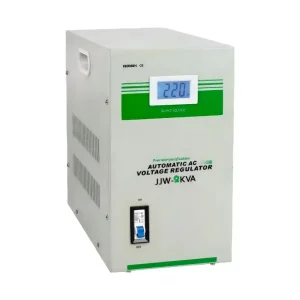
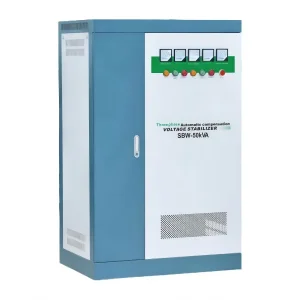
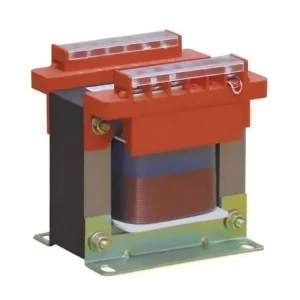
Explore auxiliary control transformers, servo-voltage regulators, industrial ATS switches, and fused knife disconnects built to complete your medium-to-low voltage switchgear assembly line.