Flagship Power Distribution & Switchgear Systems
Engineered in compliance with IEC 61439, GB/T 7251, and ISO industrial standards for modern energy grids and heavy-duty commercial facilities.
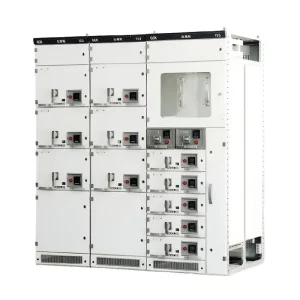
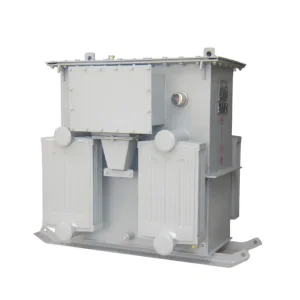
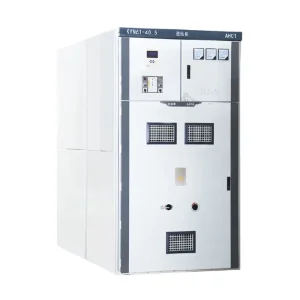
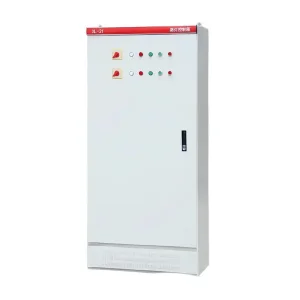
GGD AC Low Voltage Fixed-Mounted Switchgear Architecture
An authoritative analysis of GGD cabinet taxonomy, structural metallurgy, thermal optimization, and dynamic electrodynamic stability in mission-critical applications.
Standardized 8MF Profile Metallurgy
The structural skeleton of the GGD distribution cabinet is engineered using high-precision 8MF cold-formed open-section steel (or customizable 20mm modular hole pitch cold-rolled profiles). This delivers exceptional bending resistance, torsion tolerance, and dynamic load-bearing integrity under high short-circuit electrodynamic forces, ensuring structural non-deformation during severe fault trips.
Natural Convective Thermodynamic Flow
Thermal accumulation directly impacts the service life of internal switchgear assemblies. GGD enclosures integrate top and bottom calibrated louvers that harness natural chimney-effect thermodynamics. During high continuous amperage operation, internal heat is exhausted through the upper perimeter vents while ambient cool air enters the base, suppressing hot-spot generation across bus joints.
Segregated Protection Compartments
Designed in strict accordance with Form 1 through Form 2b internal separation paradigms (customizable to Form 3/4 via tailored engineering), GGD units maintain segregated functional sectors: the upper busbar compartment, central apparatus/incoming cubicle, and cable termination field. This segregation safeguards field maintenance engineers against accidental live-conductor contact during scheduled downstream interventions.
Comparative Engineering Specifications
Detailed comparative evaluation between GGD fixed-mounted switchgear and alternative low-voltage assemblies (GCK, GCS, and XL-21) to empower precision EPC requisitioning.
| Evaluation Parameter | GGD (Fixed AC Assembly) | GCK / GCS (Withdrawable) | XL-21 (Compact Power Box) |
|---|---|---|---|
| Structural Mounting | Fixed framework with bolted apparatus | Modular withdrawable drawout cassettes | Wall-leaning / Free-standing sheet metal |
| Rated Operational Voltage (Ue) | AC 380V / 400V / 415V / 690V | AC 380V / 400V / 660V | AC 220V / 380V / 400V |
| Rated Current Capacity (In) | Up to 3150A – 4000A | Up to 4000A – 6300A | Up to 630A (Sub-distribution) |
| Short-Time Withstand (Icw) | 50 kA / 1s | 50 kA – 80 kA / 1s | 10 kA – 15 kA / 1s |
| Primary Application Domain | Industrial transformers, plants, pump houses | Large power stations, data centers, hospitals | Floor distribution, small workshops, utilities |
| Capital Expenditure (CAPEX) | Highly Economical / Lowest TCO | Premium (35%–60% higher than GGD) | Lowest (Restricted to low amperage) |
| Maintenance Profile | Zero drawer wear, annual visual inspection | Requires regular drawout contact greasing | Minimal periodic terminal torquing |
Sector-Specific Power Distribution Solutions
Tailored electrical integration architectures utilizing GGD distribution cabinets across severe operating environments worldwide.
Heavy Industrial & Metallurgical Manufacturing
Heavy motor drives, electric arc smelters, and rolling facilities subject LV switchboards to severe harmonic distortions, rapid transient surges, and elevated ambient particulate counts. GGD cabinets configured with internal tin-plated TMY electrolytic copper busbars, anti-corrosive powder coatings, and Form 2 segregation ensure continuous thermal dispersion while withstanding cyclical inductive motor-starting stresses.
Renewable Energy: Solar PV & Wind Substation LV Balance
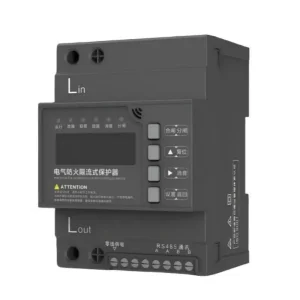
In utility-scale photovoltaic parks and wind gathering farms, the step-down or auxiliary power cabinets must endure wide day-to-night temperature swings, condensed humidity, and continuous load. GGD cabinets act as centralized low-voltage AC collector panels and auxiliary services distribution units, integrating smart surge protection devices (SPDs), automated transfer switches (ATS), and remote telemetry interfaces.
Municipal Infrastructure & Wastewater Utilities
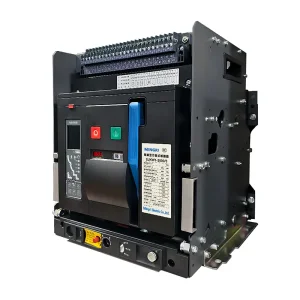
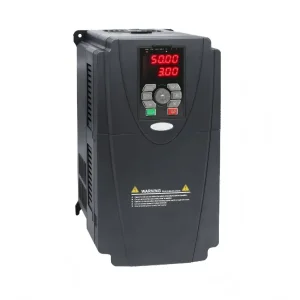
Continuous fluid pumping stations require high reliability with zero downtime tolerance. GGD motor control and distribution panels accommodate large intelligent air circuit breakers (ACBs) paired with variable frequency drives (VFDs) and soft starters. The vibration-resistant rigid frame ensures long-term bus joint stability despite high acoustic and mechanical pump resonance.
Manufacturing Quality Systems & Export Verification
Adhering to international electrical engineering standards ensures seamless regulatory sign-off across destination jurisdictions in Southeast Asia, Central Asia, the Middle East, Africa, and South America.
IEC 61439-1 & IEC 61439-2 Type Testing
Every export-grade GGD panel line undergoes third-party accredited type tests verifying temperature rise limits, dielectric properties, short-circuit withstand capabilities, effectiveness of the protective circuit, clearances and creepage distances, mechanical operation, and ingress protection verification (IP30, IP40, up to IP54 with external roof covers).
Raw Material Traceability & Metallurgy
Copper busbars utilize high-purity electrical grade cathode copper (Cu ≥ 99.95%) with chamfered edges, automated torque-indicator bolt fasteners, and colored heat-shrinkable cross-linked polyolefin insulation sleeves. Steel enclosures receive multi-stage zinc phosphating and electrostatic epoxy-polyester thermosetting powder coatings exceeding 720 hours of salt spray testing.
Factory Acceptance Testing (FAT) & Ocean Packaging
Comprehensive pre-shipment FAT encompasses high-voltage dielectric insulation withstand tests, mechanical interlock sequence verification, primary current injection tests, and automated wiring continuity checks. Switchboards are hermetically wrapped in moisture-barrier foil with desiccants and secured within non-fumigation reinforced export wooden crates.
The GGD Smart Evolution: IoT, Edge AI & Predictive Analytics
How modern Chinese engineering is modernizing the classic GGD cabinet into an intelligent, sensor-dense node for cloud energy management and condition-based predictive maintenance.
Wireless Surface Temperature Monitoring
Traditional periodic thermographic inspections with handheld infrared cameras capture only point-in-time anomalies. Next-generation GGD cabinets embed passive SAW (Surface Acoustic Wave) or micro-powered digital RF temperature transponders directly onto the primary busbar joints and breaker connections, reporting real-time thermal profiles 24/7 over Modbus-RTU / LoRaWAN.
Harmonic Mitigation & Smart Power Quality (PQ)
With industrial loads increasingly driven by non-linear rectifiers, variable speed drives, and switching converters, total harmonic distortion (THDi) causes busbar overheating and nuisance breaker trips. Upgraded GGD assemblies integrate active power filters (APF) and static var generators (SVG) directly inside incoming sections, stabilizing power factor above 0.98.
Edge Gateways & Predictive Failure Diagnostics
Edge compute controllers aggregate trip unit metrics, arc-flash optical detector loops, dielectric leakage monitors, and door interlock state sensors. Cloud-connected dashboards synthesize electrical stress histories to project Remaining Useful Life (RUL) of switching mechanisms, transitioning facilities from reactive to prescriptive maintenance.
Frequently Asked Technical & Procurement Questions
Clear, engineering-backed answers addressing the most critical specifications, installation constraints, and international customization variables.
Medium & Low Voltage Auxiliary Switchgear & Components
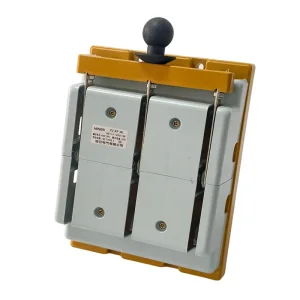
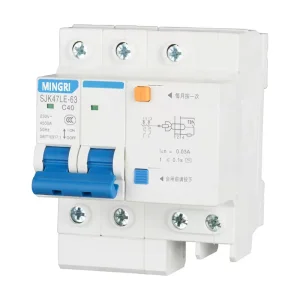
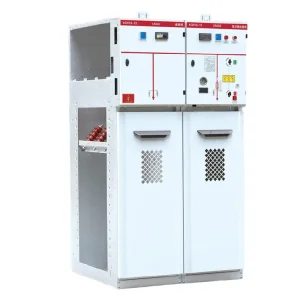
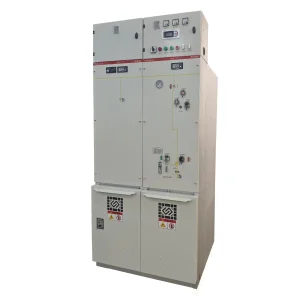
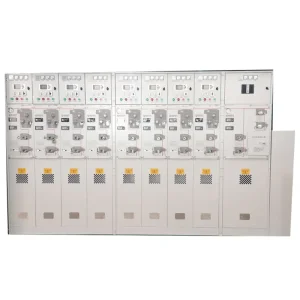
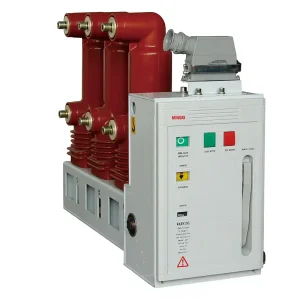
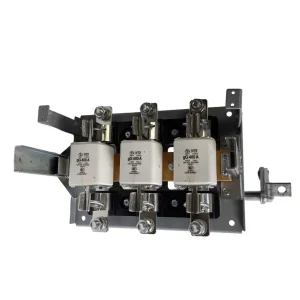
Integrate your primary GGD low-voltage installations with factory-direct medium-voltage ring main units, vacuum circuit breakers, and specialized safety disconnectors.