Featured Industrial Variacs & MV Switchgear Solutions
Explore high-performance single-phase and three-phase contact autotransformers engineered in tandem with medium-voltage ring main units and primary isolation equipment to support stringent industrial testbeds and distribution substations.
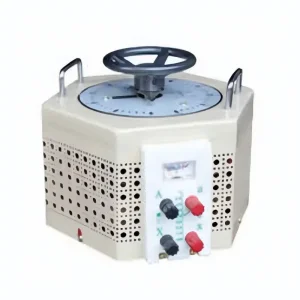
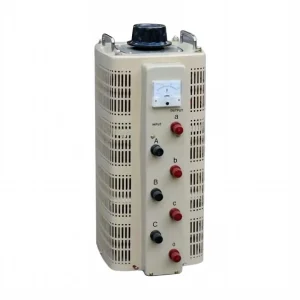
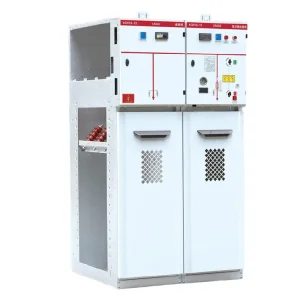
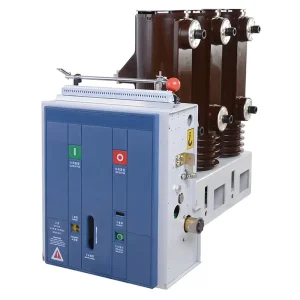
Global Landscape of Variac Transformers & Voltage Regulators
Variable autotransformers (variacs) remain an irreplaceable cornerstone in power electronics, calibration laboratories, and industrial process control. Unlike solid-state pulse-width modulation (PWM) power supplies that introduce high-frequency switching noise, electromagnetic interference (EMI), and harmonic distortion, toroidal variable autotransformers deliver a pure sinusoidal waveform with zero distortion, exceptional short-term overload capacity, and near-unity power factor operation.
Toroidal Grain-Oriented Silicon Cores
Fabricated using cold-rolled grain-oriented (CRGO) electrical steel with minimal hysteresis losses and superior magnetic flux density exceeding 1.7 Tesla. The seamless toroidal structure minimizes fringing flux, yielding exceptionally low no-load magnetizing currents and silent magnetic operation across variable ambient conditions.
Proprietary Silver-Graphite Brushes
Equipped with micro-milled sintered silver-graphite carbon brush assemblies engineered to provide precise commutating resistance. This eliminates inter-turn short-circuit overheating during wiper contact transitions, significantly extending the mean time between maintenance cycles (MTBM) in heavy cyclic load operations.
Dynamic Commutation Tracks
Precision diamond-burnished coil tracks treated with anti-oxidation gold flash or nickel-plating barriers ensure zero carbon deposition and stable contact resistance even under high-temperature conditions up to 130°C (Class B insulation compliance to IEC 61558-2-14 standards).
Technical Comparison: Variacs vs. Electronic Voltage Regulators
Electrical consulting engineers frequently face selection dilemmas between contact autotransformers, servo motor stabilizers, and thyristor/IGBT solid-state converters. The comparative table below clarifies why industrial test setups favor toroidal contact autotransformers for mission-critical validation.
| Performance Metric | Toroidal Variac Autotransformer (TDGC2J/TSGC2J) | Servo Motor Controlled Stabilizer (TSJA) | Solid-State / PWM Electronic AC Source |
|---|---|---|---|
| Waveform Purity & THD | 0.00% added THD; absolute fidelity to incoming wave | Negligible (< 0.5% added during regulation) | 1.5% to 5.0% THD due to high-frequency switching |
| Surge & Inrush Withstand | Extreme: 10× rated current for 10ms without shutdown | High: 3× rated current for motor start cycles | Limited: Fast electronic trip triggered at 1.2× – 1.5× rating |
| Efficiency at 100% Load | 98.5% – 99.2% (low core & resistive losses) | 95.0% – 97.5% | 88.0% – 93.0% (thermal dissipation requires active cooling) |
| Electromagnetic Noise (EMI/RFI) | Completely zero emission; clean laboratory standard | Zero during static; mild brush noise during servo travel | High EMI/RFI; requires heavy filtering capacitors and chokes |
| Maintenance & Longevity | Brush inspection every 3,000–5,000 operating hours | Servo gearbox and limit switch inspection yearly | Semiconductor degradation; capacitor dry-out within 7–10 years |
| Power Factor Influence | Transparent to load PF (operates 0.0 to 1.0 lag/lead) | Essentially reflects load power factor | Often distorts non-linear load power factor characteristics |
Global Application Scenarios & Localized Engineering
From precision aerospace validation in North America to heavy industrial process manufacturing across Southeast Asia and the Middle East, our variacs and integrated medium-voltage switchgears provide stable, resilient electrical infrastructure.
Aerospace & EV Powertrain Testing
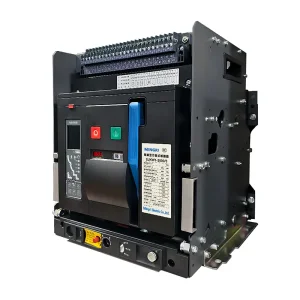
Electric vehicle (EV) charging hardware and onboard chargers (OBC) demand stress-testing under simulated grid undervoltage and overvoltage conditions (e.g., ISO 16750-2 and LV 124 compliance). Variac transformers paired with VS1-12C vacuum circuit breakers deliver distortion-free stepped transient voltages, verifying over-current trip limits and thermal saturation in power inverters.
Semiconductor & Cleanroom Testbeds
Cleanroom fabrication facilities in East Asia and Europe integrate three-phase TSGC2J contact regulators into burn-in test benches. The absence of high-frequency harmonics guarantees that ultra-sensitive silicon wafer metrology tools and precision lithography laser drivers are completely shielded from supply line phase-jitter or radio-frequency interference.
Metallurgical Annealing & Heating Systems
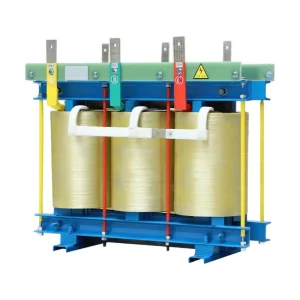
Furnace and heating element life depends directly on smooth voltage stepping. Variacs provide stepless thermal ramp-up for molybdenum, tungsten, and silicon carbide heating elements, preventing thermal shock fractures caused by instantaneous full-voltage switching, while coordinating with SGB10 dry-type transformers for high-amperage galvanic separation.
Complete Substation-to-Load Protection Architecture
A variac regulator cannot operate in isolation within modern utility or enterprise facilities. As a certified manufacturer based in Yueqing, Mingri Electric engineers the entire electrical ecosystem: stepping down medium-voltage grid feeders via ring main units and modular substations, providing circuit breaker isolation, and regulating precise utilization voltages.
Medium-Voltage Grid Interconnection
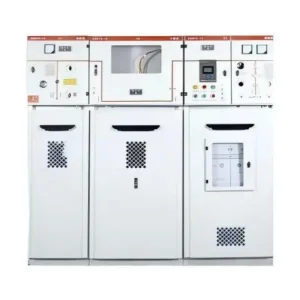
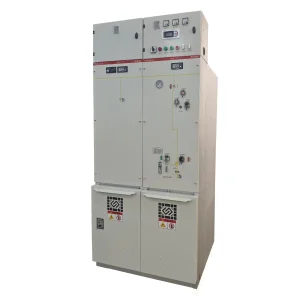
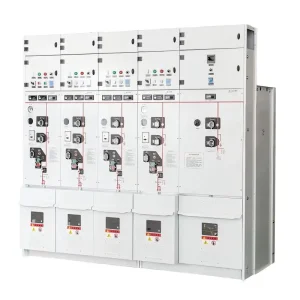
Incoming 12kV to 40.5kV feeds pass through our SF6-insulated SafeRing-40.5 RMU or eco-friendly gas MRHBXGN-12(F) switchgear, equipped with VS1 vacuum breakers to isolate upstream ground faults and provide short-circuit withstand up to 31.5kA.
Prefabricated Transformation
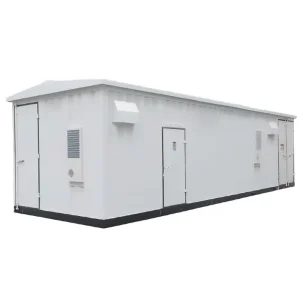
Factory-assembled modular cabin substations step high voltage down to 400V/230V three-phase industrial mains using SG(B)10 non-encapsulated dry transformers, which deliver superior fire retardancy and environmental safety inside commercial structures.
Precision Low-Voltage Control
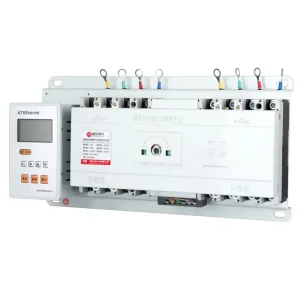
From the switchboard, SJKQ2Z automatic transfer switches and SJKW1-2000 air circuit breakers route power into TDGC2J and TSGC2J contact regulators for sensitive laboratories, motor soft-start testing, and specialized electrochemical plating benches.
The Future of Variable Autotransformers & Grid Intelligence
The ongoing global transition toward renewable energy, decentralized microgrids, and digital twins is transforming traditional electromagnetic apparatus into smart, communicative, self-diagnostic industrial assets.
IoT Edge Telemetry & Predictive Health
Next-generation TSGC2J units integrate fiber-optic embedded thermal sensors and micro-vibration pick-ups on brush arm shafts. High-frequency edge processors analyze brush contact impedance, predicting carbon wear and sparking anomalies before contact track pitting can occur.
Hybrid Nanocrystalline Core Formulations
By blending amorphous ribbon alloys with ultrafine grain silicon steel, future toroidal cores will slash core no-load excitation losses by an additional 42%, satisfying European EcoDesign Tier 3 targets and drastically diminishing standby parasitic power across continuous laboratory deployments.
Microprocessor-Assisted Servo Positioning
Replacing standard brushed DC servo servomechanisms with high-torque brushless permanent magnet (BLDC) motors and optical absolute encoders. This achieves dynamic response latencies under 40 milliseconds for line-sag mitigation while completely preserving clean sinusoidal voltage envelopes.
Variac Transformer Sizing & Technical Selection Protocol
Specifying an industrial variac requires rigorous calculation to ensure mechanical endurance and prevent premature thermal brush failure. Electrical project engineers should adhere to this standardized formula and derating criteria:
1. Calculation of Continuous KVA Rating
Autotransformers are rated on throughput current capacity. The continuous rating must be computed based on maximum operational current ($I_{max}$) and maximum output voltage ($V_{out\_max}$):
Single Phase: $kVA = (V_{out\_max} \times I_{max}) / 1000$
Three Phase: $kVA = (\sqrt{3} \times V_{line\_max} \times I_{max}) / 1000$
2. Inrush & Overload Safety Margins
For inductive loads (such as motors, transformers, or solenoids), starting currents typically spike to 6×–8× nominal load. Although variacs exhibit high thermal inertia, sustained motor starting curves exceeding 3 seconds necessitate a sizing multiplier of 1.4× to 1.8× nominal continuous kVA.
3. Ambient & Altitude Derating
Standard ratings assume operating conditions up to 40°C ambient and ≤1,000 meters altitude. When operating at elevations between 1,000m and 4,000m (due to reduced air dielectric breakdown and reduced convective cooling), derate thermal capacity by 1% for every 100 meters above 1,000m.
Frequently Asked Technical Questions (FAQ)
Find direct, engineer-reviewed answers regarding variac autotransformer physics, electrical configurations, and factory-direct procurement.
A variac autotransformer shares a single continuous copper winding between the primary input and secondary output; it regulates voltage via a movable carbon contact wiper without galvanic electrical isolation. In contrast, an isolation transformer features separate primary and secondary windings, physically decoupling the load from ground and preventing direct DC shock pathways.
Yes. Standard single-phase TDGC2J autotransformers are tapped with an over-voltage winding segment. When supplied with nominal 220V AC input, the continuous wiper path travels from 0V up to an over-voltage limit of 250V (or 430V phase-to-phase on TSGC2J three-phase units), enabling testing of equipment across high-line line tolerance bands.
Because the transformation ratio is determined strictly by the physical mechanical turn ratio on the toroidal magnetic core without semiconductor phase-angle switching (triacs) or PWM chopping (MOSFETs/IGBTs). The magnetic flux induction remains completely linear, introducing zero harmonic artifacts (<0.1% added THD).
Three-phase TSGC2J units are constructed by mechanically ganging three identical toroidal autotransformer cores on a unified central rotor shaft, electrically wired in a Star (Wye) configuration with a common floating or grounded neutral point. Input terminals connect to U, V, W; output terminals provide 0V to 430V continuous phase-to-phase adjustment.
Preventative maintenance involves periodic visual inspection every 3,000 to 5,000 operating hours. Inspect brush length (replace before worn down to the brass holder clip), blow away fine carbon dust with dry compressed air (<30 PSI), and gently clean track conductors with isopropyl alcohol if industrial atmospheric grease has settled.
Yes. While manual variacs utilize a front-panel rotary knob, motorized industrial variants integrate a reversible AC or stepper motor coupled via a reduction gear assembly. Limit switches define absolute travel bounds, and a closed-loop controller receives 4-20mA or 0-10V analog signals from PLCs to automatically maintain desired terminal voltages.
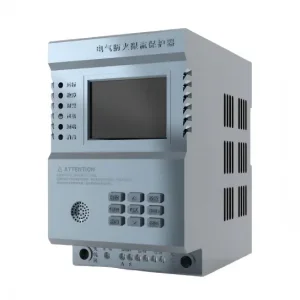
Upstream Switchgear, Transformers & Protection Systems
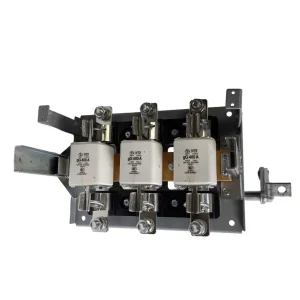
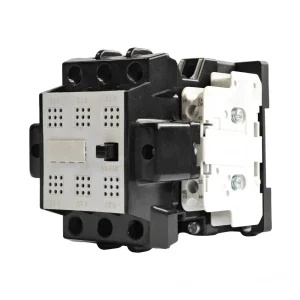
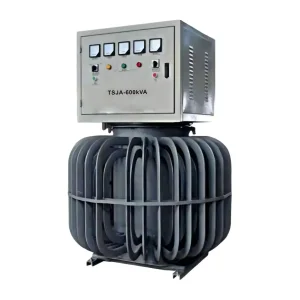
Complete your facility’s electrical distribution system with factory-certified medium and low-voltage switchboards, oil-immersed voltage stabilizers, and modular substations direct from our Yueqing manufacturing hub.
Factory Acceptance Testing (FAT) & Rigorous Verification
Every variac transformer, circuit breaker, and ring main unit leaving our Yueqing manufacturing campus undergoes strict routine and type testing according to IEC 60076, IEC 61558-2-14, and ISO 9001 quality management guidelines. Our in-house testing lab executes partial discharge screening, dielectric insulation withstand testing at 2.5kV AC, full-load temperature rise validation, and carbon brush contact resistance optimization before dispatch.
Dielectric Strength & Hipot
Every wound core assembly undergoes 2,500V RMS dielectric breakdown testing between the isolated brush shaft assembly and magnetic core steel to guarantee user safety during high-potential transient spikes.
Full-Span Linearity Verification
Automated test benches actuate motorized and manual shafts across 0% to 100% travel points, verifying that output voltage tracking remains linear within ±0.75% tolerance across every individual winding turn.
Global Engineering Support
Engineers and international EPC contractors receive complete CAD dimensions, single-line wiring diagrams, factory routine test reports, and remote video inspection support to guarantee swift, dependable grid commissioning.