Active Electrical Fire Current-Limiting Protectors
Engineered to suppress explosive short-circuit arcs and thermal runaway at the microsecond threshold, safeguarding civil, commercial, and extreme-load industrial distributions.
-
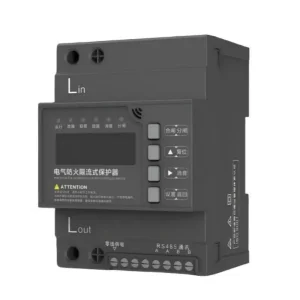 ODM Single phase small electrical fire-resistant current limiting protector Supplier, CompaniesView Specifications
-
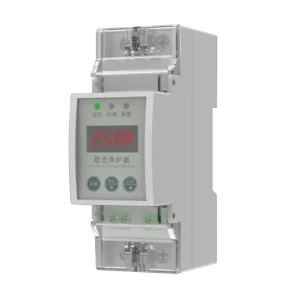 China Electrical Fire Current-Limiting Protector - Economical Type Manufacturer, CompaniesView Specifications
-
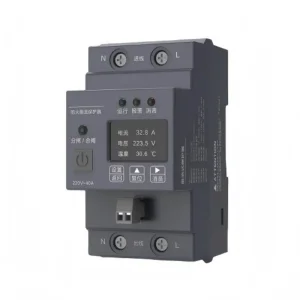 Wholesale Miniature Single-Phase Current-Limiting Protector with LCD Screen 220VAC Manufacturers, FactoriesView Specifications
-
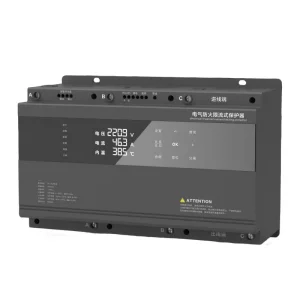 Wholesale 160A Three-Phase Molded Case Fire Protection Limiter Factory, CompanyView Specifications
-
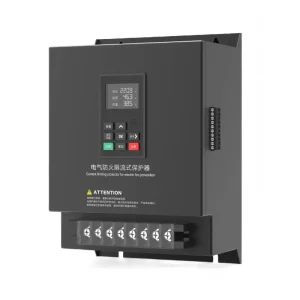 Wholesale 80A Three-Phase Intelligent Electrical Fire Current-Limiting Protector Manufacturers, CompaniesView Specifications
-
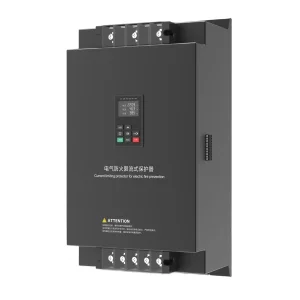 ODM 250A three phase electrical fire prevention current limiting protector Manufacturers, FactoriesView Specifications
-
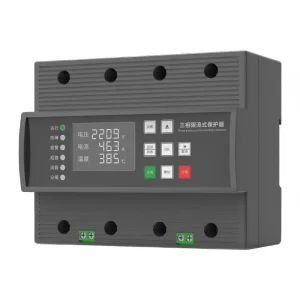 Wholesale 80/125A Economic Three-phase Current-limiting Protector Manufacturer, CompanyView Specifications
-
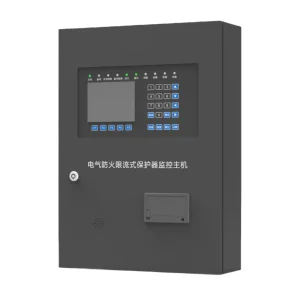 High-Quality Mingri Current-limiting Protector System Main Unit Manufacturers, FactoryView Specifications
The Evolution of Modern Power Control and Circuit Protection
Addressing short-circuit prospective peak currents, arc flash containment, and digital coordination in dense energy infrastructures.
In modern industrial and utility distribution environments, the requirements for Power Control & Protection have expanded far beyond passive overcurrent disconnects. Today's electrification infrastructure—dominated by non-linear loads, high-density variable frequency drives (VFDs), distributed photovoltaic (PV) generation, and multi-megawatt energy storage systems (BESS)—demands dynamic response matrices. Conventional mechanical circuit breakers, operating within standard 20 to 50 millisecond breaking cycles, allow severe peak fault currents ($I_p$) and destructive thermal let-through energy ($I^2t$) to propagate across sub-distribution busbars, often resulting in equipment vaporization, contact welding, and severe electrical fires.
As a Tier-1 Power Control & Protection Manufacturer & Factory based in Yueqing, China, Mingri Electric delivers advanced protective apparatus that converge ultra-fast microsecond solid-state current limiting with robust electromagnetic contactor designs. By combining high-purity silver-nickel (AgNi) and silver-tin-oxide (AgSnO2) contact matrices with optimized arc splitters and digital edge-sensing logic, our factory delivers complete low- and medium-voltage portfolios adhering strictly to IEC 60947-2, IEC 60947-4-1, and GB/T 14048 standards.
Deterministic Arc Quenching
De-ionizing arc chute geometries coupled with multi-plate magnetic blowouts rapidly stretch, cool, and extinguish sustained electrical arcs within a single quarter-cycle, drastically slashing $I^2t$ let-through stress.
Microsecond Current Limiting
Active solid-state sensing mechanisms detect fault current rise profiles ($di/dt$) and inject opposing counter-electromotive forces or fast mechanical separation in under 3 milliseconds before peak fault realization.
IoT Telemetry Integration
Embedded sensors capture contact erosion, terminal temperature rise, operating coil inrush, and residual leakage currents, transmitting real-time RS-485 Modbus and industrial Ethernet telemetry to central SCADA systems.
Why Global EPCs & OEMs Source from Yueqing, China
Decades of localized component supply chain integration, automated SMT surface mount assembly, and stringent high-voltage test laboratories.
Hyper-Clustered Supply Chain
Situated in Yueqing—the world capital of low-voltage electrical apparatus—our manufacturing facility accesses sub-tier raw materials (pure electrolytic copper, DMC plastics, bimetals) within a 15-kilometer radius, ensuring agile component delivery.
Automated Robotic Assembly
Automated punch presses, computer-vision weld inspections for precious metal contact pads, and robotic pick-and-place lines minimize human tolerances, achieving standard PPM defect rates comparable to European tier-one brands.
Full-Spectrum Custom OEM/ODM
From customized magnetic coil voltages (12VDC to 660VAC 50/60Hz) to private-label molded-case enclosures and auxiliary contact combinations, our engineering team executes prototype modifications in under 14 days.
Rigorous Type Testing
Every product line undergoes rigorous validation: short-time withstand current testing, 100,000-cycle mechanical endurance, temperature rise runs under 110% continuous thermal rating, and 2.5 kV impulse dielectric verification.
Global Industry Trends Shaping Protective Switchgear
The transformation from passive thermomagnetic trip devices to active solid-state intelligence and sustainable eco-insulation.
| Technological Dimension | Conventional Generation Solutions | Next-Gen Mingri Smart Engineering | Engineering Value to Global EPCs |
|---|---|---|---|
| Fault Interruption Time | 20 ms – 40 ms (Mechanical bimetal/spring) | < 3 ms (Hybrid solid-state / current limiting) | Eliminates arc blast flash energy; preserves upstream busbars and cabling. |
| Contact Material Matrix | Standard Fine Silver / Cadmium Alloy (AgCdO) | Eco-friendly AgSnO2 / AgNi micro-alloying | 100% RoHS & REACH compliance, zero heavy metal toxic outgassing during arcing. |
| Switching Inrush Control | Uncontrolled random mechanical closure | Pre-insertion damping resistors & zero-cross | Limits capacitor and inductive motor inrush currents from 60x down to < 2.5x $I_n$. |
| Asset Health Diagnostics | Reactive visual inspection / scheduled teardown | Embedded thermal sensing & contact wear algorithms | Predictive maintenance alerts via RS-485 / Modbus before catastrophic contact weld. |
| Dielectric Environmental Profile | Greenhouse gas insulation (SF6 heavy dependence) | Vacuum interrupters, solid dielectric, & clean air | Future-proof against escalating international F-Gas quotas and carbon penalties. |
Comprehensive Macro Industry Solutions
Deploying specialized power control apparatus across mission-critical civil, renewable, and manufacturing operations.
Power Factor Correction & Harmonics
Integration of CJ19 Series Capacitor Switching Contactors equipped with leading pre-insertion damping wire contacts. These suppress violent high-frequency inrush currents during step-switched capacitor bank operations, prolonging capacitor dielectric lifespan and preventing sub-station voltage dips.
Heavy Industrial Motor Control Centers
Designed for AC-3 and AC-4 duty cycles, our CJX2, CJX1 (3TB/3TF), and A-Series AC Contactors deliver reliable magnetic coupling up to 400A and 690V. Combined with LADN auxiliary logic, they ensure seamless Type 2 coordination under severe locked-rotor motor conditions in heavy processing mills.
Electrical Fire Prevention Networks
Deploying 1-Phase and 3-Phase Active Current-Limiting Protectors at sub-panel feeders within public venues, high-rise residential towers, and wooden structures. Real-time resistive leakage detection cuts power prior to arc spark ignition, ensuring zero flashover occurrences.
Specialized Engineering Operating Environments
Configured to meet the rigorous environmental, thermal, and operational challenges of global infrastructure projects.
Renewable PV & BESS Systems
Tolerating elevated ambient temperatures up to +70°C inside inverter enclosures. Featuring enhanced contact air gaps to withstand sustained DC-side backfeed transients and harmonic switching resonance.
Mission-Critical Data Centers
Designed for Tier-III and Tier-IV redundant power trains. Contactors and current limiters deliver ultra-low acoustic vibration, zero hum coil designs, and instantaneous coordination with downstream static transfer switches.
Commercial Skyscrapers
Integrated electrical fire protection main units monitor multi-channel branch circuits, mitigating cable insulation degradation caused by high neutral harmonics and load imbalances.
Mining & Heavy Metallurgy
High-grade anti-tracking mold resins (CTI > 600V) withstand heavy dust, conductive carbon particles, and aggressive vibration profiles common to vibrating screens, hoists, and slurry pump lines.
Global Enterprise Sourcing & Compliance Guide
Essential technical criteria for project procurement managers and panel builders evaluating switchgear manufacturers.
When selecting a high-volume Power Control & Protection manufacturer in China, international engineering teams must look beyond baseline unit pricing. Total Cost of Ownership (TCO), failure liability under transient surges, and compliance with local installation codes are paramount.
1. Type-Test Certification Portability
Ensure current limiters and contactors have third-party test verification from accredited bodies (such as CNAS, KEMA, or TÜV) certifying compliance with IEC 60947. Verified test records confirm short-circuit withstand and thermal rise parameters.
2. Material Purity & Silver Content
Scrutinize contact tip composition. Standard budget switches dilute silver contacts with high copper alloys, resulting in micro-welding after short faults. Mingri utilizes authentic high-percentage AgSnO2 alloy matrices, providing elevated anti-weld resistance.
3. Continuous Duty Coil Optimization
Assess steady-state hold VA ratings. Modern energy-saving contactor coils feature dual-winding or electronic economizer circuits that reduce continuous coil thermal dissipation by up to 70%, drastically decreasing internal enclosure operating temperatures.
Frequently Asked Engineering Questions
Direct technical answers regarding performance parameters, selection standards, and integration protocols.
How does an Electrical Fire Current-Limiting Protector differ from a standard MCCB?
A standard Molded Case Circuit Breaker (MCCB) relies on mechanical bimetallic strips and magnetic solenoids, requiring 15–40 milliseconds to trip under short circuits. An electrical fire current-limiting protector uses ultra-fast solid-state electronic detection, extinguishing the fault current in under 3 milliseconds, thereby preventing the electrical arc energy from reaching the flashpoint needed to ignite surrounding combustibles.
Why are pre-insertion resistors required on CJ19 capacitor switching contactors?
When uncharged shunt capacitors connect to an energized AC system, they represent a momentary short circuit, generating inrush currents up to 60 times nominal current ($I_n$). The CJ19 contactor incorporates leading auxiliary contacts with high-resistance nichrome wires that close milliseconds ahead of the main contacts, dampening the voltage surge before transferring continuous current to the primary contacts.
Can Mingri AC contactors be driven directly by 24VDC PLC transistor outputs?
Standard AC contactors utilize high-inrush electromagnetic coils that exceed typical PLC transistor ratings (0.5A). However, Mingri provides specialized low-consumption electronic coil variants (available on CJX2 and LC1D series) that feature built-in optocoupled interface cards, permitting direct activation from 24VDC PLC digital outputs without external interposing relays.
What parameters are required to generate an exact OEM contactor quote?
To ensure precision engineering matching, provide: 1) Rated operational voltage ($U_e$) and operational current ($I_e$), 2) Utilization category (e.g., AC-1 for resistive heating, AC-3 for squirrel-cage motors, or AC-6b for capacitors), 3) Control coil voltage and frequency (e.g., 220VAC 50Hz, 110VAC, 24VDC), and 4) Required auxiliary contact arrangements (e.g., 1NO+1NC, 2NO+2NC).
AC Contactors, Modular Blocks & Switching Devices
Heavy-duty magnetic contactors, auxiliary blocks, and capacitor controllers built for millions of uninterrupted switching cycles.
-
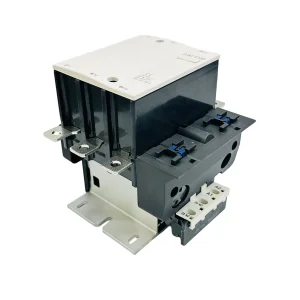 OEM CJX2 (LC1-D) Series AC Contactor 50/60Hz Suppliers, ManufacturersView Specifications
-
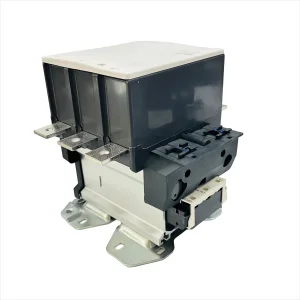 China CJX2-F Series AC Contactor for Motor Control Suppliers, ManufacturerView Specifications
-
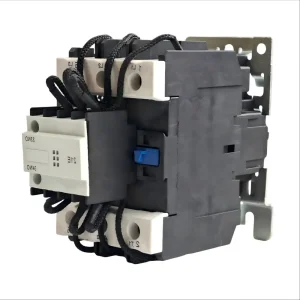 China CJ19 Series Capacitor Switching Contactors 380V 50/60Hz Suppliers, SupplierView Specifications
-
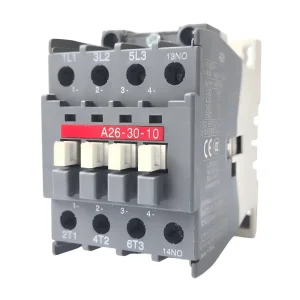 China A9~300 Series AC Contactors 5060Hz 380V Manufacturers, FactoriesView Specifications
-
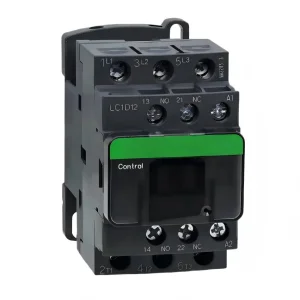 OEM LC1D Series AC contactor 50/60Hz 660V Manufacturers, FactoriesView Specifications
-
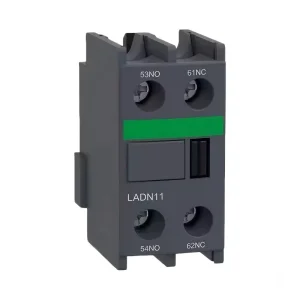 ODM LADN 1NO 1NC Auxiliary Contact For AC Contactor Manufacturers, ManufacturerView Specifications
-
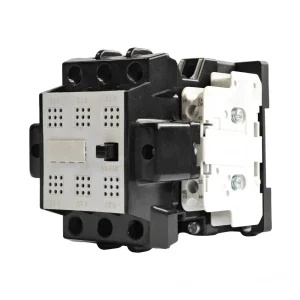 OEM CJX1 (3TB) Series AC Contactors 9-400A 380V AC-3 Factories, CompanyView Specifications
-
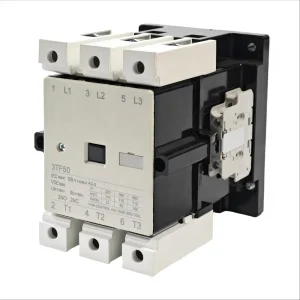 ODM CJX1 (3TF) Series AC Contactors 9-400A 690V Suppliers, CompanyView Specifications