Specialized Low-Voltage Breaking & Protection Devices
Engineered to satisfy IEC 60947-2, IEC 60947-4-1, and GB/T 14048 benchmarks. Integrated with microprocessor trip logic, current-limiting architectures, and harsh-environment durability.
-
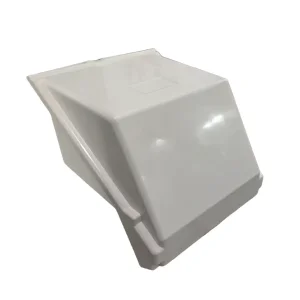
Wholesale D165T LV Moulded Case Pole Mounted Breaker Digital Trip Unit Manufacturer, Factories
Explore Technical Specs -
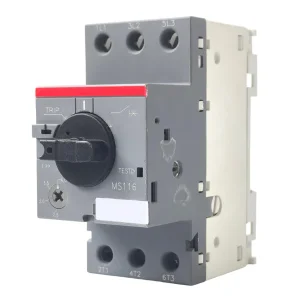
ODM MS116 Low Voltage Motor Protection Circuit Breaker Supplier, Companies
Explore Technical Specs -
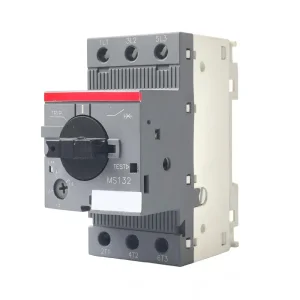
Wholesale MS132 Low Voltage Motor Protection Circuit Breaker Manufacturers, Factories
Explore Technical Specs -
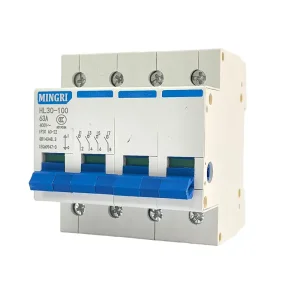
Wholesale High-Performance HL30 Miniature Disconnect Switch 1-4P 6-100A from China Factory & Suppliers for AC Systems Factories, Company
Explore Technical Specs -
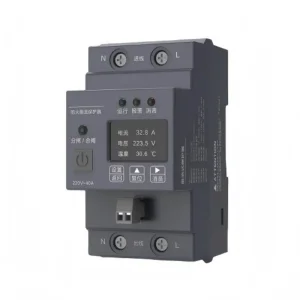
Wholesale China Suppliers Factory Miniature Single-Phase Current-Limiting Protector with LCD Screen 220VAC for Enhanced Safety Manufacturers, Companies
Explore Technical Specs -
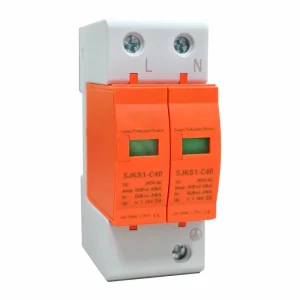
OEM Surge Protection Device SPD SJKS1-C Series 3/4P 25kA - Reliable China Suppliers & Factory for Overvoltage Safety Supplier, Manufacturers
Explore Technical Specs -
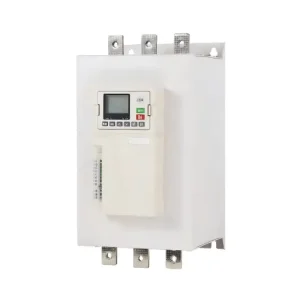
China MCR8 Series Digital Motor Soft Starter Suppliers, Company
Explore Technical Specs -
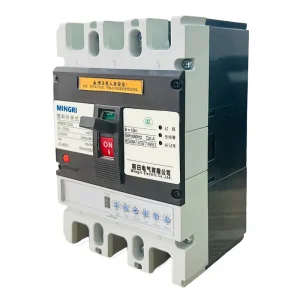
Wholesale SJKM3E Electronic Circuit Breaker (ECB) - Smart Protection 16A-800A | China Suppliers & Factory Compliance Factory, Company
Explore Technical Specs
The Global Commercial & Engineering Landscape of "Other Breakers"
Moving beyond conventional thermal-magnetic MCCBs and standard domestic MCBs: Understanding how specialized breaking mechanisms govern electrification, automated microgrids, and heavy industrial applications.
Motor Protection Circuit Breakers (MPCB)
High-inductance inductive motor loads demand specialized thermal trip curves (Class 10/20) and instantaneous magnetic trip mechanisms rated at 12x to 14x full-load amperage to suppress catastrophic locked-rotor damage without false tripping during inrush transients.
Solid-State & Electronic Breakers (ECB)
Replacing mechanical linkages with microprocessor units (Micrologic/DSP), Electronic Circuit Breakers execute instantaneous algorithmic analysis of waveform harmonics, true RMS calculations, and provide programmable LSI/LSIG protection settings with Modbus/Ethernet telemetric uplinks.
Automatic Transfer Switches (ATS & PC-Class)
For uninterruptible emergency bus transitions, PC-class ATS mechanisms integrate dual-power interlocked solenoids capable of breaking under heavy short-circuit stress, facilitating millisecond-grade utility-to-genset transfers without zero-sequence resonance anomalies.
Technological Megatrends: From Passive Air-Break to Microsecond Solid-State Clearence
The global energy transition introduces bidirectional distributed energy resources (DERs) and high DC short-circuit transients. Conventional spring-charge air or molded mechanisms face structural limitations that require next-generation semiconductor and digital trip upgrades.
Silicon Carbide (SiC) SSCBs
Solid-State Circuit Breakers (SSCB) utilizing SiC MOSFET arrays interrupt prospective fault currents of 20kA within < 5 microseconds, virtually eliminating mechanical arc ablation and reducing arc-flash explosion energy ($I^2t$) by 99.8% in EV charging clusters and naval microgrids.
Edge-AI Digital Trip Units
Microcontroller units integrated into breakers process localized high-frequency current signatures ($di/dt$), differentiating harmless inrush current spikes or motor starts from hazardous high-impedance series arc faults (AFCI) via onboard convolutional filtering algorithms.
SF6-Free Dielectric Vacuum Interrupters
Conforming to the EU F-Gas ban and global carbon neutrality directives, medium-voltage specialized breakers (such as VSY2 miniaturized vacuum switches) utilize hermetically sealed ceramic vacuum bottles with axial magnetic fields to disrupt fault arcs in a completely zero-GWP environment.
Active Arc-Flash Mitigation
Breakers equipped with Zone-Selective Interlocking (ZSI) and optical light sensors bypass normal intentional time delays during internal flashover events, commanding immediate trip solenoid fire within 12 milliseconds to safeguard maintenance personnel.
Mission-Critical Deployment Scenarios Across Global Sectors
Specific engineering requirements vary dramatically across commercial, utility, and heavy manufacturing installations. Here is how specialized breaking hardware handles severe conditions.
1. Utility BESS & PV Solar Inverters
Photovoltaic string arrays and Battery Energy Storage Systems (BESS) exhibit high DC time constants ($\tau = L/R$) without natural zero-crossing points. Specialized high-voltage DC breakers employ permanent-magnet arc blowouts and wide-gap de-ionizing splitter plates capable of quenching sustained 1500V DC arcs under reverse power flow.
2. Tier IV Hyperscale Data Centers
Ensuring five-nines (99.999%) availability demands absolute selectivity. SJKQ5 and SJKQ2 automatic transfer switches interface directly with static UPS topologies. Combined with electronic MCCBs boasting programmable $I^2t$ response curves, upstream breakers clear faults without initiating cascading feeder collapses across server racks.
3. Mining, Heavy Metallurgy & Marine
Vibrations, conductive coal dust, and salt-laden atmospheres rapidly degrade generic breakers. Sealed vacuum circuit breakers (VSY2-12GD) and heavy-duty current limiters operate within tropicalized enclosures rated IP65/NEMA 4X, insulated against harmonic distortion from large thyristor-controlled ball mills.
International Standard Harmonization & Selection Parameters
Navigating global regulatory frameworks requires exact technical compliance. Below is a comparative engineering reference matrix comparing specialized breaker categories against international electrical codes.
| Breaker Classification | Primary Governing Standards | Rated Current (In) | Trip Unit Technology | Arc Quenching Media | Target Industrial Sector |
|---|---|---|---|---|---|
| Motor Protection (MPCB) | IEC 60947-4-1, UL 60947-4-1 | 0.1A – 100A | Thermal-Magnetic Bimetallic | De-ion Plate Air Chute | Pump/HVAC/Factory Automation |
| Electronic MCCB (ECB) | IEC 60947-2, GB/T 14048.2 | 16A – 1600A | Digital Microprocessor (LSI/LSIG) | Magnetic Blowout Air Chute | Main Distribution & Data Centers |
| Miniaturized HV Vacuum Breaker | IEC 62271-100, IEEE C37.09 | 630A – 3150A | Relay-Driven CT/PT Secondary | Ceramic Vacuum Interrupter | Medium Voltage RMU & Substations |
| Automatic Transfer Switch (ATS) | IEC 60947-6-1, NFPA 110 | 32A – 3200A | Microcontroller Logic / Solenoid | Interlocked Double-Break Contacts | Hospitals & Critical Infrastructure |
| Pole-Mounted Auto-Recloser | IEEE C37.60, IEC 62271-111 | 400A – 1250A | DSP Controller with GPS Sync | Solid Dielectric / Vacuum | Rural Overhead Grid Distribution |
Integrated Macro Solutions: Turnkey Protection Engineering
A resilient power network is only as effective as the coordination between its feeder tiers. Mingri Electric engineers integrated topologies from the primary substation transformer down to final branch circuits.
Hierarchical Selective Coordination
By pairing high-speed current-limiting miniature devices on final sub-circuits with short-time delay ($I^2t$ on/off) calibrated electronic breakers (SJKM3E) upstream, electrical faults are confined strictly to the compromised branch, preventing upstream main breaker tripout and whole-plant blackouts.
Harmonic Resonance Suppression
Non-linear industrial loads (variable frequency drives, high-frequency induction furnaces) inject severe 5th, 7th, and 11th order harmonics that overheat conventional breakers. Our specialized breaker assemblies incorporate de-rated thermal matrices and CJ19 capacitor switching contactors to restore power factor equilibrium.
Smart SCADA Condition Telemetry
Real-time status monitoring (contact wear degradation, temperature rises across primary terminals, contact opening speeds, and total accumulated fault interrupt energy $\Sigma I^2t$) is transmitted via RS485/Modbus or IEC 61850 protocols directly into building automation systems to facilitate predictive maintenance.
Frequently Asked Questions on Specialty Circuit Breakers
Technical guidance for EPC project leaders, electrical panel builders, and procurement engineers evaluating specialty switchgear.
What distinguishes an MPCB (e.g., MS116/MS132) from a standard MCCB?
A Motor Protection Circuit Breaker (MPCB) integrates dedicated thermal overload protection calibrated to Class 10 or Class 20 trip characteristics, matching the heat dissipation curves of squirrel-cage motors. Unlike basic MCCBs, MPCBs provide intrinsic phase-failure and phase-unbalance sensitivity via differential bimetallic mechanisms, preventing catastrophic motor single-phasing under load.
How does an Electronic Circuit Breaker (ECB) improve selective discrimination?
Standard thermal-magnetic MCCBs rely on physical bimetal deflection and magnetic coils, which exhibit wide tolerance bands (±20%) and fixed trip thresholds. Electronic breakers (such as the SJKM3E series) utilize onboard current transformers and digital signal processors, allowing micro-step tuning of long-time delay ($L$), short-time pick-up ($S$), instantaneous override ($I$), and ground-fault protection ($G$) with tighter than ±5% trip band repeatability.
Why are Vacuum Circuit Breakers (VCB) preferred for medium-voltage inductive switching?
Vacuum interrupters utilize high-dielectric contact gaps inside evacuated ceramic envelopes. The absence of gas prevents arc reignition during the zero-crossing phase of high inrush and highly inductive reactive currents. They offer extraordinarily high mechanical life (up to 30,000 operations) with zero toxic decomposition byproducts compared to legacy SF6 switchgear.
What criteria govern the selection between PC-Class and CB-Class Automatic Transfer Switches?
PC-Class ATS devices (such as SJKQ5) are capable of making and withstanding short-circuit currents without utilizing an integral overcurrent trip device, depending on upstream coordinated breakers to clear faults. They offer exceptional endurance and withstand high short-time withstand currents ($Icw$). CB-Class ATS devices incorporate dedicated thermal-magnetic or electronic trip units within the switch body itself, acting as both an isolator and an overcurrent interrupter.
How does temperature derating affect breakers installed in tropicalized substations?
Most industrial low-voltage breakers are calibrated for a 40°C ambient reference point. In high-heat environments (e.g., prefabricated desert container substations reaching 55°C), thermal-magnetic breakers experience premature tripping unless derated by a factor of 0.82 to 0.88. Digital trip electronic units (ECB) are immune to ambient bimetal drift, requiring minimal thermal compensation across elevated ranges.
What information is required to issue an engineered quotation for custom ODM breakers?
Design teams require the single-line diagram (SLD), system voltage and operating frequency (50/60Hz), rated current ($In$), short-circuit breaking requirement ($Icu/Ics$ at nominal voltage), required auxiliary signaling contacts (shunt trip, undervoltage release, alarm switches), terminal connection geometry (busbar vs. lug), and compliance certifications (IEC, CE, UL).
Comprehensive Power Apparatus & Integrated Distribution Systems
Complementary dry-type transformers, high-voltage vacuum apparatus, capacitor switching contactors, and automated voltage stabilization systems engineered for global electrical infrastructure.
-
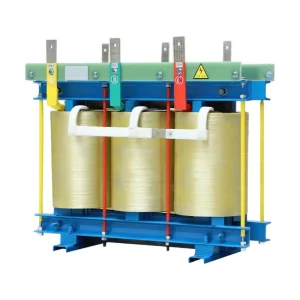
OEM SG(B)10 Type 10kV Series Non-encapsulated Coil Dry Type Transformer Suppliers, Company
Explore Technical Specs -
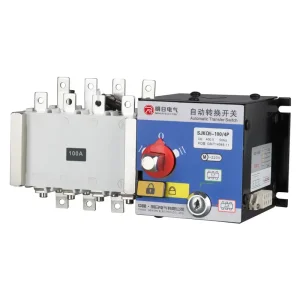
Wholesale SJKQ5 ATS Dual Power Automatic Transfer Switch Supplier, Manufacturers
Explore Technical Specs -
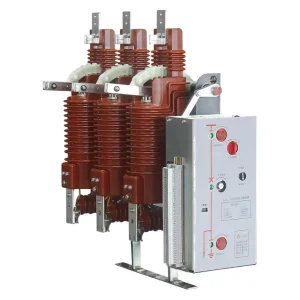
ODM VSY2-12GD Miniaturized Three-Position High Voltage Vacuum Circuit Breaker Manufacturers, Factory
Explore Technical Specs -
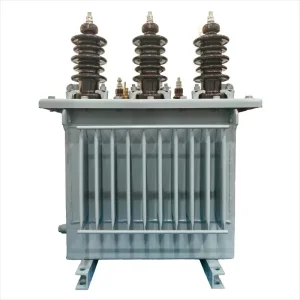
OEM S11-M 10kV Fully-Sealed Distribution Transformer - China Suppliers & Factory for Reliable Power Solutions Suppliers, Supplier
Explore Technical Specs -
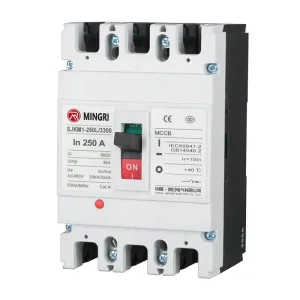
Wholesale SJKM1 Moulded Case Circuit Breaker (MCCB) from China Suppliers for Reliable Power Protection in Factories Manufacturers, Manufacturer
Explore Technical Specs -
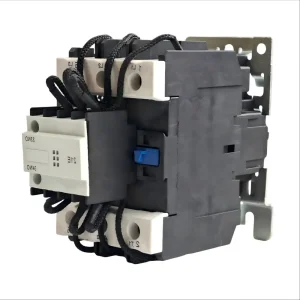
Wholesale CJ19 Series Capacitor Switching Contactor 380V 50/60Hz - Reliable China Suppliers & Factory for Power Factor Correction Supplier, Factory
Explore Technical Specs -
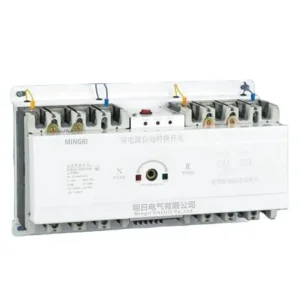
High-Quality SJKQ2 Dual Power Automatic Transfer Switch Factories, Company
Explore Technical Specs -
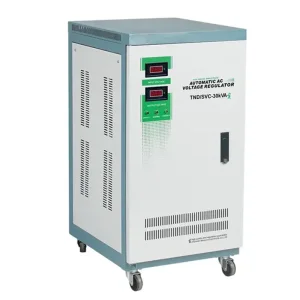
ODM TND/S Two Phase Series Fully Automatic Ac Voltage Regulator Manufacturers, Factory
Explore Technical Specs