Flagship Uninterruptible Power Architectures for Paris
Engineered for high power density, maximum double-conversion efficiency (up to 97.2% VFI Mode), and seamless integration into EN 50600 and NF C 15-100 compliant electrical infrastructures across Greater Paris.
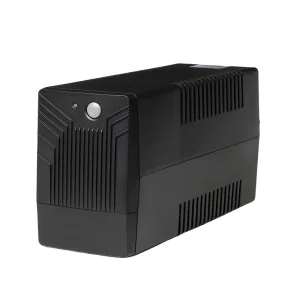
- Zero-noise standby topology for office clusters
- Fast sub-4ms transfer time to battery power
- Smart battery life diagnostic management
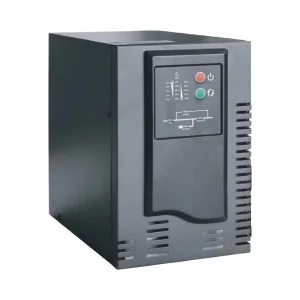
- 3-Level IGBT topology with Unity PF (1.0)
- Compact footprint ideal for urban edge centers
- THDi < 3% to preserve power grid quality
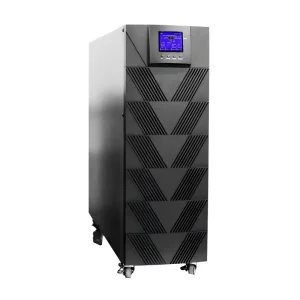
- Built-in output isolation transformer
- High overload capability up to 150% for 1 min
- Resilient against high inrush currents
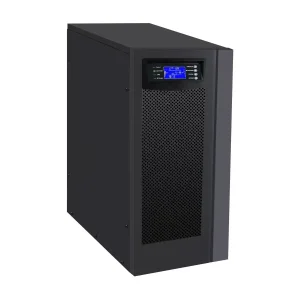
- N+X parallel redundancy configuration
- Advanced DSP multi-core digital controller
- Compatible with LiFePO4 battery cabinets
The Paris Power Landscape: Strategic Industrial & Data Infrastructure
A rigorous review of uninterruptible power supply demands across the Île-de-France region, driven by the expansion of hyperscale cloud zones, the Grand Paris Express transit network, and European clean energy directives.
The Île-de-France Data Hub: Europe's Strategic Digital Backbone
The Paris metropolitan region stands alongside Frankfurt, London, Amsterdam, and Dublin as the core of the FLAP-D data center corridor. Clusters across Seine-Saint-Denis, Pantin, and Magny-les-Hameaux are experiencing double-digit capacity increases to support European Sovereign Cloud initiatives and high-density generative artificial intelligence training clusters.
Under French environmental mandates, including RE2020 and corporate adherence to ISO 50001 energy management frameworks, facilities in Paris face strict energy efficiency thresholds. Datacenter operators can no longer accept low-efficiency UPS architectures. The local standard requires transformerless IGBT-based UPS topologies capable of delivering over 96.5% efficiency in true double-conversion mode and exceeding 99% in intelligent eco-modes, combined with ultra-low total harmonic distortion (THDi < 3%).
Additionally, electrical grid interactions governed by RTE (Réseau de Transport d'Électricité) and Enedis require enterprise power systems to provide frequency support and avoid reactive penalties, positioning UPS solutions not merely as passive safety nets, but as dynamic energy management assets.
Grid Transition & Enedis Harmonization
Integration with French medium-voltage (20 kV) step-down sub-stations requires switchgear and UPS front-ends that adhere to strict surge withstand (IEC 61000-4-5) and low phase-displacement standards.
Urban Densification & Space Constraints
Paris real estate commands a massive premium. Modern installations necessitate modular UPS architectures providing up to 500 kW per cabinet footprint, reducing occupied white space by over 40%.
LiFePO4 Chemistry Substitution
Rapid obsolescence of Valve-Regulated Lead-Acid (VRLA) batteries across Île-de-France. Advanced Lithium Iron Phosphate (LFP) delivers 3x the cycle life, 70% weight reduction, and superior thermal stability.
Global Semiconductor Evolution
The global UPS sector is transitioning from traditional silicon-based insulated gate bipolar transistors (IGBTs) to Silicon Carbide (SiC) and Gallium Nitride (GaN) wide-bandgap switches. This lowers internal switching losses by 45% and allows higher carrier frequencies.
- 40% thermal dissipation reduction
- Zero audible noise switching options
- Mean Time Between Failures > 350,000 hrs
La Défense Financial Demands
Europe's premier dedicated business district houses global investment banking institutions, fintech cores, and trading desks. Every microsecond of electrical interruption risks millions of euros in transactional desynchronization.
- True Class 1 VFI-SS-111 compliance
- Zero-transfer-time static switching
- Dual bus distributed 2(N+1) designs
Grand Paris Infrastructure Overhaul
The Grand Paris Express project introduces 200 km of automated metro lines and 68 new stations. Signaling, automated track braking, supervisory SCADA systems, and station tunnel ventilation rely on low-frequency industrial UPS.
- Galvanic output isolation transformers
- EN 50121-4 railway electromagnetic compatibility
- Heavy surge & vibration mechanical resilience
Engineered Deployment Matrices Across Greater Paris
From healthcare intensive care complexes under the AP-HP to specialized aerospace research hubs in the southern suburbs, our UPS platforms are tailored to exact local site parameters.
| Vertical Sector | Paris Regional Concentration | Dominant Grid Vulnerabilities | Recommended UPS Architecture | Compliance & Norms |
|---|---|---|---|---|
| Colocation & Cloud Hyperscalers | Saint-Denis, Pantin, Aubervilliers, Clichy | Dynamic voltage sag, phase balance fluctuations, high harmonic content | Modular High-Frequency Online Double Conversion (N+X parallel bus) | EN 50600-2-2, IEC 62040-3 VFI-SS-111, ISO 50001 |
| Healthcare & Clinical Surgery | AP-HP Network, Pitié-Salpêtrière, Necker Hospital | Medical imaging load surges (MRI/CT), zero-tolerance outage limits | Industrial Low-Frequency Online UPS with Dual Galvanic Isolation | NF C 15-211 (Medical premises), IEC 60364-7-710 |
| Metro & High-Speed Transit | RATP Network, Grand Paris Express (Lines 14-18) | Electromechanical inductive kickback, 3rd harmonic line distortion | Ruggedized Low-Frequency 3-Phase UPS with Anti-Resonance Cabinets | EN 50121-4, EN 50155, NF F 16-101 (Fire safety) |
| Commercial Banking & Fintech | Paris 8th Arrondissement, Paris La Défense | Micro-second transient impulses, data packet corruption risks | High-Density Modular Online UPS with Integrated Lithium-Ion BESS | Tier III / Tier IV Uptime Institute, NF C 15-100 |
| Aerospace & Defense R&D | Saclay Innovation Cluster, Vélizy-Villacoublay | High inductive motor testing, rapid cycling laboratory loads | Custom Industrial Frequency Online UPS with Bidirectional Inverters | CE, ISO 9001, IEC 61439 Switchgear Integration |
Technology Roadmap: 2026–2035 Grid Interactivity
Addressing the shifting paradigm from standalone backup power supply to intelligent grid stabilization, distributed battery storage economics, and predictive AI self-healing systems.
Grid-Interactive "UPS-as-a-Reserve"
With Paris increasing renewable penetration from offshore wind and solar, grid frequency fluctuations occur more frequently. Modern UPS systems now incorporate bidirectional rectifiers, enabling facilities to provide Frequency Containment Reserve (FCR) back to RTE while maintaining safety reserves.
- Monetization via demand-response contracts
- Autonomous peak shaving algorithms
- Real-time state-of-charge margin safety
AI Predictive Life-Cycle Telemetry
Replacing reactive calendar maintenance with dynamic predictive analytics. Integrated IoT sensors continuously evaluate DC bus capacitor degradation, thermal stress signatures, and semiconductor gate resistance, notifying Paris facility engineers months before physical failure.
- MTTR decreased to under 30 minutes
- Automated thermal mapping via infrared sensors
- Secure Modbus-TCP & SNMPv3 integration
Eco-Pass Eco-Conscious Topologies
Modern topologies offer dynamic double conversion: continuous load monitoring enables systems to operate in ultra-efficient static bypass mode during clean grid conditions, switching to full double conversion in less than 2 milliseconds upon the slightest voltage deviation.
- 99.1% operating efficiency in ECO-mode
- Significant carbon credit savings under EU ETS
- Redundant power supplies across all control boards
Integrated Medium-to-Low Voltage Protection & Power Quality Equipment
Uninterruptible continuity requires a robust electrical chain. Explore our certified switchgear, control transformers, DC disconnect breakers, and harmonic elimination cabinets designed for comprehensive facility protection.
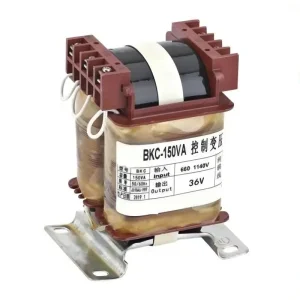
- High-grade silicon steel lamination core
- Low eddy current losses & temperature rise
- Certified to IEC 61558-2-4 standards
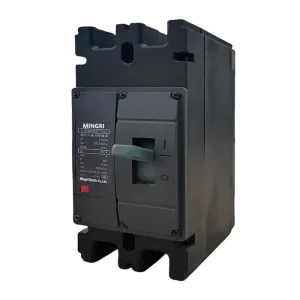
- Rated voltage up to 1500 VDC rating
- Fast arc extinguishing chamber design
- Reliable isolation for battery banks
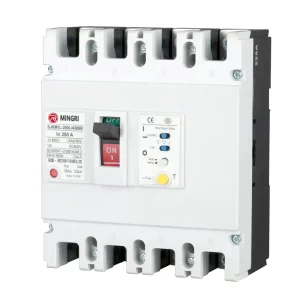
- Adjustable residual operating current
- Critical fire-hazard prevention cutoff
- Full compliance with IEC/EN 60947-2
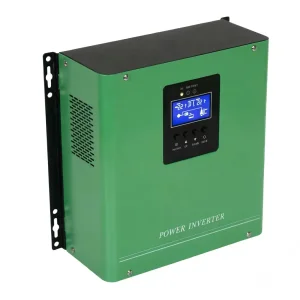
- Pure sine wave high-stability output
- Smart solar MPPT charge controller built-in
- Flexible utility grid and battery mixing
- Multi-level inverter control architecture
- High short-circuit clearance capability
- Intelligent battery thermal compensation
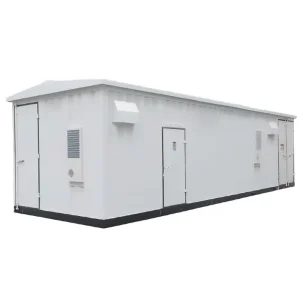
- Weatherproof IP54 enclosure with HVAC
- Integrated MV switchgear, transformer & UPS
- Rapid plug-and-play field commissioning
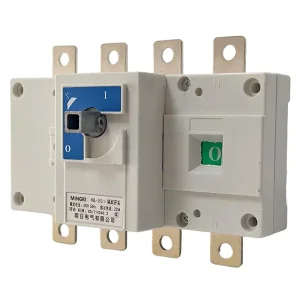
- Zero-break continuous maintenance isolation
- High mechanical endurance up to 10,000 cycles
- Rated up to 3150A for large main panels
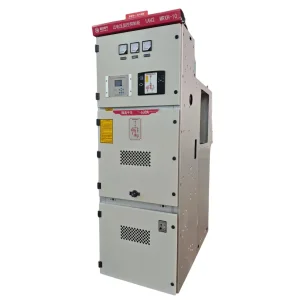
- Mitigates ferroresonance in medium voltage
- Protects PTs and electronic UPS front-ends
- Fully compliant with French grid code standards
Electrical Architecture Comparison: Topology Decision Matrix
Selecting the optimal topology for enterprise facilities across Île-de-France requires balancing footprint, capital expenditure, lifecycle efficiency, and isolation requirements.
| Architecture Feature | High-Frequency Transformerless Online (MCHF) | Low-Frequency Industrial with Isolation (MCL31 / MCL33) | Standby Modular (MCEX / MCTA) | Hybrid Energy Inverter Architecture (MCS) |
|---|---|---|---|---|
| Classification (IEC 62040-3) | VFI-SS-111 (Double Conversion) | VFI-SS-111 (True Heavy Industrial) | VFD / VI (Passive Standby / Interactive) | Bi-Directional Multimode Inverter |
| Typical Power Range | 10 kVA – 800 kVA (Modular parallel) | 10 kVA – 1200 kVA (Parallelable) | 500 VA – 3 kVA (Distributed) | 1 kVA – 15 kVA (Renewable linked) |
| VFI Mode Efficiency | 96.5% – 97.2% | 94.0% – 95.8% | Up to 98% (Mains passthrough) | 94.5% – 96.0% |
| Transfer Time to Battery | 0 ms (True seamless) | 0 ms (True seamless) | 2 ms – 6 ms | 4 ms – 10 ms |
| Galvanic Isolation | Optional external cabinet | Fully integrated built-in copper transformer | None | Integrated electronic isolation |
| Primary Paris Use Case | Tier III/IV Hyperscale Data Centers, Cloud Servers | Rail traction control (RATP), Nuclear medical (AP-HP) | Edge micro-racks, decentralized network rooms | Micro-grids, solar-supplemented tertiary buildings |
Frequently Asked Questions: Industrial UPS in Paris & France
Key regulatory, environmental, and engineering questions answered for electrical consultants, engineering contractors (EPCs), and facility directors.
What French electrical standards govern UPS installations in Paris?
Installations must strictly comply with NF C 15-100 (low-voltage electrical installations), covering neutral earthing arrangements (such as TT, TN-S, or IT systems) and discrimination protection. For medium-voltage connections, NF C 13-100 applies. Equipment must satisfy European standards EN 62040-1 (safety), EN 62040-2 (electromagnetic compatibility), and EN 62040-3 (performance test methods). Data center deployments frequently require alignment with EN 50600.
How does RE2020 impact UPS equipment selection in Île-de-France?
The French RE2020 regulation strictly targets embodied and operational carbon in building construction and infrastructure. For electrical engineers, this requires selecting UPS platforms that demonstrate high efficiency (minimizing heat dissipation and HVAC power), compact physical footprints, and compatibility with recyclable Lithium-Iron-Phosphate (LFP) energy storage, which delivers lower lifecycle carbon footprints compared to traditional lead-acid batteries.
What is the advantage of Low-Frequency vs High-Frequency UPS in Paris industries?
High-frequency transformerless UPS systems (like our MCHF series) are lighter, have a smaller footprint, and offer high efficiency, making them standard for commercial IT and colocation data centers. Conversely, low-frequency UPS systems (such as the MCL31 and MCL33 series) feature heavy-duty built-in copper isolation transformers that provide physical galvanic separation between input and load. This makes them indispensable in harsh environments like Grand Paris Express railways, pharmaceutical facilities, and AP-HP hospital operating rooms subject to heavy inductive motor spikes and electrical noise.
Are these systems compatible with emergency generator sets used in Paris?
Yes. Our systems feature active input power factor correction (PFC > 0.99) and an input current distortion rate of less than 3% (THDi). Additionally, soft-start walk-in controls limit inrush currents when switching over to backup diesel or gas generator sets (e.g., Kohler-SDMO, Cummins). This ensures generator sizing ratios can remain compact (1.1x to 1.2x UPS capacity) without causing generator hunting or tripping.
How are batteries recycled and managed in compliance with French ADEME regulations?
Under French environmental legislation enforced by ADEME (Agence de la transition écologique) and the EU Battery Directive (Directive 2006/66/EC and Regulation 2023/1542), manufacturers and suppliers must provide structured end-of-life take-back and recycling mechanisms. Our Lithium-Iron-Phosphate battery cabinets are designed with non-toxic, non-cobalt chemistry and feature modular disassembly protocols to guarantee high reclamation rates of copper, lithium, and steel casing.
What redundancy architectures are typical for La Défense financial facilities?
Financial firms and algorithmic trading centers generally deploy 2(N+1) or distributed redundant (catch-bus) system architectures. Each server or critical terminal receives dual power cords fed from separate UPS systems with synchronized phase outputs via a Static Transfer Switch (STS) or parallel load synchronization (LBS) bus. This ensures maintenance can occur on any power train without load disruption.