Featured Industrial & Enterprise UPS Systems for Milan Projects
Engineered for severe harmonic mitigation, double-conversion efficiency, and zero transfer interruptions across Milan’s industrial clusters and IT colocation hubs.
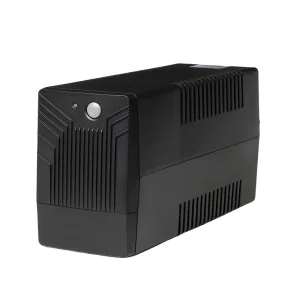
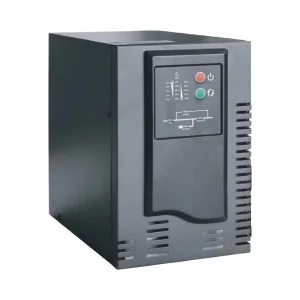
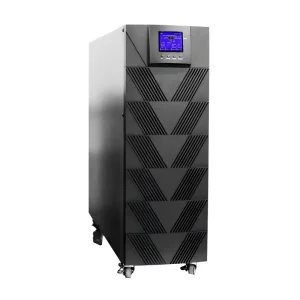
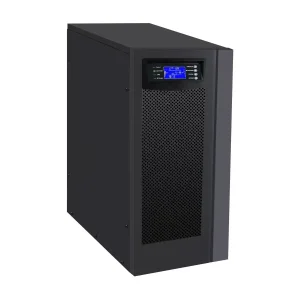
Industrial Electrification & Power Dynamics in Milan & Lombardy
As Italy’s premier economic engine producing over 22% of national GDP, Milan and the broader Lombardy region represent a uniquely demanding electrical environment characterized by high-density colocation computing, high-precision mechatronics, and rigorous EU decarbonization mandates.
Data Capital & Hyperscale Hubs
The Milan metropolitan area—specifically the Caldera campus, Settimo Milanese, and Cornaredo corridors—has emerged as Southern Europe’s top-tier digital gateway. These hyperscale and carrier-neutral colocation facilities require modular UPS systems that support Tier III and Tier IV fault tolerance, sub-millisecond static bypass transfer, and continuous harmonic suppression under 100% non-linear computing loads.
Advanced Mechatronics & Industry 4.0
Stretching across Monza, Brianza, Bergamo, and Brescia, Lombardy’s precision mechanical engineering sector relies on heavy-duty robotic welding, 5-axis CNC machining centers, and automated manufacturing lines. Transients, inductive spikes, and voltage sags cost precision plants millions per event, necessitating robust low-frequency, transformer-isolated UPS architectures capable of handling heavy inrush currents.
Pharmaceutical & Biomedical Clusters
With Milan hosting international healthcare hubs, biological research institutions, and large pharmaceutical production facilities along the Via Emilia corridor, continuous power reliability is tied to regulatory compliance. Our purified sine-wave topologies guarantee non-stop operation of cryogenic cold chains, continuous fermentation tanks, and critical sterilization processes without waveform harmonic distortion.
Mitigating Power Quality Degradation in European Grids
The accelerated integration of distributed renewable energy across Europe has created dynamic grid volatility. Frequency variations, sub-cycle voltage sags, switching transients, and utility switching operations create an unforgiving operational environment for critical microelectronics.
| Grid Disturbance Type | Physical Cause in Modern Grids | Industrial Consequence | Hardware Engineering Mitigation |
|---|---|---|---|
| Voltage Sags & Dips (>10 ms) | Remote short-circuits, heavy motor starting, and localized load imbalances. | PLC dropouts, variable frequency drive trips, and automated line halts. | Double-conversion topology with continuous DC link buffer; zero break battery takeover. |
| Harmonic Distortion (THD-V > 8%) | Inverter non-linear switching, EV fast chargers, and switched-mode power supplies. | Transformer overheating, premature capacitor degradation, neutral overheating. | Active 3-level IGBT rectifiers with digital power factor correction achieving THDi <3%. |
| Micro-Interrupts & Transients | Grid feeder reclosing, capacitor bank switching, and lightning surges. | Semiconductor breakdown, memory corruption in servers, communication protocol faults. | Heavy-duty MOV surge suppressors coupled with galvanic isolation transformers. |
| Frequency Deviations (±0.5 Hz) | Intermittent renewable generation without sufficient mechanical rotational inertia. | Generator synchronization failure, synchronous clock drift, cooling fan stalls. | Frequency-independent voltage regulation (VFI-SS-111 compliance per EN 62040-3). |
Technological Roadmap: From SiC Semiconductors to Grid-Interactive UPS
Modern mission-critical facilities demand that UPS units evolve from passive insurance policies into dynamic energy assets capable of bidirectional grid interaction, AI health diagnostics, and optimized footprint densities.
Silicon Carbide (SiC) 3-Level Topologies
By substituting standard silicon IGBTs with advanced Silicon Carbide (SiC) MOSFET semiconductors in our online double-conversion stages, switching frequencies increase tenfold while reducing thermal dissipation losses by over 40%. The resulting system achieves up to 98.8% full-load efficiency in true double-conversion mode and over 99.4% in intelligent ECO-mode. This massive thermal reduction allows data centers and cleanrooms to significantly downsize their cooling HVAC infrastructure, lowering PUE (Power Usage Effectiveness) metrics across Milan facilities.
LiFePO4 Integration & Cell-Level BMS Architecture
Transitioning from heavy Valve Regulated Lead-Acid (VRLA) batteries to non-flammable Lithium Iron Phosphate (LiFePO4) storage reduces physical system footprint by 65% and weight by 70%. Integrated multi-tier Battery Management Systems (BMS) provide real-time telemetry on internal cell resistance, temperature gradients, state-of-charge (SoC), and state-of-health (SoH). Designed for 15+ years of operational service life and over 4,000 cycles, our lithium systems eliminate the routine 3-to-5-year battery replacement cycle.
Bidirectional Grid-Interactive VPP Capabilities
In alignment with Italy’s transmission system operator (Terna) regulatory pilots for Fast Reserve and tertiary demand response, our intelligent UPS platforms support Fast Frequency Reserve (FFR) functionality. Equipped with bidirectional converters, units can dynamically modulate energy absorption or feed controlled active power back to local microgrids to shave peak energy costs during high-tariff periods—without compromising downstream critical load reliability.
Predictive Digital Twins & AI Component Telemetry
Every critical subsystem—including DC bus electrolytic capacitors, high-speed DC cooling fans, and power semiconductor junction thermal paths—is monitored via predictive edge algorithms. By tracking Equivalent Series Resistance (ESR) degradation and junction thermal deltas against digital twin baseline profiles, our controllers dispatch automated maintenance alerts months before physical degradation can induce unpredicted system failure.
China OEM/ODM Manufacturing Resilience & Global Delivery Engine
Combining deep R&D engineering with our Yueqing manufacturing hub enables unmatched manufacturing velocity, direct structural cost control, and comprehensive bespoke customization for European systems integrators.
End-to-End Component Vertical Integration
Located within the world’s foremost low- and medium-voltage electrical manufacturing cluster, our factory manages the complete value chain in-house: automated transformer winding, CNC sheet metal fabrication, SMT automated surface mount electronics placement, and multi-stage copper busbar bending. By eliminating external tiered sub-assemblers, we maintain total quality traceability and compress manufacturing lead times to 2-4 weeks.
Comprehensive Full-Load Stress Testing
Before export, every single UPS unit undergoes exhaustive quality testing in our certified laboratories: 100% full-load thermal burn-in, inductive load dump handling, extreme unbalanced load stability checks, step-load transient response testing (0% to 100% to 0%), and short-circuit withstand validation. Certified factory test reports accompany each dispatch to facilitate streamlined local European on-site commissioning.
Competitive Total Cost of Ownership (TCO)
Bypassing complex intermediary distribution networks allows European EPC contractors and plant operators to source Tier-1 electrical grade apparatus at factory-direct pricing. Coupled with high-reliability components engineered for 100,000+ hour MTBF (Mean Time Between Failures), our units reduce lifetime operational expenditure by up to 35% compared to conventional European branded offerings.
European Standards & Italian Regulatory Certifications
Our power systems meet and exceed all harmonized European directives, IEC international standards, and Italian CEI installation requirements to guarantee unhindered facility certification and safety audits.
EN/IEC 62040 Standard Series Adherence
Full compliance with EN 62040-1 (General and safety requirements for UPS in operator access areas), EN 62040-2 (Electromagnetic compatibility Category C1/C2/C3 emission and immunity requirements), and EN 62040-3 (Method of specifying performance and test requirements). Certified classification as VFI-SS-111 guarantees the highest grade of independent voltage and frequency protection against all upstream supply variations.
Italian CEI 0-16 & CEI 0-21 Grid Interconnection
For grid-interactive installations, energy storage tie-ins, and industrial backup systems connected to Italian distribution utilities (e.g., e-distribuzione, Unareti in Milan), our control systems adhere precisely to technical rules for MV connection (CEI 0-16) and LV connection (CEI 0-21), ensuring compliant frequency drift trip curves and active/reactive power injection control.
Integrated Electrical Distribution & Circuit Safety Systems
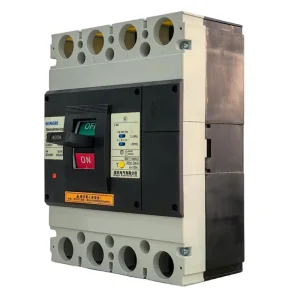
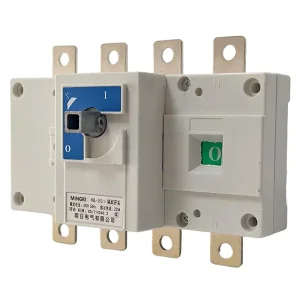
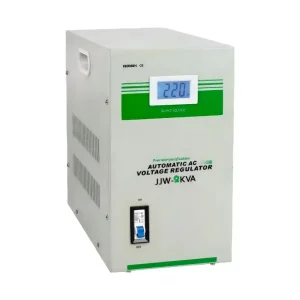
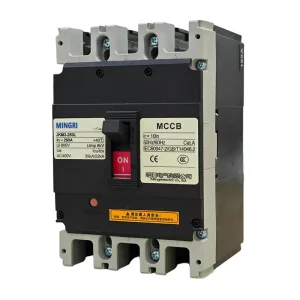
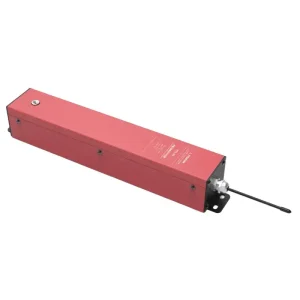
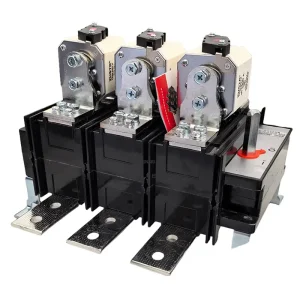
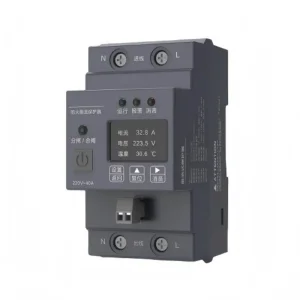
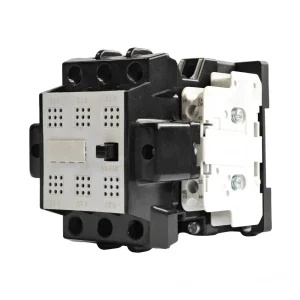
A truly resilient UPS architecture relies on coordinated upstream isolation, downstream sub-distribution, and rapid arc suppression. Explore our integrated safety components deployed alongside critical UPS power rooms.
Frequently Asked Technical Questions (FAQ)
Authoritative technical insights for electrical consultants, data center facility engineers, and procurement directors evaluating industrial UPS systems in the European common market.
What is the structural difference between high-frequency and low-frequency transformer-based UPS systems?
High-frequency UPS systems (such as our MCHF series) utilize advanced IGBT rectification and high-speed DC-to-DC conversion, eliminating the need for bulky output low-frequency isolation transformers. This produces exceptional efficiency (up to 98.5%), lower weight, and a compact footprint ideal for corporate enterprise and colocation data rooms. Conversely, low-frequency systems (such as the MCL31 and MCL33 series) incorporate an integrated, heavy copper galvanic isolation transformer at the inverter output. This physical barrier completely isolates the critical load from upstream DC bus anomalies, provides superior protection against severe short-circuits, and readily handles massive inductive inrush currents typical of CNC machinery, industrial induction heaters, and medical imaging scanners in heavy manufacturing environments.
How does EN 62040-3 VFI-SS-111 classification protect critical European installations?
The EN 62040-3 standard defines performance categories using a 9-character code. "VFI" signifies Voltage and Frequency Independent, confirming that the output voltage and frequency are generated entirely by the inverter, irrespective of upstream utility variations. "SS" denotes that the output waveform is a clean Sine wave under both linear and non-linear loads. The "111" classification confirms the highest dynamic performance tier: the output voltage remains within strict limits during normal operation, step-load changes (0-100%), and mode transitions (mains to battery and vice-versa) with zero transfer interruption (<0 ms break).
Can your UPS systems synchronize seamlessly with on-site diesel or natural gas backup generators?
Yes. Our online double-conversion units are engineered with wide input frequency acceptance windows (configurable from 40 Hz to 70 Hz) and soft-start programmable rectifier control (adjustable walk-in rate from 5 to 30 seconds). This completely avoids sudden loading shocks that can stall standby diesel generator engines during transfer. Furthermore, with an input power factor exceeding 0.99 and THDi suppressed below 3%, our systems prevent generator voltage hunting and overheating, enabling a 1:1.15 generator-to-UPS sizing ratio rather than the costly 1:2.0 oversizing historically required by legacy systems.
Why is Lithium Iron Phosphate (LiFePO4) increasingly preferred over traditional VRLA batteries in Milan facilities?
In metropolitan hubs like Milan where square meter commercial real estate commands high premiums, LiFePO4 chemistry yields major physical and financial advantages. LiFePO4 delivers 3x the energy density of VRLA, freeing up more than 60% of floor space and reducing floor load reinforcement costs due to a 70% weight decrease. Thermally, LiFePO4 operates comfortably up to 30°C without rapid degradation, significantly decreasing air-conditioning energy consumption. With a design life of 15 years and over 4,000 deep discharge cycles (compared to 3-5 years and 300 cycles for lead-acid), total lifecycle replacement disruptions and disposal liabilities under EU Battery Directives are drastically minimized.
What is the standard procedure for spare parts procurement and international engineering commissioning?
We operate a structured support model tailored for European technical contractors. All modular components—including power modules, static bypass cards, and control microcontrollers—are built on universal plug-and-play field-replaceable architecture. We maintain dedicated regional spare parts reserves and collaborate directly with local Italian MEP engineering firms to conduct factory witness testing (FAT), site acceptance testing (SAT), and remote telemetry commissioning via encrypted cloud gateways.