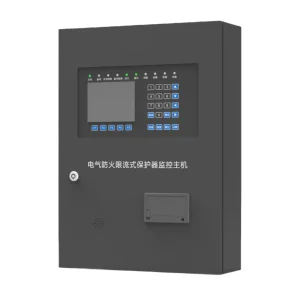
Substation Safety • Main Unit
Engineered for TNB, SESB, and SESCO network parameters, ensuring fault-current limitation, arc mitigation, and seamless distribution substation integration.
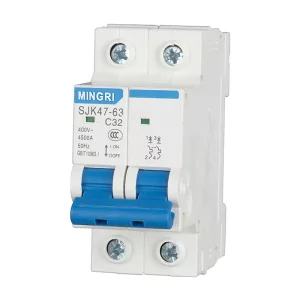
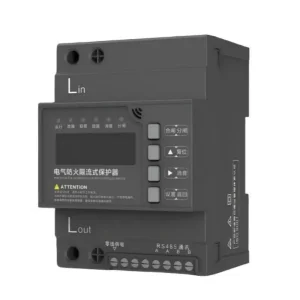
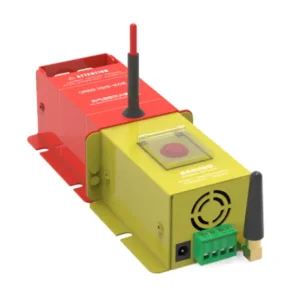
Navigating technical shifts in Tenaga Nasional Berhad (TNB), Sarawak Energy Berhad (SEB), and Sabah Electricity Sdn Bhd (SESB) regulatory territories.
Malaysia is currently undergoing one of the most aggressive electrical infrastructure modernizations across the ASEAN region. Governed by the Energy Commission of Malaysia (Suruhanjaya Tenaga), the National Energy Transition Roadmap (NETR) mandates accelerated renewable penetration, decentralized mini-grids, and cross-border interconnectors like the ASEAN Power Grid. Peninsular Malaysia's utility giant, Tenaga Nasional Berhad (TNB), is modernizing sub-transmission (132 kV, 275 kV, 500 kV) down to distribution lines (33 kV, 22 kV, and 11 kV stepping down to 415 V three-phase / 240 V single-phase), requiring transformers capable of withstanding dynamic bi-directional power flows, steep harmonics from industrial variable speed drives, and intense tropical weathering.
In East Malaysia, Sarawak Energy (SESCO) leads Southeast Asia in green hydropower deployment, attracting aluminum smelters, polysilicon manufacturing, and green hydrogen hubs along the Samalaju industrial belt. Meanwhile, Sabah Electricity (SESB) emphasizes islanded distribution stability, requiring compact substations and step-up transformers with wide tap-changer tolerances to smooth voltage sags across remote plantations and coastal ports.
Hyperscale clusters across Sedenak Tech Park, Nusajaya, and Cyberjaya demand ultra-reliable dry-type and K-factor rated isolation transformers with partial discharge < 10 pC, low excitation losses, and integration with SCADA/BMS systems.
Penang’s Bayan Lepas and Batu Kawan industrial parks, together with Kulim Hi-Tech Park (KHTP) in Kedah, require zero micro-outage tolerances. Transformers must exhibit high short-circuit withstand withstand capability and low electromagnetic interference (EMI).
Large-Scale Solar (LSS4, LSS5) installations across Kedah, Perak, and Terengganu require skid-mounted step-up substation packages equipped with electrostatic shielding, harmonic suppression for central inverters, and high-efficiency core architectures.
International benchmarks driving modern transformer design: from European EcoDesign Directive Tier 2 to high-permeability grain-oriented electrical steels.
Globally, the transformer manufacturing and distribution landscape faces twin dynamics: unprecedented demand generated by grid electrification, renewable energy growth, and artificial intelligence data centers, contrasted with strict global carbon reduction mandates. Key global paradigms driving our manufacturing standards include:
Utilizing high-grade, domain-refined Cold-Rolled Grain-Oriented (CRGO) magnetic silicon steel sheets (such as 23Q110 and 20Q085) minimizes no-load losses (hysteresis and eddy current losses) by up to 35% compared to conventional grades, matching IEC 60076-20 Level 2 standards.
Replacing traditional petroleum mineral oils with natural bio-esters (such as FR3) with fire flash points surpassing 300°C eliminates explosion risks in commercial high-rises and pristine tropical zones, while providing 100% biodegradability in compliance with ISO 14001.
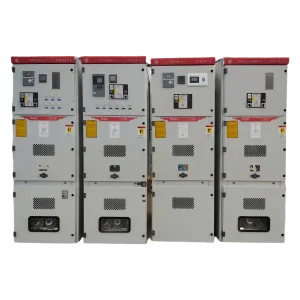
Phasing out high-GWP SF6 gases in medium-voltage ring network units and primary switchgear feeding distribution transformers. Adoption of dry air, N2/O2 mixes, and solid epoxy resin casting ensures complete compliance with global F-gas phaseouts.
Technical matrices engineered to bridge incoming utility parameters with critical commercial and heavy industrial operating environments.
| Transformer Architecture | Voltage Classes (kV) | Capacity Range (kVA/MVA) | Insulation / Cooling | Primary Malaysian Target Application |
|---|---|---|---|---|
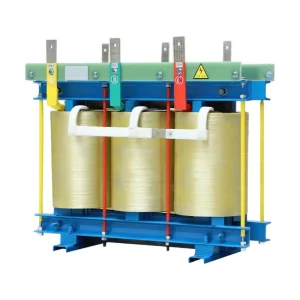
| Cast Resin Dry-Type (SCB/SGB) | 6.6 kV, 11 kV, 22 kV, 33 kV → 0.415 kV | 100 kVA to 5,000 kVA | Class F (155°C) / Class H (180°C) AN/AF | Kuala Lumpur High-Rise, Johor Data Centers, Subways, Cleanrooms |
| Hermetically Sealed Oil-Immersed | 11 kV, 22 kV, 33 kV → 0.415 kV / 6.6 kV | 250 kVA to 10,000 kVA | Mineral Oil / Natural Bio-Ester (ONAN/ONAF) | TNB Distribution Substations, Industrial Manufacturing Parks, Plantations |
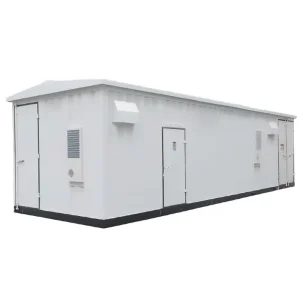
| Prefabricated Compact Substation | 11 kV, 22 kV, 33 kV Ring-Main Ready | 500 kVA to 3,150 kVA | IP54/IP55 Compartmentalized Hybrid | Rapid Deployment Tech Parks, Township Developments, Commercial Plazas |
| Solar Inverter Step-Up Skid | 0.6 kV, 0.8 kV → 11 kV, 22 kV, 33 kV | 1,000 kVA to 6,250 kVA | Multi-Winding Split Coil (ONAN/KNAN) | Large Scale Solar (LSS) Plants, Commercial Rooftop PV Farms |
| Heavy Duty Arc Furnace / Rectifier | 11 kV, 22 kV, 33 kV → Multiple LV Outputs | 2.5 MVA to 25 MVA | Forced Oil Water/Air Cooling (OFAF/OFWF) | Steel Foundries, Smelters, Chemical Chlor-Alkali Plants |
Standard temperate climate transformers fail prematurely in Malaysia due to rapid dielectric breakdown, severe tank rusting, and overheating. Mingri Electric engineers all transformer equipment designated for Malaysian export with customized equatorial hardening measures:
Malaysian average humidity regularly exceeds 90%. Windings undergo triple vacuum pressure impregnation (VPI) or vacuum casting with flame-retardant epoxy, eliminating micro-voids, tracking, and mold formation.
For installations in Pengerang (Johor), Kemaman (Terengganu), or Pasir Gudang, tanks receive a multi-stage thermal spray zinc or zinc-rich epoxy primer followed by polyurethane topcoats reaching >240 μm dry film thickness.
Unlike European standard 20°C/25°C average designs, windings and cooling channels are thermally calculated with low temperature rises (50K/55K) to maintain full nameplate capacity without insulation thermal aging.
Direct alignment with MS (Malaysian Standards), IEC international guidelines, and utility interconnection approval protocols.
Deploying transformers and medium-voltage switchgear in Malaysia demands uncompromising compliance with local statutory mandates overseen by Suruhanjaya Tenaga (Energy Commission) under the Electricity Supply Act 1990 (Act 447) and Electricity Regulations 1994. Our manufacturing facilities, engineering documentation, and product typologies are rigorously validated against:
Strict compliance with TNB Distribution Technical Specifications for 11kV/415V, 22kV/415V, and 33kV/11kV substations, including vector groups (Dyn11 standard), tap changers (±2.5%, ±5%), neutral grounding, and acoustic noise emissions restricted below 50 dBA.
Complete type-test portfolios carried out in accredited third-party laboratories (KEMA, ASTA, or CNAS certified), covering short-circuit withstand, temperature-rise testing, lightning impulse tests (BIL up to 170 kV), and sound power levels.
Fully certified for indoor basement and high-rise plant room deployments under Malaysian Fire and Rescue Department (BOMBA) regulations, utilizing dry-type self-extinguishing Class F1 cast resin matrices with zero toxic emissions.
Comprehensive FAT witnessing via high-definition digital live streaming or in-person visits to our Yueqing advanced manufacturing base, complete with on-site commissioning and engineering liaison teams serving West and East Malaysia.
Engineered turnkey integration for critical sectors powering the Malaysian national economy.
Heavy oil-immersed distribution units and explosion-proof compact substations installed in severe marine-petrochemical environments. Featuring pressurized tanks, nitrogen blanket options, high-grade 316 stainless steel hardware, and intrinsically safe sensor cabling.
Multi-MVA cast resin dry-type transformers running parallel with K-Factor ratings (K-13, K-20) to handle nonlinear high-frequency switch-mode power supplies. Equipped with RTD PT100 thermal protection, forced AF cross-flow blowers, and Modbus-RTU smart monitoring.
Prefabricated outdoor step-up compact substations integrating 0.8kV to 33kV transformers with integrated vacuum switchgear and SCADA telemetry. Sealed enclosure rating up to IP55 with double-wall thermal insulation prevents equatorial condensation.
Anticipating the technological horizon for Malaysia's smart grid evolution.
As Malaysia advances its smart grid agenda under TNB's Grid of the Future initiative, distribution transformers are evolving from passive iron-and-copper assemblies into intelligent, digitized edge nodes. Our product development roadmap focuses on three pivotal frontiers:
Embedded acoustic, optical fiber winding temperature sensors, and miniaturized multi-gas DGA probes transmit real-time dielectric health data to predictive AI algorithms, allowing Malaysian asset managers to transition from reactive maintenance to condition-based operational models.
Integrating high-voltage silicon carbide (SiC) semiconductors with high-frequency magnetic links. SSTs enable direct medium-voltage AC to low-voltage DC conversion, perfectly optimized for ultrafast EV charging hubs along the North-South Expressway and microgrids.
Expanding the standard catalog of synthetic and palm-derived natural esters with higher moisture tolerance and prolonged transformer lifespan under Malaysian tropical conditions, ensuring 100% soil non-toxicity in plantation and watershed regions.
Direct answers to the most common engineering, compliance, and ordering inquiries.
The predominant distribution voltage in Peninsular Malaysia under TNB is 11 kV stepping down to 415 V (three-phase line-to-line) or 240 V (single-phase line-to-neutral) at 50 Hz. In certain industrial hubs, data centers, and heavy infrastructure regions, 22 kV and 33 kV systems are widely utilized. We manufacture transformers compatible with all standard voltage inputs with customized off-circuit tap changers (OCTC) or on-load tap changers (OLTC) covering ±2 × 2.5% regulation steps.
Under BOMBA (Malaysian Fire Department) guidelines, indoor sub-stations and basement transformer installations face strict fire-safety restrictions. Cast resin dry-type transformers (such as our SCB10/SCB13 series) feature self-extinguishing epoxy resins, eliminating oil leakages, volatile flammable vapors, and environmental contamination risks while providing high short-time overload capability.
Our transformers undergo environmental design calculations tailored for an ambient temperature baseline of 40°C (with peak ceilings reaching 45°C) and relative humidity exceeding 90%. We utilize Class H/F insulation materials, enlarged cooling ducts, vacuum pressure impregnation with anti-fungal varnishes, and marine-grade C5-M polyurethane coatings on all external enclosures.
Yes. In compliance with TNB standard distribution guidelines, Dyn11 is our standard configuration for MV to LV step-down units to provide a solid neutral connection for single-phase residential/commercial loads and trap third-harmonic zero-sequence currents. Alternate vector connections such as Ynd11, Dd0, or dual secondary split windings for renewable PV inverters are routinely engineered.
We supply a complete engineering documentation package including full type test reports from internationally recognized labs (covering short circuit, temperature rise, and impulse tests according to IEC 60076), routine factory test certificates, single-line diagrams (SLD), GA layout drawings, foundation loading calculations, and operational maintenance manuals.
Standard distribution transformers and modular substations carry a typical production schedule of 4 to 6 weeks depending on volume and customization. Sea freight transit from our coastal Ningbo/Shanghai export ports to Port Klang or Penang Port typically requires only 7 to 10 days, ensuring rapid project timelines for Malaysian turnkey projects.
Explore our complete portfolio of type-tested dry-type transformers, intelligent modular substations, and low/medium-voltage distribution assemblies.