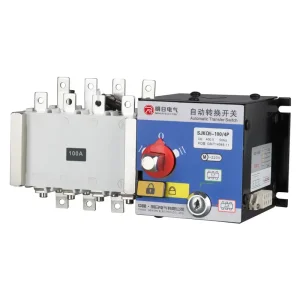
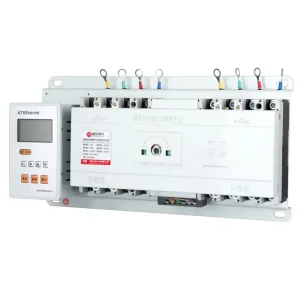
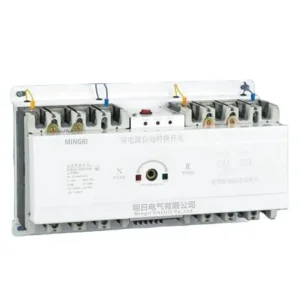
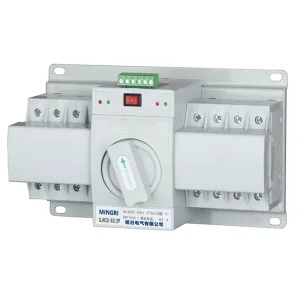
Flagship Intelligent Dual-Power Automatic Transfer Switches (ATS)
Engineered for high-frequency electrical switching in commercial, industrial, and solar photovoltaic systems across Brazil, fully conforming to ABNT NBR IEC 60947-6-1 and NR-10 standards.
Industrial Dynamics & Electrical Infrastructure Landscape in Brazil
Comprehensive insights into Brazil’s National Interconnected System (SIN), distributed renewable energy booms, and the rigorous operational standards required for South American industrial deployments.
The Brazilian Grid Revolution: High Solar Penetration & Grid Resilience
Brazil’s electricity matrix is internationally celebrated for its massive reliance on hydroelectricity, yet recent years have witnessed an aggressive expansion of solar photovoltaic generation under ANEEL (Agência Nacional de Energia Elétrica) regulations. With mini and micro distributed generation (Geração Distribuída - GD) exceeding 30 gigawatts, switchgear systems must withstand bidirectional power flows, rapid voltage oscillations, and constant islanding events.
Commercial and industrial complexes throughout São Paulo, Minas Gerais, Bahia, and Rio de Janeiro face critical continuity challenges due to localized thunderstorms, transmission line congestion, and seasonal drought curtailments. Panel builders (quadristas) and EPC contractors demand Automatic Transfer Switches (ATS) and load break disconnectors that guarantee sub-cycle switching, reliable galvanic separation, and zero risk of phase clashes during automated utility-to-generator transitions.
Navigating NR-10 Safety Directives & Tropicalization Demands
Engineering electrical equipment for Brazil requires far more than generic low-voltage assembly. The Ministério do Trabalho e Emprego enforces NR-10 (Norma Regulamentadora 10), mandating rigorous operator safety, positive contact break indication, padlocking capability in the OFF position, and IP2X finger-safe barrier protection on all live terminal shrouds.
Furthermore, Brazil’s diverse biomes—ranging from equatorial humidity in the Amazon basin to high-salinity maritime atmospheres along the Santos and Rio coastlines—demand comprehensive tropicalization. Switchgear housings must utilize flame-retardant, anti-tracking thermoset compounds (CTI > 600V), while conductive busbars require electro-tin or silver plating exceeding 8-12 microns to defeat sulfur dioxide corrosion, galvanic pitting, and mold proliferation.
Tailored ODM Switch Architecture for Brazilian Strategic Sectors
Custom switchgear topologies formulated to solve operating friction points in Agribusiness, Mining, Photovoltaic Infrastructure, and Critical Hyperscale Facilities.
Agribusiness & Ethanol Bio-Refineries
Spanning Mato Grosso, Goiás, and western São Paulo, Brazil’s massive agribusiness facilities require uninterruptible processing for grain silos, cold storage, and sugar-cane ethanol plants. Inrush currents from massive induction motors induce intense voltage sags. Our heavy-duty load isolation switches (HGL, HS13BX) provide high making and breaking capacities up to AC-23A utilization categories, sustaining direct switching under heavy motor load without contact welded failures.
- High mechanical endurance: Over 10,000 switching operations
- IP54/IP65 rotary mechanisms resistant to bagasse and grain dust
- Seamless integration with back-up diesel turbine generators
Mining & Metals Processing (Vale Corridor)
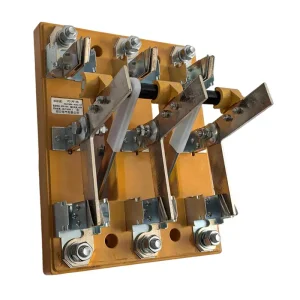
In the Iron Quadrangle of Minas Gerais and the Carajás mining district of Pará, electrical distribution operates in iron ore particulate atmospheres with ambient vibrations. Our knife-melt isolation switches (HH15/QSA) and double-throw safety switches integrate cast-iron / heavy sheet-steel enclosure compatibility, silver-nickel stationary contacts, and transparent arc chutes that permit visual verification of contact separation in accordance with mining safety covenants.
- High short-circuit rating: Up to 100kA with integrated fuse-links
- Mechanical interlocks preventing door opening under energized load
- Tropicalized anti-seize actuation linkages
Utility-Scale Solar (Centralized & GD)
Brazil's northeastern sunbelt (Ceará, Piauí, Bahia) experiences surface ambient temperatures exceeding 45°C with severe UV irradiance. We manufacture specialized DC and AC disconnect switches rated for string combiner boxes and central inverter stations. Operating up to 1500V DC and 690V AC, these switches integrate magnetic arc blowout magnets and rapid spring-assisted toggle mechanisms that eliminate sustained direct-current arcing.
- Zero thermal derating up to 50°C internal enclosure ambient
- Compliant with ABNT NBR 16690 photovoltaic wiring standards
- Bimetallic copper-aluminum lug connectors for flexible cabling
China Factory 4.0: Manufacturing Prowess & Yueqing Hub Synergy
Harnessing automated component fabrication, robotic quality validation, and supply chain vertical integration to deliver ultra-reliable, cost-optimized switchgear directly to Brazilian importers.
End-to-End Vertical Manufacturing & Component Traceability
Headquartered in Yueqing, Zhejiang—the global epicenter of low- and medium-voltage electrical manufacturing—our manufacturing infrastructure leverages complete vertical integration. Unlike assemblers who outsource critical components, we fabricate our own copper busbars, precision punch tooling, thermosetting DMC/SMC molded enclosures, and silver-cadmium oxide / silver-tin oxide electrical contacts in-house.
Every single ATS mechanism and knife disconnect switch passes through our computer-monitored MES (Manufacturing Execution System). From raw electrolytic copper ingot sourcing to automated stamping, ultrasonic riveting, laser-welded arc-quenching plates, and multi-point dielectric withstand testing, every batch is marked with permanent QR traceability for end-of-line verification and long-term asset management.
Mitigating "Custo Brasil": SKD/CKD Agility & Tariffs Strategy
Importing assembled electrical switchboards into Brazil involves substantial customs hurdles, including Imposto de Importação (II), IPI (Imposto sobre Produtos Industrializados), and ICMS state levies. For Brazilian OEMs and large-scale panel builders seeking to minimize landed costs, we offer tailored Semi-Knocked Down (SKD) and Completely Knocked Down (CKD) logistics kits.
Our engineering team assists Brazilian partners in establishing local assembly protocols under NCM tariff classifications that slash import taxes by up to 14-20%. We supply complete bill-of-materials (BOM), custom laser-etched Portuguese labeling, calibrated tooling fixtures, and full factory inspection test certifications (FAT) to ensure smooth clearance through Santos, Paranaguá, and Vitória customs corridors.
Rigorous Laboratory Quality Assurance Protocols
| Validation Test Category | Reference Global / ABNT Standard | Test Parameters & Engineering Target |
|---|---|---|
| Mechanical & Electrical Endurance | ABNT NBR IEC 60947-3 / 60947-6-1 | 10,000 to 20,000 duty switching cycles under rated thermal current without contact welded deformation. |
| Dielectric Insulation Withstand | IEC 60664-1 / IEC 60947-1 | Rated impulse withstand voltage (Uimp) up to 8kV/12kV; industrial power-frequency withstand 2500V AC for 1 min. |
| Short-Time Withstand Current (Icw) | ABNT NBR IEC 60947-3 | Withstands electrodynamic peak stresses up to 50kA/1s without flashover or structural mechanical collapse. |
| Corrosion & Salt-Mist Exposure | IEC 60068-2-11 (Test Ka) / ISO 9227 | 168 to 480 hours neutral salt spray testing to validate anti-corrosion plating in C4/C5 marine Brazilian coastal zones. |
Technology Roadmap: Telemetry, IoT & Modern Brazilian Grids
Transitioning from passive electrical isolation to digitized, self-diagnosing switchgear equipped with Modbus RTU, continuous thermal sensing, and SF6-free eco-insulation.
Edge SCADA & Modbus RTU Interfacing
Brazilian smart substations and automated industrial panels increasingly require continuous monitoring. Our newer generation ATS switches incorporate RS-485 Modbus RTU and Ethernet ports natively, transmitting phase voltage, load current, frequency, transition logging, and fault codes directly to plant SCADA systems, preventing unscheduled downtime before it halts a production line.
Embedded Micro-Thermal Telemetry
Loose busbar connections and overloaded phases are primary causes of switchboard fires in hot, humid climates. We offer optional wireless SAW (Surface Acoustic Wave) temperature sensors directly on primary stationary contacts. Operators can monitor terminal temperature trends remotely without violating NR-10 arc-flash hazard boundaries by opening energized doors.
SF6-Free & Eco-Conscious Materials
In line with global ESG directives and Brazilian carbon reduction policies, our product roadmap prioritizes halogen-free, recyclable thermoplastics and high-performance vacuum interruption mediums. Our solid-insulated and vacuum-break mechanisms eliminate potent greenhouse gases, ensuring your projects remain fully compliant with incoming international carbon border adjust instruments.
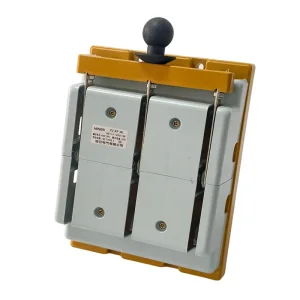
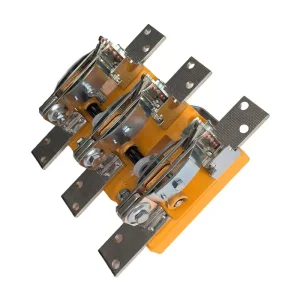
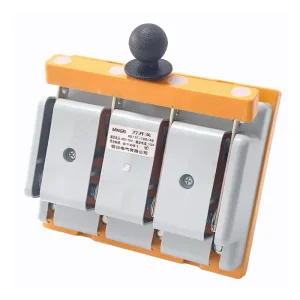
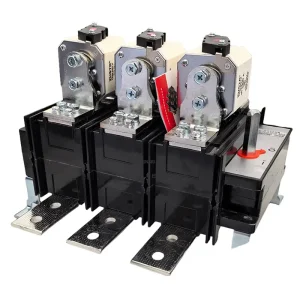
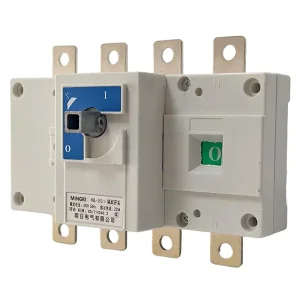
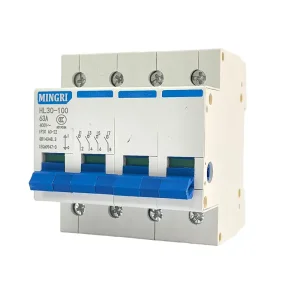
Complete Knife Disconnect, Rotary Load Break & Fuse-Combination Portfolio
Heavy-duty galvanic isolation devices built for distribution cabinets, motor disconnect circuits, and primary electrical utility switchboards across Brazil.
Frequently Asked Technical, Procurement & Compliance Questions
In-depth responses curated by our chief switchgear application engineers for Brazilian distributors, quadristas, and EPC managers.
Accelerate Your Switchgear Supply Chain for Brazil
Partner directly with China's leading low-voltage switch manufacturer. From complete switch units to SKD knockdown kits tailored for Brazilian tariff mitigation, our engineering team is ready to review your project single-line diagrams.