Featured Low & Medium Voltage Disconnect Systems
High-end power apparatus configured for Japanese industrial applications, featuring reinforced copper busbars, modular switch-disconnector logic, and robust seismic containment.
-
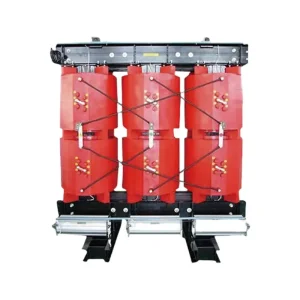
SC(B)13 Resin Insulated Dry Type Power Transformer (Japan Industrial Distribution)
View Product Details -
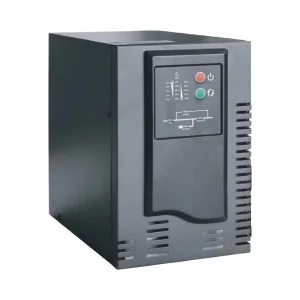
MCHF Series High-Frequency Industrial Cleanroom Online UPS Power Supply
View Product Details -
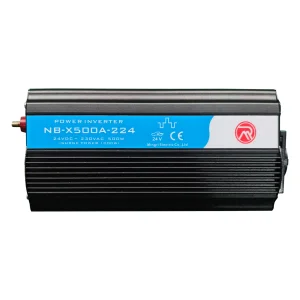
X500 High-Efficiency DC-to-AC Pure Sine Power Inverter for Switchgear Telemetry
View Product Details -
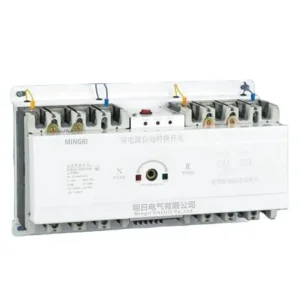
SJKQ2 Dual Power Automatic Transfer Switch with Knife Isolation Mechanism
View Product Details
Industrial Status of Disconnect & Knife Switches in Japan
Decoupling power systems safely: How visible break knife-type disconnect switches secure Japan's dual-frequency grid and heavy semiconductor infrastructure.
Dual 50Hz/60Hz Interconnects & Industrial Demand
Japan's electrical grid represents one of the most technically demanding environments globally. Bifurcated between eastern 50 Hz (TEPCO, Tohoku Electric) and western 60 Hz networks (KEPCO, Chubu, Kyushu Electric), industrial plants and heavy consumers mandate switchgear that functions flawlessly across both operational frequencies without excessive eddy current losses or inductive heating.
Knife switches—traditionally serving as the unambiguous gold standard for galvanic disconnection—are undergoing an aggressive technological renaissance. From the massive semiconductor fabrication clusters across Kumamoto (Silicon Island Kyushu) and Hokkaido's Rapidus mega-foundry to heavy-duty automotive stamping lines in Aichi, engineers demand switches that deliver absolute visible air-gap verification for zero-energy Lockout/Tagout (LOTO) protocols.
Critical Requirements in Japanese Heavy Engineering
- JIS C 8201-3 Compliance: Strict low-voltage switchgear standards mandating severe temperature-rise limits (ΔT ≤ 30K on silver-plated contact surfaces).
- Seismic Anti-Latching (JEAG 4601): Resisting 0.8g to 1.2g horizontal ground acceleration during major seismic activity without accidental closure or contact chatter.
- Zero Outgassing for Cleanrooms: Halogen-free, non-tracking DMC/SMC insulation bases preventing chemical contamination in nanoscale lithography fabs.
Technological Architecture of High-Current Knife Disconnectors
Moving beyond legacy open-knife boards: Explore the precision physics behind modern enclosed, spring-assisted, and arc-quenched disconnect solutions.
High-Conductivity T2 Copper
Fabricated using 99.95% pure cold-drawn electrolytic copper (JIS H3140 C1100 standard). Contact surfaces receive 10μm to 20μm electro-tin or hard silver plating to eliminate oxidation film degradation over 25+ years of operational switchroom life.
Dual-Spring Seismic Cam Latch
To safeguard against accidental blade disengagement during Great East Japan-magnitude seismic oscillations, contact fingers feature redundant beryllium-copper compression springs guaranteeing sustained contact pressure ≥ 45N.
Non-SF6 Eco Arc Mitigation
In compliance with Japan METI decarbonization mandates, all enclosed knife switches utilize de-ionizing splitter-grid chute technology. Fast magnetic-blowout coils draw, elongate, and extinguish inductive arcs within 8 milliseconds without greenhouse gas emissions.
Comprehensive Technical Specification Comparison
| Operational Parameter | Standard Commercial Switch | JIS C 8201-3 Heavy Industrial | ODM Nuclear & Fab Grade (Custom) |
|---|---|---|---|
| Rated Voltage (Un) | AC 400V - 690V | AC 690V / DC 1000V | AC 1000V / DC 1500V (BESS / Solar) |
| Continuous Current (In) | 100A - 1600A | 200A - 3150A | Up to 6300A Forced Cooled Busbars |
| Short-Time Withstand (Icw, 1s) | 15 kA - 25 kA | 50 kA | 80 kA - 100 kA Peak |
| Insulation Base Material | Phenolic Resin Board | SMC/DMC Fiber Composite | High-Grade Steatite / Ceramic Composite |
| Operating Temperature Limit | -5°C to +40°C | -25°C to +55°C | -40°C to +70°C Heavy Industry Ambient |
Industrial Solutions Engineered for Japan's Strategic Sectors
Precision power distribution systems built for the stringent mechanical, thermal, and spatial footprints of Japanese infrastructure.
1. Semiconductor & Battery Gigafactories
Ultra-pure manufacturing demands faultless continuity. Knife disconnect switches installed upstream of UPS rectifiers provide fail-safe physical air-gaps during harmonic filter servicing. The zero-creepage design eliminates dust accumulation common in automated chemical clean bays.
2. Utility Solar PV & 1500V BESS Facilities
With the expansion of Hokkaido and Kyushu solar arrays, our DC knife disconnectors manage high inductive breaking stresses. Built-in magnetic arc-chutes reliably isolate battery storage strings during fire suppression or inverter replacements.
3. Heavy Metallurgy, Shipyards & Mining
In the marine environments of Yokohama, Kobe, and Kitakyushu, our enclosures utilize SUS316L stainless steel with passivated buswork resisting severe sodium chloride corrosion and sulfur dioxide fumes typical of blast furnace gas zones.
Global OEM/ODM Customization & Manufacturing Resilience
From Yueqing manufacturing strength to Tokyo EPC switchgear cabinets: Total supply chain integration, agile copper fabrication, and rapid prototyping.
Custom Busbar & Mounting Footprints
Japanese control cabinet configurations frequently utilize non-standard modular spacing (such as 25mm or 50mm DIN-pitch structures). Our engineering team designs drop-in replacement knife switches matching legacy Mitsubishi, Fuji Electric, and Togami footprint templates, slashing site retrofit downtimes by over 70%.
Customization covers terminal lug hole drillings (JIS single-hole or dual-hole NEMA spacing), motorized rotary actuating shafts, transparent polycarbonate blast-shield covers, and auxiliary microswitches (1NO+1NC up to 4NO+4NC) for remote SCADA integration.
Comprehensive Quality Control & Testing
Every custom switch undergoes rigorous multi-stage validation prior to export packing:
- • Micro-Ohm Meter Contact Verification: Ensuring zero hotspot anomalies under full continuous current.
- • High-Pot Dielectric Testing: 3750V AC 1-minute flash-over test across open knife jaws.
- • Coordinate Measuring Machine (CMM): Dimensional validation to ±0.05mm precision for busbar interconnection alignment.
- • Salt Spray Chamber Exposure: Continuous 96-hour to 1000-hour ASTM B117 salt mist validation.
Localization Support, Regulatory Compliance & METI Alignments
Eliminating regulatory friction for Japanese contractors, EPCs, and global importers distributing throughout Asia-Pacific.
JIS C & JEC Compliance
Engineered in direct conformity with JIS C 8201-3 (Low-voltage switchgear and controlgear - Switches, disconnectors, switch-disconnectors) and JEC-2300 (Alternating-current circuit-breakers and switches). Full certified type-test documentation is supplied with every shipment.
DENAN Law & PSE Mark
For apparatus falling within Japan’s Electrical Appliance and Material Safety Act (DENAN), equipment is manufactured to satisfy Diamond or Circle PSE certification thresholds, ensuring unfettered regulatory customs clearance and domestic distribution.
Bilingual Engineering Support
Our ODM technical department delivers full CAD modeling (STEP, DWG), single-line circuit diagrams, and operation manuals in both fluent technical Japanese and English, eliminating misunderstandings between international procurement teams and local site electricians.
Technology Roadmap: Intelligent Disconnect Switches (2025–2030)
Pioneering smart substations with integrated sensor telemetry, thermal monitoring, and automated safety isolation mechanisms.
Frequently Asked Technical & Procurement Questions
Direct engineering answers regarding knife switch implementations, Japanese regulatory nuances, and custom ODM contract terms.
Industrial Switchgear, Protection & Power Conditioning Gear
Complementary high-reliability power equipment engineered for full substation compatibility, renewable power conditioning, and automated switchroom integration.
-
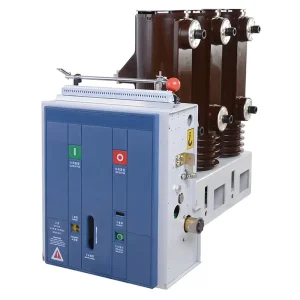
VS1-12C Indoor High-Voltage Side-Mounted Vacuum Circuit Breaker (Substation Primary)
View Product Details -
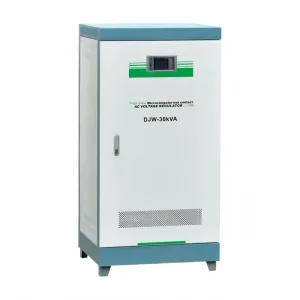
DJW / SJW Microcomputer Non-Contact AC High-Precision Voltage Regulator
View Product Details -
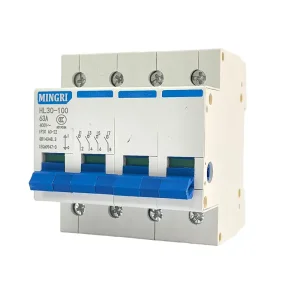
HL30 Miniature Disconnect Switch 1-4P 6-100A (JIS C Compact Distribution)
View Product Details -
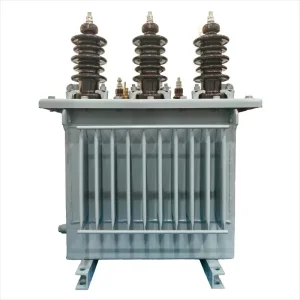
S11-M 10kV Hermetically-Sealed Heavy Duty Oil-Immersed Distribution Transformer
View Product Details -
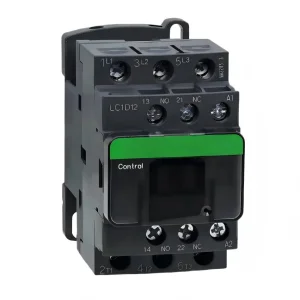
LC1D Series AC Magnetic Contactor (50/60Hz Dual-Frequency 660V 300A)
View Product Details -
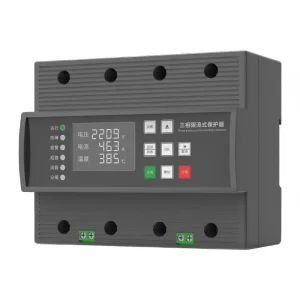
Three-Phase Intelligent Current-Limiting Protector 80/125A Safety Device
View Product Details -
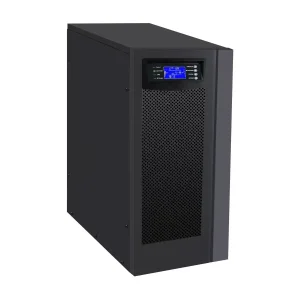
MCL33 Industrial-Grade Low-Frequency Online Backup UPS Substation System
View Product Details -
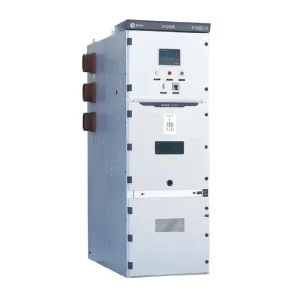
KYN28-24 Withdrawable Armored Metal-Enclosed Switchgear Panel Unit
View Product Details