Featured Industrial Isolation & Substation Systems
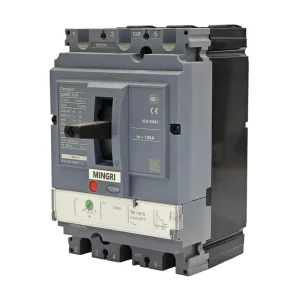
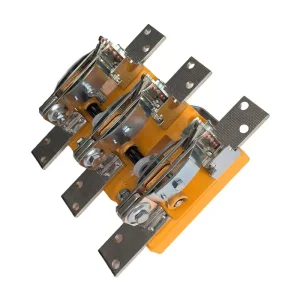
Engineered for mission-critical North American applications: solar farms, industrial panel building, data center switchboards, and distribution substations requiring visible air-gap safety isolation.

US Commercial & Industrial Demand Dynamics
The United States industrial electrical landscape is undergoing a systemic structural upgrade. Aging power distribution networks, rapid expansion of hyperscale data centers across Northern Virginia, Texas, and Phoenix, combined with unprecedented growth in utility-scale photovoltaic (PV) generation, have driven unprecedented demand for rugged, high-reliability disconnect switches.
Knife switches—specifically heavy-duty safety disconnects, single-throw and double-throw rotary knife mechanisms, and high-voltage open-air disconnectors—remain an irreplaceable safety standard across American heavy industrial plants. In line with the National Electrical Code (NEC Article 430 and Article 440) and OSHA lockout/tagout (LOTO) protocols, maintenance teams require an unequivocal, physical visible air-gap break to guarantee complete de-energization before servicing medium- and low-voltage machinery.
Standard enclosed circuit breakers, while compact, do not provide the visible gap verification mandated in high-risk chemical, metallurgical, and marine operations. Consequently, industrial panel builders (UL 508A certified shops) and original equipment manufacturers (OEMs) across the US face soaring delivery backlogs from domestic suppliers, escalating the need for qualified, globally backed high-capacity manufacturing partners.
NEC Compliance
Mandatory physical break verification for motor disconnects
Thermal Class
Tested against extreme ambient rises in outdoor PV combiner boxes
Arc Containment
Fast extinction under dynamic fault currents up to 100kA with fuses
LOTO Safeguards
Direct mechanical padlock provisions on disconnect handles
Industry Evolution: Modernizing Knife Switch Technology
Beyond rudimentary open knife designs, contemporary knife switches are sophisticated electro-mechanical systems engineered for severe duties, DC high-voltage disruption, and automated grid telemetry.
1500V DC Solar Architecture
The American renewable transition has shifted utility-scale PV inverters and battery energy storage systems (BESS) from 1000V to 1500V DC. Knife-based isolators must manage powerful non-zero-crossing DC arcing with specialized magnetic blowout coils and multi-break rotary contacts.
Severe Industrial Durability
North American mining, metal foundries, and petrochemical refineries demand enclosures certified to NEMA 3R, 4, 4X, and 12. Knife switch contacts require high-grade silver-plated electrolytic copper (minimum 99.95% Cu-ETP) to eliminate thermal runaway under sustained load.
Smart Telemetry Integration
Modern EPC contractors increasingly mandate microswitch auxiliary contacts integrated directly into the knife switch operating shaft. This allows SCADA systems in remote control rooms to verify the mechanical position of the isolation blade instantaneously.
Advanced Manufacturing & Supply Chain Resilience
Located in Yueqing, Zhejiang—the epicenter of global electrical engineering—our digitalized manufacturing facilities combine Industry 4.0 automated stamping, precision CNC copper profiling, and robotic silver-brazing lines. This automated infrastructure eradicates contact resistance discrepancies, ensuring consistent knife contact pressure across high-volume production runs.
American engineering procurement managers face domestic lead times often stretching between 26 and 52 weeks for heavy disconnects and custom low-voltage power distribution gear. Leveraging our lean supply chain network, extensive raw copper stockpiles, and agile modular assembly, we deliver customized, factory-tested knife disconnects and integrated switchgear assemblies within 4 to 8 weeks.
Every switch batch undergoes rigorous temperature rise testing, dielectric withstand verification, and mechanical endurance cycling prior to sea or air transit, providing full traceability documentation essential for American project approval.
| Performance Metric | Standard Market Spec | Mingri Factory 4.0 Standard |
|---|---|---|
| Lead Time (Standard Assemblies) | 24 - 40 Weeks | 4 - 6 Weeks (Air/Fast Sea Ready) |
| Contact Metallurgy | Standard Brass / Tin Plated | T2 Pure Electrolytic Copper (Ag-plated) |
| Mechanical Endurance | 1,500 - 3,000 Cycles | Up to 10,000 Cycles Verified |
| Dielectric Isolation Test | 2.5 kV for 1 min | Up to 4.2 kV / Partial Discharge < 5pC |
| Salt Spray Enclosure Life | 240 Hours | 720 Hours (ASTM B117 / NEMA 4X Grade) |
Engineered for Rigorous US Field Operating Conditions
Explore how our heavy knife disconnects, rotary mechanisms, and distribution substations are deployed across key American industrial sectors.
Utility-Scale Solar Combiners (ERCOT & CAISO)
Installed inside NEMA 4X fiberglass combiner boxes across desert regions of Texas and California, our rotary knife disconnects maintain thermal stability under high solar irradiance and cyclic load changes up to 1500V DC.
Data Center Backup Power (Ashburn & Silicon Valley)
Serving as high-capacity manual transfer and bypass isolation switches between utility feeds and secondary diesel generators, ensuring zero unexpected downtime during live line maintenance.
Heavy Foundry & Automotive Assembly (Midwest)
Integrated within heavy machinery control centers throughout Ohio and Michigan, providing maintenance operators with uncompromised visible air-gap safety in compliance with NFPA 79 electrical safety standards.
Integrated Switchgear, Disconnectors & Transformer Solutions
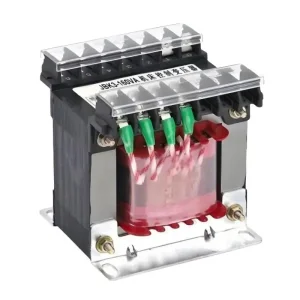
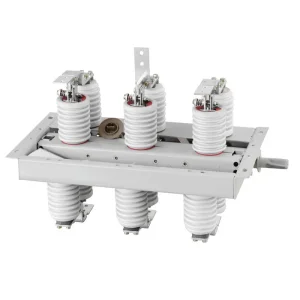
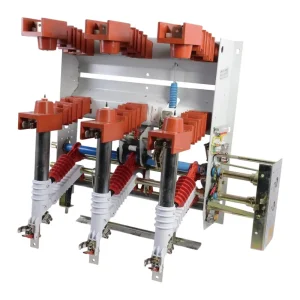
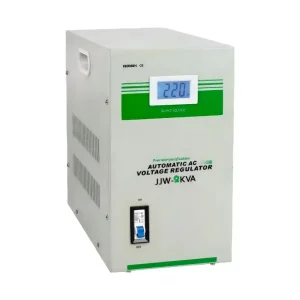
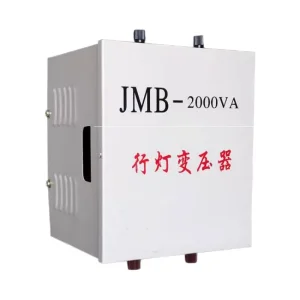
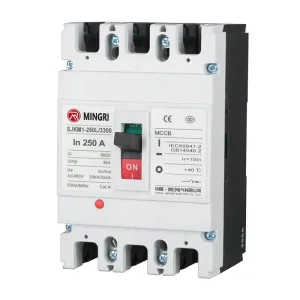
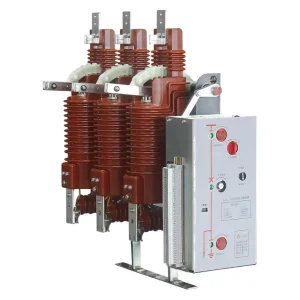
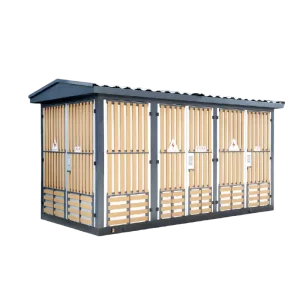
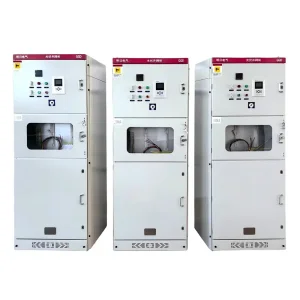
Complete your power distribution system with our factory-integrated disconnectors, high-voltage vacuum breakers, low-voltage switchboards, and distribution transformers.
Frequently Asked Technical & Procurement Questions
Expert answers addressing electrical standards, certification pathways, dynamic short-circuit duties, and international shipping to North American ports.
While MCCBs provide automated overcurrent and short-circuit thermal-magnetic trip curves, knife disconnect switches fulfill a crucial legal and physical safety objective under OSHA and NEC mandates. Knife switches offer an unmistakable, physical visible air-gap disconnection, ensuring that no internal welded contacts or dielectric leakage can bridge the circuit during mechanical repairs. Furthermore, fused knife switches offer exceptionally high short-circuit withstand capabilities (up to 100kA or 200kA RMS symmetrical with Class J, R, or T fuses) at a substantially lower total cost than high-interrupting MCCBs.
A single-throw knife switch connects or disconnects a single source to a single load circuit. In contrast, a double-throw switch features center hinged contact blades that can close into two distinct sets of stationary contacts (Source A - OFF - Source B). Double-throw switches are predominantly utilized for manual source-transfer systems, such as switching a critical motor drive panel between standard grid utility power and an emergency onsite standby generator without the danger of parallel back-feeding.
Yes. We supply comprehensive engineering submittal packages for all exported switches, switchgear, and substations. This includes third-party type-test certificates covering mechanical endurance, dielectric voltage withstand, short-circuit peak withstand, and temperature rise curves. For US engineering submittals, our technical team works closely with US panel builders to provide drawings, step files, terminal lug ratings, and torque specifications required to fulfill UL 508A panel certification requirements.
We use premium grade T2 electrolytic copper with an electrical conductivity exceeding 98% IACS. All contact blades and stationary jaw clips are electro-plated with 10 to 15 microns of pure silver (Ag) or tin (Sn), per project specifications. This electro-plating eliminates copper oxidation, minimizes contact resistance to micro-ohm tolerances, and prevents destructive thermal runaway under continuous 100% full-load currents in enclosed NEMA enclosures.
Our automated facility maintains a baseline monthly capacity of over 30,000 low-voltage knife switches and 400 complete medium-voltage switchgear sections. Standard knife switches and disconnect components are dispatched within 15 to 25 business days from order signoff. Sea freight to West Coast ports (Los Angeles / Long Beach) averages 14 to 18 days, while East Coast shipments (New York / Savannah) average 28 to 32 days. For urgent construction deadlines, express air cargo logistics can be arranged within 5 to 7 days.
Accelerate Your Power Infrastructure Procurement
Speak directly with our senior electrical engineers. Receive tailored CAD/3D models, complete short-circuit interrupting ratings, and competitive direct-factory price quotes for your project.
Send Inquiry Now