High-Voltage Load Break Switches Engineered for Indian Substations
Type-tested switching components conforming strictly to IEC 62271-105 and IS 9920 performance standards. Optimized for 50Hz networks under severe tropical conditions.
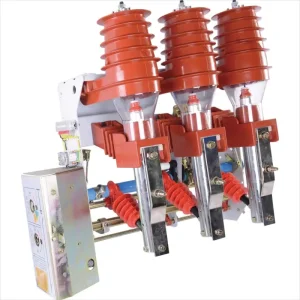
FK(R)N12-12 11kV Air Load Breaker Fuse Switch Unit (India Urban Discom Standard)
Explore Model Specs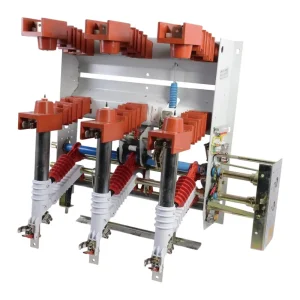
FK(R)N12-24D 22kV Heavy-Duty HV Load Breaker Switch for Industrial Feeder Isolation
Explore Model Specs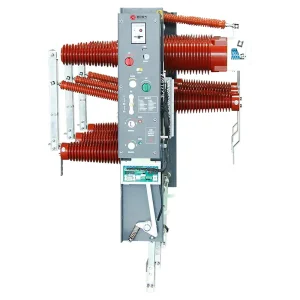
FZ(R)N21C-40.5D 33kV Indoor AC High-Voltage Vacuum Load Switch for Sub-Transmission
Explore Model Specs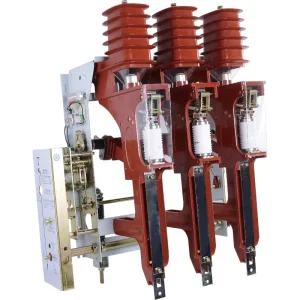
FZN25-12 11kV/12kV High-End Vacuum Load Switch for Smart RMU Compact Enclosures
Explore Model SpecsIndia's Power Grid Modernization: Demands for Resilient MV Switching Infrastructure
Analyzing the pivotal shift in Indian electrical engineering standards under the Revamped Distribution Sector Scheme (RDSS) and massive renewable energy integration.
The Dynamic Evolution of India’s Power Transmission & Distribution (T&D)
The Republic of India represents one of the fastest-expanding medium-voltage (MV) and high-voltage (HV) infrastructure markets globally. Driven by the central government's capital-intensive initiative—the Revamped Distribution Sector Scheme (RDSS) with an outlay exceeding ₹3 lakh crore—the focus has aggressively pivoted from mere grid expansion to radical supply-side quality, reduction of Aggregate Technical and Commercial (AT&C) losses below 12%, and systematic replacement of antiquated air-break switch disconnectors.
State electrical distribution companies (DISCOMs)—including Tata Power, BESCOM (Karnataka), MSEDCL (Maharashtra), UGVCL/PGVCL (Gujarat), and WBSEDCL (West Bengal)—are transitioning to compact secondary substations (CSS) and Ring Main Units (RMU). In this transitional matrix, the High-Voltage Load Switch (Load Break Switch - LBS) acts as the frontline defensive and switching component. Whether protecting secondary distribution transformers from destructive short-circuit overcurrents via fuse-combination units or providing safe, visible circuit isolation for line operators, the LBS forms the backbone of commercial feeders.
Engineering Rigor for Tropical Climates
Load switches bound for India must withstand extreme operational environments: ambient dry-bulb temperatures soaring above 48°C in northern plains, 100% condensing humidity in southern and eastern peninsulas, heavy airborne coal-dust in industrial belts (such as Odisha and Chhattisgarh), and coastal salinity in Gujarat and Tamil Nadu. Standard components will suffer dielectric breakdown without specialized creepage distances (minimum 25–31 mm/kV) and silicone/cycloaliphatic epoxy resin encapsulation.
Indian Regulatory Compliance & Engineering Standards
Tenders released across India are governed by the rigorous technical parameters stipulated by the Central Electricity Authority (CEA) and the Bureau of Indian Standards (BIS), which harmonize closely with international electrotechnical norms:
| Governing Standard | Technical Equivalent | Scope of Compliance |
|---|---|---|
| IS 9920 (Parts 1-4) | IEC 62271-102 / 103 | High-voltage switches for rated voltages above 1kV up to 52kV. |
| IS 13118 | IEC 62271-100 | High-voltage alternating-current circuit-breakers and combined LBS. |
| IS/IEC 62271-105 | IEC 62271-105 | High-voltage alternating current switch-fuse combinations. |
| CBIP Manual 322 | CIGRE Guidelines | Best engineering practices for substation automation and switchgear design. |
Our manufacturing protocols implement double the safety margins mandated by standard bids, integrating CPRI (Central Power Research Institute) and ERDA test verification criteria right at the core assembly stage in our state-of-the-art Yueqing facility.
China Industry 4.0: Supply Chain Resilience, Precision & Cost Supremacy
How our smart Yueqing manufacturing base unlocks unprecedented lead-time advantages, mechanical reliability, and tier-one pricing for Indian EPC contractors.
Automated APG Casting Process
Utilizing high-end Automatic Pressure Gelation (APG) vacuum machines for epoxy casting. Our resin insulators and switch bodies eliminate micro-voids, guaranteeing partial discharge (PD) levels under 5 pC at 1.2 times rated voltage—vital for the longevity of Indian installations.
Class M2 Mechanical Endurance
Each batch of our vacuum load switches (such as the FZN25 and FZRN21 series) undergoes stringent 10,000-cycle no-load mechanical tests. Laser cutting, CNC punching, and robotic arm welding eliminate manual assembly variations across linkages and spring drives.
Supply Chain Cluster Resilience
Headquartered in Yueqing—the world-renowned capital of electrical manufacturing—we maintain zero-day inventory buffers for high-conductivity silver contacts, pure oxygen-free copper busbars, and vacuum interrupters, ensuring rapid 15-day delivery to major Indian ports.
Procurement Optimization for Indian EPC Contractors (L&T, BHEL, Sterling & Wilson, Tata Projects)
Global infrastructure firms frequently battle cost overruns driven by European brand monopolies and protracted 26-week lead times. By sourcing directly from our China Factory 4.0, Indian EPC conglomerates capture a 25% to 40% reduction in capital expenditure while retaining strict compliance with international type-test regimes (STL members / KEMA / CESI / ASTA certificates available upon tender submission).
Mission-Critical Use Cases Across India’s Diverse Industrial Ecosystem
Where high-voltage load switches, isolating disconnectors, and capacitor switching solutions deliver uninterrupted power and personnel safety.
1. Utility Secondary Distribution & Compact RMUs
Urban density in metropolitan hubs like Mumbai, Delhi NCR, Hyderabad, and Chennai leaves no footprint for traditional open-air substations. Modern distribution mandates 12kV / 24kV Gas-Insulated or Air-Insulated Ring Main Units featuring vacuum load break switches.
Our FK(R)N12 and FZN25 series provide compact footprint dimensions, enabling switchgear builders to configure 3-way, 4-way, and 5-way RMUs with built-in motor-operated mechanisms for automated feeder isolation via SCADA/DMS.
2. Utility-Scale Solar PV Step-Up Substations (Bhadla, Pavagada, Khavda)
India is installing massive solar parks characterized by high ambient irradiance and extreme dust. The step-up transformer units (0.8kV to 33kV) demand robust AC vacuum load switches like the FZ(R)N21C-40.5D.
Equipped with current-limiting DIN fuses, these units protect the step-up transformer against incoming high-amplitude short-circuit events while providing visible isolation for maintenance personnel operating in harsh desert conditions.
3. Heavy Chemical, Textile & Steel Manufacturing Hubs
Industrial corridors such as Sanand, Dahej, Sri City, and Jamshedpur feature severe harmonic distortion and volatile voltage profiles caused by arc furnaces and non-linear loads. The switching of power factor correction (PFC) banks generates devastating inrush currents.
Integrating our specialized CJ19 series capacitor switching contactors on low-voltage secondary panels alongside our armored withdrawable KYN28-24 metal-enclosed switchgear ensures dampening of transient surges, protecting critical switchgear from contact welding and breakdown.
4. Metro Rail Transit & Railway Auxiliary Substations
Rapid urban transit systems (such as Delhi Metro, Namma Metro, Maha Metro) deploy 25kV traction systems accompanied by 33kV internal auxiliary power distribution networks. High-cycling vacuum load switches provide fail-safe isolation and transfer capabilities for station lighting, ventilation, and signaling auxiliaries.
Comprehensive Switchgear, Isolators & Protection Apparatus for India
Explore our complete secondary distribution and transmission portfolio, custom-built to match DISCOM technical schedules and private sector turn-key specs.
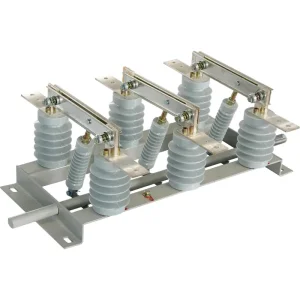
GN19-12 11kV Indoor High-Voltage Isolating Switch (Visible Double-Break Safety)
Explore Model Specs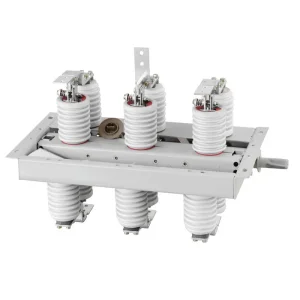
GN30-12(D) Rotary High-Voltage Disconnector with Earthing Switch for India Substation
Explore Model Specs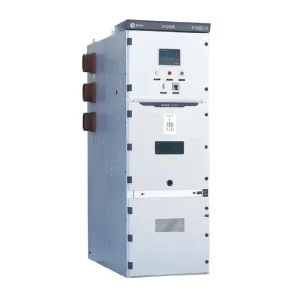
KYN28-24 Withdrawable Armored Metal-Clad Switchgear (24kV Industrial Class)
Explore Model Specs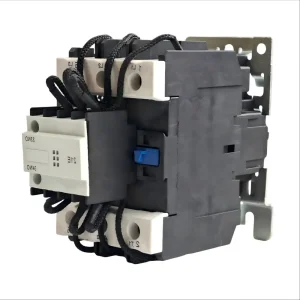
CJ19 Heavy-Duty Low-Voltage Capacitor Switching Contactor 380V/415V (Inrush Suppression)
Explore Model Specs
FZN25-12 12kV 630A Indoor AC Vacuum Load Switch (Heavy-Duty Dual Spring Operation)
Explore Model Specs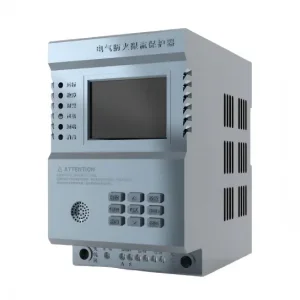
Single-Phase Current Limiting Protector 20-80A 230VAC for Indian Commercial Boards
Explore Model Specs
OEM Customized GN19-12 Disconnector Switch for Panel Builders (Engineered for CEA Specs)
Explore Model Specs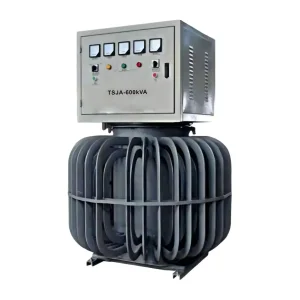
TSJA Industrial Oil-Immersed High-Capacity Voltage Stabilizer (Severe Grid Fluctuation)
Explore Model SpecsOvercoming Import Barriers & Ensuring Zero Failure Rates in Indian Tenders
A pragmatic engineering checklist for procurement directors, procurement agencies, and technical evaluators across India.
The Crucial Role of Fuse-Switch Combinations in Distribution Transformers
Across Indian 11kV networks, distribution transformers (often 100kVA, 250kVA, or 500kVA ratings) are vulnerable to repeated low-voltage downstream phase faults and high-impedance earth return conditions. A high-voltage load switch coupled with current-limiting strike-pin fuses (such as our FZN25-12RD series) provides superior, cost-effective defense compared to complex vacuum circuit breakers (VCBs):
- Total Break Time: Current-limiting fuses sever peak fault currents in under 10 milliseconds, preventing violent tank rupture and fire hazards in the transformer.
- All-Pole Tripping: The instant any individual fuse blows, an integrated mechanical striker impinges upon the switch trip-bar, disconnecting all three phases simultaneously to prevent single-phasing burns on inductive motors.
- CAPEX Rationalization: Fused LBS arrangements cost approximately 40% less than equivalent circuit breaker panels while offering equal short-circuit interruption capacity (up to 31.5kA or 50kA cut-off).
Factory Acceptance Testing (FAT) Protocol & Documentation
We facilitate complete remote digital Factory Acceptance Tests (FAT) with high-definition video feeds, alongside physical inspection rights for third-party inspection agencies (TPIAs) such as Bureau Veritas, SGS, TUV, and DNV:
Mandatory Standard Routine Tests Performed on 100% of Units:
- Power frequency withstand voltage test across main gap and between phases (42kV dry for 1 minute on 12kV models; 95kV on 33kV models).
- Main circuit resistance measurement using 100A DC micro-ohmmeter to ensure low contact degradation.
- Mechanical operational cycles (opening, closing, earthing interlock validation).
- Auxiliary circuit insulation and electrical trip coil functionality tests at 85%–110% rated control voltage.
Frequently Asked Questions: High-Voltage Load Switches in Indian Grids
In-depth technical answers addressing regulatory compliance, thermal derating, delivery logistics, and operational parameters.
What is the fundamental difference between an HV Load Break Switch (LBS) and a Disconnector/Isolator?
An HV Load Break Switch is equipped with an arc-quenching medium (such as a vacuum interrupter chamber or air-blast arc chute) and spring-toggle mechanism capable of safely making and breaking rated normal full-load currents (e.g., 630A or 1250A) as well as closing into short-circuit faults. An Isolator or Disconnector (e.g., GN19-12) has zero arc-quenching capability and must only be operated off-load when the circuit current has already been extinguished by an upstream breaker or switch.
How do ambient temperatures in northern and central India affect load switch ratings?
Standard IEC and IS ratings specify an ambient reference temperature of 40°C. In states like Rajasthan, Punjab, and Uttar Pradesh, summer substation internal temperatures frequently reach 50°C to 55°C inside compact metal enclosures. To prevent thermal runaway on copper contacts, we apply derating factors (typically 0.88 to 0.92 of rated current) or upgrade switch contacts with high-micron silver plating (up to 20 µm) and reinforced busbar cross-sections to ensure continuous operation without exceeding IEEE/IEC temperature-rise thresholds.
Can your vacuum load switches integrate with Indian SCADA and Smart Grid standards?
Yes. Our FZN25 and FZRN21 series can be factory-fitted with 24VDC, 110VDC, or 220VDC electric motor actuators, auxiliary switches (up to 8NO+8NC), trip coils, and optical position sensors. These integrate seamlessly with Remote Terminal Units (RTUs) and Distribution Automation Systems (DAS) running standard protocols such as IEC 60870-5-104 or Modbus TCP/IP, enabling remote sectionalizing without line crew dispatch.
What is the standard creepage distance provided on your epoxy insulators for dusty or coastal zones?
For installations in industrial corridors or coastal regions (e.g., Hazira, Jamnagar, Chennai, Ennore), we offer extended creepage sheds engineered to Class IV (Very Heavy Pollution) per IEC 60815, delivering specific creepage distances of 31 mm/kV. This prevents tracking, surface treeing, and flashovers caused by hygroscopic salt or coal dust deposits common in Indian industrial atmospheres.
How do you guarantee interlocking safety between the Load Switch, Earth Switch, and Enclosure Door?
Our apparatus incorporates a failsafe five-prevention mechanical interlocking linkage: (1) The load switch cannot be closed when the earthing switch is made; (2) The earthing switch cannot be engaged while the load switch is closed; (3) The panel or cubicle front door cannot be opened until the earth switch is fully closed; (4) The earthing switch cannot be opened while the panel door remains open; and (5) Padlock holes prevent unauthorized manual lever actuation.
What are the lead times and shipping logistics from your Yueqing factory to Indian seaports?
Standard production runs for customized batches (50 to 500 units) take between 15 to 25 business days. Sea transit from Ningbo or Shanghai Port to Nhava Sheva (JNPT Mumbai) or Mundra Port takes approximately 14 to 18 days. For south and east India, direct shipping lines to Chennai Port, Cochin, or Kolkata take approximately 18 to 22 days. Air freight options are readily supported for urgent replacement projects.
Can you provide customized mounting frames to retrofit aging legacy Indian switchgear?
Yes. Our R&D engineering department regularly designs custom mounting adapter plates, customized busbar connection heights, and adjustable shaft drive extensions to retrofit aging or obsolete isolators and switches in existing cubicles (e.g., legacy ABB, Crompton Greaves, Schneider, or BHEL panels) without the necessity of replacing the entire cubicle structure.
What warranty and spare parts commitments do you provide for overseas EPC buyers?
All load switches, disconnectors, and switchgear products leave our facility with a comprehensive 18-month standard warranty from dispatch or 12 months from commercial commissioning. We maintain an express inventory pool of spare vacuum interrupters, trip coils, auxiliary contacts, and fuse-bases, deployable within 48 hours to minimize any plant downtime.
Ready to Optimize Your Power Distribution Infrastructure?
Whether you require technical single-line diagram (SLD) evaluation, customized 11kV/22kV/33kV load switch quotation for a pending DISCOM tender, or comprehensive type-test documentation, our international engineering team is at your command.