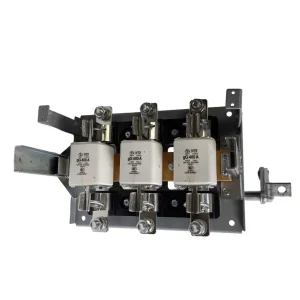
UK-Industrial HR3 Fuse Type Knife Switch for Motor Protection
Engineered for severe inductive motor protection and high short-circuit withstand across industrial machinery, incorporating reinforced arc-extinguishing chambers.
Explore Technical SpecDirect OEM/ODM industrial fused isolation assemblies designed for motor circuit branch protection, heavy engineering feeder pillars, and low-voltage distribution cubicles across the United Kingdom.
Engineered for severe inductive motor protection and high short-circuit withstand across industrial machinery, incorporating reinforced arc-extinguishing chambers.
Explore Technical Spec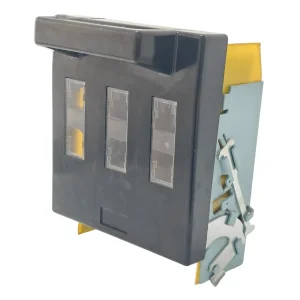
Guarantees unequivocal visual verification of physical circuit disconnection, meeting stringent UK Health and Safety Executive safe isolation requirements.
Explore Technical Spec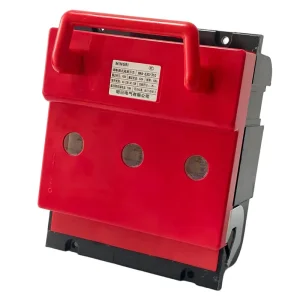
High breaking capacity design built for severe-duty switching of mixed resistive and inductive loads, optimized for UK panel builders and modular MCCs.
Explore Technical Spec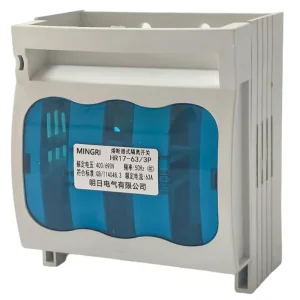
Compact busbar mounting configuration delivering exceptional thermal stability and up to 120kA breaking capacity for heavy infrastructure main intake panels.
Explore Technical SpecThe electrical landscape across the United Kingdom is undergoing its most profound structural transformation since the inception of the National Grid. Driven by legal commitments under the Climate Change Act to achieve Net Zero by 2050, British industries are rapidly transitioning away from fossil fuel combustion toward high-density electrification. This structural pivot has dramatically reshaped the operating demands placed upon low-voltage (LV) switchgear, distribution networks, and industrial isolation devices.
In modern UK manufacturing facilities, pharmaceutical hubs, automated logistics centres across the "Golden Triangle," and high-density commercial assets, power supply reliability cannot tolerate compromise. Facilities operating under the rigorous framework of BS 7671:2018+A2:2022 (The IET Wiring Regulations 18th Edition) and the Electricity at Work Regulations 1989 (Statutory Instrument 1989 No. 635) require electrical isolation equipment that not only interrupts continuous rated currents but also provides unmistakable physical galvanic isolation and withstands prospective short-circuit currents (PSCC) frequently exceeding 50kA or 100kA at the point of common coupling (PCC).
As an authoritative global manufacturer with dedicated production lines customized for the British market, our factory delivers fused disconnect switches (switch-disconnector-fuse and fuse-switch-disconnector units) engineered from the molecular level up. These units handle intense thermal shocks, suppress destructive arc flashes within milliseconds through precision de-ionizing plate assemblies, and interface flawlessly with British Standard BS 88 bolted and clip-in high rupturing capacity (HRC) fuse links.
Every disconnect switch is type-tested to ensure complete operational safety under the stringent criteria of BS EN 60947-3, confirming verified load-break performance and isolation security.
By pairing high-grade silver-plated knife contacts with BS 88 industrial fuse links, let-through energy (I²t) during downstream bolting faults is choked in fractions of a cycle, protecting sensitive VFDs and PLCs.
Designed with transparent poly-carbonate view windows or direct knife-blade visibility, providing maintenance electricians with verified visual indication before entering lockout/tagout (LOTO) protocols.
A notable trend observed across British industrial specifications—from Thames Water treatment works and National Grid sub-tier substations to hyperscale data clusters in Slough—is the continued preference for fused disconnect switches over molded case circuit breakers (MCCBs) for main incoming isolation and motor control center (MCC) incomers.
While modern electronic trip unit circuit breakers offer re-settable convenience, they suffer from mechanical latency, electronic component aging, calibration drift, and relatively slow clearing times under high-intensity short circuits. A BS 88 HRC fuse within a precision-machined disconnect housing operates purely on fundamental thermodynamic principles: high-density sand filling and silver-notched elements melt instantaneously during prospective fault conditions, clearing the fault without mechanical delay. This eliminates the risk of switchgear weld-shut catastrophic failures, substantially reduces the Arc Flash Hazard Category under IEEE 1584 calculations, and ensures localized fault containment without knocking out upstream distribution boards.
UK distribution system design requires complete cascading discrimination. With our fused disconnectors, cascading ratios down to 1.6:1 are reliably achieved without intricate electronic relay programming or secondary injection testing.
Fused disconnect systems possess no internal microprocessors, requiring zero annual electronic recalibration, zero firmware upgrades, and offering indefinite operational lifespan under standard preventive maintenance schedules.
Molded from non-hygroscopic, flame-retardant glass-fiber reinforced unsaturated polyester (DMC/SMC), our switch housings are impervious to sulfur-laden industrial fumes, coastal maritime humidity, and heavy dust ingress.
The distinction between generic commercial isolators and our high-specification industrial disconnect assemblies lies in our metallurgy, dielectric geometry, and kinetic contact mechanisms. Engineered to meet the arduous AC-23A utilization category (frequent switching of severe motor and highly inductive loads under power factors down to 0.35), our switches employ high-purity electrolytic copper (Cu-ETP, 99.9% purity) finished with a specialized high-adhesion micro-crystallized silver electroplating (up to 20 microns).
This silver boundary drastically decreases contact resistance to sub-milliohm levels, mitigating Joule effect heating during continuous high-amperage operation (from 100A up to 1600A frames). Under short-circuit conditions, magnetic blow-out forces are leveraged via patented curved contact geometries: electromagnetic repulsion pushes the electric arc instantly off the main current-carrying contacts and deep into the multi-plate steel de-ionizing arc chute chamber. Here, the arc column is split, cooled, and extinguished in under 5 milliseconds, preserving switch longevity and guaranteeing that flashover to ground is physically impossible.
| Engineering Parameter | Our Industrial Fused Disconnect | Standard Molded Case Breaker (MCCB) | Non-Fused Air Isolator |
|---|---|---|---|
| Short-Circuit Rupturing Capacity | Up to 120 kA @ 415V / 500V | Typically 36 kA to 70 kA | Withstand only (Requires upstream fuse) |
| Arc Clearance Speed (Fault) | < 4 milliseconds (Fuse melt) | 15 to 30 milliseconds (Mechanical trip) | Cannot clear fault conditions |
| Energy Let-Through (I²t) | Ultra-Low (Chokes thermal energy) | Moderate to High | Passive (Entire fault energy passes) |
| Safe Isolation Verification | Direct Visible Break / Visual Air Gap | Concealed internal contact position | Varies (Depends on enclosure design) |
| Mechanical Endurance (Operations) | 10,000+ Cycles (BS EN 60947-3) | 4,000 - 8,000 Cycles | 8,000+ Cycles |
| Susceptibility to Spurious Trips | Zero (Passive thermal fuse physics) | Subject to harmonic / EMI nuisance trips | Zero (Passive) |
From the industrial heartlands of the Midlands and Northern England to offshore wind interfaces in Scotland, our equipment forms the backbone of heavy electrical networks.
UK solar farms and grid-scale BESS facilities face unique DC arc extinction challenges. Our DC-rated fused disconnect switches (tested to DC-21B / DC-PV2 standards) provide rock-solid isolation of string inverters and modular containerized lithium-ion battery racks up to 1500V DC.
Tier III and Tier IV UK facilities utilize our high-amp HR17 and HR6 fused disconnect switchboards as incoming bypass isolators and UPS transfer switches, guaranteeing zero false tripping and flawless isolation during maintenance.
In assembly lines, metal forging, and plastics extrusion plants, our switches withstand harsh ambient operating conditions, high cycling, vibration, and thermal cycling without micro-welding or dielectric degradation.
Supplied inside IP65 weather-resistant and chemical-resistant glass-reinforced polyester (GRP) or 316-grade stainless steel enclosures, safeguarding wet well submersible pump control circuits against corrosive atmospheres.
Installed inside distribution pillars, rising mains, and landlord metering panels across Central London high-rises to isolate tenant branch feeds securely and satisfy building insurer risk frameworks.
Designed for the harsh maritime conditions of Felixstowe, Southampton, and Liverpool ports, handling shore-to-ship power connection towers and crane gantry heavy electrical isolation.
Importing high-specification electrical equipment into the post-Brexit United Kingdom requires comprehensive documentation and verified legal compliance. Mingri Electric operates in full alignment with the UK Conformity Assessed (UKCA) regulatory regime, supplemented by European CE markings, ensuring rapid customs processing through major UK ports of entry.
Every shipment destined for UK switchboard builders, electrical wholesalers, and EPC contractors is accompanied by complete type-test certificates from internationally accredited high-power test laboratories (ILAC-MRA recognized). Our testing regimens include:
To support agile engineering workflows, we provide native 2D/3D CAD models (STEP, DWG, BIM/Revit), detailed single-line schematic diagrams, and terminal lug drill-hole templates to streamline switchboard layout design and mechanical integration.
As the UK accelerates towards digitalized asset management and predictive maintenance under PAS 55 and ISO 55000 standards, Mingri Electric is pioneering the convergence of traditional mechanical isolation with IoT edge intelligence.
Our latest research and development initiatives include Smart Fused Disconnect Switches integrated with passive surface acoustic wave (SAW) wireless temperature sensors on each terminal lug. This allows continuous real-time thermal monitoring without requiring battery replacements or intrusive fiber-optic cabling, feeding temperature gradients straight into facility SCADA or Building Management Systems (BMS) via Modbus RTU or LoRaWAN. Abnormal resistance spikes caused by loose cable terminations or improper bolt torque are detected weeks before hot-spot deterioration can precipitate an arc flash event.
Furthermore, our next-generation mechanical assemblies are built using fully recyclable engineering thermoplastics, lead-free silver plating processes, and zero SF6 trace elements, upholding our customers' ESG targets and green building credentials under BREEAM ratings.
Complementary engineering equipment engineered to integrate seamlessly with our fused disconnect switches for end-to-end UK industrial switchboard and substation builds.
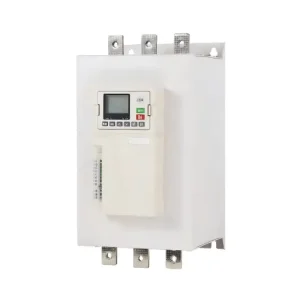
Precision torque profiling and reduced inrush starting for heavy industrial pumps, compressors, and ventilation systems across British water and processing works.
View Specification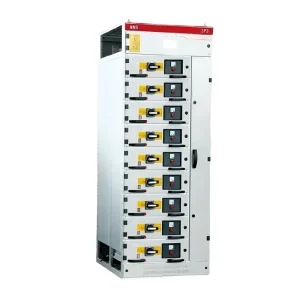
Heavy-duty withdrawable MCC and power center design offering internal segregation up to Form 4b, maximizing uptime in continuous UK process plants.
View Specification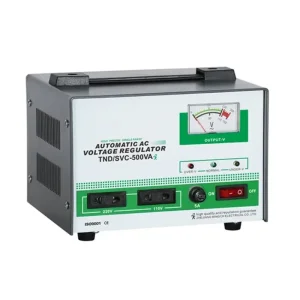
High-precision voltage regulation safeguarding sensitive laboratory, telecom, and automated production machinery against mains voltage sags and surges.
View Specification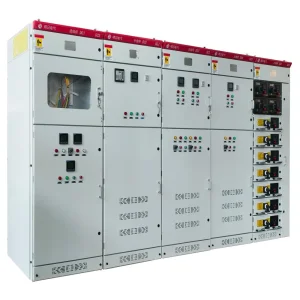
Fully type-tested modular panel enclosures optimized for primary secondary distribution substations and critical commercial real estate main intake rooms.
View Specification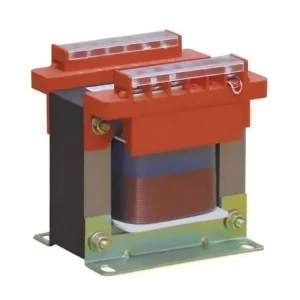
High dielectric strength dry-type control transformers converting 400V/415V down to safe 24V/110V control voltages for UK machinery automation cabinets.
View Specification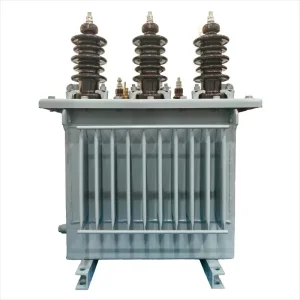
High-efficiency, low-loss oil-immersed distribution transformers engineered for industrial substations connecting directly to 11kV UK regional electricity networks.
View Specification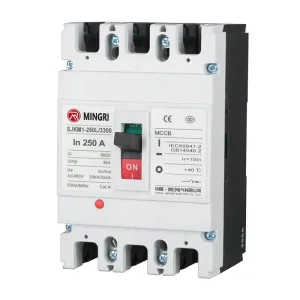
Robust current-limiting molded case circuit breakers delivering adjustable thermal and magnetic trip thresholds for feeder pillar and commercial board installations.
View Specification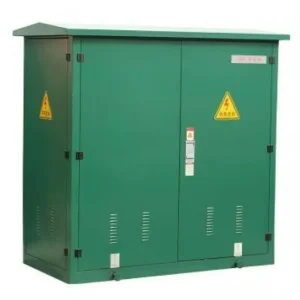
All-weather pad-mounted packaged substation integrating MV ring switches, transformer, and LV fused distribution for UK utility solar and wind farms.
View SpecificationDirect technical answers addressing British Standards, safe isolation procedures, fuse link interoperability, and custom OEM fabrication.
Under BS EN 60947-3, in a Switch-Disconnector-Fuse (such as our HR17 and HR6 modular series), the fuse links are held stationary within dedicated carrier bases while mechanical knife contacts open and close around them. In a Fuse-Switch-Disconnector, the fuse-links themselves are mounted directly onto the moving contact carrier, physically serving as the moving bridge contacts. Both configurations satisfy load-break isolation requirements, but the stationary switch-disconnector-fuse design provides higher mechanical rigidity and easier fuse link thermal dissipation in continuous high-load industrial installations.
Yes. While our switches natively accommodate standard DIN NH blade fuses (Size 00, 1, 2, 3), our manufacturing factory offers specialized terminal adapters and dedicated direct-mount carriages designed specifically for standard UK BS 88-2 bolted tag fuse links (center-to-center fixing dimensions of 73mm, 94mm, 111mm, and 133mm). This ensures zero modification is required when replacing legacy British switch-fuse units during site refurbishments.
The UK Health and Safety Executive (HSE) Guidance Note GS38 and Electricity at Work Regulations mandate unambiguous proof of isolation before maintenance commences. Our HR3 and HR5 series incorporate direct visible knife-blade contacts, allowing electricians to visually confirm open air-gap clearance with the cabinet door open or via armored impact-resistant clear polycarbonate windows. All operating mechanisms feature triple-padlock hasp provisions to enforce strict Lockout/Tagout (LOTO) protocols in the OFF position.
Utilization category AC-20 through AC-22 covers non-inductive or low-inductance loads. In contrast, AC-23A mandates that the disconnect switch can safely make and break stalled rotor motor currents (up to 8 times full-load motor current) at power factors as low as 0.35, repeatedly without contact welding or phase-to-phase flashovers. Our units undergo full AC-23A type testing, guaranteeing fail-safe emergency motor disconnection under jammed-rotor fault conditions.
Absolutely. Every switch frame can be specified with factory-installed early-break auxiliary contacts (1NO+1NC, 2NO+2NC, or gold-flashed contacts for low-voltage signal integrity). These microswitches open milliseconds prior to the main power contacts, allowing variable frequency drives (VFDs) or soft starters to shut down cleanly without arcing across the main knife disconnect points.
Every production batch supplied to the UK market includes an authorized Certificate of Conformity (CoC), full Factory Acceptance Test (FAT) routine inspection reports, material chemical composition data sheets, dimensional drawings in DXF/STEP formats, and comprehensive operating and maintenance manuals. Formal ASTA or KEMA type-test certificate copies are available upon request during technical bidding.
Accelerate your UK switchgear builds, infrastructure tenders, and OEM projects with factory-direct pricing, custom engineering adaptability, and certified British Standards compliance.