Current Limiting Protectors Suppliers & Supplier in the Iraq Market
Engineered for harsh ambient temperatures exceeding 55°C, high fault current thresholds, and severe harmonic distortions across Iraqi industrial, oil & gas, and national grid networks.
Send Inquiry NowPrimary Current Limiting Protection Systems for Iraq Grid Infrastructure
Ultra-rapid response units designed to clip fault current crests within 1-3 milliseconds, safeguarding downstream switchgear, transformers, and industrial infrastructure.
-
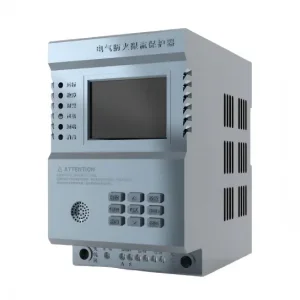 Wholesale Single phase current limiting protector 20-80A 220VAC - High Ambient Surge Tolerance for Iraq Residential & Light Commercial Feeders
-
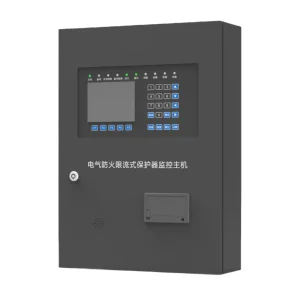 China China Current-limiting Protector System Main Unit - Integrated SCADA Ready Power Data Management for Iraqi Substations
-
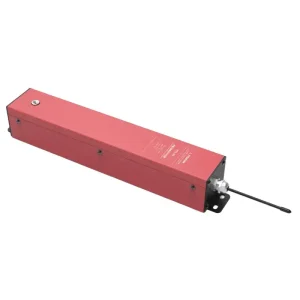 China Intelligent Wireless Automatic Gas Fire Extinguishing Device - Perfluorohexanone Protection Series for Harsh Desert Substation Switchrooms
-
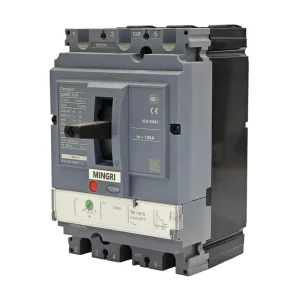 High-Quality SJKM5 Industrial MCCB Breaker for Fast Arc Extinction & Ultimate Short-Circuit Protection Across Southern Iraq Refineries
Electrical Grid Environment & Protection Bottlenecks in Modern Iraq
A rigorous examination of electrical distribution parameters across Baghdad, Basra, and Erbil requiring advanced current limiting technology.
⚡ The Dual-Supply Dynamic & High Short-Circuit Risks
The Iraqi power distribution infrastructure operates under unique, rigorous challenges. Industrial facilities, extraction sites in Rumaila and West Qurna, and major commercial nodes frequently navigate erratic transitions between the primary grid managed by the Ministry of Electricity (MoE) and localized heavy-duty diesel generator microgrids (often 1 MVA to 3.5 MVA banks).
These abrupt parallel transfers generate massive fault-level fluctuations. When bus couplers tie unsynchronized sources, prospective short-circuit currents easily surpass the rated breaking capacity of standard circuit breakers (often reaching prospective peaks of 65kA to 100kA within cycles). Without current limiting protectors, switchgear assemblies suffer thermal melting and destructive electrodynamic mechanical repulsion.
🌡️ Thermal Stress, High Salinity, and Sand Particulate Contamination
Climatic factors exacerbate electrical vulnerability in Southern and Central Iraq. Summer temperatures frequently touch 52°C to 56°C in open substation enclosures. Traditional thermal-magnetic elements trip prematurely due to thermal drift, causing severe nuisance outages that halt continuous-process industries.
Simultaneously, airborne dust containing fine quartz silica and saline particles (especially in the Khor Al-Zubair industrial basin) penetrates standard ventilation paths. Fast current-limiting protectors featuring completely enclosed vacuum interrupters or hermetically sealed chemical pyrotechnic bridges eliminate external ionized gas expulsion, maintaining dielectric strength in severe environmental conditions.
Global Paradigms vs. Localized Iraqi Deployment Architectures
How cutting-edge fault current limiting (FCL) strategies translate to practical industrial deployments across Iraq.
Global Fast-Acting Interrupters
Worldwide benchmarks employ pyrotechnic Is-limiters and resonance-type solid-state current limiters to restrict fault currents at the first sub-transient crest. This avoids the cost of replacing entire switchgear line-ups when upstream generation expands.
Iraqi Upstream & Midstream Oil Sites
In high-inertia motor environments such as water injection stations and degassing plants, Mingri Electric current-limiting units prevent bus voltage collapse during adjacent circuit faults, maintaining operations without resetting ESP drives.
Commercial & Municipal Substations
Baghdad and Erbil commercial centers require compact, space-efficient current limiters that integrate directly into RMUs and low-voltage distribution boards to mitigate downstream cable fire risks during utility transient spikes.
Engineering Implementation Across Critical Iraqi Sectors
Field-proven topologies designed for operational continuity under severe grid instability.
🏭 Basra Petrochemical & Fertilizer Complexes
Industrial complexes running continuous reactors cannot tolerate voltage sags longer than 40 milliseconds. Standard breakers typically take 60 to 100 milliseconds to isolate faults, inevitably tripping sensitive contactors and variable speed drives across the entire plant.
By implementing our fast current limiting protectors and electronic MCCBs at incoming sub-distribution switchboards, prospective faults are truncated within the first quarter cycle (<5 ms), stabilizing the remaining busbar voltage above 85% of nominal value and preventing catastrophic emergency shutdowns.
🏥 Critical Infrastructure, Hospitals & Data Centers
Hospitals in Baghdad and governmental data nodes rely heavily on automatic transfer switches (ATS) switching between erratic grid lines and local generator fleets. When a short circuit occurs on a downstream branch during transfer, ordinary protective devices often fail to coordinate selectively.
Our coordinated single-phase and three-phase current limiting solutions enforce absolute selectivity (discrimination). Energy let-through (I²t) is constrained far beneath cable thermal withstand limits, isolating only the affected branch while life-safety systems remain live.
Quality Engineering, Iraqi Standards & Forward Roadmap
Comprehensive adherence to international IEC requirements alongside real-world MoE operational norms.
IEC / COSQC Conformance
Full type testing in accordance with IEC 60947-2, IEC 60282-1, and validation under Iraqi Central Organization for Standardization and Quality Control requirements.
Thermal De-rating Testing
All internal copper busing and release assemblies are validated at constant 55°C ambient chambers without nuisance tripping or accelerated contact degradation.
IoT & Cloud Telemetry
Integration of RS-485 Modbus and wireless early-warning temperature sensors on high-current contact bridges to identify micro-arcing before fault propagation occurs.
Eco-Gas & Solid Insulation
Phasing out greenhouse gas vectors in medium-voltage companion equipment, transitioning to solid dielectric insulation and fluoroketone automated arc suppressors.
High-Performance Switchgear, Isolation & Circuit Protection Systems
Comprehensive range of switchgear, MCCBs, ELCBs, and disconnect switches manufactured for high-reliability electrical distribution.
-
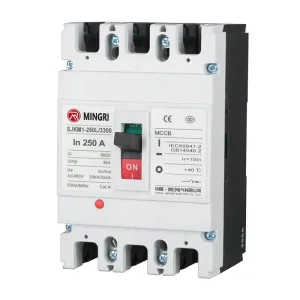 Wholesale SJKM1 Moulded Case Circuit Breaker (MCCB) - Reliable Industrial Power Distribution & Overload Protection
-
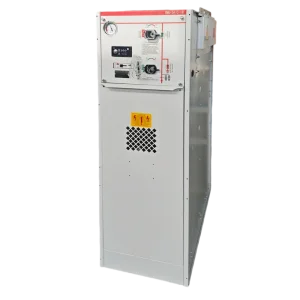 ODM RM6 Fully Enclosed and Fully Insulated Gas-Insulated Ring Network Switchgear - Sealed for Desert Substation Duty
-
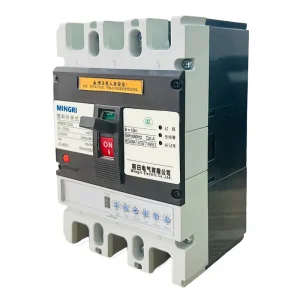 High-Quality SJKM3E Electronic Circuit Breaker (ECB) - Microprocessor Protection for 16A-800A Heavy Industrial Loads
-
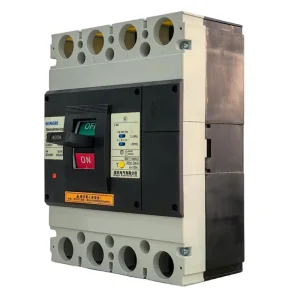 OEM SJKM3L ELCB Earth Leakage Circuit Breaker - High Sensitivity 230V/415V Personnel & Fire Protection
-
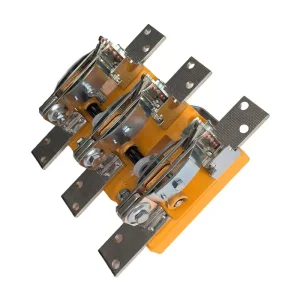 ODM HD13BX Single Throw Rotary Knife Switch - Visible Isolation Gap for Plant Maintenance & Panel Safety
-
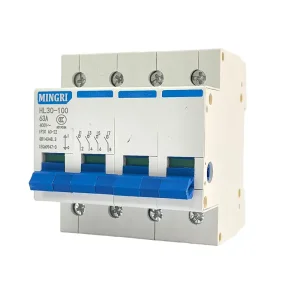 Wholesale High-Performance HL30 Miniature Disconnect Switch 1-4P 6-100A for AC Sub-Distribution Boards
-
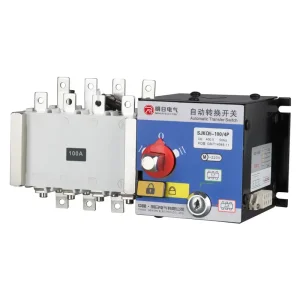 Wholesale SJKQ5 ATS Dual Power Automatic Transfer Switch - Millisecond Switching Between Utility Grid and Local Gensets
-
Wholesale China SJKM5 Industrial MCCB Breaker Factory - 100A-630A Heavy-Duty Short-Circuit Protection for Iraq Infrastructure
Current Limiting Protection in Iraq: Technical FAQ
Practical answers to electrical design, sourcing, and maintenance questions faced by consultants and electrical engineers in Iraq.
💡 How does a current limiting protector differ from a standard industrial circuit breaker?
A standard mechanical circuit breaker takes between 1.5 to 3 complete AC cycles (30 to 60 ms) to separate its contacts and extinguish the arc, during which the full peak fault current passes unobstructed through downstream busbars and cables. A fast current limiting protector introduces an opposing arc voltage or pyrotechnic chemical disconnect within 1 to 3 ms, cutting off the current waveform long before it reaches its theoretical first-cycle peak. This radically reduces electrodynamic stress and thermal let-through energy (I²t) by up to 90%.
💡 Why is current limitation especially critical when parallel-running Iraqi diesel generators?
Many private and commercial facilities across Iraq combine utility feeds with multiple on-site diesel generators. When multiple sources operate in parallel or switch over via non-synchronized bus ties, the prospective short-circuit capacity doubles or triples. Downstream panels originally rated for 25kA may suddenly be exposed to prospective fault levels of 50kA or more. Installing current limiting protectors at the coupling points avoids costly full replacements of legacy switchboards by clamping fault current to safe levels.
💡 How do Mingri Electric protective devices manage ambient temperatures exceeding 50°C in Basra and Nasiriyah?
Standard European or East Asian protective ratings are calibrated at 30°C or 40°C. In Southern Iraq, ambient shade temperatures regularly hit 52°C, meaning internal cabinet temperatures can exceed 65°C. Mingri Electric devices utilize custom silver-plated copper conductor profiles, high-temperature composite casing insulation, and electronic trip units calibrated with thermal memory algorithms to prevent nuisance trips without compromising fault response speed.
💡 What documentation and type test certifications are supplied for Iraqi EPC tenders?
Every shipment is accompanied by complete type-test certificates from accredited international laboratories (conforming to IEC 60947-2, IEC 60282, and IEC 62271), routine factory test certificates, certificate of origin, and de-rating curves specific to high ambient desert installations. We also assist EPC contractors in obtaining verification clearance through pre-shipment inspection bodies (such as Bureau Veritas or TÜV) as required by Iraqi authorities.
💡 What is the typical lead time and logistics route for electrical switchgear orders destined for Iraq?
Standard modular units are manufactured within 20 to 30 working days. Shipments destined for central and southern Iraq are routed via sea freight to the Port of Umm Qasr, while northern projects in Iraqi Kurdistan are commonly cleared through Turkish land borders or air freight via Erbil International Airport for urgent replacements.