High-Performance Protective Switching Devices for Slovak Heavy Industry
Combining the functional capabilities of molded case circuit breakers, contactors, thermal overload relays, and digital isolators into integrated, self-coordinated control architectures.
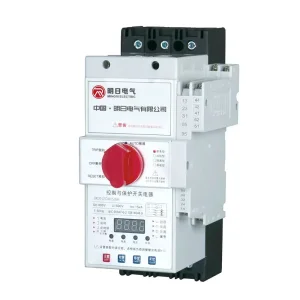
SJKCPS Control & Protective Switching Device (Slovakia Spec)
Integrated multi-function switchgear merging circuit breaker, contactor, and overload capabilities with zero coordination-weld risk in continuous motor feeder duties.
- Rated Voltage ($U_e$): 400V / 690V AC
- Breaking Capacity ($I_{cs}$): Up to 50kA
- Trip Coordination: Type 2 Verified
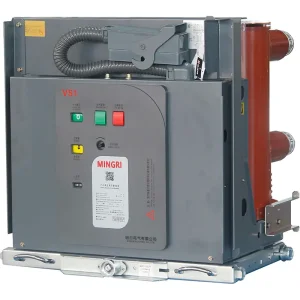
VS1-12/24 Indoor Withdrawable High-Voltage Vacuum Circuit Breaker
Engineered for 12kV/24kV distribution cabinets across Slovak industrial substations, providing reliable arc quenching, high mechanical endurance, and embedded interlocks.
- Rated Voltage ($U_r$): 12kV – 24kV
- Rated Breaking Current: Up to 31.5kA
- Mechanical Life: 30,000 Operations
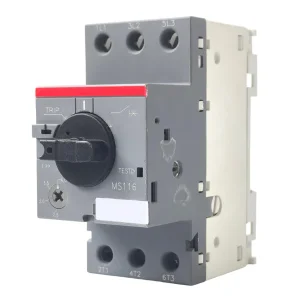
ODM MS116 Low Voltage Motor Protection Circuit Breaker (MPCB)
Compact 45mm width motor starter units delivering thermal and magnetic protection with integrated phase loss sensitivity for European OEM machinery and conveyor systems.
- Setting Range: 0.1A to 32A
- Standard Compliance: IEC/EN 60947-4-1
- Mounting: Standard 35mm DIN Rail
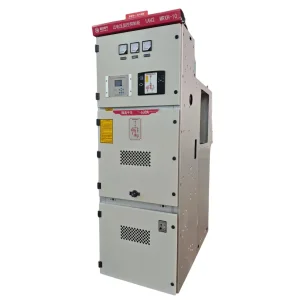
MRXH-10 Arc Suppression & Resonance Elimination Cabinet
Intelligent neutral point grounding and harmonic suppression system protecting transformer insulation and underground cabling systems in Slovak mining and metallurgy hubs.
- Network Voltage: 6kV / 10kV / 35kV
- Fault Transfer Speed: < 30ms Micro-tripping
- Data Interface: RS485 / Modbus RTU
Electrical Infrastructure Realities in the Slovak Republic
A comprehensive examination of electrical control challenges across Central Europe's automotive capital and its transitioning industrial grids.
Automotive Density & Uptime Demands
As the world’s largest per-capita automobile producer (hosting Volkswagen in Bratislava, Stellantis in Trnava, Kia in Žilina, Jaguar Land Rover in Nitra, and the newly established Volvo electric vehicle facility near Košice), continuous processing uptime is non-negotiable. Stamping presses, automated painting booths, and robotic welding rigs demand switchgear that guarantees Type 2 coordination—ensuring that downstream motor or feeder shorts do not cause contact welding or upstream main busbar trips.
DSO Modernization & Grid Resiliency
The Slovak distribution network, managed by three regional DSOs—Západoslovenská distribučná (ZSD), Stredoslovenská distribučná (SSD), and Východoslovenská distribučná (VSD)—is actively undergoing digital transformation under the EU's Fit-for-55 and modern energy transition mandates. This necessitates intelligent switchgear capable of autonomous fault isolation, real-time power measurement, and digital fieldbus connectivity (Modbus/PROFINET) to maintain grid stability under fluctuating distributed generation.
Heavy Metallurgical & Chemical Enclaves
Slovakia's traditional heavy industries—such as U.S. Steel Košice, Železiarne Podbrezová, and extensive chemical clusters in Bratislava and Šaľa—exert punishing electrical loads. Induction furnaces, continuous casting drives, large-scale ventilation fans, and chemical scrubbers generate high harmonic distortions, short-circuit fault levels, and inductive kickbacks that rapidly degrade conventional separated motor starter components.
Engineering Principles of IEC/EN 60947-6-2 Control and Protection Switches
A rigorous architectural breakdown of why integrated CPS topologies outperform legacy discrete contactor-breaker combinations in high-reliability environments.
The Architectural Evolution of Motor Circuit Protection
Historically, motor branch circuits in European industrial panels relied on a three-tier discrete assembly: a Molded Case Circuit Breaker (MCCB) or fuses for short-circuit interruption, an electromagnetic contactor for switching duty cycles, and a bimetallic thermal overload relay for continuous thermal tracking. This setup introduces multiple electrical junctions, elevated internal impedance, cascading thermal dissipation inside sealed IP54 enclosures, and complicated coordination challenges.
The IEC/EN 60947-6-2 standard establishes a distinct product category: Control and Protective Switching Devices (CPS). Unlike component-level pairings, a CPS integrates the disconnecting, main contact switching, and electronic tripping mechanisms inside a unified physical frame, entirely eliminating intermediate interconnect wiring and drastically lowering contact resistance.
Achieving Flawless Self-Coordinating Type 2 Integrity
Under European safety directives and EN 60947-4-1 standards, Type 1 coordination permits contact damage, breaker degradation, and welding, requiring component servicing after a short circuit. Type 2 coordination demands that no contact welding shall occur and the device must remain operational without recalibration. Our CPS technology implements an intelligent dual-break contact architecture combined with high-speed electromagnetic blow-out coils.
During high-magnitude short-circuit events (up to 50kA/400V), the magnetic repulsion force instantly separates the primary arc contacts before the digital electronics trigger the latch mechanism. This restricts peak let-through energy ($I^2t$) to less than 15% of that experienced with traditional discrete assemblies, shielding upstream busway systems across Slovak facilities.
| Evaluation Parameter | Traditional Discrete Modular Assembly (Breaker + Contactor + Relay) | Integrated SJKCPS Architecture (IEC 60947-6-2 Standard) | Engineering Benefit for Slovak Plants |
|---|---|---|---|
| Enclosure Space Consumption | Requires 100% baseline DIN rail/mounting plate depth and width | Reduced by 55% to 70% | Enables compact switchgear design; fits more feeder circuits per panel |
| Internal Wiring Terminals | 12 to 18 external screw/lug connections subject to vibration loosening | Only 6 main terminals (L1-L3 in, T1-T3 out) | Eliminates 66% of thermal failure points; minimizes maintenance retorquing |
| Short-Circuit Coordination | Requires empirical coordination calculation; high risk of contact welding | Factory-Certified Type 2 Self-Coordination | Zero contact welding risk; operational continuity restored immediately after clearing |
| Mechanical & Electrical Lifespan | AC-3 mechanical: ~1-3 million; electrical: ~100k-200k cycles | Mechanical: 5–10 million; electrical: 500k–1M cycles | Ideal for high-cycle automotive presses, stamping lines, and conveyor drives |
| Thermal Heat Dissipation | High cumulative $I^2R$ heat from multiple contact junctions and bimetals | Optimized single-pole thermal path | Lowers internal cabinet temperatures, preventing premature PLC/inverter aging |
China Factory 4.0: Resilient Supply Chains & High-Volume Production
Overcoming Western European switchgear procurement delays through advanced automation, digital quality tracing, and certified manufacturing excellence in Yueqing.
Fully Automated SMT & Cleanroom Assembly
Our microprocessor protection units and electronic trip boards are manufactured using automated high-speed Surface Mount Technology (SMT) with 3D optical and X-ray soldering inspection (AOI/AXI). Encapsulated in cleanrooms, our circuit boards demonstrate extreme resistance to environmental humidity, thermal shock, and airborne industrial contaminants common in metallurgical facilities.
100% End-of-Line Dynamic Testing
Every single CPS unit leaving our production line undergoes rigorous automated end-of-line (EOL) functional verification. This includes multi-point contact resistance testing, dynamic mechanical timing analysis, dielectric breakdown checks at 2,500V AC, and precision trip curve verification across thermal, magnetic, and ground-fault current thresholds, ensuring zero-defect deployments for Slovak EPCs.
Strategic Dual-Track Sourcing & Lead-Time Advantage
European machine builders and switchboard contractors currently face 24 to 52-week lead times from legacy Western suppliers. By establishing an agile Tier-1 manufacturing direct pipeline, our Yueqing smart facility provides predictable 4-to-6-week production cycles, combined with ISO 9001/14001/45001 compliance, complete material test certificates, and full design adaptability.
Localized Industrial Application Scenarios in Slovakia
Delivering high-reliability protection across demanding manufacturing, energy, and process infrastructure deployments.
High-speed hydraulic press lines and robotic welding clusters in Trnava, Žilina, and Nitra require tens of thousands of motor switching operations per week. SJKCPS units serve as distributed motor starters for heavy hydraulic pumps and ventilation systems, providing instant short-circuit tripping without letting upstream busbars trip, thereby avoiding millions of euros in multi-station production shutdowns.
Corrosive chemical environments and volatile process atmospheres mandate sealed, ultra-reliable motor control devices with precise thermal memory tracking. Our CPS devices are deployed in motor control center (MCC) panels driving hazardous-area transfer pumps, gas compressors, and cooling towers, preventing hot-spot overheating and ensuring instant earth-leakage interruption.
Slovak water management utilities (such as Bratislavská vodárenská spoločnosť - BVS) and municipal district heating networks rely on submersible pumps and booster booster booster sets. SJKCPS coupled with SJKQ5 Automatic Transfer Switches delivers uninterrupted dual-power source switching, preventing water-hammer pressure spikes and protecting submersible winding coils against phase loss and underload cavitation.
As southern Slovakia rapidly expands ground-mounted solar farms and utility-scale battery energy storage systems (BESS), switchgear must handle bi-directional power flows, rapid DC/AC switching surges, and severe ambient temperature variations. Our withdrawable switchgear and vacuum circuit breakers safeguard grid interconnection step-up substations against severe voltage spikes.
Integrated Low & Medium Voltage Switching Solutions
Certified distribution, switching, and safety systems engineered for European system integrators, EPCs, and panel builders.
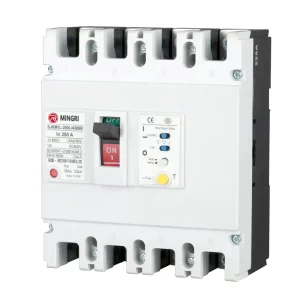
China SJKM1L Earth Leakage Circuit Breaker (ELCB) for Industrial Safety
Precision zero-sequence current detection providing rapid fault clearance against ground-fault leakage currents, preventing electrical fires and human contact hazards.
- Frame Current ($I_n$): Up to 630A
- Residual Tripping ($I_{\Delta n}$): 30mA to 500mA Adj.
- Poles: 3P / 4P Configurations
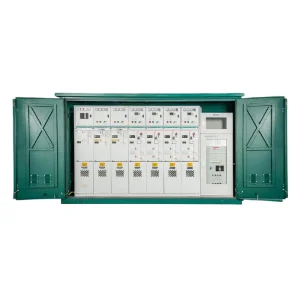
OEM High Voltage Outdoor Intelligent Switch Box for Slovakia Networks
Weatherproof, stainless-steel-enclosed sectionalizing outdoor switchgear designed for harsh Slovak winters (-30°C), incorporating remote telemetry for DSO feeder automation.
- Rated Voltage: 12kV / 24kV / 36kV
- Enclosure Rating: IP55 / IP65 Stainless
- Automation: Integrated RTU / FTU
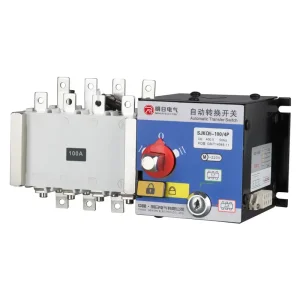
Wholesale SJKQ5 ATS Dual Power Automatic Transfer Switch
Microprocessor-directed dual-channel automatic transfer switch providing sub-second failover between utility grid and backup diesel/UPS systems in hospitals and data hubs.
- Rated Current ($I_e$): 16A to 1600A
- Transfer Duration: < 100ms Fast Transfer
- Standard: IEC/EN 60947-6-1
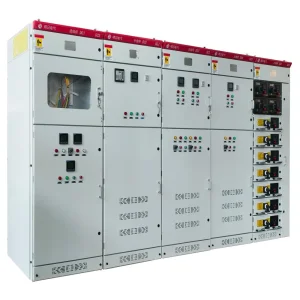
China Low Voltage Withdrawable Switchgear Panel for Slovakia Industry
Full modular withdrawable MCC and power center cabinet architecture (MNS/GCS type equivalent) permitting online cassette replacement without de-energizing the main busbar.
- Rated Insulation ($U_i$): 1000V AC
- Busbar Peak ($I_{pk}$): Up to 105kA
- Form of Separation: Form 3b / Form 4b
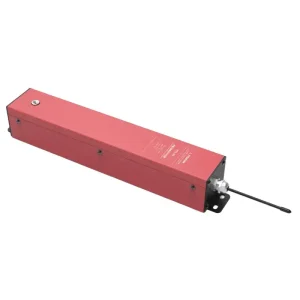
ODM Intelligent Automatic Gas Fire Extinguishing Device (Perfluorohexanone)
Ultra-fast micro-environment fire suppression targeting internal arc flashes inside closed electrical cabinets, deploying non-conductive, clean agent with zero ozone depletion.
- Extinguishing Agent: FK-5-1-12 (Clean Agent)
- Activation Time: < 1 Second Thermal Pulse
- Residue: Non-Conductive, Zero Residue
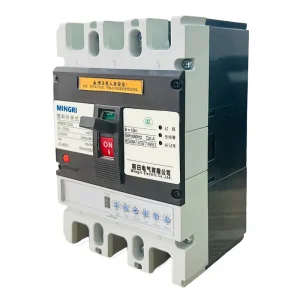
Wholesale SJKM3E Electronic Circuit Breaker (ECB) 16A–800A
Next-generation molded case breaker featuring programmable microprocessor trip units (LSI protection), precise current profiling, and real-time Modbus communication.
- Current Range: 16A to 800A Adjustable
- Breaking Capacity ($I_{cu}$): 50kA – 85kA at 400V
- Trip Functions: LSI + Ground Fault
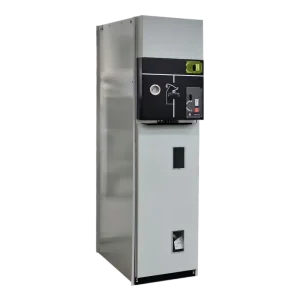
High-Quality SM6 Modular Air Insulated Medium Voltage Ring Main Unit (RMU)
Compact air-insulated switchgear units configurable as switch-disconnectors, vacuum circuit breakers, or metering bays, compliant with European distribution requirements.
- Service Voltage: Up to 24kV / 50Hz
- Busbar Rating: 630A / 1250A Continuous
- Internal Arc Class: IAC AFLR 20kA 1s
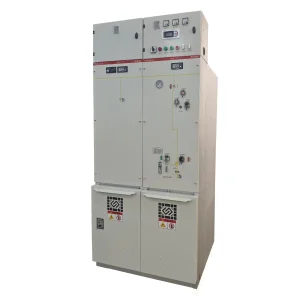
OEM SafeRing-40.5 Gas Insulated Ring Main Unit (RMU) Sealed Switchgear
Fully hermetic stainless-steel tank design insulating all medium-voltage live components for maintenance-free 40.5kV operation in compact indoor and wind farm substations.
- Rated System Voltage: 40.5kV Class
- Tank Hermeticity: Sealed Pressure System
- Protection Class: IP67 High Voltage Tank
Engineering Questions Answered for Slovak Engineers & Buyers
Authoritative insights addressing technical compliance, lead times, international certifications, and installation standards.
How does an integrated CPS satisfy Slovak safety regulations compared to traditional MCCB + Contactor combinations?
In Slovakia, electrical panel construction is governed by STN EN standards (harmonized with EU Directives). Standard assemblies often encounter failure when contactors weld during downstream short circuits. Under STN EN 60947-6-2, an integrated CPS ensures unified Type 2 coordination within a single certified envelope. The unit’s electro-dynamic contact mechanism forces contact separation under short-circuit conditions before external mechanical stress can weld the contact faces, providing absolute operational safety and eliminating manual contact replacement downtime.
Can SJKCPS devices seamlessly connect into our existing Siemens or Schneider PLC architecture over industrial fieldbus?
Yes. The intelligent controller embedded in SJKCPS series units features standard RS485 communication ports operating on open Modbus RTU protocol, with optional gateway converters supporting PROFINET, PROFIBUS-DP, and Ethernet/IP. This enables direct telemetry integration into automotive SCADA platforms (such as WinCC, TIA Portal, or Ignition), reporting real-time 3-phase currents, phase-unbalance percentages, thermal capacity utilization, trip event history, and contact wear diagnostics.
What documentation and test certificates are supplied for customs clearance and Slovak technical inspection (TI SR)?
Every shipment is accompanied by CE Declarations of Conformity, ISO 9001:2015 Quality System certificates, RoHS/REACH compliance declarations, and full third-party type-test reports from accredited testing bodies (such as CNAS or international laboratory equivalents). In addition, routine factory test certificates (covering dielectric insulation, contact resistance, and tripping calibration curves) are provided per serial number to guarantee immediate acceptance by Technická inšpekcia, a.s. (TI SR) and regional utility authorities (ZSD, SSD, VSD).
What are the standard delivery lead times and logistical pathways for machinery plants in Western vs. Eastern Slovakia?
Standard production runs for customized CPS devices and low-voltage withdrawable switchgear require 3 to 4 weeks at our Yueqing smart facility. Shipments bound for western clusters (Bratislava, Trnava, Nitra) typically transit via multimodal maritime shipping to the Ports of Koper (Slovenia) or Hamburg (Germany) with direct rail freight into the Dunajská Streda intermodal hub (total transit 26-32 days). Urgent project requirements are serviced via air freight into Vienna International Airport (Schwechat) or Bratislava Airport (BTS) within 5 to 7 business days.
How does the SJKCPS unit perform in environments with high voltage distortion and harmonics?
Heavy industrial installations with extensive variable frequency drives (VFDs) and arc furnaces induce high Total Harmonic Distortion ($THD_i$ and $THD_u$). Conventional thermal bimetallic relays nuisance-trip due to eddy-current overheating. SJKCPS utilizes digital true-RMS measurement sampling algorithms that accurately differentiate between harmonic skin-effect heating and genuine over-current faults, while internal metal-oxide varistors (MOVs) and transient voltage suppression (TVS) diodes safeguard the digital logic from voltage surges up to 8kV.
Are customized mounting adapters and mechanical retrofits available for legacy European panel enclosures?
Yes. We engineer customized DIN rail adapter brackets, rear-busbar connection kits, and door-interlock rotary mechanisms that match standard European enclosure dimensions (including Rittal, Schneider Prisma, and Eaton xEnergy). Our engineering department can work directly from your AutoCAD/EPLAN electrical schematics to supply pre-wired sub-assemblies tailored to exact cabinet dimensions.
Accelerate Your Electrical Distribution Engineering in Slovakia
Partner directly with our specialized switchgear engineering facility. Access factory-direct wholesale pricing, certified IEC/EN compliance documentation, and rapid prototyping for your next industrial project.