Featured Low-Voltage Switchgear Assemblies for Melbourne Commercial & Industrial Facilities
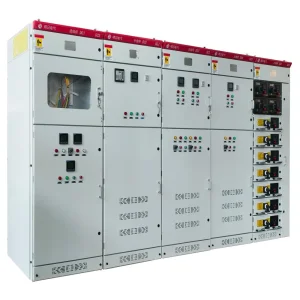
Engineered to meet rigorous AS/NZS 61439.1/.2 form-separation protocols and designed for rapid drop-in integration across Greater Melbourne industrial plants, data hubs, and logistics corridors.
Victoria's Energy Transition & Melbourne’s Power Grid Landscape
The metropolitan region of Melbourne and the broader state of Victoria are undergoing one of the most comprehensive electrical grid transformations in the Southern Hemisphere. As Victoria accelerates toward its statutory target of 95% renewable generation by 2035 and net-zero greenhouse gas emissions by 2045, traditional centralized coal-fired generation in the Latrobe Valley is rapidly decommissioning. This seismic shift demands an unprecedented expansion in high-performance medium voltage (MV) and low voltage (LV) switchgear distribution nodes.
Grid Modernisation & DNSPs
Melbourne’s power distribution is orchestrated by five principal Distribution Network Service Providers (DNSPs): CitiPower (serving the Melbourne CBD and inner suburbs), Powercor (western suburbs and regional Victoria), Jemena (northwestern corridor), AusNet Services (outer east and rural corridors), and United Energy (southern and peninsula zones). Every MV switchboard interfacing with these distribution networks requires rigorous adherence to local Service and Installation Rules (SIR), fault-level withstand ratings, and protection interlock mechanics.
Hyperscale BESS & Renewables
Victoria’s Renewable Energy Zones (REZs) are integrating multi-hundred-megawatt battery energy storage systems (BESS) such as the Victorian Big Battery in Moorabool and new grid-scale storage facilities throughout western Melbourne. These systems require modular 22kV, 33kV, and 40.5kV switchgear with ultra-fast circuit breakers capable of clearing high short-circuit currents without degrading service continuity (LSC2B classification).
Civil Mega-Projects & Urban Renewal
Major civil works—including the Metro Tunnel Project, the Suburban Rail Loop (SRL), the West Gate Tunnel, and the electrification of the Port of Melbourne—impose rigorous duty cycles on auxiliary distribution boards. Switchgear installed in underground and marine-proximate environments must demonstrate superior internal arc flash containment (IAC AFLR) and ingress protection ratings from IP42 up to IP65.
Global Switchgear Market Dynamics & The Yueqing Manufacturing Paradigm
Globally, switchgear lead times from legacy North American and Western European original equipment manufacturers (OEMs) have ballooned to 52 to 78 weeks due to structural shortages in grain-oriented electrical steel (CRGO), copper busbar processing bottlenecks, and prolonged backlogs in vacuum interrupter assembly. For Melbourne EPC developers and engineering firms, these supply chain delays translate into acute project penalties, deferred commissioning revenue, and escalation clauses.
Direct-to-Factory Industrial Aggregation
Mingri Electric, headquartered in Yueqing (China’s preeminent electrical equipment capital), eliminates tiered distributor markups and regional agency friction. Our manufacturing ecosystem integrates in-house precision laser cutting, CNC punching, automated robotic busbar bending, and dedicated cleanroom vacuum interrupter fabrication. This deep vertical consolidation allows us to ship fully bespoke 12kV, 24kV, and 40.5kV switchgear ensembles in 6 to 12 weeks, complete with full routine test certificates and FAT (Factory Acceptance Test) sign-off.
Engineering Agility & CAD/Revit BIM Customization
Unlike rigid multinational product platforms, our design bureau directly interfaces with Melbourne building services consultants, providing 3D CAD step files, BIM/Revit models, secondary control wiring schematics, and single-line diagrams (SLD) within 48 to 72 hours. Whether adjusting cubicle footprints to fit legacy Melbourne CBD plant room access hatches or integrating client-specified micro-processor relays (SEL, Schneider, ABB, or Siemens), our factory offers absolute customization.
Engineering Compliance Matrix: Australian Standards vs. Mingri Switchgear Capabilities
Procuring switchgear from China for operation across Melbourne and Victoria demands stringent alignment with Australian and international electrotechnical frameworks. The table below delineates the statutory engineering benchmarks and how our equipment delivers uncompromising compliance.
| Regulatory Benchmark | Australian Statutory Mandate | Mingri Factory Engineering Specification | Operational Value for Melbourne EPCs |
|---|---|---|---|
| AS/NZS 61439.1 & .2:2016 | Low-voltage switchgear and controlgear assemblies; verification by test vs design rules. | Full design verification tests covering temperature-rise limits, dielectric properties, short-circuit withstand up to 80kA/1s, and clear Form 3b / Form 4a / Form 4b internal segregation. | Seamless compliance with Victorian building codes; reduces on-site certifier sign-off delays in commercial basements. |
| AS 2067:2016 | Substations and high voltage installations exceeding 1 kV a.c. | Earthing switch short-circuit making capacity, safety mechanical interlocks preventing racking under load, touch and step potential safety mitigations. | Ensures substation integrity for private high-voltage customer connections across CitiPower and Powercor boundaries. |
| AS 62271.200 (IEC 62271-200) | A.C. metal-enclosed switchgear and controlgear for rated voltages above 1 kV up to 52 kV. | Internal Arc Classification IAC AFLR up to 31.5kA for 1s. Automated exhaust pressure relief flaps, LSC2B service continuity, partitioned metallic shutters (PM class). | Maximum operator survivability in densely populated Melbourne industrial estates and hospital backup substations. |
| Ambient Thermal Derating | AS/NZS 3000 (Wiring Rules) accommodating Victorian heat waves up to 45°C ambient. | Busbar sizing and thermal modeling calculated at 40°C to 50°C ambient baseline with silver-plated contact surfaces and ventilated cubicle architecture. | Guarantees continuous rated current capacity without nuisance tripping during peak summer grid demand spikes. |
| Seismic Qualifications | AS 1170.4: Earthquake actions in Australia for critical infrastructure. | Reinforced 2.0mm-2.5mm Aluzinc sheet frame structures with anti-vibration locking fasteners and rigid foundation anchor bracketry. | Meets critical infrastructure resilience requirements for telecommunications and water treatment plants. |
Localized Application Profiles Across Greater Melbourne & Regional Victoria
From high-density urban towers in Southbank to expansive manufacturing hubs in Dandenong South, our switchgear systems solve distinct regional power architecture challenges:
Western Corridor Hyperscale Data Centers
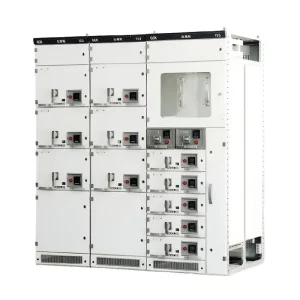
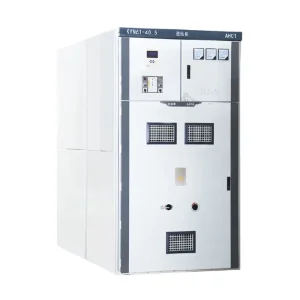
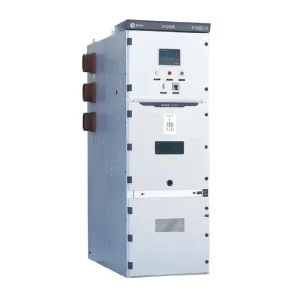
Truganina, Derrimut, and Ravenhall have emerged as Melbourne's hyperscale computing backbone. These centers require low-voltage Form 4b MNS and GCS switchboards coupled with 22kV KYN28-24 metal-clad medium voltage switchboards to feed continuous dual-bus UPS streams and high-capacity chillers with zero tolerance for unplanned outages.
Industrial Estates: Dandenong & Campbellfield
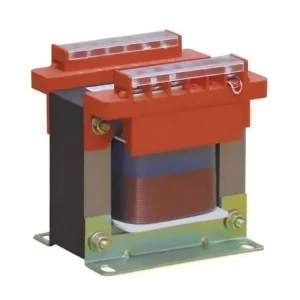
Manufacturing plants, heavy food processing units, and logistics complexes require robust GCK and GGD switchgear and BK series control transformers. Designed to withstand inductive motor loads, frequent switching operations, and harsh atmospheric dust, our gear delivers low total lifecycle cost.
BESS & Solar Step-Up Kiosk Substations
Across northern and central Victoria, decentralized solar farms and community batteries connect to 22kV and 33kV distribution lines. Our MR-SafeRing-12 and XGN15-24 gas-insulated ring main units (RMU) provide compact footprints, stainless steel hermetic gas enclosures, and maintenance-free operation across severe temperature fluctuations.
Technological Innovations Driving Australian Energy Procurement
Switchgear is no longer just a passive electro-mechanical barrier; it is a networked, intelligent sensing hub. Mingri integrates modern smart grid telemetry and environmental innovations to meet Australia’s decarbonization targets:
IoT Predictive Condition Monitoring
Our medium-voltage switchboards can be outfitted with passive non-contact SAW (Surface Acoustic Wave) wireless temperature sensors on busbar disconnects and circuit breaker spouts. Real-time partial discharge (PD) monitoring via transient earth voltage (TEV) and ultrasonic sensors detects insulation degradation months before failure, feeding operational health telemetry straight to central SCADA systems via IEC 61850 or Modbus-TCP.
Eco-Gas & Solid-Insulated RMU Options
With Australia actively scrutinizing the phase-down of fluorinated greenhouse gases (F-gases), SF6 emissions face mounting regulatory hurdles. Mingri leads with alternative solid-insulated (GXGN-12) and dry-air / eco-gas insulated ring main units. These units maintain high dielectric breakdown strength without utilizing sulfur hexafluoride, avoiding long-term environmental liabilities for Victorian asset owners.
Medium Voltage, Ring Main Units & Industrial Control Componentry
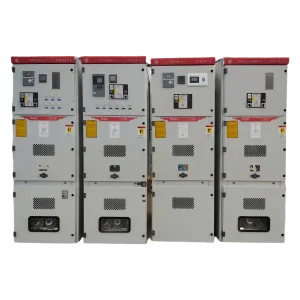
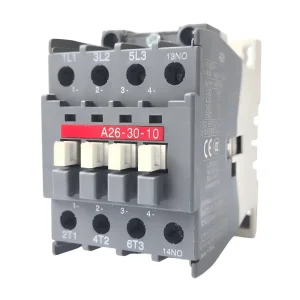
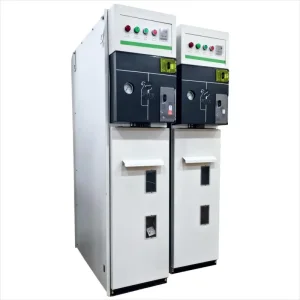
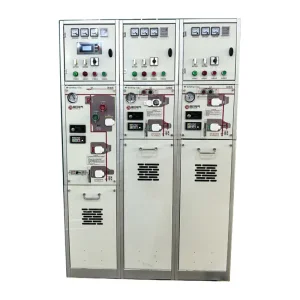
Explore our comprehensive lineup of MV armored withdrawable panels, SF6/solid ring main units, heavy-duty contactors, and control transformers optimized for export to Australian contractors and global utilities.
Procurement Blueprint: Vetting China Switchgear Manufacturers for Australian Deployment
Procurement engineers handling cross-border equipment delivery must enforce a fail-safe quality verification sequence. At Mingri Electric, our manufacturing and inspection workflow incorporates five distinct QA gates:
1. Raw Material Metallurgy & Traceability
We mandate mill test certificates for every copper busbar batch (minimum 99.95% electrolytic copper conductivity, T2 standard) and utilize premium Aluzinc or cold-rolled electro-galvanized steel sheets (minimum 2.0mm thickness) to guarantee structural rigidity under electrodynamic short-circuit forces.
2. Digital FAT & Live Video Audits
Melbourne clients and consultants can participate in remote interactive Factory Acceptance Tests via high-definition video streaming. Our testing bay covers power-frequency dielectric tests, primary current injection, mechanical interlock operations, and secondary control circuit scheme validation in real-time.
3. Seaworthy Packaging & Ocean Logistics
Ocean transit through tropical sea lanes to the Port of Melbourne requires vacuum-sealed foil moisture barrier packaging, activated desiccant packs, and heavy-duty ISPM-15 heat-treated timber crates. We coordinate direct containerized discharge to Port of Melbourne berths with full documentation for rapid Australian Border Force and biosecurity clearance.
Frequently Asked Questions: Switchgear Procurement for Melbourne & Global Projects
Clear, actionable answers addressing technical certification, network approval, customs clearance, and on-site deployment in Victoria, Australia.
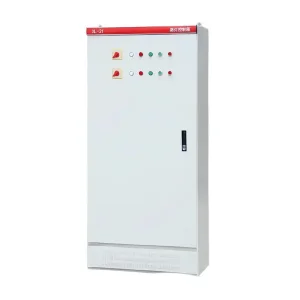
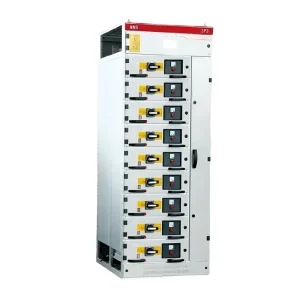
Our low-voltage switchboards (including MNS, GCS, GCK, and XL-21) are manufactured strictly in accordance with AS/NZS 61439.1 and AS/NZS 61439.2:2016. Verification is accomplished via a blend of comprehensive type testing and design calculations covering temperature rise, dielectric withstand, short-circuit withstand, and clear Form 3b or Form 4b internal barriers. Complete test certificates and compliance documentation dossiers are provided with project submissions to satisfy Australian electrical inspectors and engineering certifiers.
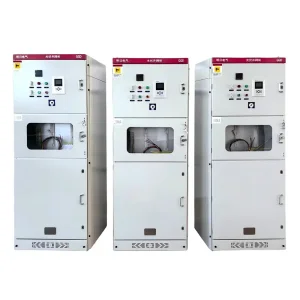
Yes. While parts of Australia operate primarily on 11kV or 33kV, Melbourne’s distribution network—specifically under Powercor, CitiPower, Jemena, and AusNet—heavily utilizes 22kV for medium-voltage sub-transmission and primary distribution. Our KYN28-24 armored switchgear and MR-SafeRing / XGN15 RMU series are natively designed for 24kV rated insulation with lightning impulse withstand voltages (BIL) up to 125kV, providing perfect electrical headroom for Melbourne 22kV systems.
Our manufacturing cycle typically ranges between 4 to 8 weeks following technical drawing and single-line diagram (SLD) approval, depending on panel quantity and customization level. Sea transit from Ningbo or Shanghai port directly to the Port of Melbourne takes approximately 14 to 18 days on direct container services. Total lead time from order placement to site arrival is commonly 8 to 12 weeks—dramatically faster than the 40+ weeks typical of domestic or European switchboard builders.
We provide full flexibility in secondary relay integration. Our factory regularly configures and pre-wires relays from global manufacturers such as Schneider Electric (Micom/Sepam), ABB (Relion series), Siemens (SIPROTEC), and Schweitzer Engineering Laboratories (SEL). Panels are pre-tested for communication over IEC 61850, Modbus-TCP, and DNP3 protocols to interface directly with Victorian DNSP or facility SCADA systems.
Mingri Electric provides comprehensive English-language engineering documentation, installation guidelines, schematic drawings, and spare parts packages with every order. For installation and commissioning, we provide 24/7 direct remote video support with our senior switchgear design engineers. Equipment is backed by a standard 18-to-24-month comprehensive warranty, with extended warranties available upon request.
Absolutely. Space constraints in Melbourne inner-city plant rooms, heritage buildings, and basement substations are a frequent engineering challenge. Our flexible modular fabrication allows customized cubicle widths, reduced busbar compartment depths, and tailored top-or-bottom cable/busduct entry configurations to fit tight spatial restrictions without sacrificing thermal ratings or arc fault containment.
Accelerate Your Project Timeline with Factory-Direct Switchgear
Whether you are engineering a 22kV solar/BESS kiosk substation in regional Victoria, designing a critical data center power distribution train in Melbourne West, or upgrading a manufacturing facility in Dandenong, our engineering teams are ready to evaluate your Single Line Diagrams and provide competitive, fully compliant proposals.