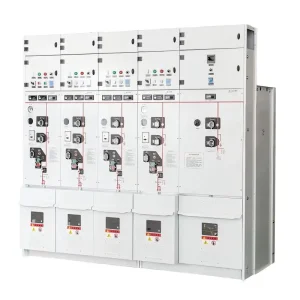
Flagship DIN-Rail Protection Devices for Austrian & EU Applications
Engineered for seamless integration into Austrian switchboards, machinery control cabinets, and residential enclosures adhering to ÖVE standards.
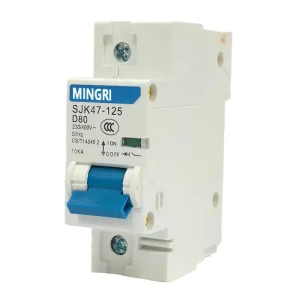
Wholesale SJK47-125 MCB Miniature Circuit Breaker (DIN Rail Mountable for Austria Enclosures)
View Technical Specs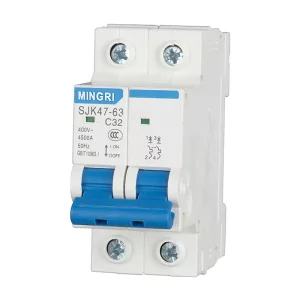
China SJK47-63 Miniature Circuit Breaker MCB DPN (Austrian Standard OEM Certified)
View Technical Specs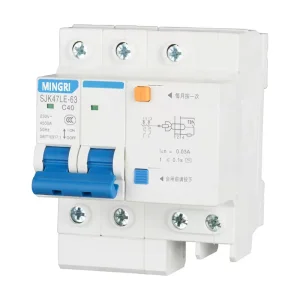
High-Quality SJK47LE-63 Residual Current Circuit Breaker RCCB (Fault Current Protection Austria)
View Technical Specs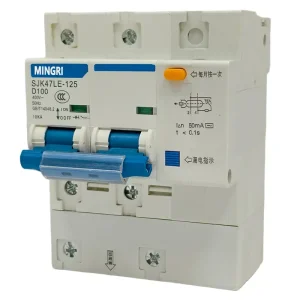
OEM SJK47LE-125 High-Current Residual Current Device (Heavy Industrial Austria Deployment)
View Technical SpecsThe Austrian & Central European Low-Voltage Protection Ecosystem
The electrotechnical manufacturing and contracting landscape in Austria represents one of the most stringent, quality-conscious markets in the European Union. Governed strictly by the Austrian Electrotechnical Association (ÖVE - Österreichischer Verband für Elektrotechnik) and synchronized with European Harmonization Documents (CENELEC) under ÖVE/ÖNORM EN 60898-1 (for household and similar installations) and ÖVE/ÖNORM EN 60947-2 (for industrial low-voltage switchgear), the demand for Miniature Circuit Breakers (MCBs) is transforming rapidly under the pressure of decarbonization, building automation, and high-performance industrial drive systems.
Austria's economic spine—spanning industrial mechanical engineering clusters in Upper Austria (Linz, Wels, Steyr), automotive innovation corridors in Styria (Graz), logistics nodes across Lower Austria, and renewable energy corridors across Tyrol and Carinthia—requires circuit protection equipment that can withstand rigorous duty cycles. The country's strict Nullungsverordnung (earthing and neutral regulation standards) requires absolute precision in short-circuit cut-off times, thermal overload dissipation, and selective coordination between upstream molded case circuit breakers (MCCB) or air circuit breakers (ACB) and downstream branch MCBs.
Global Landscape: The Electrification Megatrend and Demands on Circuit Interrupters
Globally, the Miniature Circuit Breaker market is experiencing a profound architectural shift driven by decentralized energy resources (DERs), electric vehicle charging infrastructure (EVSE), battery energy storage systems (BESS), and hyperscale data center construction. Traditional passive thermal-magnetic MCBs are increasingly required to handle bidirectional power flows, harmonic distortions caused by non-linear loads (such as variable frequency drives and solar micro-inverters), and heightened ambient temperatures inside densely packed DIN-rail enclosures.
In high-income industrial regions like Austria, Germany, and Switzerland (DACH), low-voltage distribution boards no longer house mere passive resistive loads. Modern installations integrate photovoltaic back-feeding, heat pump compressors with high inrush currents, and multi-point DC fast-charging terminals. Consequently, miniature circuit breakers must exhibit zero nuisance tripping under transient overvoltages, superior thermodynamic stability up to 55°C without excessive de-rating, and strict current-limiting performance (Energy Limiting Class 3) to protect downstream cables from thermal stress during prospective short-circuit faults up to 10kA or 15kA.
Why Austrian EPCs & Panel Builders Partner with Yueqing Factory Hubs
China's electrical engineering supply chain—anchored in the world-renowned electrical manufacturing capital of Yueqing (Zhejiang Province)—has evolved from simple component assembly into an ultra-automated, vertically integrated industrial powerhouse. For Austrian Original Equipment Manufacturers (OEMs), engineering procurement contractors (EPCs), and wholesale electrical distributors, direct collaboration with Tier-1 Chinese manufacturers provides an unbeatable convergence of capital efficiency, technological scalability, and custom engineering agility.
Automated Spot-Welding & Assembly
Multi-station automated robotic lines handle silver alloy contact riveting, arc chute stacking, and bi-metal strip calibration without human handling error, ensuring micron-level mechanical tolerances.
100% Thermal & Magnetic Testing
Every single unit undergoes automated computer-controlled current injection testing for instantaneous magnetic tripping (Curves B, C, and D) and calibrated thermal overload delay, matching strict IEC/EN tolerances.
Component Vertical Integration
In-house tooling, thermoset/thermoplastic injection molding (PA66 with UL94 V-0 flame rating), copper extrusion, and metallurgical stamping eliminate sub-tier markups and expedite prototyping cycles.
Localized Austrian Applications: Bridging Alpine Infrastructure & Smart Grids
The deployment of high-grade MCBs sourced from our Chinese manufacturing lines directly addresses several specific, demanding installation profiles common in Austria:
- Alpine Cableway, Pumping & Ski Lift Sub-Stations: High-altitude installations throughout Tyrol, Salzburg, and Vorarlberg encounter severe temperature swings (-30°C to +40°C), atmospheric condensation, and lightning-induced voltage surges. Our MCBs feature specialized silver-graphite contact compositions and moisture-resistant bimetal elements that maintain precise tripping characteristics across extreme thermal gradients.
- Industrial Plant Enclosures (Machinery & Automation): Austrian precision machine builders (Maschinenbau) exporting worldwide require dual-rated MCBs complying with both EN 60898-1 and EN 60947-2, as well as UL 1077/489 supplementary protection standards. Compact DPN (1P+N in single 18mm module) designs allow Austrian panel builders to double their circuit density within standard Rittal or Eaton distribution racks.
- Biomass & Hydro Generation Facilities: With over 60% of Austria's domestic electricity generated by run-of-river and pumped-storage hydropower, alongside widespread agricultural biomass generation, our DC and AC miniature circuit breakers provide robust protection for turbine sensor arrays, actuator motor circuits, and auxiliary DC control buses.
- Commercial Heat Pump & EV Fleet Depots: Heavy inrush currents caused by commercial scroll compressors and multi-phase Level 2/3 charging units demand Curve D tripping profiles capable of sustaining 10x to 14x rated current surges for milliseconds without spurious interruption, yet providing rapid magnetic clearing during genuine bolted faults.
Comprehensive Engineering Matrix: SJK47 Series vs. Austrian Industrial Baseline
To enable mechanical and electrical procurement managers to conduct rigorous value-engineering analyses, the table below illustrates the physical, electrical, and regulatory specifications of our core modular circuit protection series:
| Parameter / Characteristic | SJK47-63 Series | SJK47-125 Heavy-Duty | SJK47LE Residual Current (RCBO) | Standard EU Generic Baseline |
|---|---|---|---|---|
| Applicable Standards | IEC/EN 60898-1, ÖVE EN 60898-1 | IEC/EN 60947-2, ÖVE EN 60947-2 | IEC/EN 61009-1, ÖVE EN 61009 | IEC 60898-1 Basic |
| Rated Current (In) | 1A, 2A, 4A, 6A, 10A, 16A, 20A, 25A, 32A, 40A, 50A, 63A | 63A, 80A, 100A, 125A | 6A to 63A (LE-63) / Up to 125A (LE-125) | Up to 63A only |
| Poles Available | 1P, 1P+N (18mm), 2P, 3P, 3P+N, 4P | 1P, 2P, 3P, 4P | 1P+N, 2P, 3P, 3P+N, 4P | Standard 1P to 4P |
| Rated Breaking Capacity (Icn/Icu) | 6,000 A / 10,000 A (Selectable) | 10,000 A / 15,000 A | 6,000 A / 10,000 A | 4,500 A / 6,000 A |
| Tripping Characteristics | Curve B (3-5 In), C (5-10 In), D (10-14 In) | Curve C (7-10 In), Curve D (10-14 In) | Curve B, C (Residual: Type A, AC, or B) | Curve C predominantly |
| Energy Limiting Class | Class 3 (I²t dissipation optimized) | Class 3 | Class 3 | Class 2 or Class 3 |
| Enclosure Housing Material | Polyamide PA66, Flame Retardant UL94 V-0, Halogen-Free | Reinforced BMC / PA66 Thermoset Composite | PA66 Glow-Wire tested to 960°C (IEC 60695-2-10) | Standard ABS/Nylon blend |
| Terminal Clamping Torque & Wire Size | Dual-function bi-connect (Fork busbar + 25mm² cable) | Tunnel clamp up to 50mm² flexible / solid wire | Bi-connect busbar + 35mm² flexible conductor | Single tunnel clamp up to 16mm² |
| Mechanical / Electrical Life | 20,000 / 10,000 cycles | 20,000 / 8,000 cycles | 20,000 / 10,000 cycles | 10,000 / 4,000 cycles |
Emerging Industry Trends & Global Procurement Strategic Criteria
1. The Rise of IoT-Enabled Smart Circuit Breakers and Energy Telemetry
In accordance with the European Energy Performance of Buildings Directive (EPBD) and Austrian energy efficiency mandates (Energieeffizienzgesetz - EEffG), commercial facilities are mandated to track and optimize sub-circuit power utilization. The traditional passive MCB is transitioning into an active data telemetry node. Modern Chinese R&D is pioneering compact IoT-enabled MCBs featuring embedded micro-current transformers, temperature sensors, and integrated wireless communication (Modbus RS485, Zigbee, or Matter protocols). This grants facility engineers in Vienna, Linz, or Graz real-time visibility into branch-level energy consumption, predictive thermal anomaly detection before insulation failure occurs, and remote motorized trip/reclose functionality.
2. Solid-State and Hybrid Circuit Interruption
While mechanical thermal-magnetic breakers remain the global benchmark for safety isolation, solid-state circuit breaker (SSCB) technology is advancing rapidly. Utilizing wide-bandgap silicon carbide (SiC) and gallium nitride (GaN) semiconductors, solid-state designs can extinguish fault currents in microseconds—nearly 1,000 times faster than mechanical contacts—eliminating mechanical arc erosion entirely. Our factory laboratories are actively developing hybrid architectures that pair solid-state ultra-fast interruption with physical air-gap galvanic isolation, tailored for hyperscale battery storage and DC microgrids.
3. Stringent Environmental and Circular Economy Standards (RoHS, REACH, and F-Gas Phaseout)
European and Austrian supply chains demand complete material traceability. Every component produced in our manufacturing facilities strictly avoids hazardous substances under EU RoHS Directive 2011/65/EU and REACH Regulation (EC 1907/2006). All plastics utilized are 100% halogen-free, recyclable, and emit minimal non-toxic smoke during rare thermal runaway occurrences, satisfying European fire safety standard EN 45545-2 for transit and public infrastructure.
Strategic Procurement Checklist for Global Buyers & Austrian EPCs:
- Selectivity & Cascading Tables: Verify verified coordination tables matching upstream MCCBs/ACBs to branch MCBs to prevent unnecessary whole-building blackout during downstream branch terminal shorts.
- De-Rating Coefficient Validation: Insist on ambient temperature correction factor curves, critical for Austrian switchgear operating in non-air-conditioned industrial enclosures or alpine exterior housings.
- Type Test Verification: Confirm third-party test certifications from globally accredited bodies (such as TÜV Rheinland, DEKRA, KEMA, or CE conformity reports) demonstrating adherence to breaking tests (Icn and Ics at 100% capacity).
- Custom Branding and Tailored Enclosure Packaging: Assess supplier flexibility for OEM laser marking, custom barcoding, terminal cover sealing options, and custom packaging designed for automated assembly-line sorting.
Frequently Asked Technical & Procurement Questions
Essential clarifications for electrical contractors, panel builders, and procurement officers sourcing circuit protection devices from China for European applications.
Medium & Low Voltage Switchgear, Transformers & Protection Solutions
Expanding beyond DIN-rail MCBs, explore our full manufacturing range engineered for utility substations, mining sites, and heavy industrial power systems.
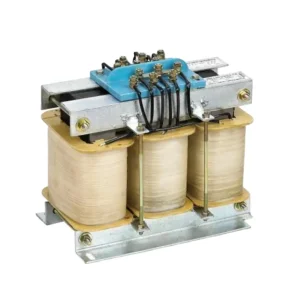
ODM Mining Transformer & Integrated Protection Transformer Unit (Heavy Duty)
View Product Details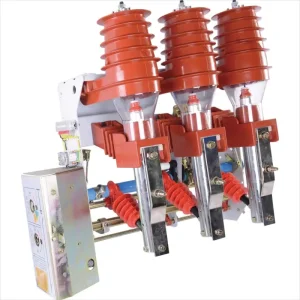
OEM FK(R)N12-12 High Voltage Air Load Break Fuse Switch Combo Unit
View Product Details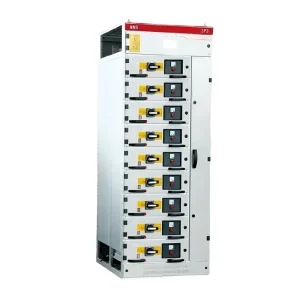
Wholesale China MNS Low Voltage Withdrawable Switchgear Modular Assembly
View Product Details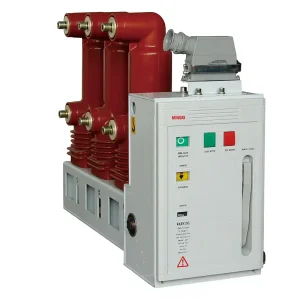
Wholesale VSB-12 Indoor High-Voltage Vacuum Circuit Breaker Switchgear Core
View Product Details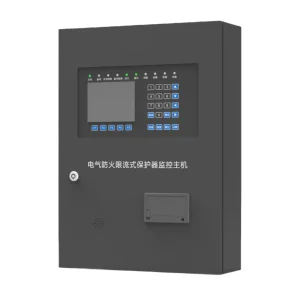
China Current-Limiting Protector System Main Unit for Advanced Power Data Networks
View Product Details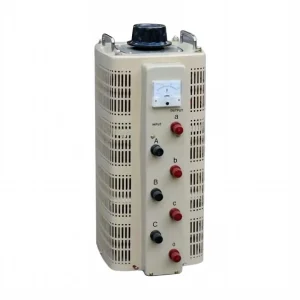
High-Quality TSGC2J Three Phase Variac Transformer Contact Voltage Regulator
View Product Details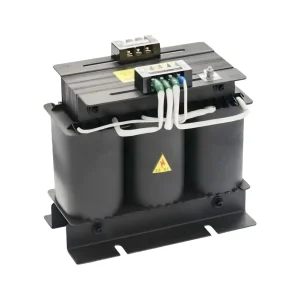
Wholesale JSG Series Three-Phase Dry-Type Servo Isolation Transformer
View Product Details