Critical Power Architecture for Singapore Facilities
Industrial-grade transfer units, high-frequency uninterruptible systems, and low-voltage switchboards customized for tropical high-humidity deployments across Jurong, Tuas, and Changi.
-
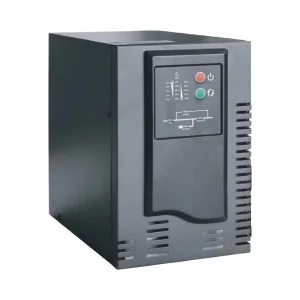 Mission Critical PowerSingapore MCHF Series High Frequency UPS & ATS Integrated SupplyInspect Model Specs
-
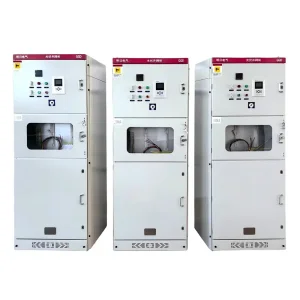 Low-Voltage AssembliesSingapore Factory Grade GGD AC Low Voltage Distribution ATS CabinetInspect Model Specs
-
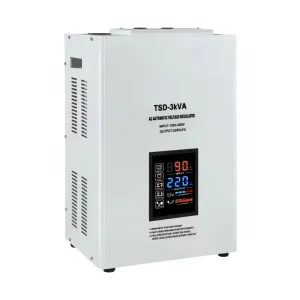 Grid ConditionersTSD Series Servo-Stabilized High Accuracy AC Regulator for Local GridsInspect Model Specs
-
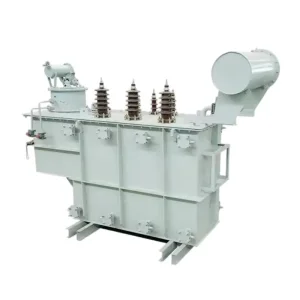 Substation TransformersSZ11/SFZ11 35kV On-Load Tap Changing Substation Power TransformerInspect Model Specs
Singapore Industrial Power Reliability: The Role of Advanced ATS Systems
An in-depth technical analysis of energy sovereignty, micro-interruption mitigation, and statutory compliance within the Republic of Singapore's energy framework.
1. Industrial & Commercial Landscape in Singapore
The Republic of Singapore represents one of the world's most concentrated, capital-intensive electrical landscapes. Governed by the Energy Market Authority (EMA) and regulated strictly under SS 638 (Code of practice for electrical installations), Singapore's grid mandates uninterrupted continuity across primary economic drivers. From semiconductor wafer fabrication facilities in Woodlands and Tampines to the petrochemical refineries of Jurong Island, downtime is measured in hundreds of thousands of dollars per second.
Following the lifting of the data center moratorium under the BCA-IDA Green Mark for Data Centres scheme, Singapore has pioneered ultra-efficient, highly resilient facilities. Automatic Transfer Switches (ATS) serve as the fundamental mechanical and electronic gateway between SP Group’s 22kV / 66kV stepped-down mains, on-site backup diesel generator sets (gensets), and battery energy storage systems (BESS). Within this context, ATS equipment is not merely a disconnect switch; it is a synchronized intelligence node managing fault isolation, neutral transition, and selective coordination without triggering upstream protection trips.
2. Global Macro Realities & The Evolution of Dual-Source Redundancy
Globally, electrical power distribution is experiencing an unprecedented structural pivot driven by the proliferation of artificial intelligence clusters, volatile renewable energy penetration, and decentralized microgrids. Modern industrial facilities are moving rapidly away from single-contingency (N+1) designs to distributed 2N or 2(N+1) architectures. Under global specifications such as IEC 60947-6-1 and UL 1008, ATS devices must satisfy stringent short-time withstand current (Icw) ratings to ensure contacts remain intact during extreme downstream bolted short circuits.
The shift from traditional Class CB (utilizing circuit breaker thermal-magnetic trip units) to dedicated Class PC (designed to make and withstand short-circuits without incorporating integral overcurrent trip mechanisms) has become the gold standard for global engineering procurement and construction (EPC) firms. Class PC switches ensure that downstream overcurrent faults are isolated by specialized upstream protection rather than causing false, uncoordinated transfer tripping.
Transition Topologies
Open Transition (Break-Before-Make), Delayed Transition with adjustable in-phase neutral decay, and Closed Transition (Make-Before-Break) for zero-interruption live parallel transfer.
Electromagnetic Arc Quenching
Advanced arc chutes and silver-tungsten alloy contacts capable of extinguishing extreme arcs during 100kA prospective fault transfers without structural contact welding.
Harmonic & Neutral Control
Overlapping four-pole (switched 4P) configurations preventing ground fault sensing errors and transient potential spikes on high third-harmonic electronic loads.
3. Singapore Localized Application Scenarios
Engineering an ATS solution in Singapore necessitates precise alignment with local environmental and statutory conditions:
- Hyperscale Cloud & AI Data Centres (Jurong East, Tai Seng, Loyang): Deployed as static transfer switches (STS) and bypass-isolation automatic transfer switches in conjunction with rotary or modular static UPS systems, guaranteeing continuous uptime in accordance with Uptime Institute Tier III/IV benchmarks.
- Biomedical and Pharmaceutical Facilities (Tuas Biomedical Park): Strict sterile production cleanrooms require seamless transfer during utility voltage sags, maintaining positive HVAC pressure and preventing chemical synthesis contamination.
- Aviation & Maritime Port Infrastructure (Changi Airport T5 & Tuas Megaport): Automated terminal container cranes and airfield ground lighting systems utilize heavy-duty Class PC transfer equipment rated for salt-mist exposure, tropical ambient heat (up to 40°C), and continuous 95% relative humidity.
- Healthcare Tertiary Facilities (National University Hospital, Singapore General Hospital): Life-safety branches require isolated emergency bypass ATS capable of transferring emergency power within 10 seconds under SS 638 hospital emergency protocol requirements.
Technical Matrix: Class PC vs. Class CB ATS Topologies
| Evaluation Parameter | Class PC (Dedicated Contactor / Mechanism) | Class CB (Molded Case / Air Circuit Breaker) | Static Transfer Switch (STS - Silicon Controlled) |
|---|---|---|---|
| Primary Switching Principle | High-speed solenoid / motorized drive mechanism with no thermal trips | Interlocked MCCB or ACB units with integrated trip coils | Solid-state anti-parallel thyristors (SCR) |
| Transfer Time Window | 30 ms – 120 ms (Open/Delayed) | 60 ms – 250 ms (Mechanical reset dependent) | < 4 ms – 16 ms (Sub-quarter cycle) |
| Short-Time Withstand (Icw) | Extremely high (Up to 100kA for 0.05s–0.5s) | Limited by the trip characteristics of the breaker | Low surge withstand; relies on ultra-fast fuses |
| Bypass-Isolation Architecture | Available via dual-drawout drawer chassis | Available via withdrawable ACB cassettes | Integral manual wraparound maintenance bypass |
| Ideal Singapore Application | Data centers, hospitals, critical commercial switchboards | General commercial building distribution boards | Point-of-load dual-corded server rack distribution |
4. Technical Roadmap & Future Outlook
The next generation of Automatic Transfer Switches deployed in Singapore is evolving beyond simple electromechanical throw-over switches. As the nation accelerates toward its Singapore Green Plan 2030, the power sector is actively incorporating clean energy imports via regional interconnectors (e.g., Lao PDR-Thailand-Malaysia-Singapore Power Integration Project) and floating solar plants at Tengeh Reservoir.
This introduces bidirectional power flow dynamics and rapid grid frequency deviations. Consequently, next-generation ATS controllers incorporate high-speed digital signal processors (DSP) running adaptive frequency-sensing algorithms, Modbus TCP/IP, and IEC 61850 protocol compliance. Edge analytics directly monitor contact erosion, coil temperature, and busbar thermal signatures in real time, shifting maintenance protocols from reactive cycles to AI-driven predictive health indices.
Consult with Singapore-Ready Power Systems Engineers
Whether configuring a 4-pole closed transition switchboard for Tuas industrial parks or an intelligent bypass ATS for a financial cloud DC, our technical advisory team delivers comprehensive Single Line Diagram (SLD) reviews and local compliance checks.
Send Inquiry NowFrequently Asked Questions: ATS Systems in Singapore
Comprehensive technical answers addressing statutory compliance, four-pole configurations, closed transition mechanics, and preventive maintenance.
What is the statutory requirement for ATS neutral pole switching under Singapore standard SS 638?
Under SS 638 (formerly CP 5), where a standby generator or alternative power source operates with an independent grounding system, a switched neutral (4-pole ATS) or overlapping neutral design is mandated. Solid non-switched neutral connections can create multiple return paths for neutral currents, causing false tripping of earth-leakage protective devices (Residual Current Circuit Breakers - RCCB / Earth Fault Relays - EFR) and inducing dangerous circulating third-harmonic currents.
When should an engineer specify a Closed Transition ATS vs. an Open Transition ATS?
Open Transition (break-before-make) provides an inherent momentary interruption during source swapping, which is acceptable for building services where motors can coast or UPS systems buffer downstream IT hardware. Closed Transition (make-before-break) momentarily parallels both sources (typically for <100 ms) when returning from generator to grid power. This eliminates voltage droop, making it essential for critical hospitals, processing plants, and financial transaction hubs, provided SP PowerGrid approval is obtained for momentary parallel interconnections.
How does Singapore’s tropical high humidity affect ATS installation and maintenance?
With Singapore’s average ambient temperature of 30°C–34°C and relative humidity frequently surpassing 90%, switchboards without environmental control face rapid contact oxidation, dielectric breakdown, and condensation-induced tracking. ATS assemblies should feature anti-condensation heaters with hygroscopic controllers, tropicalized insulation varnishes, and silver-plated copper busbars complying with temperature rise standards specified in IEC 61439-1.
What is the fundamental difference between IEC 60947-6-1 and UL 1008 testing regimes?
IEC 60947-6-1 is the dominant standard in Singapore and the British Commonwealth, classifying switches into PC, CB, and CC categories with specific endurance and short-circuit making/withstand ratings. UL 1008 is an American standard emphasizing rigorous short-circuit testing with specific upstream overcurrent protective devices (OCPD). While both ensure life-safety reliability, specifying an IEC 60947-6-1 certified unit streamlines EMA licensing and PE (Professional Engineer) endorsement in Singapore.
Engineered Grid Infrastructure for Regional EPCs
Complete your Singapore power distribution ecosystem with modular substations, hybrid inverters, vacuum circuit breakers, and intelligent universal air circuit breakers.
-
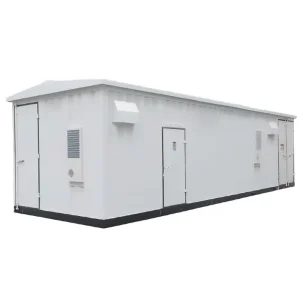 Smart Grid CabinSingapore Smart Grid Modular Prefabricated Intelligent Cabin SubstationInspect Model Specs
-
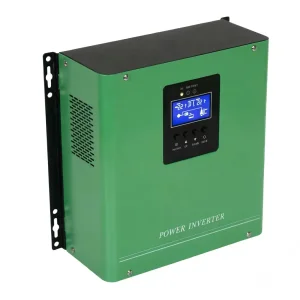 Solar & MicrogridMCS Commercial Hybrid Solar Inverter System with Auto-Transfer CapabilityInspect Model Specs
-
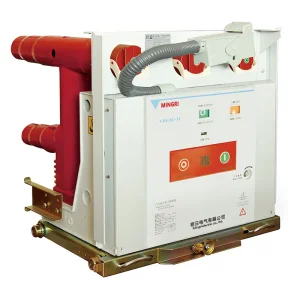 MV Circuit InterruptersMRVS1-12/24 Fixed Indoor High-Voltage Vacuum Circuit Breaker UnitInspect Model Specs
-
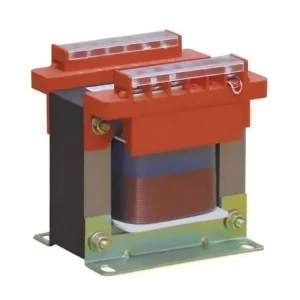 Auxiliary TransformersBK Industrial Control Isolation Transformers for Transfer Switch GearInspect Model Specs
-
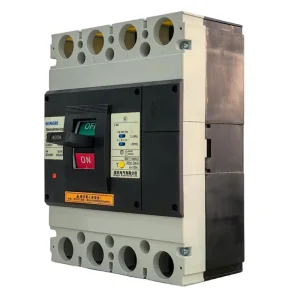 Residual ProtectionSJKM3L High-Sensitivity 230V/415V Earth Leakage Protection DeviceInspect Model Specs
-
High-Voltage BreakersZN63A (VS1) 12/24kV Armored Withdrawable Vacuum Circuit BreakerInspect Model Specs
-
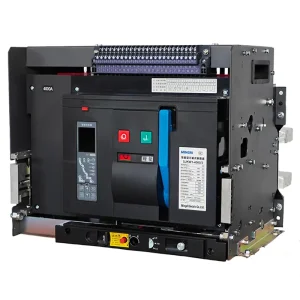 Intelligent Air BreakersW1 Series Intelligent ACB Universal Breaker for Heavy Main SwitchboardsInspect Model Specs
-
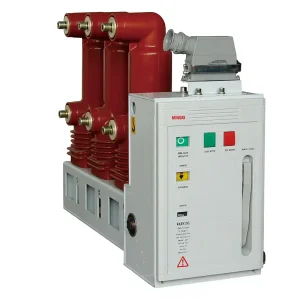 Heavy Industry MV BreakerVSB-12 High-Capacity Indoor HV Vacuum Circuit Breaker 630A to 4000AInspect Model Specs