Featured High Voltage Vacuum Circuit Breakers & Systems
Engineered under strict ISO 9001:2015 quality frameworks, our vacuum circuit breakers and secondary distribution switchgear deliver ultra-high mechanical durability, exceptional dielectric recovery, and zero toxic emission footprints.
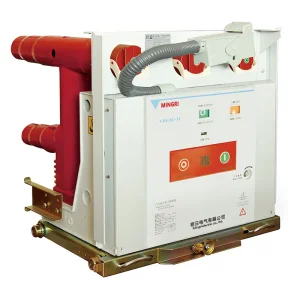
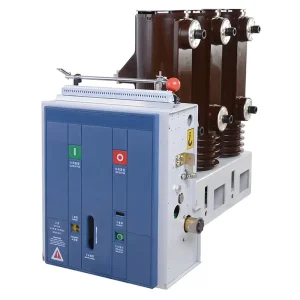
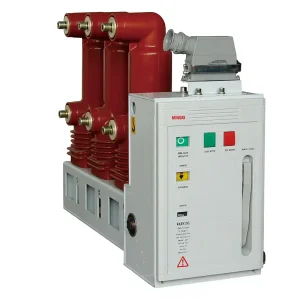
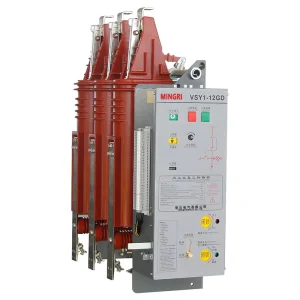
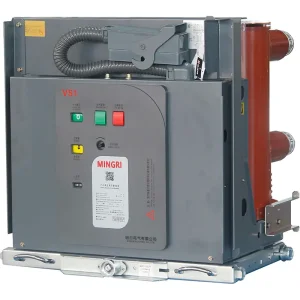
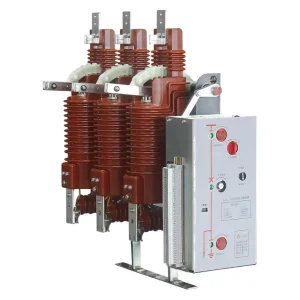
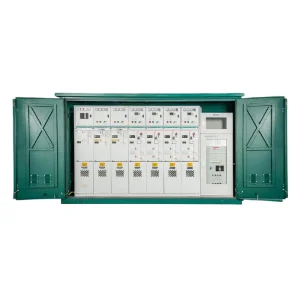
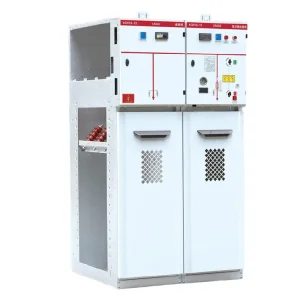
Engineering Architecture: The Science of Vacuum Arc Quenching
A granular analysis of dielectric recovery speed, transverse vs. axial magnetic field contact designs, solid insulation embedded poles, and operating mechanism endurance in modern medium-to-high voltage vacuum circuit breakers.
Advanced Contact Metallurgy (CuCr Alloys)
The core performance of any Vacuum Interrupter (VI) relies on contact material composition. Mingri Electric implements high-purity vacuum induction melted Copper-Chromium (CuCr25 to CuCr50) alloys. This metallurgy suppresses vapor emission during high-energy arcing, drastically minimizes contact erosion under repetitive short-circuit interruptions up to 50kA, and eliminates current chopping, safeguarding downstream transformers from steep-fronted transient overvoltages.
Axial Magnetic Field (AMF) Geometry
To prevent localized anode spot formation during high-fault current conditions, our VCBs incorporate engineered AMF (Axial Magnetic Field) and TMF spiral groove structures. The self-generated magnetic field forces the metal-vapor vacuum arc to maintain a diffuse mode across the entirety of the electrode surface. This guarantees rapid dielectric recovery within micro-seconds after current zero (AC zero-crossing), allowing flawless restrike-free interruption of capacitive and inductive networks.
Solid-Insulated APG Embedded Poles
Traditional assembled poles with exposed VI envelopes are susceptible to airborne condensation, particulate accumulation, and partial discharge. Mingri Electric utilizes Automatic Pressure Gelation (APG) epoxy resin embedding technology. The interrupter and primary conductive terminals are cast into a monolithic hydrophobic epoxy shell, eliminating environmental degradation and achieving IP65 insulation robustness even in high-humidity tropical microclimates.
| Parameter / Metric | VS1-12 Series (Indoor MV) | VS1-24 Series (Medium-High) | SafeRing / 40.5kV Class VCB | Compliance Standards |
|---|---|---|---|---|
| Rated Voltage (Ur) | 12 kV | 24 kV | 40.5 kV | IEC 62271-100 |
| Power Frequency Withstand (1 min) | 42 kV (phase/earth) / 48 kV (gap) | 65 kV | 95 kV | GB/T 1984 |
| Lightning Impulse Withstand (BIL) | 75 kV / 85 kV crest | 125 kV crest | 185 kV crest | IEEE C37.09 |
| Rated Breaking Current (Isc) | 20 / 25 / 31.5 / 40 / 50 kA | 20 / 25 / 31.5 kA | 25 / 31.5 kA | Class E2 Interruption |
| Mechanical Endurance (M-Class) | 30,000 Operations (M2 Class) | 20,000 Operations | 10,000 to 20,000 Operations | Maintenance-Free VI |
| Operating Sequence Rated Duty | O - 0.3s - CO - 15s - CO | O - 0.3s - CO - 180s - CO | O - 0.3s - CO - 15s - CO | Auto-Reclosing (Rapid) |
China Factory 4.0: Supply Chain Resilience & Vertical Synergy
Headquartered in Yueqing, Zhejiang—the world's definitive epicenter for electrical power equipment—Mingri Electric leverages full vertical integration from raw copper forging to finished robotic switchgear assembly.
Cluster Advantage & Lead-Time Optimization
The Yueqing electrical industrial cluster represents an unprecedented ecosystem of over 10,000 specialized electrical component fabricators. By consolidating precision stamping, silver electroplating, CNC machining, and specialized insulation molding within a 20-kilometer radius, Mingri Electric compresses procurement lead times from industry norms of 16–24 weeks down to 3 to 6 weeks for standard and customized VCB orders.
Ultra-Cleanroom Brazing & High Vacuum Degassing
Internal dielectric vacuum integrity (< 10⁻⁵ Pa) is preserved for a certified 30-year operational life through our proprietary continuous-furnace vacuum brazing process. Ceramic envelopes and CuCr contacts are degassed under high-thermal vacuum ovens in Class 10,000 cleanrooms, totally expelling occluded gas atoms that could otherwise trigger post-arc dielectric re-ignition under heavy fault tripping.
100% Non-Destructive Screening Protocols
No circuit breaker exits our Yueqing production lines without multi-stage automated validation. Every vacuum interrupter undergoes helium mass-spectrometer leak detection, magnetron-controlled internal vacuum verification, full-cycle mechanical travel curve tracing (opening speed, contact bounce < 2ms, over-travel), and high-pot 42kV/65kV power-frequency dielectric withstand testing.
Macro Industry Solutions: Engineered for Critical Grid Assets
From extreme duty-cycle mining haulage to low-loss photovoltaic collection stations and tier-IV hyper-scale datacenters, Mingri high voltage VCB systems ensure continuous uptime and instantaneous trip protection.
Renewable Energy: PV & BESS Substations
Modern solar farms and Battery Energy Storage Systems (BESS) experience frequent inverter-induced high-frequency harmonics and constant switching cycles. Our VS1 and MRVS1 series with Class C2 capacitive breaking capabilities eliminate dangerous pre-strikes and restrikes during cable energization and capacitor bank switching, preventing cascade inverter inverter shutdowns.
Hyperscale AI & Cloud Data Centers
With computing clusters demanding megawatts of instantaneous power, unexpected MV network trips cause multimillion-dollar disruptions. Mingri VCB assemblies integrated within KYN28-24 and RM6 Gas-Insulated Switchgear guarantee ultra-fast total break times (< 45ms), millisecond auto-transfer sequence responsiveness, and comprehensive relay protection compatibility.
Electrified Rail Transit & Traction Power
Catenary feeder lines are plagued by violent short-circuit transients caused by lightning discharges and rapid pantograph dynamics. Mingri's side-mounted and withdrawable breakers provide robust E2 electrical endurance without contact readjustment or interrupter replacement, fulfilling demanding traction substation duty cycles with unmatched continuity.
Heavy Industrial, Petrochemical & Mining
Subsurface mining tunnels and petrochemical refineries subject primary equipment to severe chemical corrosive vapor, particulate dust, and mechanical vibration. APG solid-dielectric embedded poles and copper busbars encapsulated in vulcanized heat-shrink sleeves protect against surface leakage paths, preventing phase-to-phase arc flash incidents.
Global Procurement Matrix: TCO Optimization & Spec Selection
Navigating engineering tradeoffs between upfront capital expenditure (CapEx) and operational lifecycle expenditure (OpEx) for international EPCs, utility operators, and industrial panel builders.
Withdrawable vs. Fixed Mount Configurations
Withdrawable VCB units paired with chassis trucks and automatic shutter mechanisms offer rapid interchangeability in mission-critical applications (substation feeders, hospitals, server farms) where MTTR (Mean Time to Repair) must remain under 15 minutes. Conversely, fixed-mount units (MRVS1, VSY2) offer compact dimensions and reduced bill-of-materials costs for compact Ring Main Units (RMU) and wind-turbine nacelle switchgear.
Spring Actuator vs. Permanent Magnetic Actuator (PMA)
Mingri offers both proven modular spring mechanisms (serviceable by field engineers globally with standardized spare kits) and bi-stable Permanent Magnetic Actuators (PMA). PMA systems slash moving mechanical components by 60%, removing gears, latches, and trip springs to achieve up to 100,000 maintenance-free operations for high-frequency cycling in metallurgical arc furnace feeds.
Total Lifecycle Cost Reductions (OpEx)
Unlike legacy SF6 gas circuit breakers burdened by leak tracking regulations, F-gas tax liabilities, certified disposal costs, and periodic pressure refilling, Mingri VCBs are intrinsically clean. With an hermetically sealed ceramic envelope and zero greenhouse gas emissions, vacuum technology slashes 30-year lifecycle ownership costs by over 42% compared to gas-insulated alternatives.
Technology Roadmap: Next-Gen Eco-Efficiency & Digital Twins
As the world transitions toward complete SF6 phaseouts and intelligent autonomous grids, Mingri Electric's engineering roadmap pioneers clean-air insulation, 72.5kV vacuum interruption, and edge IoT monitoring.
SF6-Free F-Gas Elimination by 2026
With EU Directive 2024/573 banning greenhouse gas fluorinated switchgear, our forward engineering pushes the boundaries of Clean-Air (Dry Air) and solid-dielectric vacuum architectures. By pairing our proprietary high-dielectric ceramic VIs with synthetic zero-GWP dry air insulating gas, we achieve 24kV and 40.5kV compact ratings without a single gram of SF6, ensuring total regulatory compliance across European and North American markets.
IoT Sensors & Smart Predictive Digital Twins
The next generation of Mingri VCBs features integrated edge telemetry: wireless SAW (Surface Acoustic Wave) temperature sensors directly embedded inside the primary tulip contacts, Hall-effect vibration monitoring on mechanical linkages, and electromagnetic travel encoders. Real-time data streams via Modbus-TCP and IEC 61850 protocol to cloud SCADA, predicting contact wear and mechanism lubrication decay before faults occur.
Ultra-High Voltage Interruption (72.5kV & 145kV)
While vacuum interrupters have historically dominated medium-voltage applications, our Yueqing R&D laboratory is actively validating double-break and multi-break series vacuum interruption technology for sub-transmission class grids. By synchronizing high-speed magnetic actuators, Mingri is expanding into the 72.5kV–145kV power circuit breaker segment, delivering green, non-explosive substation transmission hubs.
Localized Support, Type Testing & Compliance Assurance
Mingri Electric stands behind every switchgear and circuit breaker export with international type test certifications, rigorous factory acceptance testing (FAT), and dedicated multilingual field engineering support.
International Accreditation & Type Testing
All flagship circuit breaker series hold certified third-party type-test reports from accredited laboratories (including KEMA-partner testing stations and national high-voltage testing centers). Complete reports cover short-time withstand current, peak withstand current, temperature rise limits at rated 4000A continuous current, and mechanical endurance up to 30,000 cycles under IEC 62271-100 and GB 1984 specifications.
Multilingual Remote & On-Site Field Engineering
Our international engineering operations provide bilingual (English & Chinese) technical assistance around the clock. Through digital high-definition FAT inspections, remote video commissioning assistance, and overseas field engineers deployed to major EPC project sites across Southeast Asia, the Middle East, South America, and Africa, we ensure flawless integration into local utility grids.
Seismic, Altitude & Harsh Climate Ruggedization
Custom engineering options address challenging geophysical operating conditions: special reinforced structural chassis tested up to 0.5g seismic accelerations (Zone 4), extended creepage external insulation sheds designed for heavy salt-spray coastal environments, and high-altitude de-rating configurations engineered for wind installations above 3,000 meters elevation.
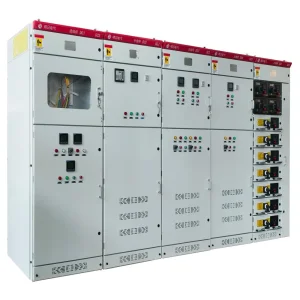
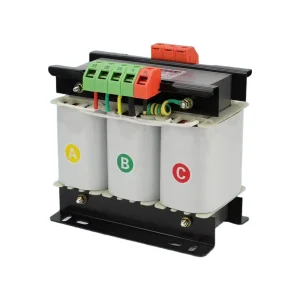
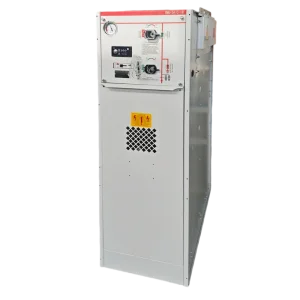
Switchgear Assemblies, Substations & Auxiliary Controls
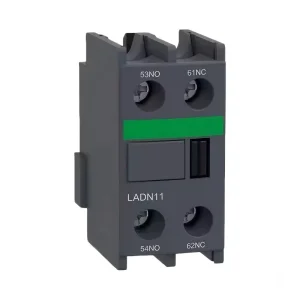
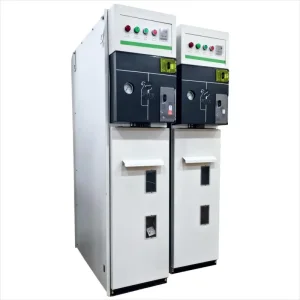
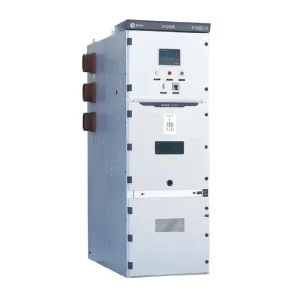
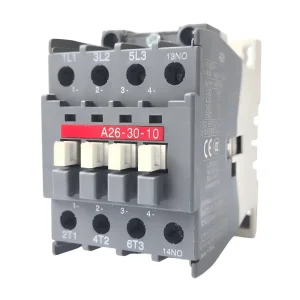
Complementing our core vacuum circuit breaker manufacture, Mingri Electric provides complete power delivery packages including metal-clad switchboards, Ring Main Units, step-up transformers, and LV motor control contactors.
High Voltage VCB Engineering & Procurement FAQ
In-depth technical answers addressing switching physics, maintenance cycles, mechanism selection, international standards compliance, and custom OEM/ODM packaging options.
Q1: What is the functional difference between Class M1, M2, E2, and C2 ratings under IEC 62271-100?
Under international standards, endurance classification distinguishes duty performance. Class M2 denotes extended mechanical endurance (up to 10,000–30,000 switching operations without maintenance or component replacement, contrasted with only 2,000 operations for M1). Class E2 signifies maximum electrical endurance without refurbishment, proving the interrupter can interrupt rated full short-circuit current repeatedly without contact renewal. Class C2 guarantees low probability of restrike during capacitive current breaking (such as overhead line charging and cable feeders), preventing damaging high-voltage surges across critical assets.
Q2: Why does vacuum interruption eliminate current chopping risks on inductive loads?
Current chopping occurs when an arc extinguishes prematurely before natural current zero, yielding steep transient overvoltages ($V = L \cdot di/dt$). Older vacuum interrupters utilized pure tungsten or copper contacts that exhibited high chopping levels (up to 15A–20A). Mingri Electric employs vacuum-refined CuCr (Copper-Chromium) sintered alloy matrices with micro-vapor reservoir dispersion. This dampens arc instability, lowering current chopping levels to below 3A–4A, preventing dielectric stress on dry-type transformer windings and heavy three-phase motors.
Q3: What are the technical criteria for replacing SF6 circuit breakers with VCBs in 12kV–40.5kV grids?
When retrofitting from SF6 to Vacuum, power engineers assess three core parameters: phase center distance (matching existing busbar stabs), BIL impulse withstand coordination (vacuum breakers may require zinc-oxide surge arresters for inductive motor protection), and physical shutter interlock interfaces. VCBs eliminate expensive SF6 gas cart refilling, toxic disassociation byproducts (such as disulfur decafluoride $S_2F_{10}$), and strict F-gas reporting burdens, yielding substantial operational savings and safer working environments for substation crews.
Q4: How does Mingri Electric maintain consistent vacuum level over a 30-year design lifespan?
Vacuum degradation is prevented through three manufacturing defense lines: First, ultra-high-density alumina ($Al_2O_3$) ceramic cylinders featuring metallized brazing edges that exhibit zero porosity. Second, active barium-titanium getter alloys welded inside the vacuum envelope to absorb residual gaseous molecules released throughout operating lifecycles. Third, 100% helium mass-spectrometer testing combined with high-frequency magnetron vacuum decay verification before, during, and after mechanical burn-in cycling.
Q5: What are the advantages of APG Solid-Dielectric Embedded Poles over assembled pole housings?
In assembled pole systems, the ceramic envelope is mechanically held between insulating brackets, exposing external surfaces to humidity, dust, vermin, and industrial chemical fumes that cause creepage tracking and partial discharge. APG (Automatic Pressure Gelation) permanently encapsulates the interrupter and copper terminal pads in a solid monolithic block of high-grade hydrophobic epoxy resin. This enhances mechanical shock resistance, eliminates moisture ingress, shortens phase-to-phase spacing, and compacts switchgear cubicle dimensions.
Q6: Can Mingri design custom draw-out trucks to match third-party switchgear panels?
Yes. Beyond supplying standard withdrawable units for industry standard KYN28, KYN61, and UniGear switchboards, our engineering department regularly executes bespoke OEM/ODM retrofit engineering. By modifying tulip contact dimensions, secondary harness pin assignments, auxiliary interlocking pushrods, and racking screw pitch, we supply drop-in replacement breakers that upgrade aging utility substations without requiring complete switchboard teardowns.