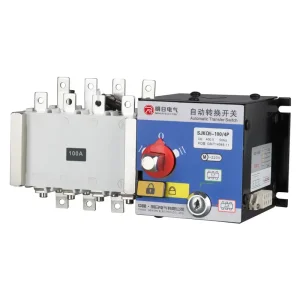
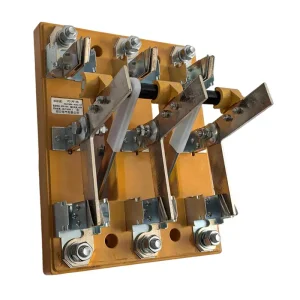
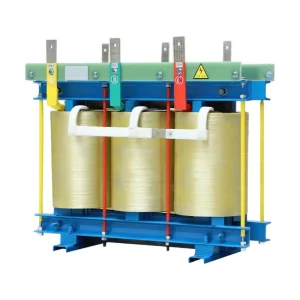
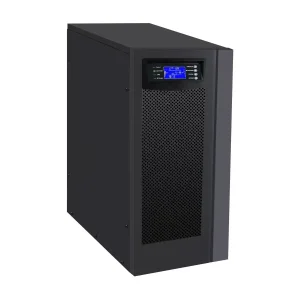
Featured Distribution Components & Compact Assemblies
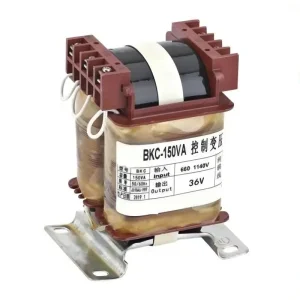
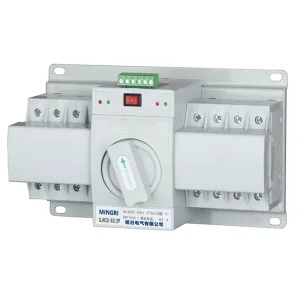
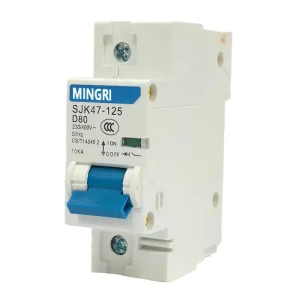
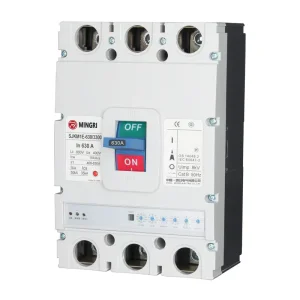
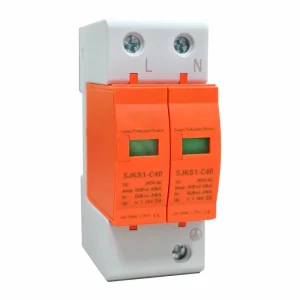
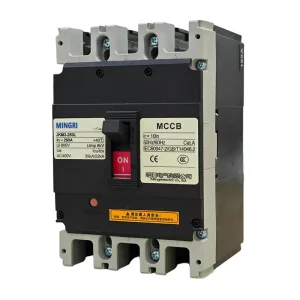
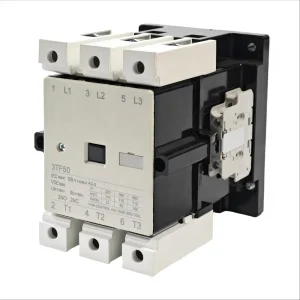
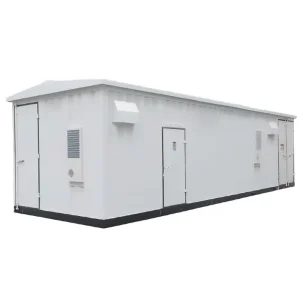
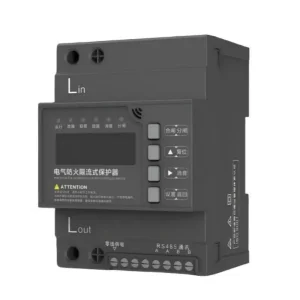
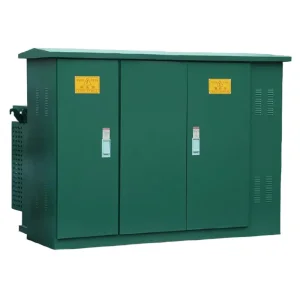
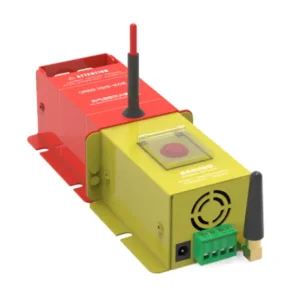
Engineered protection elements, smart trip breakers, automated transfer units, and pre-packaged transformer sub-systems configured for modern industrial power distribution boards.
Why Global Procurement Heads Partner with Chinese Factory Clusters
The convergence of deep supply-chain integration, precision robotics, and rapid prototype turnarounds establishes Yueqing and Yangtze River Delta manufacturers as premier partners for electrical enclosure systems.
Vertical Supply Ecosystem
Situated within the world's most concentrated low-voltage electrical hardware corridor, Chinese production facilities leverage instant raw material availability—from electrolytic tough pitch (ETP) copper busbars to cold-rolled stainless steel sheets (AISI 304/316L) and specialized halogen-free polyamide resins. This proximity cuts procurement lead times from months to hours.
Automated Sheet Metal & Polyurethane Gasketing
Utilizing German and Japanese fiber laser cutting cells, CNC tandem press brakes, and robotized continuous-pour polyurethane (FIPFG) sealing systems, China's Tier-1 plants maintain dimensional tolerances within ±0.2mm. Seamless automated gasketing ensures sustained IP55, IP65, and IP66 ingress ratings across high-volume production cycles.
Type-Tested Rigor & Accredited Labs
Leading companies operate CNAS-accredited in-house testing centers capable of simulating 100kA short-circuit withstand, 1000-hour neutral salt spray (ASTM B117), glow-wire flammability (IEC 60695-2-11), and thermal runaway diagnostics under full rated current, dramatically accelerating third-party CE, KEMA, and UL certification processes.
Architectural Standards, Selective Coordination, and Modern Enclosure Dynamics
A rigorous engineering manual on configuring, procuring, and deploying low-voltage distribution boxes (DBs) for critical infrastructure, heavy industries, and renewable grids.
1. Deconstructing the Low-Voltage Enclosure: Beyond the Steel Sheet
A low-voltage distribution box—frequently classified as a panelboard, consumer unit, or sub-distribution board (SDB)—serves as the primary operational nexus dividing electrical power feeds into downstream subsidiary circuits while provisioning individual overcurrent, short-circuit, ground fault, and surge protection. In accordance with IEC 61439-1 (General Rules) and IEC 61439-2 (Power Switchgear and Controlgear Assemblies), contemporary distribution assemblies are not mere mechanical enclosures; they are engineered thermal and electromagnetic protective barriers.
The structural efficacy of a modern distribution box is defined by several core metrics: enclosure volume-to-dissipation ratio, busbar dynamic stress resistance during peak prospective short-circuit current ($I_{pk}$), and dielectric insulation integrity under impulse voltages up to 8 kV. Leading Chinese engineering facilities utilize parametric finite element analysis (FEA) to verify mechanical deflection limits of enclosure walls under electrodynamic short-circuit forces before any physical steel is stamped.
| Enclosure Material Class | Standard Grade | Corrosion Resistance | Impact Protection | Thermal Conductivity | Ideal Deployment Zone |
|---|---|---|---|---|---|
| Cold-Rolled Carbon Steel | SPCC / DC01 (Powder-Coated) | Moderate (500h Salt Spray) | IK08 - IK09 | High (~50 W/m·K) | Commercial buildings, clean indoor industrial plants |
| Austenitic Stainless Steel | AISI 304 / 316L (Pickled/Passivated) | Extreme (>1500h Salt Spray) | IK10 | Moderate (~16 W/m·K) | Offshore platforms, chemical processing, marine harbors |
| Glass-Fiber Reinforced Poly (GRP/SMC) | Thermoset Composite | Immune to chemical corrosion | IK08 - IK10 | Very Low (Insulating) | Photovoltaic combiner boards, outdoor roadside cabinets |
| Die-Cast Aluminum Alloy | AlSi12 / ADC12 | High (Anodized/Coated) | IK09 - IK10 | Very High (~120 W/m·K) | Harsh vibration mining, railway traction sub-panels |
2. Macro Engineering Solutions: Thermal Management & Arc Flash Containment
Thermal accumulation represents the primary failure vector in high-density distribution boxes. As miniature circuit breakers (MCBs) and molded case circuit breakers (MCCBs) operate continuously at full nominal current ($I_n$), internal joule heating ($P = I^2R$) elevates internal ambient temperatures. If enclosure convection is inadequate, breakers undergo nuisance thermal tripping due to bimetallic strip pre-deflection.
Tier-1 Chinese distribution equipment suppliers counter this through algorithmic internal volume sizing, strategically positioned labyrinth louver designs with integrated filter media, and thermodynamic thermosiphon heat pipes. Furthermore, in installations where safety mandates internal arc classification (IAC), panels are constructed with rapid blow-out pressure relief flaps on the top plate and arc optical sensors that signal upstream main breakers to trip within < 5 milliseconds, neutralizing the arc flash event prior to structural envelope rupture.
3. Industry Paradigm Shifts: The Emergence of Smart IoT Distribution Boards
The global distribution box industry is experiencing a profound transition from passive mechanical switchboards to intelligent, edge-computing power nodes. Key transformative trends shaping global procurement demand include:
Integrated Micro-Telemetry: Outgoing sub-circuits no longer rely on external, bulky power meters. Modern miniature breakers feature integrated Rogowski coils and shunt micro-resistors communicating via Modbus RTU or wireless Zigbee/Thread protocols to a centralized Edge Gateway module located directly on the DIN rail. Facility managers gain real-time visibility into active power, reactive power, power factor, and harmonic distortion (THD up to the 31st order).
Predictive Maintenance via Solid-State Thermal Probing: Terminal connection degradation caused by cyclic thermal expansion is the leading cause of panel fires. Smart distribution boxes feature multi-channel NTC temperature probes or wireless surface acoustic wave (SAW) sensors attached directly to breaker incoming lugs, detecting resistance anomalies well before insulation pyrolization occurs.
F-Gas Free & Low-Carbon Footprint Assemblies: In accordance with tightening EU F-gas and global decarbonization directives, medium-to-low voltage step-down cabinets and smart consumer units emphasize 100% recyclable thermoplastic components, halogen-free wiring ducts, and lifecycle carbon audit trails verified by ISO 14064 standards.
Localized Application Scenarios & Demands
Customizing ingress, compartmentalization, and device selectivity based on physical, climatic, and operating environments.
Data Centers & Edge Server Rooms
Requires dual-bus power path isolation (2N architecture), high-speed static automatic transfer switches (ATS) capable of transition under 4ms, and transient surge suppression devices (SPDs) with low let-through voltage to preserve sensitive server power supplies.
Utility-Scale Solar & Storage Parks
Demands DC combiner boxes rated up to 1500V DC with specialized high-breaking capacity DC gPV fuses, rotary disconnectors, and anti-condensation heating elements housed inside UV-resistant SMC or marine-grade stainless enclosures.
Petrochemical & Offshore Exploration
Focuses on explosion-proof enclosures (ATEX/IECEx Zone 1 and 2), nitrogen-purged pressurized cabinets, and thick-gauge AISI 316L metallurgy capable of resisting hydrogen sulfide and chloride stress corrosion cracking.
Global Enterprise Sourcing & Compliance Specifications
Essential benchmarks multinational EPCs, utility concessions, and distributors must evaluate during supplier selection and factory acceptance testing.
Form of Internal Separation
Global project specifications typically designate low-voltage assembly internal partition classes from Form 1 through Form 4b (under BS EN / IEC 61439-2). Form 4b guarantees total physical isolation between functional units, busbars, and outgoing terminals, enabling maintenance on an active panel without shutting down adjacent critical loads.
Selective Coordination Tables
EPC contractors require certified cascading and selectivity tables. Top-tier manufacturers supply computerized TCC (Time-Current Curve) studies validating that downstream miniature breakers clear faults instantaneously while upstream MCCBs remain closed, preventing whole-facility blackouts.
FAT / SAT Inspection Protocols
Rigorous verification procedures require full Factory Acceptance Testing (FAT), including high-potential dielectric testing (2.5 kV / 1 min), insulation resistance screening (>100 MΩ at 1000V DC), secondary control circuit loop checks, and automated torque verification on all busbar bolted joints.
Frequently Asked Questions on Distribution Boxes & Enclosures
Technical clarifications, compliance questions, and operational guidelines answered by our senior low-voltage switchgear engineering team.
What is the structural distinction between IEC 61439-1/2 and older IEC 60439 standards?
IEC 61439 eliminated the ambiguous terms "TTA" (Type-Tested Assembly) and "PTTA" (Partially Type-Tested Assembly). It enforces a strict design verification model requiring proof through three distinct verification methods: testing, calculation, or physical design rules. Temperature rise limits, short-circuit withstand, and clearance/creepage distances must be rigorously substantiated.
How do I determine whether an installation requires IP54, IP65, or IP66 enclosures?
IP54 provides dust protection and resistance to splashing water from any angle, which is suitable for standard indoor manufacturing. IP65 provides complete dust tightness and protection against low-pressure water jets, ideal for washdown food processing areas. IP66 provides complete dust tightness and protection against heavy seas or powerful water jets, recommended for outdoor marine, rooftop, and unprotected petrochemical applications.
What role does the IK rating play in industrial panelboard specifications?
The IK rating (defined under IEC 62262) quantifies an enclosure's mechanical impact resistance in Joules. For instance, IK08 designates resistance to a 5-Joule impact (equivalent to a 1.7 kg mass dropped from 300 mm), while IK10 designates resistance to 20 Joules. Heavy industrial zones, mining quarries, and public vandal-prone areas consistently mandate IK10 steel or heavy SMC composite enclosures.
Can custom distribution boxes incorporate third-party automation components?
Yes. OEM/ODM contract manufacturing allows comprehensive schematic configuration. Enclosures can be precision-machined with DIN rails, G-rails, custom copper bus arrangements, cable glands, and pre-wired auxiliary terminals to house third-party PLCs, current transformers, variable frequency drives (VFDs), and smart telemetry gateways while maintaining thermal and dielectric compliance.
Integrated Switchgear, Transformers & Critical Power Units
Heavy-duty power switching, step-down conversion transformers, DIN-rail miniature modules, and uninterrupted power backup systems tailored for high-availability distribution infrastructure.