Industrial Motor Starting & MV Distribution Equipment
Explore high-voltage switchgear, intelligent variable frequency enclosures, and motor protection systems engineered in strict compliance with IEC 60076, IEC 62271, and GB/T 14048 standards.
Technical Overview: Motor Starting Transformers in Heavy Industry
Analyzing transient inrush dynamics, mechanical stress mitigation, and electromagnetic flux stabilization across modern electrical distribution grids.
Direct-on-line (DOL) startup of squirrel-cage induction motors and synchronous drives draws 600% to 800% of nominal full-load amperage ($I_{FLA}$). This transient surge induces severe terminal voltage dips, destabilizing busbar infrastructure and tripping sensitive medium-voltage protection relays. Autotransformer starting steps down voltage to 50%, 65%, or 80% through designated taps, limiting the line current proportionally to $(V_{tap}/V_{nominal})^2$.
Our OEM factories utilize high-grade, cold-rolled grain-oriented (CRGO) silicon steel laminations with core losses below 0.85 W/kg. Windings are wound using continuous oxygen-free electrolytic copper (OFHC) or structural electrical-grade aluminum. Autotransformers feature Class H or Class C vacuum pressure impregnation (VPI) with solvent-free polyester resins, guaranteeing structural resistance against electrodynamic radial short-circuit forces exceeding 40 kA.
Unlike open-circuit Star-Delta starters which produce destructive second-stage torque spikes and re-acceleration transients during transfer, industrial starting transformers leverage Korndörfer closed-transition schematics. The autotransformer operates as a series inductive choke during tap transition, maintaining continuous magnetic excitation within the motor airgap and totally eliminating breaker flashover risks.
| Starting Method | Starting Current (% of $I_{FLA}$) | Starting Torque (% of Nominal) | Transition Transient Severity | Harmonic Distortion (THD) | Capital Investment / Robustness Ratio |
|---|---|---|---|---|---|
| Direct-On-Line (DOL) | 600% – 800% | 150% – 200% | None (Single step) | Zero (Pure sinusoidal) | Lowest initial cost / Highest mechanical wear |
| Star-Delta (Y-Δ) | 200% – 260% | 33% | Severe (High current pulse at open step) | Zero | Low cost / High stress on coupling & gears |
| Autotransformer (Korndörfer) | 170% – 380% (Configurable) | 42% – 64% (Tunable) | Negligible (Closed continuous circuit) | Zero (No EMI/RFI issues) | Optimal Lifecycle ROI / Maximum MTBF |
| Solid-State Soft Starter | 250% – 450% | 30% – 70% | Smooth ramp | High (SCR firing harmonics: 5th, 7th) | Moderate cost / Thermal sensitivity in harsh plants |
| Variable Frequency Drive (VFD) | 100% – 120% | 100% – 150% | Seamless transition | Requires Active Filtering (>35% without reactor) | Highest capital cost / Sensitive clean-room requirement |
Why Source from Chinese Manufacturing Centers: Yueqing Cluster Efficiency
Vertical supply chain convergence, automated high-voltage coil winding, and rapid prototype turnarounds drive unmatched capital efficiency for international EPC contractors.
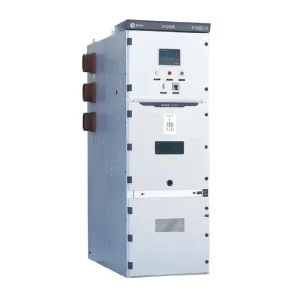
Yueqing (Wenzhou) serves as China’s low- and medium-voltage electrical capital. Within a 15-kilometer radius, factories source high-purity electrical copper rods, oriented silicon steel slits, epoxy tooling moulds, laser-cut galvanized cabinets, and smart vacuum circuit breakers (such as our KYN28 switchgear platforms). This localized density slashes bill-of-materials (BOM) lead times from 16 weeks to under 21 calendar days.
Wholesale starting transformer assemblies undergo exhaustive factory acceptance testing (FAT). Standard verification includes partial discharge evaluation (<10 pC at 1.2 $U_m$), lightning impulse withstand tests up to 95 kV BIL, temperature rise assessments under continuous locked-rotor simulation, and vector harmonic compliance, documented per ISO 9001, ISO 14001, and CE mandates.
Standardized catalogs rarely fit custom utility or offshore demands. Factories accommodate specialized parameters: 3.3 kV, 6.6 kV, 10 kV, 11 kV, and 13.8 kV motor lines; duty cycles from standard 3 starts per hour up to heavy-duty marine dredging specifications; Class H dry-type cast resin or mineral-oil immersed units with multi-tap configurations (50%, 65%, 80%).
Application Landscapes: Where Starting Transformers Outperform Solid-State Electronics
High-reliability solutions deployed across extreme ambient environments where electronic harmonic disruption, semiconductor overheating, or power supply swings are unacceptable.
Harsh mineral processing environments feature heavy airborne dust, extreme ambient heat, and extreme starting friction torques. Solid-state thyristors often suffer junction overheating or harmonic crosstalk in remote mining setups. Heavy-duty autotransformer starters withstand continuous high-torque starting pulses without degrading grid power quality.
Classified hazardous environments mandate strict thermal dissipation control and explosive safety compliance. Starting transformers enclosed in rugged pressurized cabinets or cast-resin formats deliver reliable operation for gas compressors, water-injection pumps, and chilling units on remote offshore rigs and refineries.
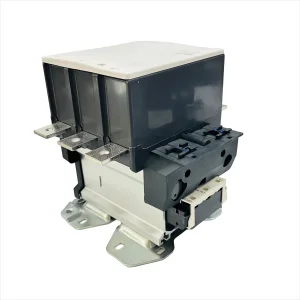
Massive 500 kW to 5,000 kW raw water transmission pumps require controlled torque profiles to prevent devastating "water hammer" hydraulic shock waves through pipelines. Starting transformers deliver reliable voltage-step acceleration, coupled with simple, long-lasting electromechanical contactor gear that local technicians can service easily.
Shipboard marine generators feature limited short-circuit fault capability and sensitive voltage baselines. Starting high-tonnage bow thruster motors via starting transformers isolates weak marine microgrids from sudden blackout triggers, complying with marine certification standards (CCS, DNV, ABS, LR).
Industry Trends: The Next Generation of Starting Systems
Technological advancement is transforming classical electromagnetic autotransformers through intelligent digitization and sustainable design.
Modern starting transformers integrate fiber-optic distributed temperature sensors (DTS) directly into core winding hot-spots. Data streams to local programmable logic controllers (PLCs) or edge IoT gateways via Modbus-TCP and IEC 61850 protocols, allowing operations to predict winding degradation and monitor cooling profiles in real time.
For liquid-immersed applications, conventional mineral oil is giving way to high-fire-point synthetic and natural ester liquids. Ester fluids provide 100% biodegradability, exceptional moisture absorption (which slows insulation paper aging), and a Class K fire-point rating (>300°C), making them ideal for urban high-rises and sensitive watersheds.
New hybrid solutions combine high-efficiency silicon carbide (SiC) thyristor banks with traditional starting transformers. The solid-state sub-circuit provides step-less current modulation for the initial 2–4 seconds, before an automated vacuum contactor switches into the transformer taps, eliminating semiconductor conduction losses during the remaining ramp cycle.
Global Procurement Matrix: How EPCs Source Efficiently
Essential checklist parameters required when submitting RFQs for starting transformers and associated medium-voltage distribution gear.
Always specify the motor nameplate kW/HP, rated primary voltage, rated full-load current ($I_n$), locked rotor current ratio ($I_{LR}/I_n$), power factor ($\cos\phi$), motor speed (RPM), and the load torque curve ($T_L$ vs. speed), especially for high-inertia equipment such as centrifugal blowers and rock crushers.
Duty cycles determine core and winding heating. Specify starts per hour, consecutive cold starts versus hot starts, resting time between cycles, and whether future operations anticipate emergency back-to-back restarts. This dictates whether natural air cooling (AN) or forced air cooling (AF) is specified.
Indicate elevation above sea level (derating curves apply above 1,000 meters), ambient temperature extremes (-25°C to +50°C), relative humidity, seismic zones, and required ingress protection ratings (IP20 indoor, IP54 outdoor walk-in enclosures, or stainless steel 316 marine cabinetry).
Clarify upstream fault clearance capacity (kA short-circuit level), integrated medium-voltage disconnect requirements, vacuum contactor sizing, thermal overload protection curves, and digital control interlocks to allow seamless switchboard integration.
Frequently Asked Questions (FAQ)
In-depth technical answers addressing engineering parameters, lead times, factory acceptance, and installation support.
Complete Medium & Low Voltage Equipment Line
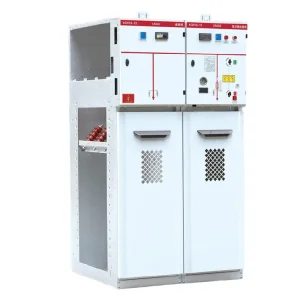
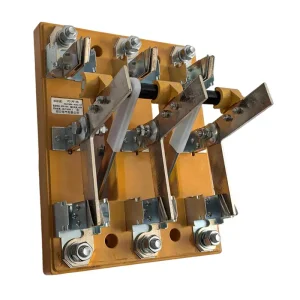
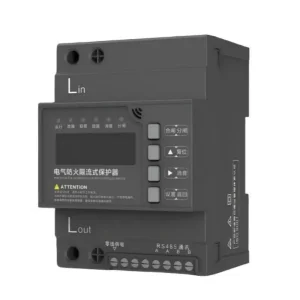
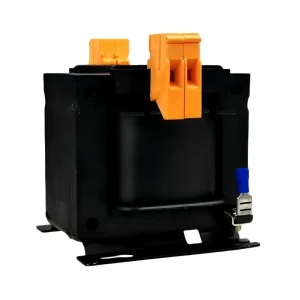
Complementary power distribution hardware: Fixed-type RMUs, industrial disconnectors, control transformers, and fire mitigation monitoring systems.