Precision Voltage Regulators & Primary Assemblies
High-reliability voltage conditioning units, purified power supplies, withdrawable switchgear panels, and modular sub-assemblies built for demanding commercial and heavy industrial duty cycles.
The Engineering & Cost Advantages of Chinese Voltage Stabilizer Manufacturing
Unpacking the technological ecosystem, advanced component sourcing, and economies of scale centered within Yueqing, Zhejiang—China’s global capital for electrical equipment.
In modern industrial automated manufacturing, semiconductor fabrication, and heavy healthcare setups, the stability of line voltage directly dictates operational uptime, product scrap rates, and capital equipment longevity. Severe voltage fluctuations—including sustained sags, surges, brownouts, transient spikes, and harmonic distortion—can degrade sensitive programmable logic controllers (PLCs), trip variable frequency drives (VFDs), burn out motor coils, and introduce catastrophic sensor errors. As global enterprise operations integrate higher densities of digital and non-linear loads, partnering with a dependable wholesale stabilizer manufacturer is a prerequisite for electrical system survivability.
Chinese electrical manufacturing centers, most notably the industrial cluster located in Yueqing (Wenzhou, Zhejiang Province), have evolved far beyond basic component assembly. Today, these facilities represent an integrated end-to-end electrical ecosystem that controls every tier of the value chain:
Ultra-Pure Metallurgical Inputs
Our direct access to cold-rolled grain-oriented (CRGO) magnetic silicon steel sheets (0.27mm to 0.35mm thickness) ensures minimal core iron loss (hysteresis and eddy currents). Combined with class H/C electrolytic oxygen-free copper coils, our autotransformers and buck-boost transformers achieve peak electrical efficiency exceeding 98.5% with ultra-low thermal dissipation.
Vertical Component Synthesis
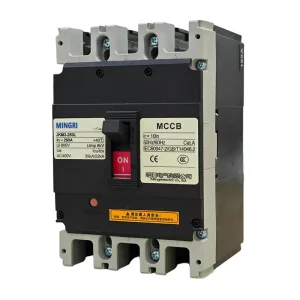
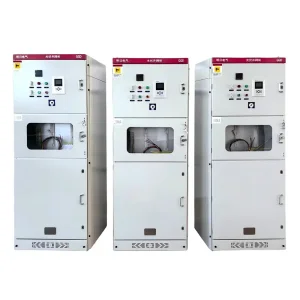
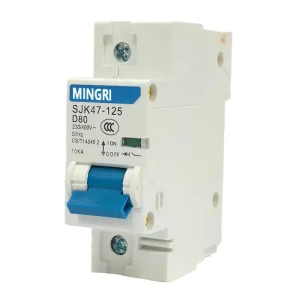
Yueqing houses tightly synchronized industrial lines producing circuit breakers (MCBs/MCCBs), heavy-duty AC contactors, bypass switchgear, digital microprocessors, and high-frequency Hall-effect sensors within a 15km perimeter. This localized supply network eliminates component transit latency and lowers overall bill-of-materials (BOM) overhead by 30-45%.
Rigorous FAT & Type Testing
Factory Acceptance Testing (FAT) is conducted in modern high-voltage testing laboratories equipped with automated computerized test benches. Every manufactured stabilizer unit undergoes continuous thermal run tests under inductive and resistive loads, dielectric breakdown tests up to 3000V, impulse lightning withstand checks, and response-rate calibrations.
Comprehensive Typology Analysis: Selecting the Correct Stabilizer
Evaluate servo electromechanical, solid-state electronic (SCR), and magnetic purification topologies to achieve optimal performance, load matching, and capital ROI.
Industrial automatic voltage regulators (AVR) rely on diverse physical principles to correct voltage deviations. Selecting the optimal architecture depends strictly on load sensitivity, grid fluctuation speed, maintenance thresholds, and environment severity.
1. Servo-Motor Electromechanical (TNS / SBW Series)
Utilizes a high-torque DC/AC servo motor coupled with a precision planetary gearbox to move carbon rollers or brush assemblies across continuous toroidal or column-type variable autotransformers. A series-connected buck-boost transformer injects or subtracts secondary compensating voltage into the primary feeder. Offers exceptionally high surge overload handling (up to 200% for 10 seconds), distortion-free sinusoidal waveforms, wide capacity scales (up to 3000kVA), and true phase-independent regulation.
2. Solid-State Static Electronic Stabilizers (SCR / Thyristor)
Completely solid-state without moving mechanical contacts. High-speed digital signal processors (DSP) monitor line voltage cycle-by-cycle (sampling at 20 kHz), triggering silicon-controlled rectifiers (SCRs) or IGBT matrices at zero-current crossings to adjust transformer tap ratios instantly. Corrects full voltage excursions within 10 to 20 milliseconds without electric arcing or mechanical brush wear. Ideal for high-vibration manufacturing floors, robotics cells, and mission-critical server installations.
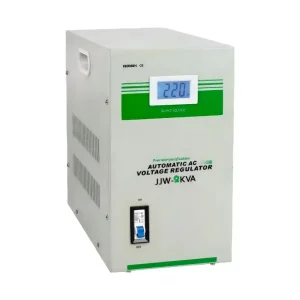
3. Magnetic Purification Regulators (JJW / JSW Series)
Combines electromagnetic resonance and ferroresonant magnetic flux saturation circuits with dual-stage multi-tap compensation. Acts simultaneously as a line-conditioning isolation transformer and ultra-high-speed voltage regulator. Delivers strong bidirectional noise filtering (attenuating RF, EMI, and spikes by up to 60dB) and ultra-tight regulation (±1%). Serves precision chromatography equipment, medical laboratories, defense electronics, and calibration rooms.
| Performance Metrics | Servo Carbon-Brush (SBW/TNS) | Solid-State SCR Static | Purified Ferroresonant (JJW) |
|---|---|---|---|
| Response Dynamic Time | 15V to 40V per second (Mechanical) | < 15 ms (Cycle-to-Cycle) | 20 ms to 40 ms |
| Voltage Output Precision | ±1% to ±3% adjustable | ±1% to ±2% digital setting | ±0.5% to ±1% precise |
| Waveform Distortion (THD) | < 0.1% added (Pure Sine) | < 1.0% (Zero-cross switching) | < 3.0% (Filtered output) |
| Overload Tolerance | Up to 200% for 10 sec / 150% 60 sec | 150% for 2 sec / 120% 60 sec | 120% for 10 sec (Current limiting) |
| Mechanical Wear / Maintenance | Periodic brush inspection needed | Zero Maintenance (Maintenance-Free) | Zero Maintenance (No moving parts) |
| Capacity Range Available | 10 kVA to 3,000 kVA | 5 kVA to 1,200 kVA | 1 kVA to 100 kVA |
| Total Cost of Ownership (TCO) | Lowest initial CapEx, high durability | Moderate CapEx, lowest ongoing OpEx | Moderate initial CapEx, critical applications |
Targeted Sector Solutions & Real-World Power Topologies
Mitigating brownouts, uncoordinated loads, phase imbalances, and harmonic interference across mission-critical vertical industries.
Automated CNC & SMT Lines
Heavy motor starts, laser cutting pulses, and servo spindle acceleration cause localized voltage sags within industrial parks. Our SBW column-type regulators ensure stable 380V/400V supply to multi-axis CNC controllers, protecting diamond-tipped cutting heads from premature shearing and preventing logic reboot failures on automated pick-and-place lines.
Medical Diagnostic Imaging
Computed Tomography (CT scanners), Magnetic Resonance Imaging (MRI), and Digital Radiography (DR) machines pull high-intensity, instantaneous pulse power during exposure scans. Inadequate regulation causes imaging artifacts and slice distortion. Our medical-grade stabilizers feature high-speed voltage regulation and galvanic isolation to eliminate common-mode ground noise.
Telecom & Data Centers
Cellular base stations and edge server clusters situated in remote regions suffer from weak grid tie-ins, extreme phase unbalance, and frequent lightning surges. Integrated stabilization systems combine wide input operational windows (160V-280V phase-to-neutral), automated bypass lines, and Class II surge protective devices (SPD) to protect uninterruptible power supplies (UPS).
Mining, Petrochemical & Heavy Ports
Quarry conveyor drives, pump stations, and gantry cranes are exposed to ambient salt mist, conductive coal dust, and wide ambient temperature swings (-20°C to +55°C). Heavy-duty stabilizers built in IP54 or NEMA 4X steel enclosures with forced air-cooling heat exchangers and conformal-coated control boards deliver continuous service without downtime.
Industrial Evolution: IoT-Connected Microgrids & Procurement Architecture
Navigating the transition toward smart solid-state voltage conditioning, predictive edge analytics, and international procurement standards.
Technological Macro-Trends Transforming Industrial Voltage Stabilization
The voltage stabilizer sector is evolving rapidly beyond mechanical motor-and-chain architectures. Driven by the proliferation of decentralized solar photovoltaic arrays, wind generation, and electric vehicle charging hubs, modern distribution networks operate with bi-directional power flows that produce rapid voltage swings and localized harmonics.
- Integrated Cloud & Industrial IoT Telemetry: Modern industrial stabilizers incorporate native Modbus-RTU, BACnet, and Ethernet communication cards. Operating parameters—including individual phase voltages, load currents, power factors, total harmonic distortion (THD), and internal transformer temperatures—are continuously streamed to supervisory SCADA platforms for predictive maintenance notifications.
- Hybrid Static-Magnetic Topologies: Leading factories are designing hybrid stabilizer architectures that unite the ultra-fast reaction times of solid-state SCR switches (compensating for immediate sags within 5ms) with high-efficiency servo autotransformers that take over steady-state regulation, combining speed with minimal electrical loss.
- Environmentally Sustainable & Eco-Safe Insulation: Transitioning from conventional petro-chemical varnishes toward non-toxic, bio-based solvent-free impregnating resins with vacuum-pressure impregnation (VPI) improves coil thermal dissipation, reduces audible humming noise (<60dB at 1 meter), and ensures self-extinguishing fire ratings up to Class F/H standards.
Strategic Enterprise Procurement Framework: Calculating True kVA & Life-Cycle ROI
Procurement directors and chief electrical engineers should never size industrial voltage stabilizers solely according to nameplate motor power ratings. Under-sizing units results in high thermal stress, nuisance circuit breaker tripping, and premature capacitor failures.
To ensure a resilient, cost-effective procurement lifecycle, engineering teams should adhere to this standardized formula:
- Inductive Load Inrush Derating: Direct-on-line (DOL) squirrel-cage induction motors pull starting currents equal to 5 to 7 times their full-load amperage (FLA). For DOL installations, a minimum inrush safety factor of 2.5 to 3.0 must be applied to the stabilizer rating. If soft starters or variable frequency drives are installed, an engineering factor of 1.25 to 1.40 is sufficient.
- Low-Line Input Derating Factor: If an electrical grid frequently drops from nominal 400V down to 300V (-25%), the transformer core must draw substantially higher primary current to maintain the required secondary kilowatt output. The stabilizer frame capacity must be proportionally scaled to handle this current density without exceeding coil thermal limits.
- International Certification Verification: Wholesale tenders require full factory compliance with IEC 61000-4-2 (ESD immunity), IEC 61000-4-4 (electrical fast transient/burst), IEC 60076 (power transformers), and CE Low Voltage Directive (LVD) 2014/35/EU. Legitimate OEM factories provide transparent, third-party laboratory test certificates (e.g., KEMA, TÜV, or CNAS accredited reports).
Frequently Asked Engineering & Procurement Questions
Clear, technical answers to critical installation, sizing, phase regulation, and warranty inquiries.
Q What is the fundamental difference between an AVR and a line-interactive UPS?
An Automatic Voltage Regulator (AVR / Stabilizer) conditions incoming utility voltage by continuously compensating for sags, surges, brownouts, and overvoltages using dynamic autotransformers or solid-state electronic tap switches, running indefinitely without battery storage. An Uninterruptible Power Supply (UPS) contains chemical battery cells designed primarily to provide instantaneous bridge power during total electrical blackouts. For industrial facilities with volatile utility lines, installing a primary wholesale stabilizer directly ahead of a UPS preserves battery cycle life by preventing unnecessary battery cycling during routine grid swings.
Q How does three-phase individual phase regulation differ from three-phase synchronized regulation?
Synchronized (unified) regulation uses a single motor control board to move all three brush assemblies identically based on the voltage monitored across a master phase. This works reliably only when the incoming electrical utility grid is balanced and the load is symmetric. Three-phase individual phase regulation (independent regulation) features three independent drive microprocessors and dedicated servo motors for phases A, B, and C. It can accept a severe input phase imbalance (such as Phase A at 190V, Phase B at 230V, and Phase C at 260V) and balance all three outputs to exactly 220V/230V phase-to-neutral (±1%), protecting downstream machinery from neutral overheating.
Q Can a standard automatic voltage regulator alter or stabilize utility frequency (Hz)?
No. Mechanical servo-motor stabilizers, SCR solid-state regulators, and magnetic purification units adjust only voltage amplitude and wave shape distortion; they cannot alter AC grid frequency (50Hz or 60Hz). In systems where the AC utility line or captive generator exhibits unstable frequency shifts, the correct engineering solution is an AC-DC-AC Static Frequency Converter utilizing an insulated-gate bipolar transistor (IGBT) double-conversion inverter topology.
Q Why is pure copper winding preferred over aluminum winding in industrial stabilizers?
While aluminum windings lower initial manufacturing costs, oxygen-free copper provides superior electrical conductivity (reducing I²R resistive heat losses), higher mechanical tensile strength to resist deformation under short-circuit electromagnetic stresses, lower thermal expansion coefficients, and significantly greater resistance to terminal galvanic corrosion. For long-term industrial deployments exceeding 15 years, copper windings ensure a lower total lifecycle cost and superior thermal run margins.
Q How does an automatic mechanical bypass switch safeguard operations during maintenance?
A built-in manual or motorized automatic bypass switch routes raw utility power directly to downstream loads through an isolated mechanical path while safely de-energizing the stabilizer's internal regulation modules, servo assemblies, and control PCBs. This allows maintenance technicians to perform routine brush replacements, internal cleaning, and calibration procedures without cutting power to the facility or interrupting production lines.
Q What are the typical factory lead times and shipping packaging standards for export?
Standard rating units (10kVA to 200kVA) generally require 10 to 15 business days for precision fabrication and FAT testing. Custom high-capacity industrial units (500kVA to 2500kVA with NEMA/IP enclosures and isolation transformers) require 25 to 35 business days. Equipment for global shipment is packed in fumigated IPPC-stamped solid seaworthy wooden crates, wrapped in moisture-resistant vapor barrier foil, and packed with silica desiccant bags to prevent corrosion during ocean transit.
Q How do high-power non-linear loads (VFDs, rectifiers, arc welders) affect stabilizer performance?
Non-linear loads inject high-order odd harmonics (3rd, 5th, 7th, 11th) back into the line, distorting the standard voltage sinusoidal wave and overheating the autotransformer core through increased eddy current losses. In installations with total harmonic current distortion (THDi) exceeding 15%, we recommend integrating our specialized K-factor isolation transformers (K-13 or K-20 rated) and tuned LC harmonic filter banks alongside the stabilizer assembly.
Q What warranties, spare parts policies, and remote field support are provided?
Every commercial and industrial voltage stabilizer is backed by a comprehensive 24 to 36-month factory warranty against material and manufacturing defects. For wholesale container shipments, we supply a complimentary 3% critical maintenance kit containing spare carbon rollers, drive belts, control PCBs, and microswitches. Real-time factory engineering support is available via secure video link, with on-site commissioning engineers deployed globally for large utility-scale projects.
Primary Power Distribution & Circuit Protection Systems
Certified automatic transfer switches, vacuum circuit breakers, distribution transformers, and intelligent control cabinets configured for dependable grid infrastructure.