Featured Photovoltaic, Medium-Voltage & Automation Systems
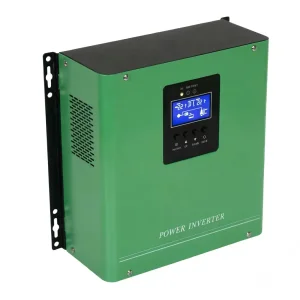
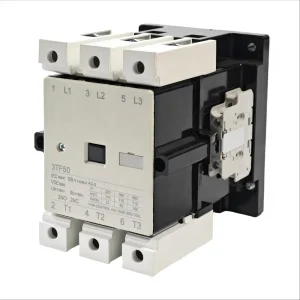
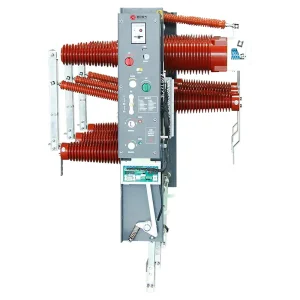
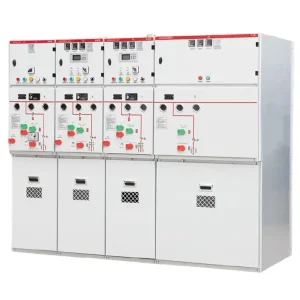
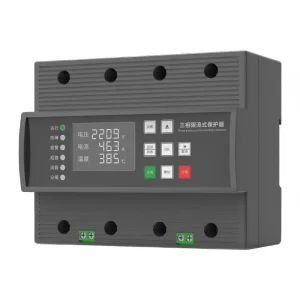
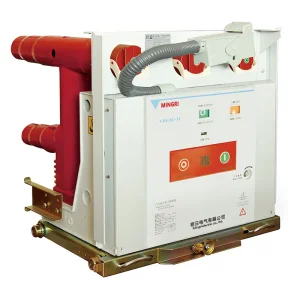
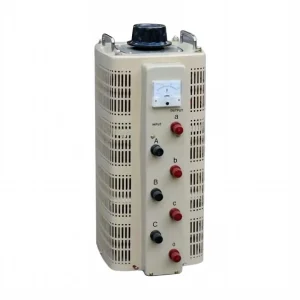
Engineered in our Yueqing Industry 4.0 production base, our electrical switchgear, high-efficiency hybrid inverters, and medium-voltage isolating gear integrate seamlessly with industrial surge defense networks to secure critical renewable generation assets.
The Strategic Evolution of Solar SPD: Mitigating 1500V DC Transients in Modern Photovoltaics
As the global solar energy infrastructure accelerates from conventional 1000V topologies to high-yield 1500V DC architectures, transient overvoltage vulnerability escalates exponentially. Photovoltaic power plants occupy sprawling open-air footprints, exposing module strings, smart combiner boxes, and central or string inverters to severe galvanic and induced lightning transients.
Direct & Indirect Lightning Surges
Photovoltaic fields act as massive earth-loop antennas. Indirect lightning strikes within a 2-kilometer radius generate violent electromagnetic pulse (LEMP) currents along kilometers of DC string cabling. Without high-capacity Type 1 and Type 2 Metal Oxide Varistor (MOV) arresters, inductive surges instantly pierce inverter IGBT bridge switches and PV panel backsheets.
1500V DC Arc Persistence Physics
Unlike alternating current (AC), DC voltage does not possess a natural zero-crossing point. When a lightning surge forces a conventional surge suppressor into thermal runaway, extinguishing the resulting DC arc becomes catastrophic. Advanced Solar SPDs incorporate specialized dual thermal disconnectors and mechanical arc-chute barriers engineered to quench persistent 1500V arcs within milliseconds.
High-Frequency Switching Spikes
Modern silicon carbide (SiC) and gallium nitride (GaN) high-speed inverter stages operate at switching frequencies exceeding 50 kHz. These high dv/dt switching oscillations superimpose persistent micro-transient spikes across the DC bus, causing standard MOVs to prematurely degrade through leakage current escalation unless precisely matched with Gas Discharge Tube (GDT) hybrid paths.
Engineering Note on Thermal Stability: Under the stringent test requirements of IEC 61643-31 and EN 50539-11, solar surge arresters must clear short-circuit currents up to the designated $I_{SCCR}$ rating without generating open flames, external arcing, or catastrophic chassis explosion. Modern Class I and Class II Solar SPDs utilize high-energy metal oxide disks doped with bismuth and cobalt oxides to maintain non-linear crystalline stability across thermal extremes from -40°C to +85°C.
Global Enterprise Procurement Requirements: Type 1 vs. Type 2 Classification Matrix
Procurement engineers at leading EPC firms, inverter original equipment manufacturers (OEMs), and utility-scale solar asset owners operate under stringent technical guidelines. Selecting between Type 1 (Class I), Type 2 (Class II), or combined Type 1+2 surge protective units dictates the long-term Levelized Cost of Energy (LCOE) and plant uptime.
| Performance Parameter | Type 1 (Class I) Solar SPD | Type 2 (Class II) Solar SPD | Type 1+2 Hybrid Protection |
|---|---|---|---|
| Primary Application Zone | Central inverters & main DC distribution boards subject to direct lightning attachment (LPZ 0A to LPZ 1). | String combiner boxes, multi-MPPT string inverters, and battery storage racks (LPZ 1 to LPZ 2). | High-risk rooftop commercial PV systems and mountain array combiners requiring compact dual-rated footprint. |
| Impulse Discharge Current ($I_{imp}$) | 12.5 kA to 25 kA (10/350 µs waveform) | N/A (Tested only under 8/20 µs) | 5 kA to 12.5 kA (10/350 µs waveform) |
| Nominal Discharge Current ($I_n$) | 20 kA (8/20 µs) | 15 kA to 20 kA (8/20 µs) | 20 kA (8/20 µs) |
| Max Discharge Current ($I_{max}$) | 40 kA to 60 kA (8/20 µs) | 40 kA to 50 kA (8/20 µs) | 50 kA (8/20 µs) |
| Voltage Protection Level ($U_p$) | ≤ 3.8 kV to 4.5 kV at $I_n$ | ≤ 3.2 kV to 3.8 kV at $I_n$ | ≤ 3.5 kV at $I_n$ |
| Governing Standard | IEC 61643-31 UL 1449 5th | IEC 61643-31 EN 50539-11 | IEC 61643-31 RoHS / CE |
| Internal Topology | High-energy Spark Gap + heavy-duty MOV array | Tri-modular High-Energy Zinc Oxide Varistor | Coordinated MOV with Spark Gap in series/parallel |
| Remote Signaling Contact | Standard Form C Dry Contact (SPDT) | Standard Form C Dry Contact (SPDT) | Integrated Opto-Coupled Telemetry Option |
Mean Time Between Failures (MTBF)
Wholesale buyers evaluate failure rate data under accelerated thermal cycling (-40°C to +105°C) and 95% relative humidity testing. Top-tier factory SPDs boast calculated MTBF figures exceeding 300,000 operational hours, drastically reducing remote O&M dispatch cycles.
Pluggable Cartridge Architecture
Modular DIN-rail designs enable rapid tool-free replacement of spent MOV blocks without de-energizing the main DC collector busbar. Built-in physical keying prevents mismatched voltage cartridge insertion during stressful on-site emergency maintenance.
Visual & Remote Indication
Dual-flag optical windows transition from vibrant green (Operational Normal) to high-visibility red (Fault/End-of-Life). Microswitch dry contacts trigger instantaneous alerts via SCADA and Modbus RTU telemetry directly to the central control station.
China Factory 4.0: Supply Chain Resilience, Automation & Yueqing Cluster Dominance
Located in Yueqing, Zhejiang—the epicenter of global low- and medium-voltage electrical manufacturing—our manufacturing facility embodies the bleeding edge of Industry 4.0 automated production. We combine complete raw material vertical integration with high-speed automated assembly lines to guarantee unmatched component repeatability and pricing stability for international wholesale procurement.
Robotic High-Precision Soldering
Eliminates human error in thermal disconnector spring calibration. Robotic hot-bar soldering ensures micro-tolerance solder melting thresholds under precisely controlled silver-alloy composition.
100% Automated Optical Inspection (AOI)
High-resolution telecentric optical sensors scan every MOV chip, spark gap gap-distance, and contact arm assembly for micro-fractures, dimensional deviance, and flux residue prior to encapsulation.
Multi-Waveform Impulse Laboratories
In-house 100kA 8/20 µs and 25kA 10/350 µs lightning current generators perform destructive batch verification, clamping voltage characterization ($U_c$), and thermal stability endurance testing.
Unmatched Yueqing Supply Agility
Surrounded by hundreds of precision mold-makers, zinc-oxide wafer sintering specialists, and UL94-V0 flame-retardant polyamide extruders, lead times are compressed by up to 60% compared to Western competitors.
Mission-Critical Deployment Scenarios Across Global Solar Terrains
From arid deserts enduring extreme diurnal temperature swings to offshore floating PV platforms battling salt fog corrosion, wholesale solar surge protective components must perform flawlessly across adverse climatic and electrical operating conditions.
Desert Utility-Scale Arrays
Installed across the Middle East (GCC), North Africa, and the Sonoran Desert. Ambient operating temperatures regularly exceed +55°C, with enclosure internals exceeding +80°C. Heavy sandstorms necessitate IP66 hermetic sealing alongside thermal-stabilized MOV ceramics that resist baseline threshold drift.
Coastal & Offshore Floating PV (FPV)
Deployed in Southeast Asia and European inland water bodies. Relentless marine humidity and salt spray accelerate galvanic pin oxidation. We supply SPDs equipped with nickel-plated copper busbar clamps, tin-plated terminals, and conformal-coated internal sensing PCBs meeting ISO 9227 C5-M marine anti-corrosion standards.
Commercial & Industrial (C&I) Rooftops
Mounted on distribution warehouses and industrial manufacturing facilities. Structural proximity to rooftop HVAC, lightning rods, and complex factory grounding grids demands low-clamping Type 1+2 surge protection to protect sensitive inverter digital signal controllers (DSP) against back-flashover events.
High-Altitude Mountain Arrays
Operating in the Andes, Himalayas, and Tibetan Plateau at altitudes exceeding 3,000 meters above sea level. Rarefied air diminishes dielectric breakdown resistance and convective cooling efficiency. We engineer specialized creepage and clearance distances compliant with high-altitude altitude derating factors.
Architectural Failure Defense: Thermal Runaway, Arc-Extinguishing Chutes & Smart Monitoring
The ultimate benchmark of an industrial-grade Solar SPD supplier is how the component behaves when its operational lifespan is exhausted. Varistors exhibit an inherent end-of-life degradation pattern where leakage current increases, generating localized heating that can trigger dangerous electrical fire hazards if the internal disconnect mechanism fails.
Dual-Axis Thermal Disconnect Mechanism
Our factory incorporates proprietary low-temperature eutectic solder joints paired with pre-stressed mechanical springs. When varistor internal temperatures cross 120°C, the solder releases smoothly, driving a mechanical barrier between the MOV terminal and the active busbar within 15 milliseconds, preempting thermal runaway.
Dynamic Arc-Extinguishing Shielding
High DC voltages (1000V to 1500V) can sustain air ionization across narrow gaps. As the thermal disconnect arm retracts, a high-temperature polyamide arc shutter slides instantaneously into the gap, segmenting and cooling the electrical arc plasma before catastrophic phase-to-ground flashover can occur.
IoT & Smart Condition Telemetry
Beyond traditional Form C auxiliary relays, our next-generation smart SPDs feature integrated current-leakage micro-transducers and impulse event loggers. Real-time RS-485 Modbus telemetry outputs total surge event counts, estimated MOV degradation percentage, and ambient cartridge thermal indices directly to plant SCADA systems.
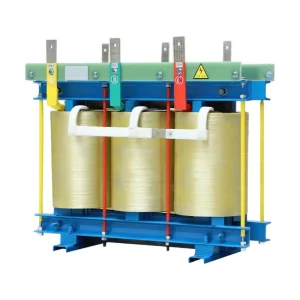
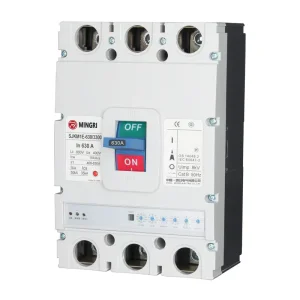
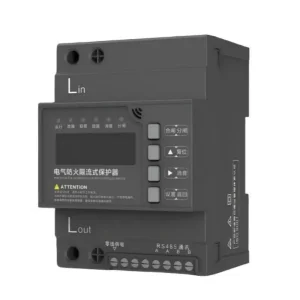
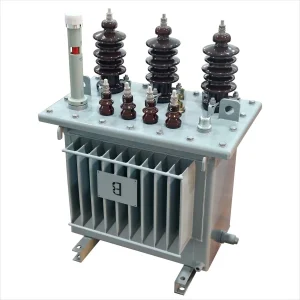
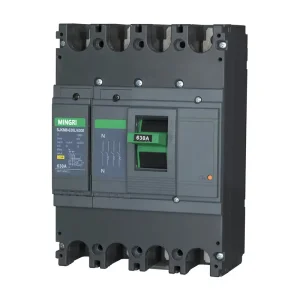
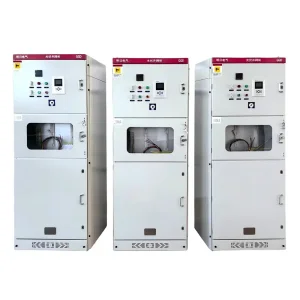
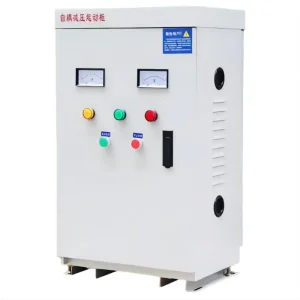
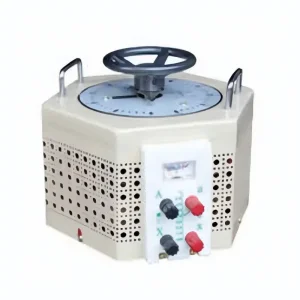
Switchgear, Power Transformers & High-Voltage Circuit Protection
Complete balance-of-plant electrical equipment supporting utility-scale substation step-up transformers, low-voltage distribution cabinets, and heavy-duty industrial circuit breakers engineered to withstand extreme short-circuit fault stresses.
Frequently Asked Technical & Procurement Questions
Direct insights from our Chief Electrical Protection Engineers addressing technical compliance, sizing formulas, and international factory supply arrangements.
Factory Verification Protocol: 5-Stage Zero-Defect Inspection Pipeline
To maintain our industry-leading <0.02% field failure rate, every single Solar SPD component leaving our production lines passes through a rigorous sequence of digital and mechanical verification checkpoints.
Stage 1: Varistor Wafer Screening
100% incoming inspection of raw zinc-oxide sintered discs. Automated testers measure breakdown voltage ($U_{1mA}$), non-linear coefficient ($\alpha$), and baseline leakage current ($I_{leak}$) at ambient room temperature and elevated +85°C conditions.
Stage 2: Soldering Profile Calibration
Continuous real-time temperature profiling across automated robotic soldering stations ensures the spring-loaded thermal trip bridge achieves exact metallurgical bonding without micro-fissuring or flux entrapment.
Stage 3: Dielectric & Insulation High-Pot
Applying 3,750V AC dielectric proofing between active phase poles and the grounding rail assembly for 60 seconds to ensure zero creepage leakage across flame-retardant UL94-V0 thermoplastic housings.