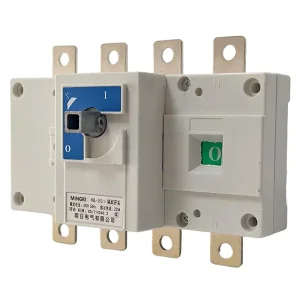
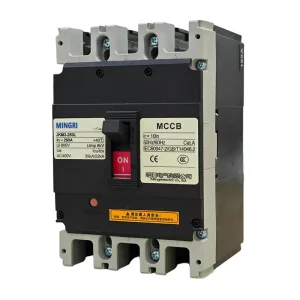
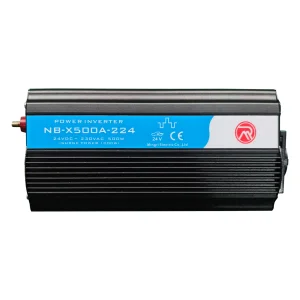
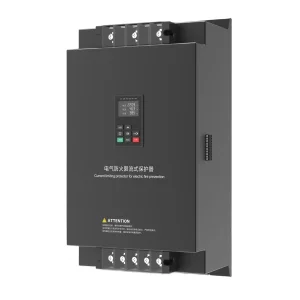
Industrial Power Distribution & Protection Portfolio
Complementary medium- and low-voltage electrical apparatus manufactured for turnkey substations, utility infrastructure, and critical power facilities.
Industrial White Paper: Global Low Voltage Series Reactor Landscape
Comprehensive engineering insights into harmonic resonance suppression, power quality standards, and detuned filtering architecture across heavy industry and commercial grids.
Resonance Mitigation Architecture
When power factor correction (PFC) capacitors are directly switched onto non-linear industrial networks, the natural LC circuit formed between the distribution transformer secondary leakage inductance and the capacitor bank often matches prominent harmonic frequencies (e.g., 5th harmonic at 250 Hz, 7th harmonic at 350 Hz). A Low Voltage Series Reactor fundamentally alters system impedance, shifting the resonant frequency well below the 5th harmonic to completely prevent destructive harmonic amplification.
System Safety CoreCapacitor Thermal & Dielectric Shielding
Industrial capacitors degrade rapidly under continuous harmonic current injection due to localized dielectric hotspots and excessive peak voltages. Installing series detuned reactors absorbs non-linear distortion currents, reduces equivalent voltage stress across capacitor terminals, and mitigates inrush current transients during energization, multiplying capacitor operating lifespans up to fourfold.
Asset PreservationGlobal Regulatory Compliance
Modern electrical regulatory standards—including IEEE Std 519-2022 and IEC 61000-3-6—impose strict limits on Total Harmonic Distortion for Voltage (THD-V < 5%) and Current (THD-I < 8% at the Point of Common Coupling). Industrial series detuned reactors provide high-stability low-voltage filtering, preventing penalty tariffs and premature circuit breaker trips.
Code ComplianceDetuning Factor Selection & Physics Principles
The operational efficiency of a low-voltage series reactor hinges entirely on its detuning ratio (p%), defined by the ratio between inductive reactance ($X_L$) and capacitive reactance ($X_C$).
| Reactor Tuning Factor (p) | Series Resonant Frequency (50 Hz / 60 Hz) | Dominant Harmonic Spectrum Blocked | Primary Industrial Operating Target | Capacitor Voltage Rating Required |
|---|---|---|---|---|
| p = 7% (0.07) | 189 Hz / 227 Hz | 5th (250/300Hz), 7th (350/420Hz) | Standard industrial manufacturing, variable frequency drives, CNC lines, automated robotics | 440V – 480V (for 400V grid) |
| p = 14% (0.14) | 134 Hz / 160 Hz | 3rd (150/180Hz), 5th, 7th | Single-phase non-linear loads, commercial complexes, data center UPS, arc furnaces, LED drivers | 480V – 525V (for 400V grid) |
| p = 5.67% (0.0567) | 210 Hz / 252 Hz | 5th & higher harmonic margins | High-density power factor compensation systems where grid harmonic distortion is moderately low | 440V (for 400V grid) |
| p = 0.5% – 1% (Inrush) | > 500 Hz (Damping) | Pure switching transient suppression | Heavy contactor-switched capacitor banks with negligible continuous harmonic background levels | 400V – 415V |
Cold-Rolled Grain-Oriented Core
Fabricated using precision-laser-cut, low-loss CRGO silicon steel laminations. Designed with multi-gap magnetic circuits to guarantee magnetic saturation linearity ($I_{lin} \ge 1.8 \cdot I_n$), preventing core flux distortion under harmonic overcurrent scenarios.
Vacuum Pressure Impregnation (VPI)
Complete assembly undergoes high-temperature vacuum drying followed by pressure impregnation using solvent-free, Class H/C modified epoxy polyester resins. Delivers moisture exclusion, high dielectric insulation, and acoustic hum under 50 dB.
Embedded Thermal Protection
Integral normally closed (NC) bimetallic thermal sensors embedded inside the center limb windings (tripping threshold 120°C / 130°C / 140°C). Provides fail-safe dry-contact relay signals to isolate contactor steps during sustained thermal overload.
Localized Application Scenarios & Sector Solutions
Tailored harmonic suppression and detuned bank configurations engineered for specific industrial mission profiles across global geographic markets.
Hyperscale Data Centers & Telecommunications
Modern data centers utilize high-density server power supplies (SMPS) and double-conversion online UPS systems that emit significant 3rd, 9th, and 15th zero-sequence triplen harmonics. A detuned reactor configuration with p = 14% (134 Hz tuning) prevents neutral line conductor overheating, protects capacitor banks, and ensures UPS output stability.
Critical InfrastructureHeavy Manufacturing & Steel Mills
Heavy duty rolling mills, induction melting furnaces, and high-horsepower variable frequency drives (VFDs) generate cyclic harmonic bursts. Heavy copper-wound p = 7% detuned reactors withstand repeated high-amplitude current surges without entering magnetic core saturation, mitigating line voltage notch depth.
Industrial ManufacturingSolar PV Farms & EV Charging Plazas
Central solar inverters and DC fast-charging plazas inject high-order switching carrier frequencies into the low-voltage collector bus. Precision aluminum-foil or copper wound series reactors protect central reactive power compensation units from premature resonance-induced tripping.
Renewable EnergyTechnology Roadmap: Next-Generation Reactor Engineering
Advancements in magnetic materials, digital thermal analytics, and hybrid power quality integration shaping the next decade of low-voltage series reactors.
Amorphous & Nanocrystalline Alloy Cores
Transitioning from conventional grain-oriented electrical silicon steel to ultra-thin amorphous ribbon and nanocrystalline alloys. This innovation cuts no-load hysteresis core losses by up to 60%, drastically minimizing parasitic heat generation inside enclosed switchboard compartments.
IoT Digital Real-Time Thermal Modeling
Embedding multi-channel PT100/fiber-optic temperature sensors alongside digital RS485 / Modbus-RTU transmitters directly on the core air gaps. Enables dynamic predictive life forecasting and integrated power quality analytics within central SCADA and building management systems.
Hybrid AHF + Detuned LC Architectures
Integrating cost-effective series detuned reactor banks with active harmonic filters (AHF). The detuned series reactor handles bulk displacement reactive power (kvar) while the active filter injects phase-canceling currents for dynamic higher-order harmonics, slashing total cost of ownership by 40%.
Global Sourcing & Engineering Customization Standards
As a specialized wholesale manufacturer, Mingri Electric engineers bespoke series reactors configured for 208V, 230V, 400V, 480V, and 690V industrial power grids. Fully certified under ISO 9001, ISO 14001, and ISO 45001 management systems, backed by full type-test validation for dynamic short-circuit endurance and temperature-rise limits.
Frequently Asked Questions (Technical & Procurement FAQ)
Engineering responses to critical design inquiries regarding reactance ratio calculation, thermal dissipation, capacitor voltage elevation, and system integration.
Why does adding a series reactor increase the operating voltage across capacitors?
When an inductor is placed in series with a capacitor, inductive reactance opposes capacitive reactance. The voltage across the capacitor becomes $U_C = U_N / (1 - p)$, where $U_N$ is the line voltage and $p$ is the reactor detuning ratio. For a 400V grid with a 7% reactor ($p = 0.07$), the terminal voltage rises to approximately 430V. Consequently, capacitors paired with 7% reactors must be rated for at least 440V or 480V to prevent premature dielectric puncture.
What is magnetic linearity saturation ($I_{lin}$) and why is it critical?
The linearity current ($I_{lin}$) specifies the current threshold at which the reactor's inductance drops by no more than 5% or 10% from its nominal value ($L_N$). Under severe harmonic distortion or fault surges, non-linear currents can spike. If a reactor saturates ($I_{lin} < 1.5 \cdot I_N$), its inductance collapses rapidly, shifting the resonant frequency upward toward the 5th harmonic, causing sudden resonance. Mingri reactors guarantee $I_{lin} \ge 1.8 \cdot I_N$ (or $2.0 \cdot I_N$ on demand).
Copper vs. Aluminum windings: Which conductor suits my application?
Both conductor materials deliver equivalent electrical performance when sized correctly for cross-sectional ampacity. Copper windings offer smaller spatial footprints, lower mechanical vibration, and superior thermal conductivity, making them optimal for compact low-voltage switchboards. Aluminum-wound reactors offer substantial weight and procurement cost reductions (25%–35% lower cost) with identical temperature rise guarantees.
Can low-voltage series reactors be switched via thyristor electronic switches?
Yes. When used in fast-acting dynamic reactive power compensation systems (SVG/dynamic PFC), series detuned reactors are paired with solid-state thyristor switches. Because thyristors switch capacitors at zero-crossing points (dV/dt = 0), the series reactor prevents rapid current rise (di/dt) from damaging the semiconductor junctions during transient grid variations.
Switchgear, Substations & Complete Low Voltage Distribution
Integrated electrical solutions manufactured with precision engineering for utilities, industrial parks, and commercial infrastructure globally.