Primary Modular Power Systems & Substation Infrastructure
Integrated transformer interfaces, medium-voltage distribution switchgear, and backup generation architectures engineered to support wholesale frequency drive installations and stable grid conversion.
-
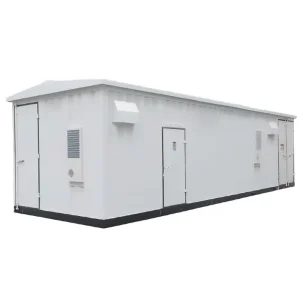 OEM Modular Intelligent Prefabricated Cabin Substation from China Suppliers - Factory-Built Solution for Smart Grids Manufacturers, ManufacturerView Specifications
-
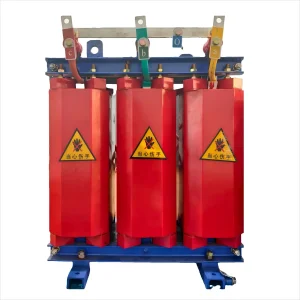 High-Quality SC(B)10 Type 10kV Series Resin Insulation Dry Type Power Transformer Manufacturers, CompaniesView Specifications
-
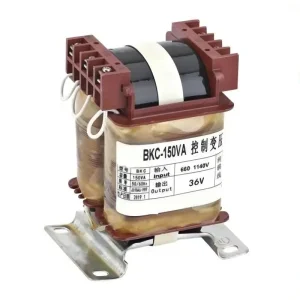 High-Quality BKC Series Control Transformers from China Suppliers – Reliable and Compact Factory Power Solutions Suppliers, ManufacturerView Specifications
-
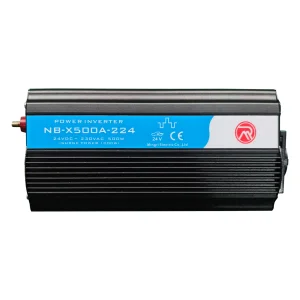 China China X500 DC to AC Power Inverter 500W with EU Socket, USB Ports - Trusted Suppliers & Factory Solution Suppliers, CompanyView Specifications
-
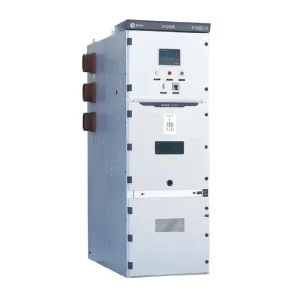 ODM KYN28-24 Withdrawable Armored Metal-Enclosed Switchgear - High Voltage Power Solutions from China Suppliers and Factory Manufacturer, FactoryView Specifications
-
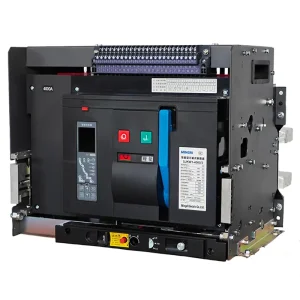 China W1 ACB intelligent universal circuit breaker Manufacturers, CompaniesView Specifications
-
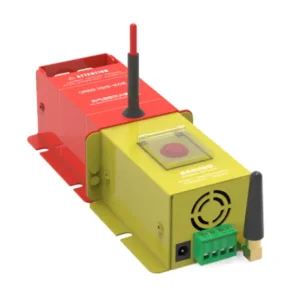 OEM Intelligent wireless automatic gas fire extinguishing device-Hot Aerosol Series Manufacturer, FactoryView Specifications
-
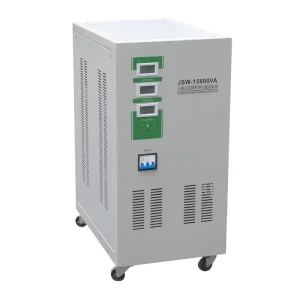 OEM JSW Three Phases Series Precise Purified Voltage Regulator Power Supply Manufacturer, FactoryView Specifications
1. Engineering Architecture of Frequency Converter Factories: Sourcing & Procurement Demands
In contemporary power engineering, selecting an original equipment manufacturer (OEM) or wholesale frequency converter factory represents a capital decision that dictates the operational lifecycle, energy efficiency, and mean-time-between-failure (MTBF) of automated production infrastructures. Wholesale variable speed drives (VSD), static frequency converters (SFC), and dynamic variable frequency drives (VFD) are no longer isolated sub-assemblies; they form the electrical core that governs motor flux, electromagnetic compliance, process precision, and thermal dissipation across heavy industrial networks.
Global procurement teams managing Tier-1 EPC ventures require strict visibility into internal supply chains. A certified frequency converter factory must maintain end-to-end control over critical power electronics topologies—from incoming wafer screening of Insulated Gate Bipolar Transistors (IGBTs) or Silicon Carbide (SiC) MOSFET modules to Automated Optical Inspection (AOI) for multilayer surface-mount control printed circuit boards (PCBs). Reliability in the field begins at the raw material phase, ensuring that DC bus capacitors utilize metallized polypropylene film capable of withstanding voltage surges up to 1.5 times nominal rating, and laminated copper busbars minimize parasitic inductance across high-speed switching transitions.
Total Cost of Ownership (TCO) Optimization
Industrial drive systems consume over 65% of motor energy in high-demand environments. Enterprise buyers look beyond the initial purchase price, auditing drive topology, switching frequency modulation, and regenerative absorption capabilities. Direct wholesale sourcing from established factories cuts distributor markups while securing drive units yielding 98% to 98.8% conversion efficiency across 20% to 100% load spectra.
Harmonic Mitigation & THDi Control
Non-linear electrical loads introduced by standard 6-pulse diode bridges cause severe harmonic contamination on upstream utility lines. Procurement contracts require wholesale frequency converter factories to integrate multi-pulse rectifiers (12-pulse, 18-pulse, or 24-pulse) or Active Front End (AFE) topologies, keeping Total Harmonic Current Distortion (THDi) below 5%, in compliance with IEEE 519 and IEC 61000-3-12 guidelines.
Severe Environment Engineering (Conformal Coating)
Industrial installations subject sensitive control electronics to airborne contaminants, hydrogen sulfide, conductive dust, and high relative humidity. Leading wholesale manufacturers utilize automated selective conformal coating lines compliant with IPC-A-610 Class 3 and IEC 60721-3-3 Class 3C2/3C3, ensuring PCB longevity inside rugged variable frequency cabinets.
Factory Derating Matrix: When specifying frequency converters for wholesale deployment at altitudes exceeding 1,000 meters above sea level, dielectric strength diminishes and air density falls. An authentic manufacturing partner provides calibrated de-rating curves: typically 1% current derating per 100m between 1,000m and 4,000m, and 0.5°C temperature derating per 100m to safeguard power semiconductor junctions.
2. Macro-Industrial Solutions: Heavy Industry, Infrastructure & Renewables
Frequency conversion technology is not homogenous; control topologies diverge substantially based on dynamic torque demands, inertia matching, and load regeneration. As an integrated electrical apparatus manufacturer located in Yueqing, Zhejiang—the power hub of China—our engineering facilities configure custom variable frequency cabinets, static shoreline converters, and motor control centers (MCC) geared toward distinct global sectors.
Offshore Marine & Shore-to-Ship Power
Vessels docked in international ports require shore-side static frequency converters (converting 50 Hz utility grid to 60 Hz onboard power, or vice versa, at 400V, 440V, 6.6kV, or 11kV). Wholesale cabinets incorporate galvanically isolated multi-winding transformers, marine-grade anti-corrosive enclosures (IP54 / IP55), and fast synchronization algorithms to prevent blackout events during shore power transfers.
Heavy Metallurgical Rolling & Mining Extraction
Conveyors, ball mills, and continuous rolling mills experience severe shock loading and peak locked-rotor torque requirements. Factory-built variable frequency systems leverage Field-Oriented Sensorless Vector Control (SVC) or Closed-Loop Flux Vector Control (FVC) with encoder feedback, delivering up to 200% starting torque at 0.0 Hz, ensuring zero slippage and controlled mechanical acceleration.
Municipal Smart Water, Desalination & HVAC
Large-scale centrifugal water pumps and chiller compressors demand multi-motor synchronous bypass controls. Modern variable frequency cabinets (such as our MC3000 series platform) feature multi-pump staging logic, sleep-wake automation, dry-run protection, and internal proportional-integral-derivative (PID) control, eliminating hydraulic water hammer events and reducing pipeline rupture hazards.
| Converter Category | Input Rectification Topology | THDi Performance | Torque Dynamic Response | Primary Industrial Deployment |
|---|---|---|---|---|
| Standard 6-Pulse VFD | Uncontrolled Diode Bridge | 35% – 45% (Unfiltered) | < 20 ms (Open-Loop V/f) | Standard fans, blowers, clean water transfer pumps |
| 12/18-Pulse Phase-Shifted | Multi-Winding Isolation Transformer | < 8% – 12% (Passive) | < 10 ms (Sensorless Vector) | Refineries, mining crushers, medium-capacity chillers |
| Active Front End (AFE) VFD | Active IGBT Synchronous Switching | < 3% – 5% (IEEE 519 Compliant) | < 2 ms (Full Vector Control) | Elevators, centrifuges, hoisting, dynamic test rigs |
| Static Shore-to-Ship SFC | Active Inverter + Isolation Step-Up | < 2.5% (Pure Sine Output) | Instantaneous Voltage Regulation | Commercial naval harbors, shipyard repair drydocks |
3. Technology Roadmap: Next-Generation Silicon & AI-Driven Predictive Maintenance
The frequency conversion sector is experiencing a paradigm shift driven by wide-bandgap (WBG) semiconductors and localized edge intelligence. As traditional silicon insulated-gate bipolar transistors reach theoretical physical limits in junction temperature ($T_j \approx 175^\circ\text{C}$) and switching losses, high-tier wholesale manufacturing plants are actively deploying Silicon Carbide (SiC) and Gallium Nitride (GaN) power stages into low and medium-voltage drives.
Silicon Carbide (SiC) Module Integration
SiC power semiconductors exhibit critical breakdown electric fields ten times higher than standard silicon. By adopting SiC MOSFET switches, our advanced frequency converter lines achieve switching frequencies up to 50 kHz without excessive thermal throttling, enabling ultra-compact footprint reductions of up to 40% and virtually eliminating acoustic motor noise on shop floors.
Embedded Neural Edge Diagnostics
Predictive maintenance is now embedded into drive control firmware. Internal Digital Signal Processors (DSPs) continuously analyze high-speed electrical signatures—calculating motor stator winding degradation, bearing race fluting caused by common-mode voltages, and DC-link capacitor equivalent series resistance (ESR) drift—alerting facility SCADA systems via Modbus TCP, PROFINET, or EtherCAT before catastrophic shutdowns occur.
Regenerative Microgrid Interfacing
Future manufacturing infrastructures demand bidirectional power routing. Next-generation wholesale frequency converters feature bi-directional four-quadrant operation, feeding dynamic braking energy back into the primary factory ring main unit or localized battery energy storage systems (BESS), transforming potential thermal waste into net-positive operational power savings.
4. Global Commercial Realities: Grid Incompatibilities & Cross-Border Engineering
A fundamental hurdle faced by multi-national procurement conglomerates and industrial plant exporters is the radical divergence of international electrical utility grids. Equipment manufactured in 50 Hz jurisdictions destined for 60 Hz territories (or vice versa) encounters severe transformer core saturation, unexpected motor overheating, and rotational speed deviations if drive parameters are not matched precisely to target distribution networks.
Dual-Grid Frequency Synthesis (50Hz / 60Hz)
While standard asynchronous induction motors run at rated speeds governed strictly by $n = \frac{120f}{p}$, an integrated variable frequency converter frees the mechanical load from utility grid constraints. Our export-oriented factory systems deliver programmable output frequency ranges from 0.00 Hz up to 600.00 Hz, enabling standard IEC motors to operate seamlessly within NEMA/IEEE standard environments without physical mechanical gearbox alterations.
Multi-Voltage Industrial Topologies
From 208V / 240V three-phase networks common in North American commercial infrastructure, to 380V / 400V / 415V European/Asian utility grids, up to 690V / 1140V heavy industrial mining installations, our wholesale frequency converter cabinets feature wide input voltage tolerance ranges (-15% to +15%) and integrated automatic voltage regulation (AVR) to counteract volatile grid sags in developing infrastructure hubs.
Galvanic Isolation & Common-Mode Attenuation
Long motor cable runs between the drive cabinet and the drive load induce high $dv/dt$ voltage spikes at motor terminals due to transmission line reflection phenomena. A factory-grade wholesale solution incorporates integrated output sine-wave filters, ferrite cores, and dv/dt chokes, attenuating peak voltage stresses to below 1,000 V/μs and safeguarding motor winding insulation against premature pinhole dielectric breakdown.
5. Quality Assurance, FAT/SAT Protocols & Regulatory Compliance
High-reliability industrial projects cannot tolerate unexpected failures during commissioning. Mingri Electric operates dedicated high-power testing platforms in Yueqing, allowing complete Factory Acceptance Testing (FAT) under full inductive, capacitive, and dynamic regenerative load scenarios before overseas dispatch.
Full Load Burn-In Test
100% of finished frequency converter chassis undergo 48 to 72 hours of thermal chamber dynamic stress cycling at 50°C ambient temperatures to eliminate infant mortality defects in switching semiconductors.
Dielectric Hi-Pot Safety
Rigorous high-potential (Hi-Pot) insulation resistance tests evaluate isolation barriers between power terminals, logic control circuitry, and chassis grounding points per IEC 61800-5-1 and UL 508C mandates.
EMC / EMI Chamber Testing
Radiated and conducted electromagnetic emission levels are validated inside anechoic test chambers to guarantee compliance with EN 61800-3 Category C1, C2, and C3 industrial thresholds.
Remote Digital FAT
Overseas clients witness live sensor telemetry, thermal infrared imaging, and step-load transient response tests via secure high-definition video connections prior to packing and export customs clearance.
All wholesale frequency cabinets, variable speed assemblies, and accompanying switchgear units comply with ISO 9001 quality management, ISO 14001 environmental safeguards, ISO 45001 occupational safety, along with CE Low Voltage Directive (LVD 2014/35/EU) and Electromagnetic Compatibility Directive (EMC 2014/30/EU).
Frequently Asked Technical & Wholesale Inquiries (FAQ)
Detailed answers addressing engineering parameters, OEM/ODM customizations, and supply chain timelines for global engineering contractors.
Secondary Power Conversion, Protection & Control Assemblies
Engineered variable frequency drive cabinets, automatic transfer switching, low-voltage control transformers, and voltage conditioning regulators fabricated for continuous industrial duty.
-
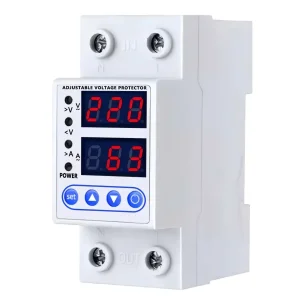 ODM Three-Phase Adjustable Voltage Protector with LED Screen Suppliers, FactoryView Specifications
-
High-Quality 500W DC to AC Power Inverter X500 with EU Socket - China Suppliers & Factory for Efficient Power Conversion Manufacturers, CompaniesView Specifications
-
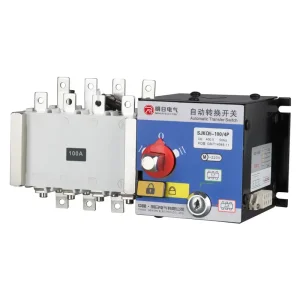 China China SJKQ5 ATS Dual Power Automatic Transfer Switch - 20A-3200A Suppliers & Factory for Reliable Power Solutions Manufacturers, CompaniesView Specifications
-
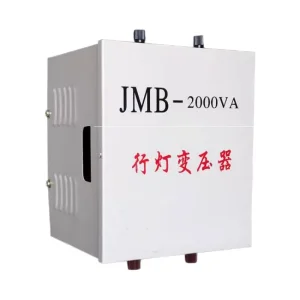 ODM JMB/BJZ/DG/BZ(DM) Series Lighting & Hand Lamp Control Transformer Suppliers, CompanyView Specifications
-
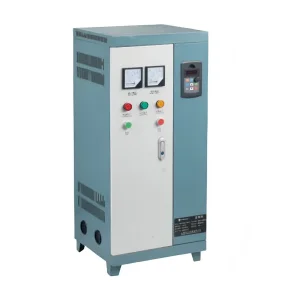 ODM MC3000 Series Variable Frequency Cabinet With Power Manufacturers, CompanyView Specifications
-
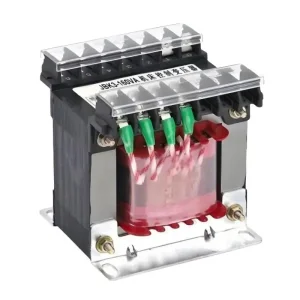 High-Quality JBK3 series machine tool control transformers Manufacturer, FactoryView Specifications
-
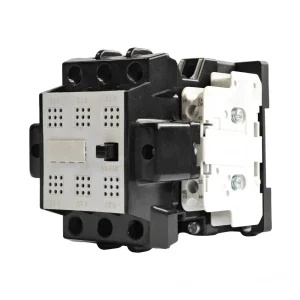 OEM CJX1 (3TB) Series AC Contactors 9-400A 380V AC-3 Factories, CompanyView Specifications
-
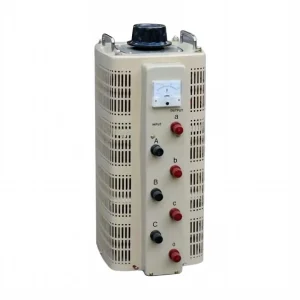 High-Quality TSGC2J Three Phase Variac Transformer Contact Regulator Supplier, ManufacturersView Specifications