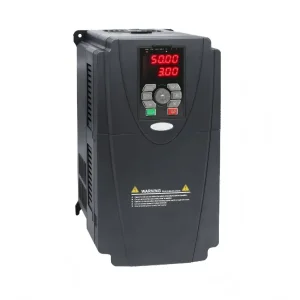
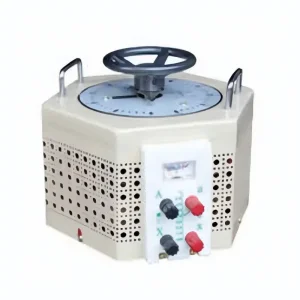
Precision Line Infrastructure & Protection Inventory
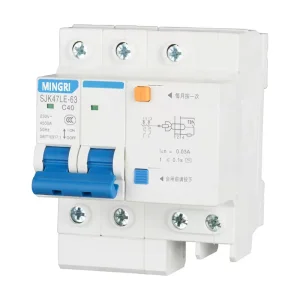
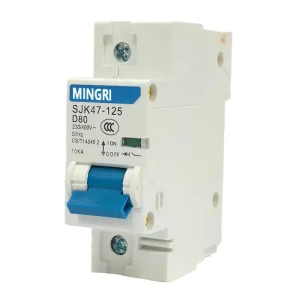
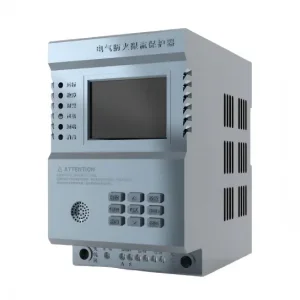
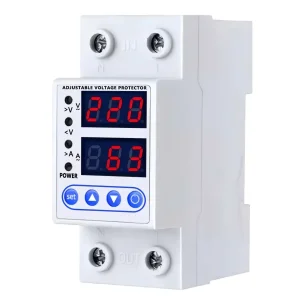
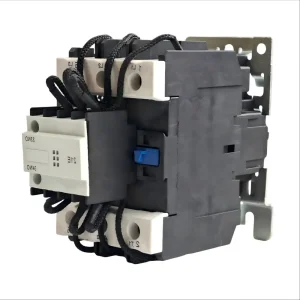
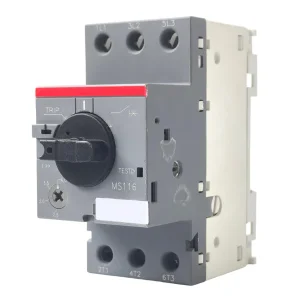
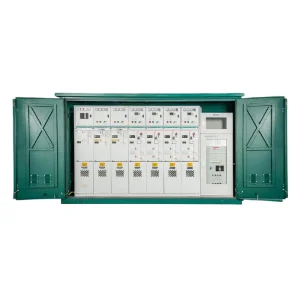
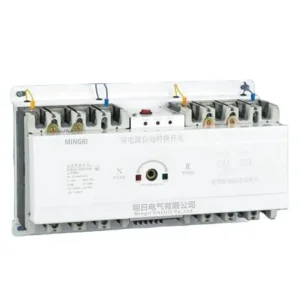
Integrate certified electrical control, auto-reclosing circuit breakers, and specialized power switching modules to safeguard multi-axis CNC machine centers and auxiliary automated tooling cells.
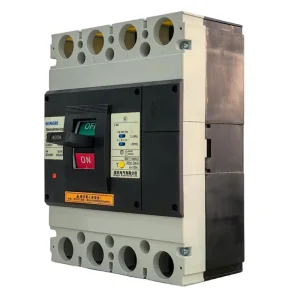
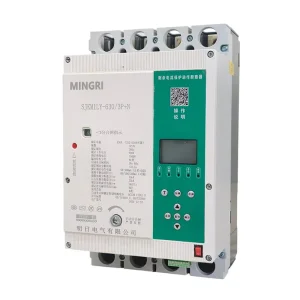
The Engineering Architecture of Industrial CNC Power Transformers
Decoupling high-frequency harmonic distortion and balancing regenerative back-EMF within automated machining environments.
Dynamic Servo Load Attenuation
Modern CNC centers execute rapid spindle acceleration, decelerative vector braking, and multi-axis interpolation. These transient cycles introduce high di/dt switching surges directly into the primary bus. Purpose-built CNC isolation transformers incorporate custom air-gap geometries and high-permeability magnetic cores to absorb cyclic back-EMF without triggering drive DC bus overvoltage faults.
Harmonic Isolation (K-Factor Rated)
Switchmode power supplies, variable frequency drives (VFDs), and PWM servo amplifiers reflect odd harmonics (3rd, 5th, 7th, 11th) back to the feed network. Factory-grade transformers utilize engineered electrostatic copper shields between primary and secondary windings, dissipating capacitive noise currents and delivering a clean reference ground crucial for sub-micron precision encoders.
Phase Symmetrical Voltage Vectoring
Phase imbalance in standard 3-phase feeds degrades motor efficiency, induces mechanical rotor oscillation, and generates heat within spindle windings. Wholesale CNC transformers manufactured to strict phase symmetry tolerances guarantee less than 1% voltage unbalance across phases, thereby directly prolonging spindle bearing operational lifespans and eliminating surface chatter during micro-milling.
Why Tier-1 Global OEMs Source CNC Transformers from China
Analyzing the manufacturing efficiencies, metallurgical innovations, and ecosystem cluster benefits that dominate the industrial power equipment sector.
Direct Access to Premium CRGO Steel
China is home to the world’s most advanced cold-rolled grain-oriented (CRGO) electrical steel rolling mills. Leading Chinese manufacturers leverage ultra-thin (0.23mm to 0.27mm), high-grade magnetic laminations featuring minimal hysteresis losses (B800 levels up to 1.88T). This material supremacy allows Chinese CNC transformers to run significantly cooler under continuous 24/7 machining load factors.
Automated VPI & Vacuum Casting Technology
Industrial transformer clusters in Yueqing and surrounding high-voltage manufacturing corridors employ industrial-scale Vacuum Pressure Impregnation (VPI) autoclaves. By submerging copper/aluminum winding structures in solvent-free Class H epoxy resins under deep vacuum followed by high-pressure curing, the windings achieve zero void formation, moisture imperviousness, and structural anti-vibration resistance.
Vertical Integration & Rapid Customization
From electrolytic copper rod drawing to automated CNC foil winding, core shearing, and terminal stamping, Yueqing's industrial manufacturing matrix consolidates 95% of the component supply chain within a 20-kilometer radius. This vertical compression cuts production lead times from months down to 10-14 business days for custom multi-tap secondary transformers.
Technological Frontiers Reshaping CNC Power Distribution
Next-generation transformers are moving from passive inductive iron cores to smart, monitored, high-efficiency nodes within intelligent digital factories.
Amorphous Metal Cores
Replacing traditional silicon steel with non-crystalline amorphous alloy ribbons slashes core no-load excitation losses by up to 70%. As global energy standards (such as EU Ecodesign and US DOE 2016) tighten, amorphous CNC step-down transformers offer unprecedented lifecycle kilowatt-hour reductions.
Real-Time IoT Telemetry
Modern CNC installations embed multi-point PT100/NTC thermistors and fiber-optic thermal probes directly within transformer winding hot-spots. Connected via RS-485 Modbus RTU or industrial Ethernet to PLC controllers, dynamic thermal tracking permits predictive maintenance before winding insulation breakdown occurs.
Solid-State Hybrid Topologies
Solid-State Transformers (SST) combining high-frequency magnetic links with wide-bandgap silicon carbide (SiC) MOSFET switches are transitioning from laboratory prototypes to specialized high-speed micro-machining centers, enabling sub-millisecond continuous voltage stabilization without mechanical tap changers.
Dry-Type Non-Flammable Resins
Stringent factory safety guidelines are pushing oil-immersed units entirely out of production floors. High-grade self-extinguishing epoxy cast-resin designs ensure zero fire propagation risks, non-toxic emissions in case of external arcing, and complete compliance with cleanroom manufacturing environments.
Macro Industry Solutions: Tailored Power Conditioning by Sector
Examining field-proven electrical solutions across high-demand industrial production environments.
| Sector & Application | Electrical Disturbance Challenges | Recommended Engineering Configuration | Operational ROI Impact |
|---|---|---|---|
| Aerospace 5-Axis Milling Titanium/Inconel blisk & turbine machining |
Heavy regenerative braking transients, rapid 3D multi-axis direction changes, spindle stall currents. | Dual-shielded copper-wound isolation transformer (K-13 rating) with integrated dynamic braking resistors & surge suppression. | Eliminates micro-pitting on machined aerodynamic profiles; prevents CNC tool breakage due to transient voltage dips. |
| Automotive Robotic Stamping Automated press lines & servo-press cells |
Massive instantaneous inductive inrush current, severe common-mode voltage fluctuations, grid sag. | Reinforced magnetic core step-down units (e.g., 480V to 200V/220V) with 300% overload handling for 10 seconds and low internal impedance (Z% < 3%). | Maintains synchronous timing across multi-robot automated handling cells, reducing cycle misfires and scrap rates. |
| Semiconductor & SMT Packaging Wire bonding, photolithography, wafer slicing |
Extreme sensitivity to sub-cycle harmonic fluctuations, zero-voltage crossing errors, static field discharge. | Ultra-low leakage current (<0.1mA) isolation units, triple copper Faraday shielding, grounded neutral-point star configuration. | Secures sub-nanometer positioning repeatability; protects sensitive machine vision and optical inspection sensors. |
| EV Battery Enclosure Milling High-speed gantry routing of large aluminum plates |
High sustained thermal loads, sustained harmonic current generation from high-frequency spindle drives (up to 40,000 RPM). | Class H insulation with forced-air (AF) smart ventilation fan arrays and thermistor-triggered interlock trip loops. | Guarantees continuous 24/7 cutting without thermal tripping, maintaining tight flatness tolerances over 3-meter spans. |
The Global EPC & Distributor Sourcing Evaluation Framework
A rigorous audit checklist for procurement managers, factory directors, and system integrators qualifying overseas transformer manufacturers.
1. International Standard Validation
Validate manufacturer certifications against IEC 60076 (power transformers), IEC 61558-2-4 (isolating transformers), UL 1561/UL 5085, and CE LVD/EMC compliance. Ensure test certificates are issued by independent accredited testing laboratories (such as TUV, KEMA, or authoritative national high-voltage testing bodies) rather than internal self-declarations.
2. Winding Conductor Metallurgy Audit
Disclose conductor material specifications upfront. High-performance CNC applications mandate electrolytic grade oxygen-free copper (purity ≥ 99.95%) with low electrical resistivity to prevent localized hot spots. When aluminum winding is proposed for cost mitigation, demand verification of mechanical cross-sectional calculations compensating for higher resistivity and thermal expansion coefficients.
3. Factory Acceptance Testing (FAT) Protocols
Ensure the supplier provides comprehensive FAT documentation covering: winding resistance measurement, voltage ratio verification and phase displacement checks, short-circuit impedance and load loss testing, separate-source AC withstand voltage, and induced overvoltage withstand. Optional partial discharge (PD) testing should yield less than 10pC at rated voltage.
Frequently Asked Questions: CNC Transformer Engineering & Procurement
Authoritative technical clarifications addressing specific power conditioning challenges faced by machine tool operators and electrical contractors.
Why do standard dry-type distribution transformers fail when powering CNC machinery?
Standard commercial distribution units are engineered for linear sinusoidal electrical loads (lighting, passive resistance heating). Industrial CNC machines incorporate dynamic variable frequency drives (VFDs) and switched servo axes that generate significant harmonic currents (high THDi) and rapid inrush surges. Standard transformers experience elevated eddy current losses, severe thermal saturation in magnetic cores, and insulation degradation under these conditions, whereas CNC-specific transformers are designed with adequate K-factor ratings, electrostatic copper shielding, and low flux density cores.
How do I correctly size the kVA rating for a multi-axis CNC machine?
Proper sizing requires more than summing steady-state power ratings. Calculate the continuous base load (spindle motor kW + total servo axes kW + auxiliary pumps/chillers). Apply a 1.25 to 1.4 safety service factor to account for simultaneous rapid traverse acceleration and spindle peak overload bursts. Formula: Required kVA = [(Spindle Rated kW / Spindle Power Factor) + Σ(Servo Axis kVA × Diversity Factor) + Auxiliary kVA] × 1.25. If the machine operates under repetitive heavy cutting cycles, derate the transformer for ambient temperature if ambient exceeds 40°C.
What is the difference between an Autotransformer and an Isolation Transformer for CNC equipment?
An autotransformer shares a single common winding between primary and secondary circuits, functioning purely as a compact voltage step-up or step-down converter without electrical isolation. While cost-effective and physically smaller, autotransformers allow grid-side voltage transients, surges, and common-mode noise to pass directly into sensitive CNC controllers. An isolation transformer features completely separate primary and secondary windings linked only by magnetic flux, providing true galvanic isolation, ground-loop elimination, and harmonic rejection essential for high-precision machining.
Why is electrostatic Faraday shielding critical in CNC servo applications?
A grounded copper electrostatic shield placed between the primary and secondary windings acts as a low-impedance capacitive sink. High-frequency common-mode noise, switching spikes generated by nearby welding equipment or heavy presses, and line transients are intercepted by the shield and safely shunted directly to ground before they can couple capacitively into the secondary winding powering the CNC controller and encoder bus.
How does altitude impact transformer thermal dissipation and performance?
At operating altitudes above 1,000 meters (3,300 feet), atmospheric air density decreases, reducing the convective cooling efficiency of dry-type transformers and lowering the dielectric breakdown strength of air gaps. For installations at high altitudes (e.g., elevated mining or manufacturing zones), transformers must be derated by approximately 0.4% per 100 meters above 1,000m, or engineered with an expanded cooling fin surface area and upgraded Class H insulation systems.
Can Chinese transformer manufacturers support multi-voltage international export needs?
Yes. Chinese OEM/ODM factories routinely produce custom universal CNC power transformers equipped with multiple primary and secondary voltage taps (e.g., Primary: 380V / 400V / 415V / 440V / 480V; Secondary: 200V / 220V / 380V). This enables global machine tool builders to standardize a single transformer mechanical footprint across equipment destined for North America, Europe, Asia, and Latin American regional electrical grids.
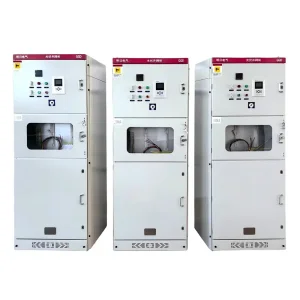
Low-Voltage Controlgear, Breakers & Variable Transformers
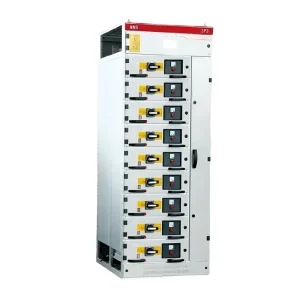
Complete your automated manufacturing infrastructure with factory-direct circuit protection, withdrawable switchgear panels, and high-precision variable auto-transformers.