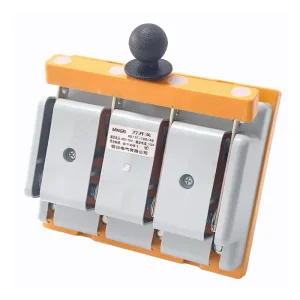
Precision Voltage Conditioning & Electrical Protection Equipment
Engineered to interface seamlessly with industrial autotransformer architectures, low-voltage control cabinets, and medium-voltage switchgear bays.
-
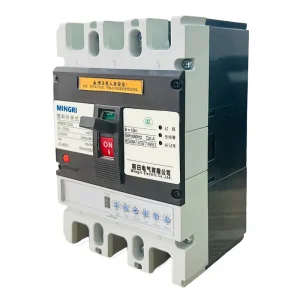 Wholesale SJKM3E Electronic Circuit Breaker (ECB) with Smart Protection Suppliers, FactoryView Specifications
-
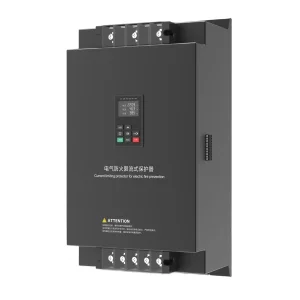 High-Quality 250A Three Phase Electrical Fire Prevention Current Limiting Protector - Reliable Safety SolutionView Specifications
-
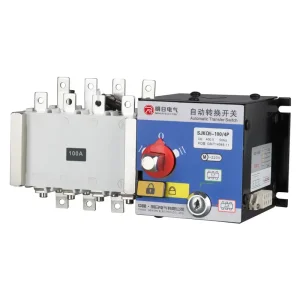 China SJKQ5 ATS Dual Power Automatic Transfer Switch - 20A-3200A Suppliers & FactoryView Specifications
-
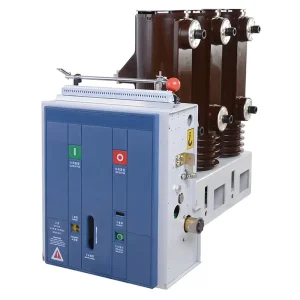 China VS1-12C Indoor High-Voltage Side-Mounted Vacuum Circuit Breaker Suppliers and FactoryView Specifications
-
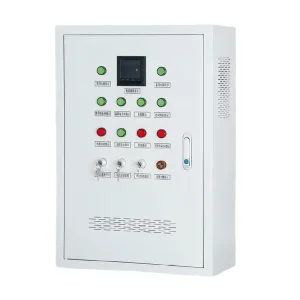 China JXF Industrial Control Box - 500V Three-Phase Power Reliable Solution for Harsh EnvironmentsView Specifications
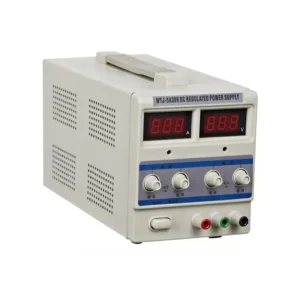
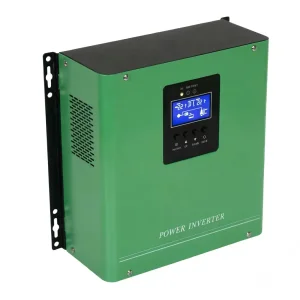
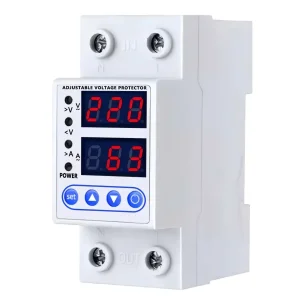
Auto Transformer Electromagnetic Topologies vs Isolation Architecture
A rigorous engineering perspective on electromagnetic coupling, co-rated physical sizing, conductive power transfer, and short-circuit fault dynamics.
In modern industrial and utility power networks, the selection between an autotransformer (auto transformer) and a conventional double-wound galvanic isolation transformer represents a fundamental trade-off between electrical boundary isolation and thermodynamic efficiency. Unlike conventional transformers that transfer 100% of energy through electromagnetic induction across isolated primary and secondary windings, an autotransformer shares a common contiguous conductive winding wound over a unified magnetic core leg. This architectural difference introduces direct conductive transfer alongside magnetic induction, creating profound operational advantages when transforming voltages with transformation ratios close to unity ($V_{high} / V_{low} \le 3.0$).
Co-Rated Physical Core Sizing
The equivalent physical core rating ($S_{core}$) represents only a fraction of total through-put power ($S_{throughput}$): $S_{core} = S_{throughput} \cdot (1 - V_{low} / V_{high})$. For an autotransformer stepping down 480V to 380V, the magnetic core is sized for only 20.8% of the actual load kVA, drastically minimizing active material requirements, total core mass, and magnetic hysteresis losses.
Superior Electrical Efficiency
Because winding volume and core dimensions are reduced, no-load losses ($P_0$, excitation watt losses) and load losses ($P_k$, $I^2R$ copper dissipation) decrease by 30% to 65% compared to two-winding isolation units. Mingri autotransformer systems consistently demonstrate operating efficiencies exceeding 98.8% to 99.4% in balanced industrial load profiles.
Low Internal Leakage Reactance
Reduced physical coil spacing and shared magnetizing circuits yield exceptionally low internal percentage impedance (%Z). This ensures tightly stabilized output regulation across dynamic inductive motor starts, but mandates coordinated upstream protection (such as VS1 vacuum circuit breakers or electronic MCCBs) to handle higher prospective symmetrical fault currents.
| Evaluation Parameter | Autotransformer Topology (Step-Up/Down) | Galvanic Isolation Transformer | Engineering Impact / Sizing Factor |
|---|---|---|---|
| Conductor Mass (Copper/Al) | Substantially reduced (Proportional to $1 - 1/r$) | 100% nominal baseline winding weight | 30%–55% lower freight and structural footprint |
| Galvanic Isolation | No direct galvanic barrier (Shared neutral line) | Complete dielectric and galvanic decoupling | Requires common mode harmonic filtration |
| Typical Full-Load Efficiency | 98.8% – 99.5% at nominal unity factor | 96.5% – 98.2% under identical loading | Significantly reduced annual kilowatt-hour losses |
| Short-Circuit Impedance (%Z) | Low (Typically 1.5% – 3.5%) | Standard to high (Typically 4.5% – 7.0%) | Demands high-interrupting capacity switchgear |
| Neutral Shift Potential | Coupled directly between primary and secondary | Independent derived secondary neutral | Demands tertiary delta ($d$) stabilization |
| Footprint / Volumetric Sizing | Ultra-compact enclosure profile | Large cubicle footprint required | Ideal for containerized BESS & modular RMUs |
China Factory Supply Chain Advantage: Yueqing Industrial Powerhouse
How concentrated supply clusters, raw material sourcing, and end-to-end testing infrastructure establish Mingri Electric's tier-1 cost and lead-time leadership.
High-Permeability CRGO Core Steels
Direct supply contracts with domestic primary mills (Baosteel/Wisco) guarantee high-grade Cold-Rolled Grain-Oriented silicon steel sheets (0.23mm to 0.27mm laminations, 23Q110 and 27Q120 grades). Step-lap mitred core stacking reduces no-load loss, harmonic generation, and audible magnetostrictive hum below 48 dBA.
Aggressive Lead Times (3–4 Weeks)
While Western transformer OEMs face lead times stretching from 26 to 52 weeks due to critical lamination and bushing backlogs, Mingri utilizes Yueqing's fully integrated 15-kilometer component ecosystem. Copper wire drawing, insulation slitting, automated VPI chambers, and sheet metal fabrication are localized under lean production control.
Automated VPI & Cast Resin Lines
Windings undergo Class H (180°C) or Class C (220°C) double-vacuum pressure impregnation (VPI) with solventless epoxy resin, cured under precision thermal cycles. This ensures void-free dielectric bonding, superior thermal dissipation, moisture impermeability, and partial discharge levels strictly under 10 pC.
Vertical Switchgear Integration
Rather than functioning strictly as a coil winding shop, Mingri Electric pairs autotransformer coils with complete switchgear bays, incorporating indoor high-voltage vacuum breakers (VS1-12C), automatic transfer switches (SJKQ5), and smart micro-protection circuit breakers (SJKM3E) into unified, tested factory assemblies.
Localization Support, Grid Compliance & Quality Standards
Executing turnkey engineering deliverables according to IEC 60076, IEEE C57, UL, and regional low-voltage directive requirements.
Deploying heavy electrical power apparatus in international markets requires rigorous compliance with diverging regional codes, environmental envelopes, and protective relaying mandates. Global engineering procurement and construction (EPC) firms require suppliers to prove rigorous verification beyond baseline manufacturing catalogs.
- International Standard Harmonization: Full compliance with IEC 60076-1 (General requirements), IEC 60076-8 (Application guide for power autotransformers), IEC 60076-11 (Dry-type power transformers), and North American ANSI/IEEE C57.12.00 / C57.12.80 codes.
- Harmonic Mitigation via Delta Tertiary Windings: When step-down autotransformers operate in star-star (Yy0) configurations across high-voltage industrial grids, ungrounded third-harmonic currents ($180\text{ Hz}$) can create intolerable telephone interference, distorted phase-to-neutral voltages, and neutral floating. Mingri designs custom delta-connected ($\Delta$) tertiary stabilizing windings to trap third harmonics and supply local auxiliary substation loads.
- Environmental Classification & Tropicalization: Enclosures engineered up to IP55 / NEMA 4X with C3 to C5-M marine-grade anti-corrosion coatings. Insulation materials are rated Class F (155°C) or Class H (180°C) with comprehensive resistance to mold, high relative humidity (up to 95% non-condensing), and extreme desert ambients reaching +55°C.
- Full Factory Acceptance Testing (FAT): Every unit undergoes routine testing in an on-site testing facility equipped with automated precision power analyzers: Winding Resistance Measurements, Voltage Ratio and Vector Group Verification, Short-Circuit Impedance & Load Loss Measurement, No-Load Loss & Excitation Current Checks, Applied Potential & Induced Overvoltage Withstand, and Full BIL (Basic Impulse Level) Lightning Surge Verification.
Enterprise Procurement Criteria: Total Cost of Ownership (TCO) Analysis
How global EPC project leaders evaluate Capital Expenditure against 30-year operational lifecycle energy dissipation.
Capitalized Loss Evaluation (A & B Factors)
Global utilities evaluate bids using the standard TCO equation: $\text{TCO} = \text{Purchase Price} + (A \times P_0) + (B \times P_k)$, where $A$ represents capitalized cost per kW of no-load loss ($3,000–$8,000/kW) and $B$ represents capitalized cost per kW of load loss ($1,200–$3,500/kW). Mingri autotransformers drastically minimize both factors through high flux-density core materials.
Fault Withstand & Thermal Envelope
Because internal impedance is lower in autotransformers, terminal short-circuit currents are significantly higher. Sourcing teams must ensure the supplier provides structural dynamic withstand calculations, reinforced coil clamping plates, and high mechanical tensile strength bracing against electrodynamic radial expansion during network faults.
IoT Diagnostics & Continuous Monitoring
Modern substations mandate real-time condition asset tracking. Mingri autotransformers offer embedded fiber-optic winding hot-spot sensors, online moisture-in-dielectric transducers, and integrated RS485 / Modbus-RTU / IEC 61850 communication interfaces for remote SCADA integration.
Localized Industrial Application Scenarios
Proven execution across electrical transmission, electrified rail, heavy motor soft-starting, and transnational manufacturing plants.
High-Voltage Grid Intertie (400kV / 220kV / 110kV)
Transmission grid interconnections utilize star-connected autotransformers with solidly grounded neutrals. Because transmission voltage ratios are often between 1.5 and 2.0, autotransformers yield massive structural weight savings, enabling transport through complex logistical terrains where two-winding units exceed bridge road ratings.
Railway Electrification (2x25kV AT Traction)
High-speed rail catenary systems employ 2x25kV autotransformer power supply schemes. Autotransformers located at 10-15km track intervals balance catenary-to-rail and feeder-to-rail voltages, dramatically mitigating inductive interference on adjacent signaling and telecom cables while minimizing rail return current drops.
Industrial Motor Auto-Starter (Korndörfer Method)
Starting large induction and synchronous motors creates massive line inrush spikes. Reduced-voltage autotransformer starters (tapped at 65% or 80%) provide smooth transitional torque while limiting starting current from the supply mains to $(V_{tap}/V_{line})^2 \times I_{LRA}$, avoiding disruptive voltage sags in industrial plants.
Export Machinery Voltage Adapters (480V ↔ 380V/400V)
Multinational industrial plants importing automated CNC machining centers, extrusion lines, or stamping presses from North America (480V 60Hz) to Europe/Asia (380V/400V 50Hz) rely on bi-directional dry-type step-up/step-down autotransformers for high-efficiency voltage matching inside small enclosure spaces.
Emerging Industry Trends Shaping Autotransformer Design
The convergence of renewable microgrids, decarbonization mandates, and solid-state power electronics.
Solid-State Hybrid Autotransformers (SSAT)
Combining fractional electromagnetic autotransformer windings with high-frequency Silicon Carbide (SiC) power converters. This hybrid architecture provides sub-cycle dynamic voltage sag correction, reactive power injection, and active harmonic filtering while retaining the ultra-high efficiency of copper-wound systems.
Biodegradable Ester Fluids & Dry Eco-Design
Replacement of traditional mineral oils with synthetic and natural esters featuring fire points above 300°C (K-class fluids). In dry-type autotransformers, non-toxic epoxy systems comply with stringent European Eco-Design Tier 2 (EN 50588-1) carbon footprint and lifecycle recycling standards.
Integration with Megawatt BESS Stations
Battery Energy Storage Systems (BESS) require bi-directional coupling between multi-pulse inverters and medium-voltage collection networks. Low-loss autotransformers optimize containerized thermal envelopes by reducing heat rejection inside battery modular spaces.
Frequently Asked Questions: Auto Transformer Engineering & Procurement
Clear, definitive engineering answers addressing insulation, grounding, protection coordination, and ordering requirements.
Why is an autotransformer not suitable for systems requiring strict galvanic isolation?
Because an autotransformer utilizes an electrically continuous winding shared between primary and secondary circuits, there is no physical dielectric barrier separating the input and output voltage potentials. If a line-to-ground fault occurs on the high-voltage side of an ungrounded or poorly grounded autotransformer system, the low-voltage side conductors will experience a hazardous phase-to-ground potential rise equal to the high-voltage level, potentially compromising downstream insulation unless solidly grounded.
What is the purpose of a delta tertiary winding in three-phase autotransformers?
In three-phase autotransformers connected in wye-wye (Yy), the neutral is typically grounded. A closed delta ($\Delta$) tertiary winding serves three critical electrical functions: (1) It provides a closed circulating path for zero-sequence 3rd harmonic magnetizing currents, suppressing 3rd harmonic voltage distortion in the phase-to-neutral waveforms; (2) It stabilizes the neutral point under unbalanced phase loading conditions; and (3) It provides a convenient source for station auxiliary service loads or reactive compensation reactors.
How does autotransformer internal impedance affect short-circuit protective device sizing?
Autotransformers inherently possess lower leakage reactance (%Z) than equivalent two-winding isolation transformers because energy is partially conducted directly rather than purely coupled across magnetic gaps. This lower impedance leads to significantly higher prospective short-circuit fault currents ($I_{sc} = I_{rated} / \%Z$). Consequently, switchgear engineers must verify that downstream protective devices (such as Mingri SJKM3E circuit breakers or VS1-12 vacuum breakers) possess adequate short-circuit breaking capacity (Icu/Ics ratings).
Can Mingri autotransformers be used bi-directionally for step-up and step-down operations?
Yes. Autotransformers are fundamentally passive, reciprocal electromagnetic devices. A standard Mingri 480V to 400V step-down unit can be back-fed as a 400V to 480V step-up unit. However, our engineering department must evaluate excitation inrush current and off-nominal voltage tap placements (typically $\pm 2 \times 2.5\%$) to verify that core saturation and flux density remain within safe limits during reverse power flow.
What documentation and technical parameters are required to issue an engineering quote?
To obtain an accurate, optimized quotation and technical proposal, buyers should submit: (1) Primary and secondary rated voltages and frequency (50Hz or 60Hz); (2) Total throughput capacity (kVA or MVA); (3) System connection type (e.g., Three-phase 3-wire or 4-wire with neutral); (4) Required vector group and presence of tertiary windings; (5) Installation environment (indoor/outdoor, ambient temperature range, altitude above 1000m); (6) Target impedance (%Z) or maximum allowable short-circuit current; and (7) Applicable regional standards (IEC, IEEE/ANSI, or GB).
Prefabricated Substations, MV Switchgear & Protection Devices
Complete secondary distribution hardware, circuit interruption cubicles, and intelligent fire suppression from our Yueqing factory.
-
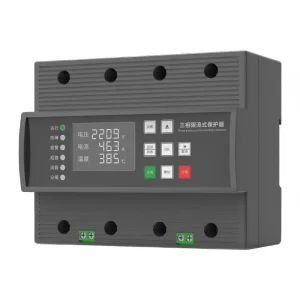 High-Quality China Economic Three-phase Current-limiting Protector 80/125A Safety Monitoring DeviceView Specifications
-
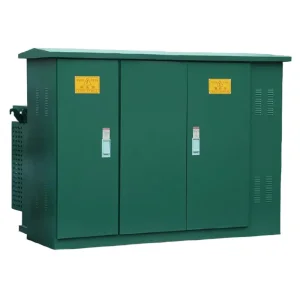 China ZGS11-12 Combined American Prefabricated Substation Efficient Power SolutionView Specifications
-
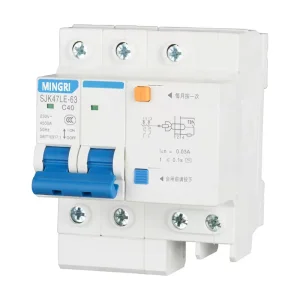 High-Quality SJK47LE-63 Residual Current Circuit Breaker RCCB Companies, CompanyView Specifications
-
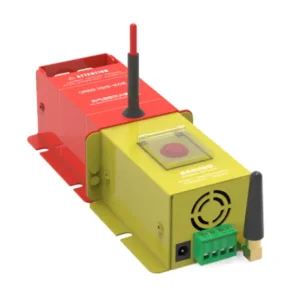 OEM Intelligent wireless automatic gas fire extinguishing device-Hot Aerosol Series Manufacturer, FactoryView Specifications
-
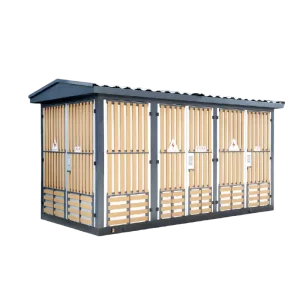 High-Quality YB□-12 Prefabricated Transformer Substation for Power Distribution Supplier, ManufacturersView Specifications
-
China China Suppliers Factory - Intelligent Wireless Automatic Gas Fire Extinguishing Device - Hot Aerosol SeriesView Specifications
-
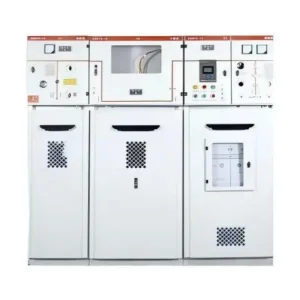 China XGN15-12 Metal-Clad Fixed-Type Ring Main Unit Switchgear in Cubicle Design Supplier, ManufacturerView Specifications