Integrated Surge Clamping & Grid Equipment Showcase
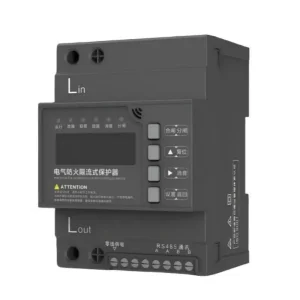
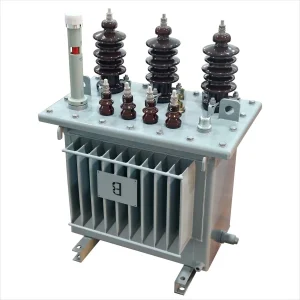
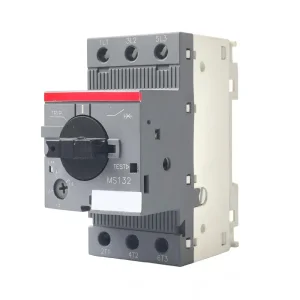
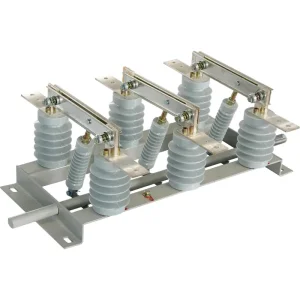
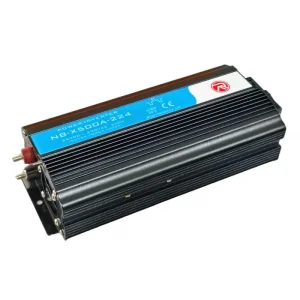
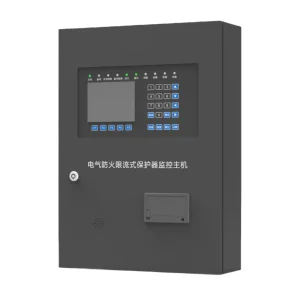
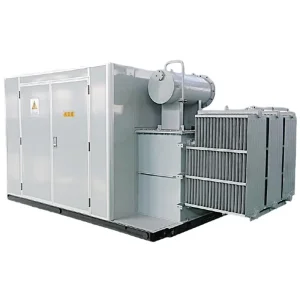
Explore high-voltage isolators, intelligent current limiters, motor protectors, and distribution transformers engineered to complement terminal 3kA secondary surge arresters.
The Role of 3kA Surge Protective Devices in Modern Power Architectures
A rigorous examination of transient overvoltage suppression, energy coordination with upstream Type 1/Type 2 devices, and the vital role of nominal 3kA ($8/20\,\mu\text{s}$) surge current clamping at vulnerable industrial termination points.
Secondary & Point-of-Use Suppression
In low-voltage electrical distribution networks compliant with IEC 60364-4-44 and IEEE C62.41, surge mitigation follows a cascading zoned principle (LPZ 0 down to LPZ 3). While primary service entrance switchboards employ massive 40kA to 100kA Type 1 or Type 2 surge protective devices, residual let-through voltage ($U_{\text{res}}$) continues downstream along distribution feeders.
A 3kA SPD operates predominantly as a precision Class III / Type 3 or compact secondary Type 2 device designed for sub-distribution panels, DIN-rail automation racks, LED streetlight driver heads, and telecom power nodes. Its task is to clamp residual microsecond transients and high-frequency inductive switching spikes that escape primary bulk arresters.
MOV Non-Linear Varistor Dynamics
The core active element within an industrial 3kA SPD is the thermally optimized Metal Oxide Varistor (MOV), often configured in combination with a Gas Discharge Tube (GDT) or transient suppression diode matrix. Under normal operating nominal voltage ($U_c$), the MOV exhibits giga-ohm leakage resistance, drawing negligible microampere idle current.
Upon arrival of an overvoltage transient exceeding the clamping threshold, the MOV transitions to a low-impedance state within less than 25 nanoseconds. For a standard $8/20\,\mu\text{s}$ impulse wave at an $I_n$ of 3kA, our engineered ceramic grain boundaries absorb and bypass high-energy transient spikes to the protective earth (PE) busbar without destructive breakdown.
Thermal Disconnection & Arc Suppression
Continuous degradation from repetitive micro-surges or sustained temporary overvoltages (TOV) presents a primary risk of catastrophic thermal runaway. Wholesale 3kA SPDs from tier-one manufacturers integrate high-temperature low-melting-point solder alloy disconnectors coupled with mechanical spring release arms.
If the MOV exceeds internal safe thermal thresholds (typically $>135^\circ\text{C}$), the thermal trip automatically isolates the degraded MOV element from the AC network, simultaneously toggling an external status window (Green to Red) and energizing remote signaling dry contacts for centralized PLC building management alarms.
Parametric Benchmarking: 3kA SPD vs. Upstream Clamping Classes
Understanding the electrical boundaries, discharge capacities, and specific installation positions ensures optimal insulation coordination across industrial switchboards and terminal nodes.
| Electrical Parameter | Point-of-Use 3kA SPD (Class III / Type 3) | Sub-Panel 20kA SPD (Class II / Type 2) | Main Incomer 50kA SPD (Class I / Type 1) |
|---|---|---|---|
| Standard Reference | IEC 61643-11 / EN 61643-11 / UL 1449 | IEC 61643-11 / EN 61643-11 | IEC 61643-11 / EN 61643-11 |
| Nominal Discharge ($I_n$) | 3kA ($8/20\,\mu\text{s}$) | 20kA ($8/20\,\mu\text{s}$) | 25kA - 50kA ($10/350\,\mu\text{s}$) |
| Max Discharge ($I_{\text{max}}$ / $I_{\text{imp}}$) | 6kA - 10kA ($8/20\,\mu\text{s}$) | 40kA - 65kA ($8/20\,\mu\text{s}$) | 100kA ($10/350\,\mu\text{s}$) |
| Voltage Protection Level ($U_p$) | < 0.8 kV to 1.0 kV (Ultra-tight) | < 1.5 kV to 1.8 kV | < 2.5 kV to 4.0 kV |
| Response Time ($t_A$) | < 25 ns (MOV) / < 5 ns (Diode hybrid) | < 25 ns | < 100 ns (Spark gap / heavy MOV) |
| Primary Target Application | LED drivers, Telecom RRU, PLCs, Inverters | Floor distribution boards, MCCB panels | Main incoming switchgear, MV/LV Substation |
| Form Factor & Mounting | Compact 1P/2P DIN, PCB solderable, inline pot | Modular DIN-rail 1P to 4P pluggable | Heavy armored modular panel-mount |
Yueqing Factory Efficiency & Production Advantages for Wholesale SPDs
How the Wenzhou-Yueqing electrical mega-cluster combines vertically integrated component supply, high-speed automated fabrication, and rigorous quality assurance to deliver superior economics.
Zinc Oxide (ZnO) Pellet Sintering
Yueqing manufacturing facilities maintain proprietary in-house electronic ceramic processing lines. Fine-grain Zinc Oxide powder formulation, bismuth/cobalt oxide doping, and precision high-temperature sintering yield exceptionally homogeneous $V-I$ characteristics, eliminating localized hot spots during 3kA wave impulse events.
Automated SMT & Robotic Assembly
Surface-mount technology (SMT) lines populate high-density surge suppression boards, integrating optical fault indicators, low-tolerance thermal disconnection links, and terminal solder joints at speed. Robotic optical inspection (AOI) prevents cold solder joints and verifies micro-clearances required under IEC clearance creepage norms.
100% Impulse & Leakage Testing
Every single manufactured 3kA SPD undergoes multi-point automated bench verification: Varistor Voltage ($U_{1\text{mA}}$) screening, leakage current ($I_{\text{pe}} < 20\,\mu\text{A}$) measurement at continuous working voltage, and high-pot dielectric withstand verification. Defective units are rejected automatically before packaging.
Wholesale OEM / ODM Flexibility
From private labeling, custom laser-etched single-line wiring schematics, and specialized terminal blocks (screw vs. cage clamp) to custom voltage thresholds ($U_c = 150\text{V}, 275\text{V}, 320\text{V}, 385\text{V}, 440\text{V}$), China's supply ecosystem delivers high-volume scalability with minimum lead time.
Localized Engineering Applications for 3kA Surge Suppressors
From municipal LED road lighting networks to remote 5G cellular towers and distributed solar generation, 3kA SPDs deliver customized terminal circuit integrity.
Municipal LED Streetlight Luminaires
Long outdoor cable runs in municipal lighting systems act as massive inductive antennae during local lightning activity. Compact inline 3kA (or $10\text{kV}/3\text{kA}$ combination wave) potted SPDs installed directly inside the luminaire pole or driver enclosure protect sensitive constant-current LED power supplies against catastrophic voltage spikes, reducing costly cherry-picker maintenance calls.
5G Telecom Base Stations & RRU Nodes
Telecom operators deploy Remote Radio Units (RRUs) mounted high on cellular towers exposed to severe electromagnetic induction. Low-voltage -48V DC power feeds and auxiliary AC supplies rely on DIN-rail 3kA SPDs equipped with hybrid MOV-GDT technology to suppress fast transients while maintaining zero DC follow-on current and ultra-low insertion loss.
Photovoltaic Inverters & Smart Metering
Within distributed rooftop solar PV systems, the AC output stage of string inverters requires secondary surge clamp suppression. A 3kA SPD on the $230\text{V}/400\text{V}$ AC interface protects sensitive inverter control boards, communication microcontrollers, and smart metering current transformers from switching surges originating in the grid.
Emerging Trends in Low-Voltage Surge Protective Technology
The transition from passive analog surge arresters to intelligent, communicative, and environmentally sustainable transient protection solutions.
IoT Degradation Monitoring
Modern smart SPDs embed micro-sensors tracking cumulative surge strike counts, leakage current trends, and MOV thermal curves, broadcasting maintenance alerts via RS-485 Modbus or wireless LoRaWAN before complete failure occurs.
Halogen-Free Polymer Housings
Environmental standards (EU RoHS, REACH) drive adoption of phosphorus-free, halogen-free flame-retardant polyamide (PA66, UL94 V-0), preventing toxic emission during catastrophic arc events.
Zero Follow-Current Spark Gaps
Micro-encapsulated triggered spark gaps and multi-chamber arc-splitting grids extinguish AC power follow-current ($I_f$) instantaneously, eliminating tripping of upstream branch circuit breakers.
High-Density Micro Form Factors
Advancements in ceramic doping allow higher energy absorption per unit volume ($J/\text{cm}^3$), halving the DIN-rail width from standard 18mm modules down to compact 9mm or 12mm formats for crowded control enclosures.
Global Enterprise Sourcing Criteria for 3kA SPD Wholesale Buyers
Essential checklist for EPC contractors, panel builders, and electrical wholesalers evaluating prospective manufacturing partners.
1. Regulatory & Laboratory Test Reports
Require formal third-party type-test reports from accredited laboratories (TUV Rheinland, DEKRA, Intertek, or KEMA) according to IEC 61643-11 or UL 1449 5th Edition. Ensure testing verifies both Nominal Discharge Current ($I_n$) and Temporary Overvoltage (TOV) withstand modes.
2. Clamping Consistency ($U_p$ at $I_n$)
Review the manufacturer's batch-to-batch coefficient of variation. Inferior MOV manufacturing creates uneven current distribution in parallel chips, leading to premature single-point degradation. Insist on automated laser batch tracing for all ceramic discs.
3. Backup Overcurrent Protection Coordination
Validate the required backup fuse or miniature circuit breaker (MCB) coordination curve. Sourcing documentation must explicitly specify maximum backup overcurrent device ratings (e.g., $16\text{A}$ to $32\text{A}$ gG/gL fuse) to prevent SPD enclosure burst during high fault conditions ($I_{\text{sccr}}$ up to $25\text{kA}$).
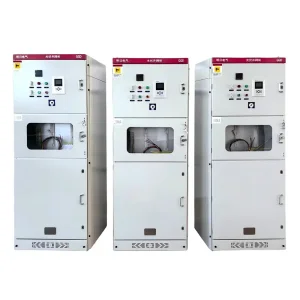
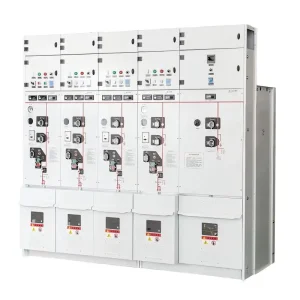
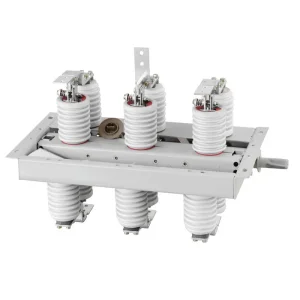
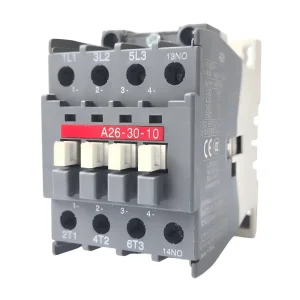
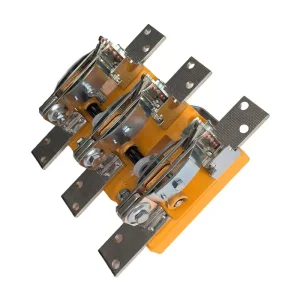
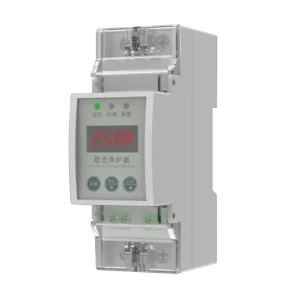
Modular Enclosures, Switchgear & Substation Systems
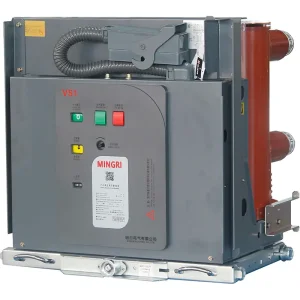
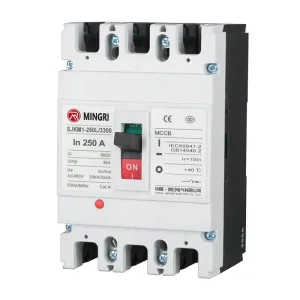
Complete your electrical installation with gas-insulated switchgear, low-voltage MCC distribution cabinets, rotary disconnectors, and AC contactors.
Engineering FAQ: Technical & Sourcing Inquiries
Authoritative technical answers to common questions posed by electrical project managers, utility engineers, and procurement specialists.
What does a 3kA rating specifically designate on a Surge Protective Device?
The 3kA rating specifies the Nominal Discharge Current ($I_n$) using a standard $8/20\,\mu\text{s}$ current waveform. It proves that the SPD can safely withstand and conduct at least 15 to 20 repetitive 3,000-ampere impulse surges without structural degradation or shifting its residual protection level ($U_p$). It indicates specialized point-of-use or terminal protection, distinct from massive 40kA+ main service arresters.
Can a 3kA SPD be installed alone without upstream surge arresters?
No. Standard electrical safety codes (IEC 62305 and IEEE Emerald Book) mandate hierarchical cascade protection. A 3kA SPD is designed to handle residual overvoltages. If a direct lightning strike or massive utility switching surge enters the facility, an unassisted 3kA SPD would face energy exceeding its maximum joule rating, triggering thermal disconnection. It must be paired with upstream Type 1 or Type 2 arresters.
How does maximum continuous operating voltage ($U_c$) affect 3kA SPD selection?
Choosing the correct $U_c$ is essential to prevent premature failure. For standard single-phase $230\text{V}$ AC networks, selecting an SPD rated at $U_c = 275\text{V}$ or $320\text{V}$ provides sufficient safety headroom against everyday grid voltage fluctuations. For regions with unstable grids or 3-phase IT ungrounded distribution systems, $U_c$ ratings of $385\text{V}$ or $440\text{V}$ are strongly advised.
What is the typical lifespan and degradation mechanism of a 3kA MOV?
Under pristine operating conditions within nominal ratings, an industrial MOV operates for over 10 to 15 years. Lifespan decreases based on the cumulative count and severity of lightning and inductive transients absorbed. Repeated sub-threshold surges gradually erode ceramic grain boundaries, increasing resistive leakage current and device operating temperature until the thermal disconnector trips.
What is the lead time and MOQ for custom wholesale OEM orders?
Standard white-label and customized branded production runs in Yueqing typically have a minimum order quantity (MOQ) of 500 to 1,000 units, with custom packaging and laser branding available. Turnaround production cycles range between 15 and 25 working days, supported by comprehensive factory pre-shipment inspection test documentation.
What is the difference between combination wave ($1.2/50\,\mu\text{s}$ - $8/20\,\mu\text{s}$) and 3kA impulse testing?
Under IEC 61643-11 Class III testing, a hybrid generator outputs an open-circuit voltage waveform of $1.2/50\,\mu\text{s}$ and a short-circuit current waveform of $8/20\,\mu\text{s}$. A device tested to $U_{oc} = 6\text{kV}$ with a short-circuit current of 3kA provides verified impedance coordination for terminal and socket-level electronic equipment protection.