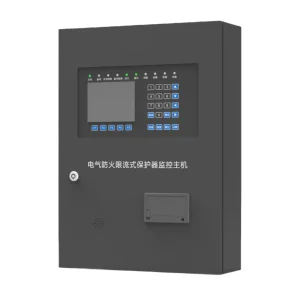
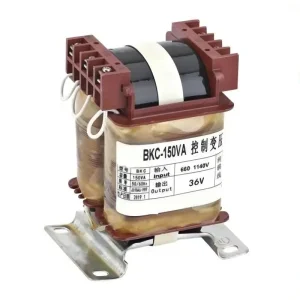
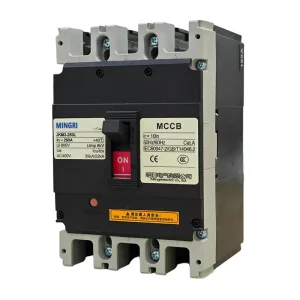
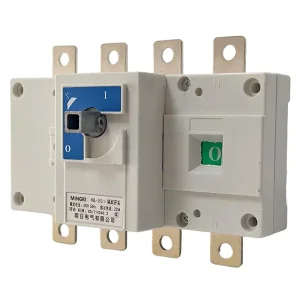
Precision Distribution Equipment & Control Switchgear
Direct factory production lines handling high-reliability 12kV MV switchgear components, secondary automatic transfer switches, precision control transformers, and complete low/medium voltage turnkey packages.
12kV Ring Main Unit (RMU) Architecture & Core Topology
An authoritative technical analysis of medium-voltage secondary switchgear modularity, arc containment engineering, and performance parameters designed to safeguard urban, industrial, and utility networks.
Modular Configuration (C, V, F Units)
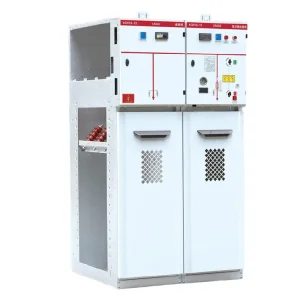
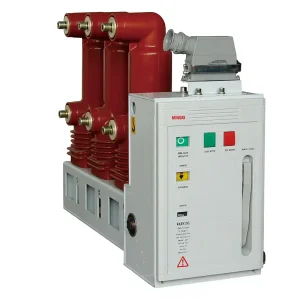
A 12kV Ring Main Unit comprises standardized modular functional units configured in extendable or non-extendable hermetic tanks. The primary building blocks include the "C" Module (Load Break Switch for incoming/outgoing ring feeders), "V" Module (Vacuum Circuit Breaker with integrated micro-processor protection relays for transformer or line protection), and "F" Module (Switch-Fuse combination offering short-circuit clearance down to milliseconds). Additional topologies provide direct cable incoming (D), metering panels (M), and busbar sectionalizing (CB/SL).
IAC AFLR Internal Arc Safety
Operator safety is paramount in high-density secondary substations. Factory-built 12kV RMU switchgear adheres stringently to IEC 62271-200 Internal Arc Classification (IAC AFLR up to 20kA 1s / 25kA 1s). Integrated rear or downward gas venting channels, gas deflectors, and robotic precision-welded 3.0mm AISI 304 stainless steel tanks direct catastrophic overpressures away from front operating personnel, lateral maintenance technicians, and rear service corridors.
Hermetic Ingress Resistance (IP67)
Utilizing laser seam welding and precision O-ring compression interfaces, the high-voltage gas chamber achieves an IP67 ingress protection rating, safeguarding live busbars, disconnectors, and vacuum interrupters from external salt-spray, ambient industrial dust, heavy moisture, and periodic flood submersion. The low-voltage mechanism and automation cabinet feature IP4X protection, ensuring impervious operating reliability across 30+ year design life-cycles.
Standard 12kV ratings require a Power Frequency Withstand Voltage of 28kV/42kV (1 min) and a Lightning Impulse Withstand Voltage (BIL) of 75kV / 85kV across isolating distances. Chinese OEM factories achieve this dielectric buffer through optimized field-grading stress cones, high-purity electrical epoxy bushings, and advanced SF6 or Dry Air filling at absolute pressures of 1.2 to 1.4 bar (20°C).
12kV RMU Insulation & Arc-Quenching Architecture Comparison
Systematic technical trade-offs evaluated by EPC electrical specification teams.
| Insulation Technology | Dielectric Medium | Global Warming Potential (GWP) | Tank Footprint / Dimensions | Environmental Susceptibility | Typical Applications |
|---|---|---|---|---|---|
| SF6 GIS (Gas Insulated) | Sulfur Hexafluoride Gas (SF6) | 23,500 High | Ultra-Compact (Width ~350mm/unit) | Zero (Hermetically Sealed IP67) | Commercial basements, compact substations, utility loops |
| Solid Insulated (SIS) | Epoxy Resin Coating + Vacuum | 0 SF6-Free | Compact (~375-400mm/unit) | Immune to gas leaks; sensitive to partial discharge | Subway networks, mining corridors, flood-prone regions |
| Eco-Gas / Clean Air GIS | Synthetic Air / N2 + O2 / Fluoronitriles | < 1 Carbon Neutral | Slightly Enlarged (~420-450mm/unit) | Zero (Hermetically Sealed IP67) | EU green grids, ESG utility mandates, corporate data centers |
| Air Insulated (AIS - SM6 Type) | Atmospheric Air + Compartment Shields | 0 Natural | Standard Modular (~500mm/unit) | Requires climate-controlled indoor electrical rooms | Industrial switch rooms, secondary factories, low-budget grids |
Why Global EPCs Wholesale 12kV RMUs from China Manufacturing Hubs
China's electrical capital in Yueqing, Zhejiang delivers unmatched supply chain concentration, cost efficiency, and automated manufacturing maturity that outpaces traditional European switchgear producers.
Hyper-Localized Supply Ecosystem
Within a 15-kilometer radius in the Yueqing industrial zone, RMU factories source high-conductivity T2 electrolytic copper busbars, precision vacuum interrupter bottles, solid epoxy resin bushings, spring operating mechanisms, and micro-switch trip assemblies. This unprecedented cluster density eliminates inter-provincial logistical delays and allows raw material pricing to adjust seamlessly with benchmark commodities.
Automated Robotic Precision Welding
Manual welding introduces thermal stress and micro-fissures responsible for long-term gas leakage. Leading Chinese wholesale switchgear factories deploy 6-axis robotic laser welding stations that assemble 3mm AISI 304/316L stainless steel gas chambers with absolute thermal consistency. Every welded gas box undergoes a rigorous vacuum chamber evacuation followed by quantitative Helium Mass Spectrometry leak testing.
Agile OEM/ODM Single-Line Customization
Unlike legacy multinational corporations whose rigid automated production lines impose months of lead time for configuration tweaks, Chinese factory floors are optimized for fast engineering adaptability. Whether an EPC requires specific Schneider/ABB footprint replication (SafeRing / RM6 / SM6 interchangeable layouts), customized relay protection schemes, or regional cable termination adapters (Euromold / Elastimold / Cooper interfaces), units are customized and assembled in days.
Emerging Industry Megatrends: The Next Decade of RMUs
Regulatory pressures, renewable grid interconnectivity, and cloud predictive maintenance are radically transforming wholesale switchgear requirements.
1. The F-Gas Ban & SF6-Free Revolution
With the European Union F-gas Regulation (EU) 2024/573 mandating a phase-out of SF6 in new medium-voltage electrical installations up to 24kV by 2026, Chinese factories are pioneering clean-air, synthetic air, and C4-FN fluoronitrile gas mixtures. Modern wholesale eco-gas RMUs maintain identical external dimensions while reducing the Global Warming Potential (GWP) to under 1, ensuring compliance with global carbon taxation and green taxonomy standards.
2. Edge-Intelligent FTU / DTU Integration
Traditional passive RMUs are obsolete. Today's smart RMUs integrate factory-wired Feeder Terminal Units (FTUs) and Distribution Terminal Units (DTUs) with dual-redundant power supplies. Supporting native IEC 60870-5-104, DNP3.0, and IEC 61850 GOOSE messaging, these smart units execute millisecond Fault Location, Isolation, and Service Restoration (FLISR), restoring non-faulted network segments within 500 milliseconds without central dispatch intervention.
3. IIoT Online Condition Monitoring
Unplanned downtime carries steep financial penalties. Next-generation wholesale switchgear features non-invasive SAW (Surface Acoustic Wave) wireless temperature sensors mounted directly to primary busbar joints and cable spouts. Integrated transient earth voltage (TEV) and ultra-high frequency (UHF) partial discharge sensors transmit live thermal and insulation health telemetry to edge gateways, facilitating true predictive maintenance.
Localized Application Scenarios & Engineering Challenges
From dense urban infrastructure to punishing desert solar installations, discover how specialized 12kV RMU configurations overcome severe environmental stressors.
Urban Vaults & High-Rises
Constrained basement spaces require minimum unit footprints (< 0.5 m² per feeder), low acoustic noise during breaker switching, and absolute zero gas emissions in unventilated chambers.
Utility Solar & Wind Plants
Subject to wide temperature fluctuations (-30°C to +55°C), high solar irradiance, and high-frequency switching overvoltages from inverters. Equipped with RC snubber circuits and UV-resistant outdoor kiosks.
Coastal, Ports & Islands
Extreme salt-mist corrosion, humidity surpassing 95%, and condensation threats. Solved using 316L marine-grade stainless tanks, C5-M anti-corrosion powder coating, and internal dehumidifying heaters.
Heavy Industrial & Mining
Vibration-rich processing plants containing airborne sulfur, conductive dust, and cyclic shock loads. Reinforced heavy-duty mechanical linkages and hermetic encapsulation maintain uninterrupted uptime.
Macro Industry Engineering Solutions for Power Utilities
Comprehensive distribution schemes that integrate 12kV RMU technology with secondary transformation, compact prefabricated substations, and network automation schemes.
Automated Open-Loop Redundancy (N-1)
In modern urban secondary grids, 12kV RMUs are configured into open-ring network circuits. Under normal operation, a designated Normally Open Point (NOP) segregates feeders from two independent primary primary substations. Upon a cable puncture or phase-to-ground fault, automated motorized actuators and microprocessor directional overcurrent relays clear the fault in <60ms, isolate the defective section, and re-close the NOP switch, restoring power seamlessly.
Prefabricated Kiosk Substation Integration
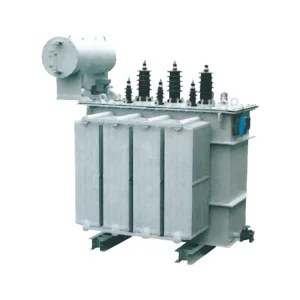
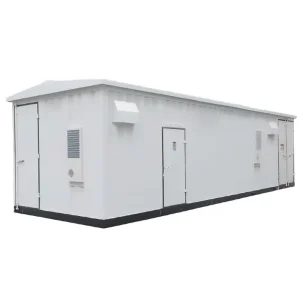
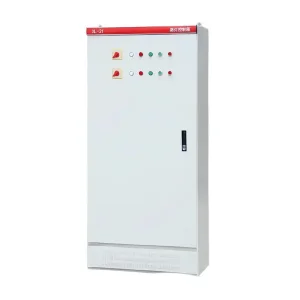
Wholesale buyers frequently specify complete prefabricated package substations (European Kiosk YB-12 or American Box-Type ZGS11-12). Our factories mount the 12kV GIS/AIS RMU in the high-voltage compartment, direct-coupled via flexible copper busbars to an hermetically sealed oil-immersed or cast-resin dry-type transformer (up to 2500kVA), linked to an integrated low-voltage distribution cabinet (XL-21 or GGD) with active power factor correction.
Solar PV String Collector & Step-Up Packages
In utility-scale photovoltaic generation fields, 12kV or 33kV RMU switchgear serves as the string collector node. We integrate sensitive zero-sequence protection relays, surge arresters (Class II metal-oxide gapless varistors), and low-power current/voltage sensors (LPITs) to safeguard inverters from severe harmonic distortion, resonance phenomena, and lighting discharge events across vast solar field terrains.
Global Sourcing, Factory Acceptance (FAT) & Compliance Protocols
A transparent guide to navigating international switchgear procurement, type test verification, third-party laboratory accreditations, and seaworthy shipping.
Type-Test Verification (ASTA / KEMA / CNAS)
Reliable Chinese switchgear manufacturers hold third-party type test reports from accredited laboratories such as KEMA (CESI), ASTA, or national high-voltage testing centers (XIHARI). Key mandatory certificates verify: Short-time withstand current (20kA/25kA for 3s), Temperature-rise limits at rated 630A/1250A currents, Mechanical endurance Class M2 (10,000 operations for vacuum circuit breakers), and Electrical endurance Class E2.
Routine Factory Acceptance Testing (FAT)
Every RMU rolling off the Yueqing assembly floor undergoes stringent routine tests before dispatch: (1) Main circuit power frequency dielectric withstand test (42kV dry for 1 min), (2) Auxiliary and control circuit insulation checks (2kV 1 min), (3) Micro-ohm contact resistance measurement (< 65μΩ per phase), (4) Mechanical operation and anti-misoperation interlock verification (five-prevention interlocking logic), and (5) Helium mass-spectrometry vacuum leak sealing test.
Seaworthy Tropicalized Packaging
Maritime container shipment subjects electrical equipment to high salinity, relative humidity spikes, and violent physical swell shock. Switchgear is vacuum-sealed inside multi-layer aluminum-foil vapor barrier bags alongside desiccant gel packs, shielded by impact-absorbing honeycomb cushioning, and crated in IPPC ISPM-15 compliant fumigated solid wooden crates fitted with 3D tilt and impact indicator sensors.
Frequently Asked Questions: Wholesale 12kV RMU Sourcing
Authoritative technical answers to common questions posed by global procurement managers, utility project engineers, and electrical EPCs.
Wholesale Circuit Breakers, Switchgear Cabinets & Transformers
Complete secondary power distribution portfolio manufactured to tight dimensional tolerances, ready for export integration into global electrical substations.