Factory-Direct Protection & Voltage Regulation Portfolio
Precision-engineered voltage regulators, high-voltage load switches, miniature and air circuit breakers, and specialized power transformers manufactured under ISO 9001/14001 compliance.
-
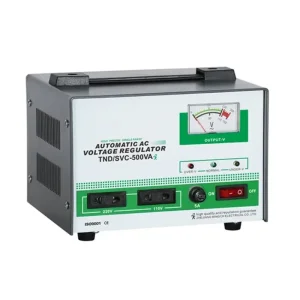 China TND/SVC Single Phase Series Fully Automatic AC Voltage Regulator Manufacturer, CompanyView Product Details
-
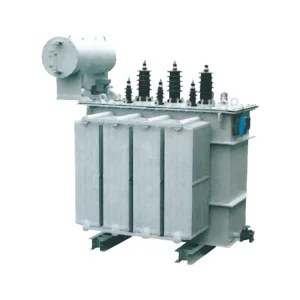 China S11 Type 35kV/6-10kV Series Power Transformer Factories, CompanyView Product Details
-
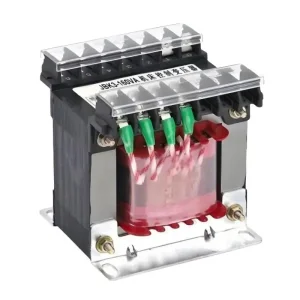 OEM High-Efficiency JBK3 Series Machine Tool Control Transformers - China Suppliers & Factory with Pure Copper Coils Manufacturers, CompaniesView Product Details
-
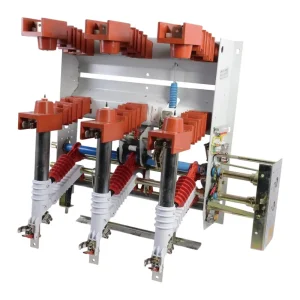 ODM High Voltage Load Breaker Switch FK(R)N12-24D - 24kV Solutions from China Suppliers and Factory Suppliers, FactoryView Product Details
-
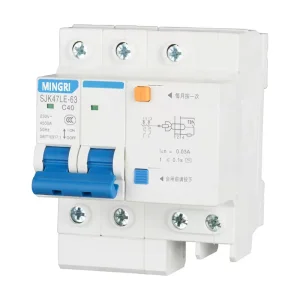 OEM SJK47LE-63 RCCB: Reliable Earth Leakage Protection from China Suppliers and Factory for 230V/400V AC Systems Supplier, FactoriesView Product Details
-
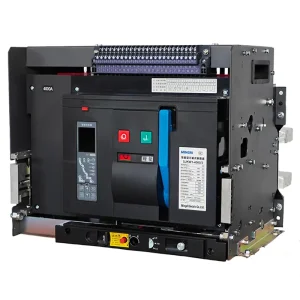 Wholesale W1 ACB Intelligent Universal Circuit Breaker from China Suppliers and Factory for Reliable Power Protection Factories, CompaniesView Product Details
-
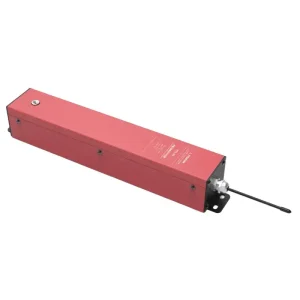 ODM Intelligent wireless automatic gas fire extinguishing device-Perfluorohexanone Series Factory, CompaniesView Product Details
-
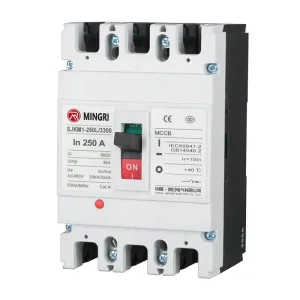 OEM SJKM1 Moulded Case Circuit Breaker (MCCB) for Power Systems Supplier, ManufacturerView Product Details
The Strategic Imperative of Under-Voltage Protection in Modern Power Grids
Mitigating sags, brownouts, and sustained under-voltage anomalies across global electrification networks through precision-calibrated trip curves and intelligent micro-processing architectures.
In the contemporary electrical engineering landscape, under-voltage protection (UVP) has migrated from a passive downstream safety feature to a fundamental grid-resilience technology. Electrical systems operate within standardized nominal tolerances—typically ±10% under IEC 60038 and ANSI C84.1 frameworks. When system voltages degrade below 85% to 70% of nominal ratings, the resulting electrodynamic stress induces catastrophic consequences across inductive machinery, digital switching power supplies, and critical infrastructure.
Unlike over-voltage spikes, which deliver instantaneous dielectric punch-through, chronic or acute under-voltage events systematically starve electric induction motors of counter-electromotive force (CEMF). Under fixed mechanical load conditions, an induction motor forced to operate at degraded terminal voltage draws an inverse surge of line current ($I \propto 1/V$). This elevates copper $I^2R$ thermal dissipation exponentially, triggering thermal insulation degradation according to the Arrhenius rule, where every 10°C temperature elevation halves the winding insulation lifespan. OEM Under-Voltage Protectors engineered by world-class manufacturing centers provide the fail-safe boundary required to isolate motors, sensitive digital controls, and power conditioning units before irreversible thermal breakdown occurs.
Furthermore, the exponential penetration of distributed energy resources (DERs)—such as grid-tied solar photovoltaic farms, wind energy conversion systems, and decentralized battery energy storage systems (BESS)—has introduced bidirectional power flows and high-frequency impedance fluctuations. Traditional unidirectional utility feeds are now obsolete. Global original equipment manufacturers (OEMs) and original design manufacturers (ODMs) must deploy robust, microprocessor-driven under-voltage trip modules, intelligent automatic transfer switches (ATS), and low-voltage withdrawable switchgear equipped with synchronous under-voltage release (UVR) mechanics capable of distinguishing between transient fault clearances and systemic grid instability.
Tripping Mechanics: Electromagnetic Relays vs. Microprocessor DSP Controllers
Evaluating electromechanical undervoltage release (UVR) coils against advanced Digital Signal Processing (DSP) voltage monitoring architectures for high-reliability electrical distribution.
Electromechanical UVR Coils
Standard UVR solenoids utilize magnetic balance springs. When terminal voltage drops below 35%–70% of $U_e$, spring tension overcomes magnetic holding force, actuating the breaker trip bar. While simple and failsafe, they lack precision hysteresis calibration and can nuisance-trip during sub-cycle motor starts without external electronic delay units.
Microprocessor True-RMS Relays
Operating at 128 samples per cycle, high-end OEM digital relays compute True-RMS voltage, filtering out harmonics (THD up to the 31st order). They allow programmable pickup limits (typically 70% to 95% $U_n$), configurable definite-time delays (0.1s to 30s), and automatic reset hysteresis bands, preventing rapid contact cycling.
Self-Healing Solid-State Disconnects
Designed for municipal infrastructure and light commercial panels, modular DIN-rail auto-reclosing protectors (O/UVP) integrate bidirectional thyristors or magnetic latching relays. Upon detecting stable nominal voltage for a preset recovery duration (e.g., 30s–180s), they execute automatic reconnects without operator intervention.
| Performance Parameter | Electromechanical UVR Coils | DSP True-RMS Monitoring Relays | Intelligent Auto-Reclosing (OUVP) |
|---|---|---|---|
| Operating Standard | IEC 60947-2 Annex B / GB/T 14048.2 | IEC 60255-127 / IEEE C37.90 | IEC 60947-1 / GB/T 21714 |
| Drop-out Voltage Threshold | Fixed: 35% – 70% of $U_e$ | Digitally Adjustable: 60% – 95% of $U_e$ | Field-Programmable: 140V – 210V (230V sys) |
| Pick-up / Reset Threshold | Fixed: ≥ 85% of $U_e$ | Adjustable Hysteresis (1% to 10% span) | Automatic Nominal Hysteresis (+15V to +20V) |
| Trip Time Delay Range | Instantaneous (<40ms) or RC delay ≤3s | Definite / Inverse Time: 0.05s to 300.0s | Adjustable: 0.1s to 10.0s Tripping Delay |
| Communication Capability | Auxiliary Contact Dry Signals Only | RS-485 Modbus RTU / Profibus / IEC 61850 | Optional Wireless (ZigBee / LoRa / WiFi / 4G) |
| Target Assembly Interface | Air Circuit Breakers (ACB) & MCCBs | MV Switchgear (KYN28) & LV Substation Panels | DIN-Rail Distribution Boxes & Machine Enclosures |
Technological Disruption in Low and Medium Voltage Protection
How artificial intelligence, IoT edge telemetry, and Wide Bandgap (WBG) semiconductors are redefining the next generation of under-voltage protection hardware.
Edge-AI Disturbance Recognition
Modern smart relays feature embedded micro-neural nets trained on thousands of voltage distortion waveforms. Instead of abruptly tripping during transient voltage sags caused by nearby motor inrush or high-voltage capacitor switching, the protector analyzes waveform shape ($\Delta V/\Delta t$) to avoid false trips while maintaining sub-millisecond reaction for legitimate grid dropouts.
IoT Cloud Telemetry & Remote Audits
B2B buyers and switchgear integrators increasingly specify protectors with integrated Modbus-TCP, MQTT, and wireless telemetry. Real-time busbar voltages, event logs with millisecond timestamps, contact wear degradation, and under-voltage event histories are streamed to centralized supervisory control (SCADA) platforms or industrial cloud dashboards.
Zero-Arc Solid-State Isolation
Leveraging Silicon Carbide (SiC) and Gallium Nitride (GaN) solid-state switches, the industry is moving towards hybrid breakers where the initial electrical disconnection during severe under-voltage brownouts occurs through semiconductors in under 2 microseconds, virtually eliminating contact arcing and tripling service life in high-vibration applications.
Application Scenarios Across Global Industrial Sectors
Under-voltage protectors operate under distinct mechanical, thermal, and regulatory parameters across heavy industries. Precision engineering ensures application-specific compliance.
Industrial Machine Tool Controls
Integrated with control transformers like the JBK3 Pure Copper Series, under-voltage trip modules protect CNC servomotors and precision PLCs. A line sag to 80% causes DC power supply dropouts, leading to robotic axis drift, cutter crashes, and expensive tool breakage. Protective coils ensure coordinated controlled shutdown.
Mining & Hazardous Flameproof Sites
In harsh underground coal and mineral shafts using KBSG9 Flameproof Dry Type Transformers, excessive cable lengths create steep voltage drops during heavy conveyor starting. UVPs with adjustable time discrimination isolate stalled machinery to avoid ignition of explosive coal dust or methane atmospheres.
Renewable Inverter & Step-Up Substations
In solar fields tied via YB Prefabricated Compact Substations, grid-compliance codes (like IEEE 1547 and VDE-AR-N 4110) mandate Low-Voltage Ride-Through (LVRT) capabilities. UVPs execute dynamic staging, shedding non-critical circuits while keeping primary inverters synchronizing with grid recovery vectors.
Hyperscale Data Centers & UPS Systems
Static Transfer Switches (STS) and Air Circuit Breakers (such as W1 ACB) rely on ultra-fast under-voltage sensing modules to initiate millisecond switching between utility feeds and on-site diesel generator standby arrays, ensuring uninterruptible operations for cloud server banks.
Commercial Refrigeration & Cold Storage
Scroll and reciprocating chillers lock their rotors during severe brownouts. Continuous sub-nominal voltage trips thermal overloads only after minutes of dangerous overheating. Automatic recovery DIN-rail UVPs trip instantly and lock out restart until system pressure equalizes, protecting multimillion-dollar agricultural and pharmaceutical stocks.
Macro-Engineering Solutions: Cascading Protection & Switchgear Integration
Achieving selective coordination, arc-fault mitigation, and transient ride-through across multi-tier medium-to-low voltage industrial distribution systems.
A single under-voltage protector cannot operate as an isolated component. In complex medium-voltage (MV) and low-voltage (LV) electrical distribution architectures, systematic protection design requires an integrated hierarchy. From utility distribution incoming feeders (35 kV / 10 kV) through step-down transformers down to 400V motor control centers (MCC), each layer must maintain selective discrimination.
Hierarchical Coordination Scheme
Tier 1: Medium-Voltage Substation Interconnection. Primary distribution feeds powered via S11 Series 35kV/10kV Transformers and controlled by VSY1-12GD Vacuum Circuit Breakers (VCB) or FK(R)N12-24D Load Break Switches utilize digital protective relays configured for ANSI 27 (Under-Voltage) and ANSI 27P (Phase-Specific Under-Voltage). Tripping curves are set with a high-voltage drop tolerance ($U < 0.65 U_n$, $t = 1.2\text{s}$) to allow downstream distribution clearing without blacking out the main primary switchboard.
Tier 2: Low-Voltage Main Intake Switchboards. At the secondary busbar within MNS Low Voltage Withdrawable Switchgear panels, incoming W1 Intelligent Universal Air Circuit Breakers (ACB) feature micro-controller units with programmable UVR releases. In the event of grid instability or primary side line drop, the ACB monitors the busbar. If degraded voltage persists beyond 500ms, the main breaker trips, decoupling the busbar and signaling the emergency diesel generator or microgrid storage system to ignite.
Tier 3: Sub-Distribution & Motor Branches. In downstream local control enclosures, SJKM1 Moulded Case Circuit Breakers (MCCB) and SJK47LE-63 RCCBs equipped with undervoltage accessories protect motor branches. Instantaneous tripping ($t < 40\text{ms}$) isolates individual stalled machines before local brownouts can escalate into cascading voltage collapse across the entire industrial plant.
Synergy with Fire and Arc Flash Mitigation
Under-voltage operating states are a recognized precursor to severe electrical fires. When line voltages sag, operators often observe persistent contact chatter in magnetic motor starters and contractors. This rhythmic fluttering produces sustained micro-arcs, degrading terminal contact resistance, causing localized overheating up to 800°C, and charring surrounding insulation. Modern integrated solutions deploy Electrical Fire Current-Limiting Protectors along with autonomous aerosol and Perfluorohexanone Gas Fire Extinguishing Units directly inside switchgear cabinets to provide instant fire suppression should abnormal arc ignitions emerge during voltage drop anomalies.
OEM/ODM Manufacturing Capabilities & Verification Rigor
Uncompromising production benchmarks from Yueqing, China's premier electrical manufacturing cluster, ensuring long-term operational integrity in demanding environments.
Precision SMT & Automated Assembly
Our high-speed Surface Mount Technology (SMT) production lines place components down to 0201 footprints with zero-defect optical inspection (AOI). Conformal coating protects internal electronic sensing boards from salt-fog, excessive humidity, and particulate ingress in harsh environments.
Electrodynamic & Temperature Rise Labs
Every breaker mechanism and under-voltage assembly undergoes rigorous testing: dielectric breakdown validation up to 4 kV AC, 10,000-cycle mechanical endurance tests, contact resistance calorimetry, and simulated ambient testing ranging from -40°C to +75°C.
Global Regulatory Compliance
Engineering under ISO 9001, ISO 14001, and ISO 45001 management systems, products are manufactured to fulfill IEC 60947-2, IEC 60255, CE-LVD/EMC directives, and national CCC quality benchmarks, offering verified test reports for EPC contractors and utility auditors worldwide.
Technology Roadmap: Under-Voltage Protection (2025–2030)
Strategic evolution from standalone electromechanical devices to cognitive, interoperable grid-protection nodes in zero-emission networks.
Phase I: Sub-Cycle GaN Hybrid Releases
Integration of wide bandgap gallium nitride (GaN) driver circuits into miniature circuit breakers, slashing mechanical tripping trigger lag from 20 milliseconds to under 3 milliseconds during severe voltage collapses.
Phase II: Native IEC 61850 GOOSE Relaying
Direct Ethernet optical bus communication enabling under-voltage relays to broadcast peer-to-peer GOOSE messages across substation networks, triggering instantaneous wide-area load shedding in less than 4 milliseconds.
Phase III: Predictive Digital Twin Telemetry
Cloud-synchronized digital replicas of switchboards running continuous predictive analytics. Protectors predict impending cable insulation failures or transformer saturation by sensing harmonic signature shifts before terminal voltage collapses occur.
Frequently Asked Questions: Technical Engineering & Sourcing
Clear, definitive answers to complex technical questions regarding under-voltage protector specification, circuit coordination, and OEM manufacturing services.
What is the fundamental difference between an under-voltage release (UVR) and a shunt trip (ST)?
An under-voltage release (UVR) is a fail-safe device: it maintains contact closure only when electrical voltage is actively supplied within specified boundaries (typically 70% to 110% of nominal rating $U_n$). If voltage is lost, interrupted, or drops below the dropout limit, the internal spring mechanism trips the circuit breaker automatically. In contrast, a shunt trip (ST) is an energize-to-trip accessory: it requires an external voltage pulse to trigger the breaker mechanism. UVRs provide inherent fail-safe disconnection during grid collapse, while shunt trips are primarily applied for emergency stop pushbuttons and remote fire interlock disconnects.
How does an under-voltage protector prevent three-phase induction motor burnout during brownout events?
Three-phase induction motors demand steady shaft output power ($P_{mechanical} \approx \sqrt{3} \times V \times I \times \cos\theta \times \eta$). If incoming line voltage drops by 20%, the line current drawn increases by approximately 25% to sustain mechanical shaft torque. As thermal heat increases proportionally to the square of current ($I^2$), internal motor stator windings experience a massive 56% surge in thermal generation. If the motor approaches its breakdown torque point, it stalls completely, drawing locked-rotor current (500% to 800% of nominal), resulting in catastrophic insulation burnout within seconds. Calibrated under-voltage protectors trip well before this breakdown threshold is reached.
Why is a programmable time delay essential for industrial under-voltage protection?
Direct-on-line (DOL) starts of large industrial motors cause immediate localized voltage sags of 10% to 25% lasting between 50 milliseconds and 2 seconds on the supply bus. An instantaneous under-voltage trip device would interpret this benign startup dip as a grid outage, tripping upstream breakers and shutting down entire plant processes unnecessarily. A programmable time delay (0.1 to 5.0 seconds) ensures the protector rides through routine startup inrushes and transient lightning strikes while tripping reliably if a sustained drop indicates true utility failure.
What parameters must overseas engineering clients provide for custom OEM/ODM development?
To achieve accurate equipment specification, our technical department requires: (1) Nominal system operating voltage ($U_n$) and operating frequency (50 Hz or 60 Hz); (2) Required pickup (≥85%) and drop-out (35%–70%) voltage ranges; (3) Definite or inverse-time tripping curve preferences; (4) Circuit breaker form factor (Miniature DIN-rail, Molded Case MCCB, or Air Circuit Breaker ACB chassis); (5) Auxiliary contacts and communication interfaces (e.g., Modbus RTU RS485); and (6) Environmental conditions such as ambient temperatures, operating altitude (>2000m derating), and ingress protection (IP code) ratings.
How does an under-voltage protector interact with automatic reclosing systems in municipal applications?
In residential, telecom base station, and light commercial distribution boards, self-recovering over/under-voltage protectors (OUVP) monitor the incoming feed. When the line voltage collapses, the internal micro-controller opens the output relay contacts within milliseconds. Once utility power is restored to nominal levels (e.g., 230V ± 10%), the controller initiates an internal delay timer (commonly 30 to 180 seconds). This waiting period protects refrigeration compressors against immediate restart with high differential head pressure and ensures that transient grid fluctuations have completely settled before re-energizing the load.
Switchgear, Transformers & High-Voltage Breaker Assemblies
Complete turnkey electrical engineering systems designed to house, interface, and protect critical downstream systems across mining, utility substations, and heavy commercial deployments.
-
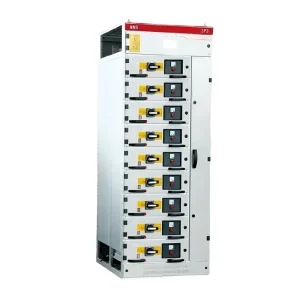 Wholesale China MNS Low Voltage Withdrawable Switchgear Suppliers | Factory-assembled Power Control Solutions Suppliers, CompanyView Product Details
-
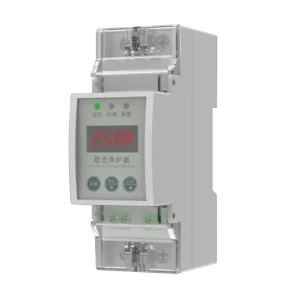 High-Quality China Economical Electrical Fire Current-Limiting Protector - Reliable Suppliers and Factory Solutions for Safety Manufacturers, FactoriesView Product Details
-
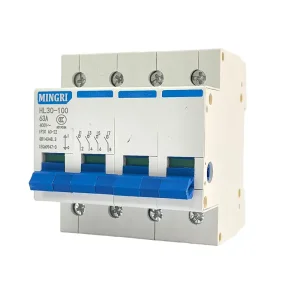 China High-Performance HL30-100 Miniature Disconnect Switch 1-4P 6-100A from China Factory - Trusted Suppliers Manufacturers, ManufacturerView Product Details
-
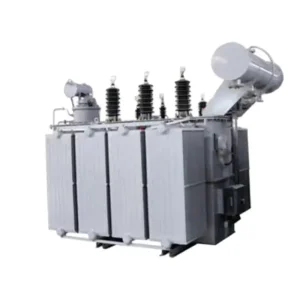 Wholesale S11 Type 35kV Series Distribution Transformer Factories, FactoryView Product Details
-
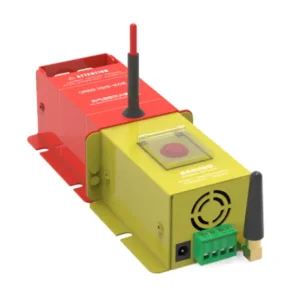 China China Suppliers Factory - Intelligent Wireless Automatic Gas Fire Extinguishing Device - Hot Aerosol Series Suppliers, SupplierView Product Details
-
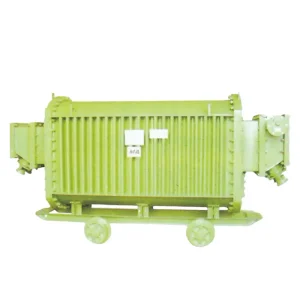 China KBSG9-50~1600/10 Mining Flameproof Dry Type Transformer Factory, CompaniesView Product Details
-
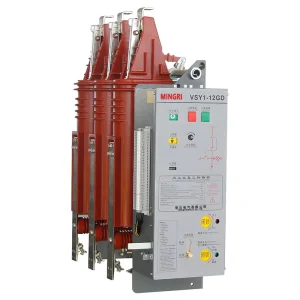 Wholesale VSY1-12GD Mounted Vacuum Circuit Current Breaker VCB Suppliers, FactoriesView Product Details
-
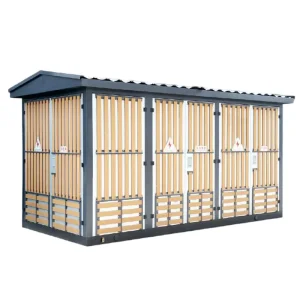 Wholesale China YB□-12 Prefabricated Transformer Substation - 50-1600kVA Power Distribution Solutions from Reliable Suppliers & Factory Manufacturers, CompaniesView Product Details