Featured OEM Electrical Power Modules & Switchgear
Factory-assembled, rigorously tested, and certified low-to-medium voltage switchgear assemblies, reactors, vacuum breakers, and precision regulators designed for streamlined utility integration.
Global Landscape of Prefabricated Substation Manufacturing
Modern power grids and industrial mega-facilities require rapid deployment, minimized civil labor, and absolute engineering predictability. Prefabricated modular substations (E-Houses, compact package substations, and kiosk substations) represent a major industrial shift away from slow, weather-dependent, site-built masonry substations.
Factory Integration vs. On-Site Construction
Traditional electrical substation builds mandate disjointed civil works, extensive field cabling, disparate equipment delivery, and unpredictable on-site labor hazards. OEM prefabrication relocates up to 90% of assembly tasks into a controlled environment where precision automated welding, computerized torque-locking, and continuous clean-room busbar termination take place.
- Elimination of civil coordination bottlenecks and delays
- Enclosed ambient validation against dust, moisture, and debris
- Integrated factory acceptance testing (FAT) before dispatch
Footprint Reduction & Space Optimization
Rapid urban sprawl, constrained offshore platforms, and strict commercial real-estate limits require power distribution hubs to deliver higher megavolt-ampere (MVA) throughput within smaller physical footprints. Compact substation architectures integrate medium-voltage switchgear, hermetically sealed or dry transformers, and low-voltage distribution into compartmentalized units.
- Up to 70% reduction in total footprint compared to brick structures
- Compartmental segregation preventing internal arc cascading
- Multi-compartment access for simplified localized servicing
Standardized Safety & Risk Mitigation
Industrial electrical failures present high flashover and catastrophic arc-blast risks. OEM prefabricated substations are engineered under IEC 62271-202 specifications and incorporate internal arc classification (IAC AFLR). Active relief venting channels explosive pressure waves away from maintenance access areas to safeguard nearby personnel and property.
- Verified IAC AFLR protection up to 31.5kA / 1 second
- Mechanical five-prevention interlocks preventing improper switching
- Non-flammable acoustic and thermal insulation dampening
Prefabricated Substations vs. Conventional Masonry Substations
EPC engineering teams and utility operators balance capital expenditure (CAPEX), operational expenditure (OPEX), project delivery timelines, and life-cycle risk when evaluating station deployment strategies.
| Evaluation Parameter | Conventional Site-Built Substation | OEM Modular Prefabricated Substation (YB / E-House) | Strategic Advantage |
|---|---|---|---|
| Project Lead Time | 9 to 18 Months (Civil foundation, curing, field assembly, multi-vendor testing) | 6 to 12 Weeks (Concurrent off-site construction and foundation civil works) | Time-to-Market Accelerated by ~60% |
| Quality Control & Testing | Fragmented site testing dependent on regional field-labor competency and weather | Standardized clean-room assembly, ISO 9001 certified FAT routines, digital SLD validation | Zero Infant Mortality Failures |
| Civil Civil Works & Footprint | Extensive bricklaying, trenching, roof casting, expansive land footprint | Pre-engineered steel or GRC enclosure, skid-mounted, compact modular arrangement | 50% to 70% Real Estate Savings |
| Safety & Arc Mitigation | Passive barrier separation, variable masonry blast resistance, higher arc risk | IEC 62271-200/202 rated IAC arc ducting, five-fold mechanical interlocks, gas pressure relief | Comprehensive Operator Protection |
| Lifecycle Mobility & Upgrades | Permanent asset; non-relocatable; difficult switchgear retrofitting | Fully relocatable via heavy-lift crane lugs; modular plug-in busbar expansion | High Salvage Value & Scalability |
Localized Application Scenarios & Engineering Demands
Power distribution topologies encounter radically varied environmental conditions across disparate global locations, requiring specialized OEM design configurations.
Utility-Scale Solar PV & BESS Plants
Modern renewable installations require step-up transformer substations placed directly adjacent to central solar inverter banks and battery energy storage systems (BESS). These stations convert 690V/800V inverter AC outputs to 12kV, 24kV, or 35kV utility transmission levels, operating under high solar radiation and extreme thermal swings.
- Integration of ZGS11-Z.T step-up combined substations
- Forced cooling ducting with dual automatic speed controls
- Harmonic suppression filtering handling variable generation spikes
Harsh Underground Mining & Excavation
Mining operations require robust electrical gear that can withstand deep subterranean humidity, corrosive dust, and constant mechanical vibrations. Equipment like the ODM Mining Transformer integrated units provide mobile, explosion-proof, and flame-retardant power transformation right at the excavation face.
- Cast-resin dry-type construction eliminating oil-leakage fire hazards
- Reinforced heavy-gauge steel skid bases for direct dragging and relocation
- Intrinsically safe micro-leakage and earth-ground continuous monitoring
Hyperscale Data Centers & Financial IT
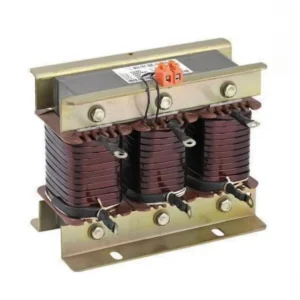
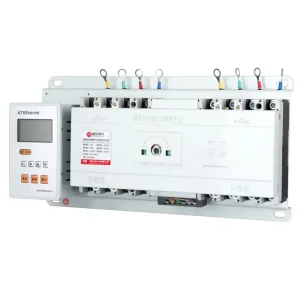
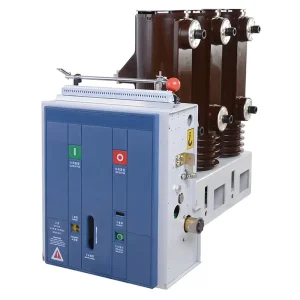
Tier III and Tier IV computing centers cannot tolerate millisecond-level power interruptions. Prefabricated switchgear rooms incorporate high-speed Automatic Transfer Switches (SJKQ2Z ATS), high-interrupting-capacity vacuum breakers, and precision series reactors to suppress harmonics caused by high non-linear server loads.
- Millisecond transfer switching between grid and standby diesel gen-sets
- Redundant dual-bus KYN28/KYN61 compartmentalized isolation
- Integration with building management systems via Modbus/IEC 61850
Urban Grid Densification & Underground Hubs
Metropolitan utility networks frequently encounter public space restrictions that preclude visible above-ground substations. Semi-buried and underground kiosk substations (such as the YBD series) embed the electrical core below street-level or within park landscapes, maintaining ambient noise dampening while supplying neighborhood distribution rings.
- IP54/IP67 ingress ratings preventing subterranean flooding risks
- Architectural low-profile exterior finishes blending with streetscapes
- Air-insulated SM6 or solid-insulated GXGN RMU equipment suites
Technology Roadmap: The Future of Medium-Voltage Distribution
Global decarbonization commitments and digitalization are accelerating technological evolution across medium-voltage switchgear design, driving shifts toward eco-friendly gases, predictive analytics, and modular microgrids.
SF6-Free Dielectric Alternatives
Sulfur hexafluoride (SF6) has an atmospheric global warming potential (GWP) 23,500 times greater than CO2. Strict F-Gas regulations in Europe and North America are accelerating the phase-out of SF6 installations. The industry is transitioning toward clean-air insulation, synthetic dry air, eco-gases like fluoronitriles, and solid-dielectric encapsulation (such as GXGN-12 series).
- Solid silicone and epoxy resin molding eliminating gas-handling protocols
- Zero global warming potential (GWP < 1) for eco-gas configurations
- Vacuum interrupter arc extinction unaffected by low operating temperatures
Smart IoT Diagnostics & Condition Monitoring
Next-generation prefabricated assemblies deploy non-invasive IoT sensors that feed data directly to edge industrial gateways. Continuous busbar temperature tracking via wireless passive SAW sensors, partial discharge (TEV and ultrasonic) analysis, and breaker mechanism timing analytics identify degradation patterns long before catastrophic equipment failure occurs.
- Dynamic real-time health scoring replacing arbitrary scheduled maintenance
- IEC 61850 MMS and GOOSE protocols for station-level fiber communication
- Augmented reality asset tracing and remote troubleshooting diagnostics
Bidirectional Microgrid Integration
Decentralized energy distribution is turning power users into active prosumers. Distributed rooftop PV, on-site battery storage, and dynamic EV charging plazas require prefabricated substations capable of handling multidirectional power flows, fast fault isolation, and adaptive relay protection algorithms.
- Smart directional overcurrent and reverse power protection relays
- Integrated power quality management and harmonic cancellation reactors
- Seamless islanding and grid reconnection sequencing via automated ATS
Turnkey OEM/ODM Substation Execution Framework
A structured engineering methodology ensures client single-line diagrams (SLD) translate into fully operational, compliant medium-voltage prefabricated solutions without site-level rework.
1. SLD Translation & Configuration
Engineering teams analyze utility interconnect specifications, fault level constraints (e.g., 20kA, 25kA, 31.5kA), continuous currents, and environmental parameters (ambient temperature ranges, altitude derating above 1000m, seismic zones). 3D CAD modeling visualizes spatial arrangements, cable entry routes, and ventilation dynamics before steel fabrication starts.
2. Precision Structural Fabrication
Substation shells are constructed utilizing heavy-duty marine-grade galvanized steel or weather-resistant Glassfiber Reinforced Concrete (GRC). Automated laser cutting and CNC punching machines achieve sub-millimeter tolerances on switchgear panel cutouts, busbar links, and interlocking assemblies to maintain enclosure integrity against moisture and dust.
3. Factory Testing & Commissioning
The completed unit undergoes thorough Factory Acceptance Testing (FAT). Routine evaluations include power-frequency withstand voltage tests, primary current injection, auxiliary loop logic verification, mechanical endurance cycling, and protection relay trip timing before the module is sealed for transit.
Engineered Industrial Portfolio: OEM & ODM Series
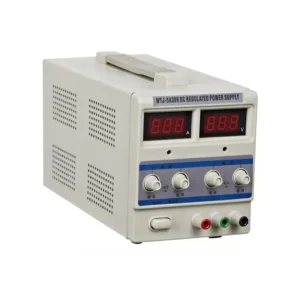
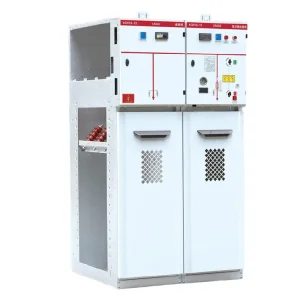
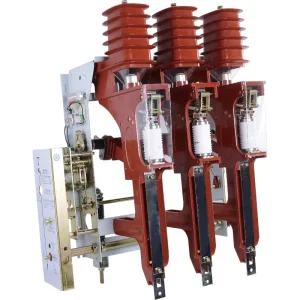
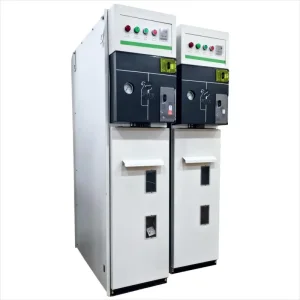
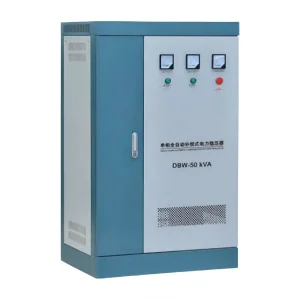
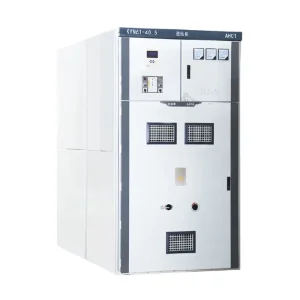
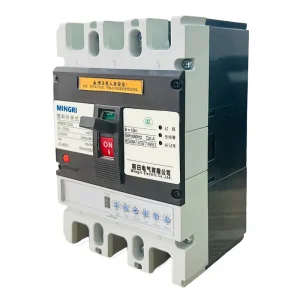
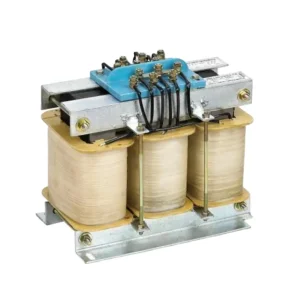
Factory-direct medium-voltage metal-clad switchgear, SF6 gas-insulated RMUs, step-down specialty transformers, and micro-protection circuit breakers engineered for high-availability infrastructures.
Engineering & Procurement Questions & Answers
Direct answers to common technical, compliance, and selection questions raised by EPC contractors, electrical consultants, and procurement managers.