⚙ Tier-1 AC Power Distribution Cabinets & Switchgear Configurations
Explore heavy-duty industrial switchgear, compact secondary distribution systems, and intelligent circuit management units engineered for seamless switchboard integration.
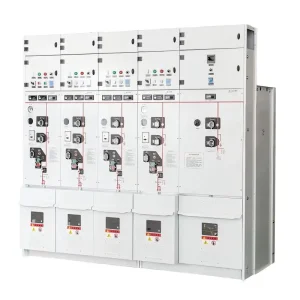
HBXGN-12(F) Eco-Gas Insulated Switchgear
Explore HBXGN-12(F) Specifications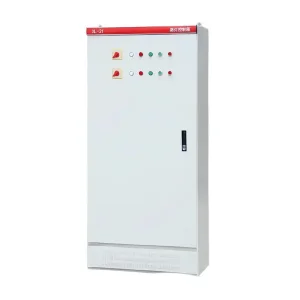
XL-21 Low Voltage Industrial Power Cabinet
Review XL-21 Cabinet Design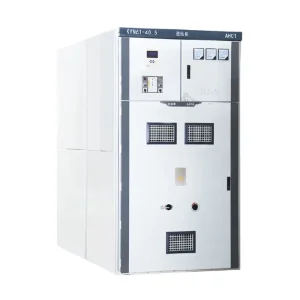
KYN61-40.5 Armoured Withdrawable MV Switchgear
Inspect KYN61-40.5 Architecture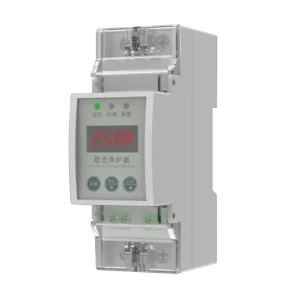
High-Performance Arc & Fire Current-Limiting Protector
View Current Limiter Specs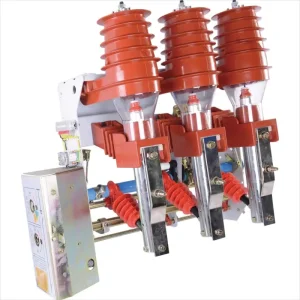
FK(R)N12-12 Air-Insulated HV Load Break Switch
Access FK(R)N12 Data Sheets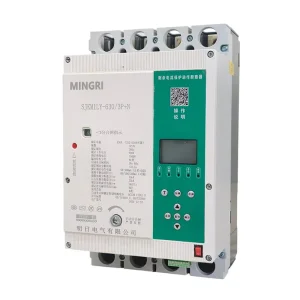
SJKM1LY Smart Auto-Reclosing MCCB Module
Evaluate Auto-Recloser Tech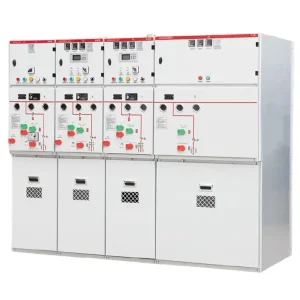
GXGN-12 Maintenance-Free Solid Insulated RMU
Download GXGN-12 Manual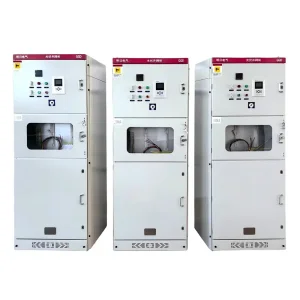
GGD Fixed-Mounted AC Power Distribution Cabinet
Select GGD Low-Voltage Cabinet🌐 Global Industrial Dynamics: The Evolution of AC Distribution Cabinets
Addressing the shifting landscape of high-density manufacturing, electrification of heavy logistics, and the rigorous demands placed on centralized AC power infrastructure.
Grid Decoupling & Microgrids
Modern commercial and industrial facilities operate localized solar, wind, and BESS nodes. AC distribution cabinets must integrate rapid automated transfer systems (ATS) capable of sub-cycle islanding and microgrid synchronization without dropping critical industrial loads.
Dynamic Load BalancingArc Flash Mitigation
Passive safety is no longer sufficient. Leading OEM AC cabinets incorporate optical active arc quenching systems, specialized pressure relief vents, and insulated copper busbars to limit internal arc flash duration to under 5 milliseconds, drastically protecting operators.
IEC/TR 61641 VerifiedSmart IoT Telemetry
Integrating IEC 61850 and Modbus-TCP communications directly into cabinet switchgear allows operators to capture real-time thermal readings across critical busbar joints, continuous harmonic distortion levels, and breaker contact wear index metrics remotely.
Predictive Lifecycle🏗 Macro Industrial & Engineering Solutions
Turnkey power distribution architectures designed for mission-critical infrastructure, hyperscale data farms, and aggressive petrochemical process environments.
Continuous Heavy Process Plants
For chemical refiners and steel mills, an unplanned shutdown costs millions. Our custom GCS and GCK withdrawable cabinets feature distinct functional unit segregation up to Form 4b, allowing engineers to replace or service motor control drawers live without de-energizing adjacent functional bays.
Hyperscale Cloud & Colocation Centers
Power Usage Effectiveness (PUE) demands extremely low thermal dissipation in distribution boards. Through 99.99% E-Cu tin-plated or silver-plated modular bus runs and CFD-optimized internal airflow paths, our AC cabinets reduce heat losses by up to 18% over conventional designs.
Renewable PV & Wind Balance of Plant
Grid-tie AC collection cabinets require reinforced protection against bi-directional harmonic currents, voltage swings, and high outdoor ambient heat. We fabricate UV-stabilized, double-skinned insulated housings with built-in air conditioning and SPD Type 1+2 arrestors.
🗺 Technical Roadmap: The Next-Gen Distribution Architecture
A strategic technological blueprint delineating the convergence of solid-state circuit breaking, eco-friendly gases, and real-time edge analytics.
SF6-Free Dielectrics
Accelerating the transition toward fluoronitrile-based gas mixtures and pure synthetic dry air, drastically reducing Global Warming Potential (GWP < 1) without increasing enclosure dimensions.
Solid-State Breakers (SSCB)
Transitioning from mechanical contactors to silicon carbide (SiC) semiconductor breakers to achieve microsecond fault clearing, zero mechanical arcing, and unprecedented cycle lifespans.
Autonomous Edge AI
Embedded microprocessor edge units executing neural algorithms directly at the switchboard to predict cable insulation breakdown and thermal runaway hours before physical manifestation.
Robotic Drawout Systems
Remote racking capabilities that allow operators to rack out high-amp breakers from safe distances via motorized worm-gear drives and localized wireless tablet controllers.
📜 Global Compliance & Localized Engineering Support
Tailored manufacturing matching rigorous international grid codes, marine standards, and industrial safety certifications.
Full Type Testing & Certification
Our OEM manufacturing lines operate under comprehensive ISO 9001, ISO 14001, and ISO 45001 management regimes. Switchgear models undergo full type testing at authorized third-party high-power testing laboratories (KEMA, ASTA, or equivalent CNAS test facilities) covering temperature-rise limits, short-circuit withstand, and mechanical endurance.
Custom OEM/ODM Integration
From single-line diagram (SLD) conceptualization to mechanical sheet-metal fabrication using CNC punching, laser profiling, and multi-stage powder coating, we support EPCs and switchboard builders with bespoke dimensions, custom entry/exit cable glands, and specified busbar sizing.
Full Lifecycle Support & Commissioning
Overseas clients benefit from factory acceptance testing (FAT) via high-definition live video feeds, comprehensive documentation bundles (wiring schematics, layout drawings, test certs), and 24/7 dedicated engineering support for on-site commissioning and emergency troubleshooting.
⚡ Advanced Modular Components & Auxiliary Switchgear
Integrate certified circuit breakers, high-reliability disconnect switches, and heavy-duty transformers to formulate complete power packages.
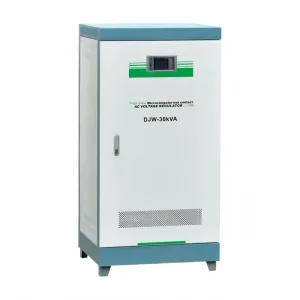
DJW/SJW Microcomputer Non-Contact Voltage Regulator
Inspect Voltage Regulator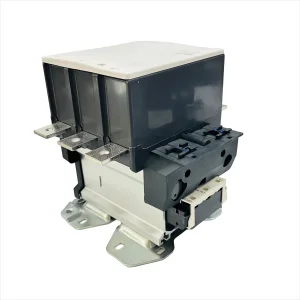
CJX2-F Heavy-Duty Industrial Motor Contactor
Review Contactor Specs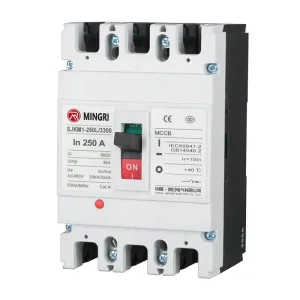
SJKM1 Molded Case Circuit Breaker (MCCB)
Evaluate SJKM1 MCCB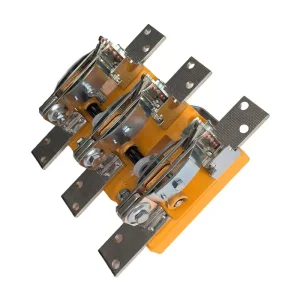
HD13BX Single-Throw Manual Isolation Knife Switch
View HD13BX Schematics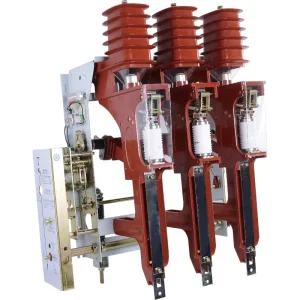
FZN25-12 High-Voltage Vacuum Interrupter Switch
Check FZN25 Capabilities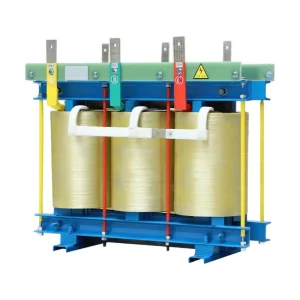
SG(B)10 10kV Non-Encapsulated Dry-Type Transformer
Explore Dry Transformer
FZN25-12 12kV 630A High-Voltage Load Break Unit
Request Load Switch Quote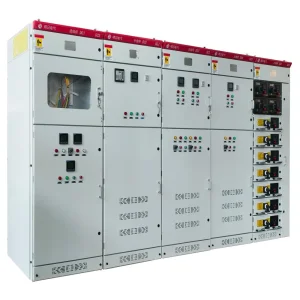
GCS Intelligent Withdrawable Motor Control Switchgear
Review GCS Modular Panel❓ Frequently Asked Technical Questions (FAQ)
Authoritative technical insights for electrical consulting engineers, switchboard builders, and procurement specialists.
Q What defines the difference between GGD, GCS, and MNS AC distribution cabinets?
GGD is a fixed-mounted panel ideal for substations where maintenance shutdowns can be scheduled and cost efficiency is paramount. GCS and MNS are draw-out modular systems. GCS utilizes high-precision withdrawal mechanisms suited for motor control centers with high duty cycles. MNS (based on a 25mm modular grid) offers the highest flexibility for international EPC specs requiring Form 4b internal segregation and high feeder packing density.
Q How do OEM suppliers calculate short-circuit withstand capabilities (Icw & Ipk)?
Rated short-time withstand current (Icw) and peak withstand current (Ipk) are verified through type testing per IEC 61439-2. Busbars are modeled using dynamic finite element electrodynamic stress calculations. The bracing distance between bus insulators is calibrated according to the peak prospective fault current to avoid structural deformation under severe electrodynamic repulsion.
Q Which thermal mitigation strategies are deployed in high-amperage (4000A - 6300A) cabinets?
For currents exceeding 3200A, skin effect, eddy currents, and contact resistance induce significant thermal rise. We utilize non-magnetic stainless steel or aluminum gland plates to eliminate hysteresis loop heating, apply silver plating on all joint contact surfaces, install specialized de-rated copper profiles, and use forced-draft or closed-loop air-to-air heat exchangers to maintain temperatures within IEC limits.
Q Can AC distribution cabinets be customized for seismic and harsh offshore environments?
Yes. Cabinets destined for seismic zones (Zone 4 / IEEE 693) feature reinforced corner gussets, stiffened rear pillars, and multi-point floor anchoring. For marine or saline chemical atmospheres, frames undergo hot-dip galvanization or are constructed using C5-M rated electrostatic epoxy polyester coatings combined with IP54/IP65 gasketed labyrinth ventilation paths.