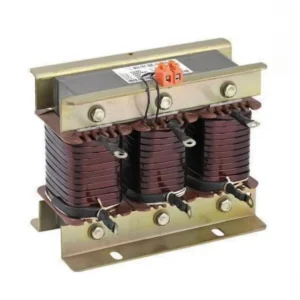
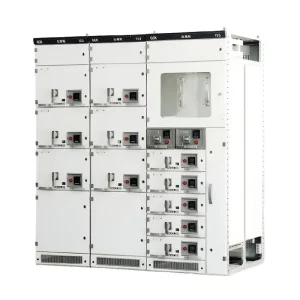
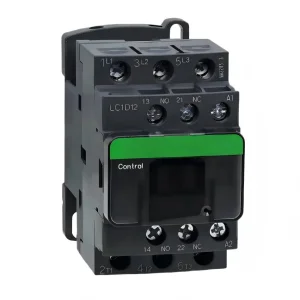
Integrated 10kV Switchgear & Substation Componentry
Certified medium- and low-voltage protection, control automation, and step-down apparatus engineered by premier OEM manufacturing hubs for severe operating environments.
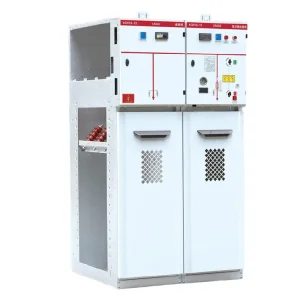
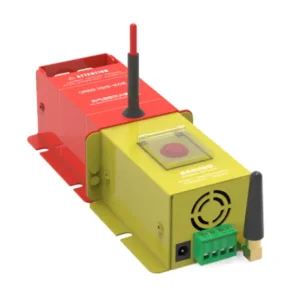
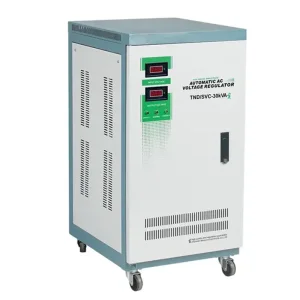
10kV Macro Industry Solutions & Heavy Extraction Grid Topologies
Modern mining infrastructure demands uncompromising electrical stability. A 10kV nominal distribution backbone acts as the primary vascular network converting incoming transmission lines into localized, heavy-duty processing energy.
Dynamic Inrush & Torsional Load Absorbers
Mining extraction faces repetitive cyclic shock-loads triggered by mega-capacity draglines, semi-autogenous grinding (SAG) mills, and longwall shearers. When multi-megawatt induction motors start directly-on-line (DOL) or via variable frequency drives (VFDs), the step-down 10kV mining transformer experiences severe electrodynamic forces across its windings.
- High mechanical short-circuit withstand withstands up to 25x rated current ($I_k$).
- Step-lap mitred core structures reduce excitation inrush current distortions.
- Reinforced clamping rings distribute radial compressive mechanical stress evenly.
Harmonic Mitigation & K-Factor Resilience
Non-linear power electronic loads (6-pulse, 12-pulse, and active front-end converters) dominate modern processing circuits, injecting massive 5th, 7th, 11th, and 13th order current harmonics. Standard distribution transformers overheat quickly under these conditions due to excessive stray load and eddy current losses within conductors and steel structural clamping.
- K-Factor designs ($K-13$ to $K-20$) specifically calculated for non-linear mining loads.
- Electrostatic shielding grounded between primary and secondary winding layers.
- Transposed copper foil winding conductors drastically lower eddy-current dissipation.
Subterranean Explosion-Proof Enclosures
In methane-volatile coal extraction and dense combustible ore shafts, surface-level equipment configurations are prohibited. 10kV mining dry-type transformers (such as KBSG and KBSGZY series mobile substations) incorporate corrugated flameproof (Ex d I Mb) carbon-steel or stainless housings capable of containing internal deflagrations without propagating fire into the mine gallery.
- Flameproof joint flanges engineered to tight mechanical machining tolerances.
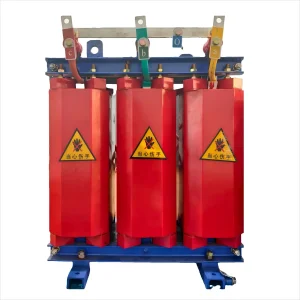
- Nitrogen-purged or hermetically sealed vacuum cast resin encapsulated designs.
- Dual-side mobile rail skids designed for narrow underground track movement.
Global Commercial Landscape: Critical Raw Materials & Mining Electrification
Accelerating global demand for energy transition metals—copper, lithium, nickel, cobalt, and rare earth elements—is pushing mining firms toward total underground fleet electrification and massive ore-sorting automated circuits.
Asia-Pacific (APAC) Hub
APAC leads global mining transformer procurement volume. Driven by deep shaft modernization in China, massive iron ore operations in Western Australia's Pilbara, and intensive nickel-matte HPAL smelters in Indonesia, the region demands massive short-circuit capacities and rapid OEM delivery timelines.
Chinese original equipment manufacturers (OEMs) have emerged as primary global export powerhouses by offering fully integrated 10kV package substations matching IEC, AS/NZS, and GB standards with significant cost and lead-time advantages.
Latin America (LATAM) Puna & Andes
The high-altitude Andean copper belt stretching through Chile, Peru, and Argentina poses extreme operational barriers. At elevations exceeding 3,500m to 4,800m above sea level, reduced atmospheric air density cuts convective thermal cooling efficiency and lowers dielectric breakdown voltage of external air clearances.
OEM manufacturers supplying this zone must apply severe derating factors, utilizing oversized core-and-coil assemblies, Class C insulation matrices, and high-creepage bushings tested for severe seismic activity (IEEE 693).
North America & EMEA Deep Corridors
Operating under stringent regulatory frameworks (MSHA Title 30 CFR in the USA, CSA C22.2 in Canada, and ATEX/IECEx across Europe and South Africa), these jurisdictions prioritize absolute zero-emission flashover prevention and non-toxic insulating media.
There is an aggressive transition away from conventional mineral oils toward biodegradable, high-fire-point synthetic esters and high-temperature vacuum cast resin dry-type 10kV step-down units.
| Transformer Architecture Type | Cooling Class | Primary / Secondary Range | Dielectric / Fluid Index | Ideal Mining Deployment |
|---|---|---|---|---|
| Cast Resin Dry-Type (SCB Series) | AN / AF (Air Natural / Forced) | 10kV, 11kV → 0.4kV, 690V, 1.14kV | Solid Epoxy Resin (Class F/H) | Shaft bottom power substations, crushers, fixed processing plants. Zero fire hazard. |
| Flameproof Mobile Substation (KBSGZY) | ANAN / Air Natural Sealed | 6kV, 10kV → 1.2kV, 3.45kV, 690V | Nomex Class C (220°C) / Nitrogen | Gassy underground coal extraction, continuous miner advance, explosive dust headings. |
| Synthetic/Natural Ester Fluid Immersed | KNAN / KNAF | 10kV, 13.8kV → 4.16kV, 480V | K-Class Synthetic Ester (>300°C Fire Point) | Eco-sensitive open pits, mobile skid substations, high-moisture processing zones. |
| Vacuum Pressure Impregnated (VPI) | AN / AF | 10kV, 12kV → 400V, 690V | Solventless Silicone Resin VPI | Extreme vibration environments, heavy shaker screens, semi-mobile skids. |
Localized Engineering Support & Mandatory Compliance Assurances
Procuring 10kV mining transformers through OEM industrial factories requires rigorous adherence to regional mining safety mandates, statutory type testing, and verified insulation system diagnostics.
Global Standards Compliance Matrix
Reputable OEM transformer manufacturers build to interlocking global frameworks. Equipment must demonstrate compliance across both general high-voltage criteria and specialized extractive safety certifications:
- IEC 60076 & IEC 60076-11: Power transformers & dry-type testing criteria (F1 flammability, C2 climatic, E2 environmental ratings).
- MSHA Title 30 CFR: Strict mandatory safety standards for underground electrical equipment across US mining sectors.
- AS/NZS 4871: Electrical equipment for mines and quarries across Australasia.
- ATEX Directive 2014/34/EU & IECEx: Equipment intended for use in explosive atmospheres (Group I, Category M1/M2).
- MA Mark: Chinese National Safety Approval for Coal Mining Products.
Factory Acceptance Testing (FAT) Protocol
To satisfy EPC contractors and mine asset managers, certified OEM facilities execute extensive type and routine factory validation testing prior to containerized dispatch:
- Lightning Impulse Withstand (BIL): Testing full-wave and chopped-wave breakdown up to 75kV–95kV peak on 10kV windings.
- Partial Discharge Verification: Confirming attenuation under 5 to 10 pico-coulombs (pC) at 1.3x to 1.5x nominal operating line voltage.
- Dynamic Short-Circuit Mechanical Withstand: Verifying core-clamping rigidity under abrupt symmetrical and asymmetrical fault current loops.
- Sound Spectrum & Vibration Profiling: Measuring acoustic dB emissions to ensure subterranean personnel occupational health compliance.
Turnkey Modular Customization
No two mines feature identical drift geometry or borehole access. Elite OEM/ODM manufacturers provide tailor-made mechanical envelopes and electrical configurations:
- Low-profile dimensioning designed to transit standard cage shafts and 1.8-meter mining tunnels.
- Dual-winding secondary systems (e.g., simultaneous 3.3kV drive power and 400V/230V auxiliary service).
- Integrated SF6-free or solid-insulated disconnect switches, vacuum circuit breakers, and zero-sequence grounding relays.
- High-tensile heavy-gauge structural channel bases engineered for rapid dragging across unpaved drift rock.
Localized Application Scenarios in Modern Mining Operations
Field-proven deployments of 10kV step-down systems across demanding environments, demonstrating operational longevity, safety interlocks, and dynamic load control.
Subterranean Longwall Coal Face Retreat
Operating Envelope: 600m depth underground, ambient methane levels fluctuating up to 1.0%, ambient humidity >90%, saturated fine coal particulate dust.
Deployment: 2500kVA 10kV to 3.3kV/1.14kV explosion-proof mobile substation (KBSGZY). Secondary 3.3kV feeds the shearer cutter motors, while 1.14kV powers the armored face conveyor (AFC) and beam stage loader. Nitrogen pressurization and PT100 temperature sensor loops trip the incoming vacuum circuit breaker in under 40 milliseconds if winding hot-spots exceed 140°C.
Open-Pit Copper Primary Crusher Skid
Operating Envelope: Open-cast copper porphyry pit, 3,800m elevation, ambient thermal range from -25°C in winter to +35°C in summer, continuous rock fracturing vibrations.
Deployment: 3150kVA cast resin dry-type 10kV to 690V transformer mounted within a heavy structural steel skid house with IP55 louvers and sand-filtration baffles. Coils encapsulated under vacuum in Class H epoxy, preventing micro-fracturing along copper-resin interfaces under intense acoustic vibration from 1,200 ton-per-hour gyratory crushers.
Battery Electric Haul Fleet Fast-Charging
Operating Envelope: Hard-rock nickel/gold underground mine transition zone, zero diesel particulates policy, ultra-rapid multi-megawatt DC charging bays.
Deployment: Multi-winding 10kV to dual 480V/690V phase-shifting transformers ($30^\circ$ electrical displacement between secondaries) powering 24-pulse IGBT rectifiers. Cancels 5th, 7th, 11th, and 13th harmonic currents at the 10kV interface, avoiding grid pollution and maintaining voltage quality across mine communication links.
Technical Roadmap: The Next Era of Subterranean Power Transformation
Material science breakthroughs, sensor miniaturization, and intelligent predictive maintenance are driving the transformation from passive magnetic steel cores to active, communicative smart transformers.
Amorphous Core Metal Alloys
Conventional high-permeability grain-oriented (HGO) silicon steels are yielding to amorphous metal ribbons in next-generation 10kV transformer designs. With non-crystalline molecular atomic random structures, amorphous cores reduce no-load iron losses ($P_0$) by 65% to 75%. In continuous round-the-clock mining extraction, this generates immense cumulative megawatt-hour energy savings over a 25-year service life.
Fiber-Optic Distributed Sensing
Rather than relying on exterior thermography or localized resistive sensors, leading OEM producers embed distributed fiber-optic Bragg grating (FBG) filaments directly inside the copper conductor windings during casting. This delivers real-time, millimeter-accurate internal hot-spot telemetry directly to mine surface SCADA systems via IEC 61850 protocol without electromagnetic interference (EMI).
Predictive AI Digital Twins
Edge-computing gateway modules installed on the transformer terminal box calculate continuous health indexes by analyzing harmonic spectra, insulation aging rates (Arrhenius degradation modeling), vibration harmonics, and real-time partial discharge bursts. Mine electrical engineers receive predictive maintenance alerts weeks before a dielectric puncture or winding turn-to-turn flashover can occur.
Engineering Deep-Dive: 10kV Mining Transformer Technical FAQ
Definitive engineering solutions addressing voltage regulation, thermal limits, explosion containment, and manufacturing customization parameters for utility-scale mining operations.
Why is 10kV selected as the primary underground distribution voltage over 0.4kV or 35kV?
The 10kV (and 11kV) voltage rating represents the optimal engineering balance between transmission cross-sectional conductor weight and phase insulation clearance requirements in narrow subterranean drift spaces. Distributing power at 400V or 690V over distances exceeding 1–2 kilometers results in unacceptable $I^2R$ power losses and massive voltage drops ($>15\%$) during large motor starts. Conversely, 35kV systems demand substantial dielectric air gaps, significantly larger cable bending radii, and cumbersome switchgear dimensions incompatible with tight haulage roadways. A 10kV distribution network allows transmission of several megawatts over multiple kilometers with negligible losses, stepping down directly at the mining face.
What is the decisive difference between Cast Resin (Dry-Type) and VPI transformers in mining?
Cast Resin Dry-Type transformers encase the high-voltage windings completely inside solid, filled epoxy resin under deep vacuum. This creates an impenetrable barrier against coal dust, sulfur fumes, moisture, and chemical aerosols, achieving superior partial discharge performance (<5pC) and maximum environmental survivability (Class E2/C2). Vacuum Pressure Impregnated (VPI) units use a porous, non-enclosed tape insulation immersed in high-temperature polyester or silicone varnish. While VPI designs handle thermal shock and physical vibration exceptionally well and are simpler to spot-repair, they remain vulnerable to heavy moisture condensation and dust ingress in unventilated underground tunnels. Consequently, Cast Resin dominates modern subterranean mining specifications.
How are high-altitude derating calculations handled for high-Andean mining operations?
Above 1,000 meters sea level (AMSL), atmospheric air pressure drops, reducing air density and degrading convective cooling capacity and dielectric breakdown strength. According to IEC 60076-11 standards, for dry-type transformers operating at high elevations without forced cooling, thermal temperature-rise limits must be reduced by 0.5% for every 100 meters above 1,000m. Dielectric clearance distances across external bushings and terminal connection phases must also be widened by approximately 1% per 100 meters, or high-creepage bushings with synthetic silicone shrouds must be factory installed. OEM factories adjust active core dimensions and enhance cooling ducts to ensure full nameplate kVA performance without premature insulation degradation.
What vector group configuration is optimal for 10kV mining distribution substations?
The Dyn11 vector group (Delta primary, Wye secondary with neutral brought out, $30^\circ$ lead) is the dominant standard across global mining networks. The Delta primary traps third-harmonic currents ($3rd, 9th, 15th$), preventing them from propagating upstream into the 10kV feeding utility grid. The Wye secondary provides a stable, accessible neutral point essential for establishing high-resistance grounding (HRG) or Petersen coil inductive grounding networks. In mine applications, HRG limits phase-to-ground fault currents to 5A–10A, eliminating hazardous touch-potential voltages on machinery frames and allowing equipment to operate through a single ground fault while tracking the defect safely.
How do flameproof enclosures (Ex d I Mb) safely contain internal electrical arc flash faults?
Explosion-proof mine transformer enclosures are not designed to prevent internal arc faults from happening, but to prevent internal ignition from escaping into the surrounding hazardous mine atmosphere (which may contain methane concentrations between 5% and 15% and suspended coal dust). The heavy-gauge corrugated walls are engineered to withstand maximum internal explosion pressure ($P_{max} \approx 10\text{ bar}$) without structural rupture. All flange connections, inspection covers, and cable bushings incorporate precision-machined "flame paths." These joints feature calibrated gaps and lengths that quench escaping combustion gases, cooling them below the ignition threshold of external coal-mine methane before reaching the outer tunnel atmosphere.
What specific data parameters should mining EPCs provide to OEM factories for custom quotes?
For precise engineering quotes, EPCs must supply: (1) Rated Capacity in kVA/MVA, (2) Primary and secondary voltage with off-circuit tap changer (OCTC) or on-load tap changer (OLTC) ranges (e.g., $10\text{kV} \pm 2 \times 2.5\%$), (3) Vector group and neutral earthing philosophy, (4) Impedance voltage percentage ($U_k\%$) to balance short-circuit current limitation against motor-starting voltage dips, (5) Site altitude, ambient temperature extremes, and seismic zones (IEEE 693), (6) Non-linear load profile or expected harmonic spectrum (K-factor rating), (7) Duty cycle and operational mobility (fixed indoor, outdoor skid, or underground flameproof rail wheel mount), and (8) Specific mine safety certification requirements (IEC, MSHA, AS/NZS, or ATEX).
Complete Mining Power Distribution Infrastructure
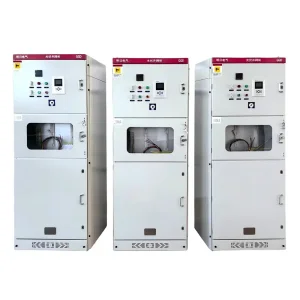
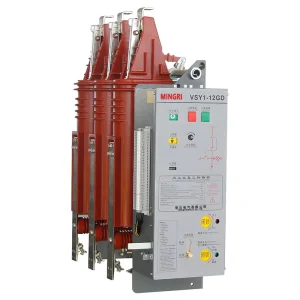
High-performance low-voltage distribution cabinets, vacuum circuit breakers, reactors, and current limiters to complete your 10kV substation engineering portfolio.