High-Performance Distribution & Control Units
Explore our foundational range of circuit breaking, power transfer, and distribution components engineered to maintain operational integrity across heavy industrial and grid networks.
-
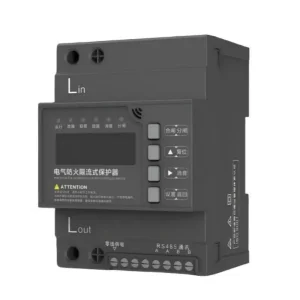
Wholesale China Suppliers Factory: Single Phase Current-Limiting Protector for Electrical Fire Safety and Fast Fault Response Manufacturers, Factories
-
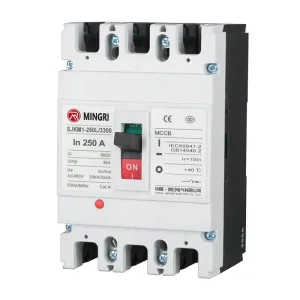
OEM SJKM1 Moulded Case Circuit Breaker (MCCB) for Power Systems Supplier, Manufacturer
-
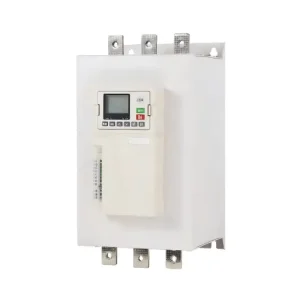
China MCR8 Series Digital Motor Soft Starter Suppliers, Company
-
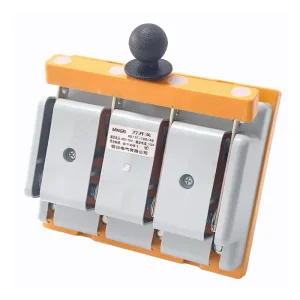
China HD11F Single Throw Anti-Error Knife Switch - China Suppliers & Factory for Reliable Industrial Power Isolation Factory, Companies
-
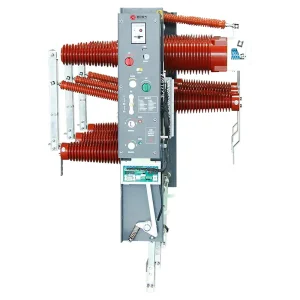
China FZ(R)N21C-40.5D AC Indoor High-Voltage Vacuum Load Switch Supplier, Companies
-
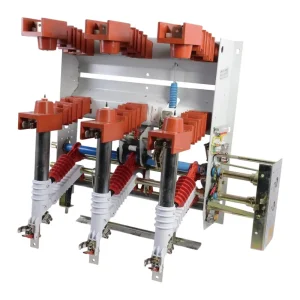
ODM High Voltage Load Breaker Switch FK(R)N12-24D - 24kV Solutions from China Suppliers and Factory Suppliers, Factory
-
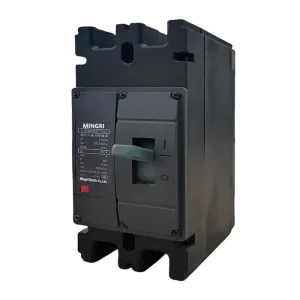
High-Quality SJKM5DC Direct Current Molded Case Circuit Breaker Supplier, Factories
-
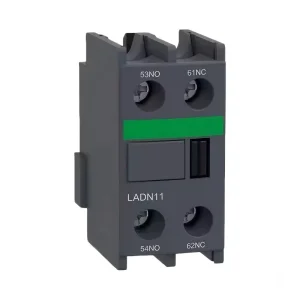
ODM LADN 1NO 1NC Auxiliary Contact for AC Contactor - China Suppliers Factory - Reliable Control Accessory Manufacturers, Factories
Global State of SF6 Insulated Switchgear Systems
In high-density metropolises, coastal corridors, and intensive industrial complexes, sulfur hexafluoride (SF6) remains the premier dielectric medium due to its extraordinary electronegativity and self-healing arc interruption capabilities.
Dielectric Strength & Footprint
Sulfur hexafluoride offers a dielectric breakdown strength roughly 2.5 to 3 times higher than atmospheric air at identical pressures. This permits phase-to-phase and phase-to-ground clearances to be reduced by up to 70%, yielding ultra-compact substations essential for subterranean substations and offshore wind turbines.
- Volume reduction exceeding 65% over AIS
- Elimination of external particulate contamination
- Optimized electric field distribution
Hermetic Environmental Sealing
Medium-voltage switchgear using SF6 isolates primary conduct components within robotic-welded, corrosion-proof AISI 304 or 316L stainless-steel gas tanks. Fully protected against moisture ingress, aggressive chemical atmospheres, airborne salts, and small wildlife intrusions.
- Ingress Protection rating up to IP67
- Resistant to saline coastal conditions
- Zero contact oxidation over 30+ year service life
Grid Resilience & Arc Quenching
Under operational load-breaking and severe short-circuit faults, the rapid thermal dissipation of SF6 snuffs switching arcs in milliseconds. Integrated molecular sieves consistently absorb moisture traces and decomposition byproducts, preventing voltage restrikes.
- Internal arc classification IAC AFLR 20kA/1s
- Rapid transient dielectric recovery
- Maintenance-free primary vacuum/SF6 breakers
| Evaluation Parameter | Air-Insulated Switchgear (AIS) | Solid-Insulated Switchgear (SIS) | SF6 Gas-Insulated Switchgear (GIS) |
|---|---|---|---|
| Dielectric Reliability | Sensitive to humidity, dust, and coastal salt fog | High; sensitive to interface aging under partial discharge | Maximum; hermetically sealed gas enclosure |
| Physical Footprint | Baseline (100% space requirements) | Compact (~45% footprint reduction) | Ultra-Compact (up to 70% space savings) |
| Internal Arc Containment | Vented through relief channels; variable reliability | Phase-segregated; limited blast propagation | Robust IAC AFLR certified stainless tank protection |
| Total Cost of Ownership (30 Yr) | Higher (regular busbar cleaning & contact overhaul) | Moderate (low inspection, component replacement cost) | Lowest lifecycle cost due to sealed-for-life design |
Advanced Manufacturing Ecosystem & Factory Efficiencies
Centering production in advanced industrial clusters like Yueqing, Zhejiang enables an unprecedented integration of localized precision machining, automated testing, and comprehensive cost management.
Automated Fabrication Infrastructure Industry 4.0
Modern Chinese manufacturing facilities leverage laser-guided robotic welding stations to fabricate high-integrity stainless steel enclosures without human error. Each tank undergoes Helium Mass Spectrometer leak testing, ensuring annual leakage rates stay far below international limits (≤ 0.1%/year).
- Robotic laser welding of 3.0mm AISI 304 enclosures
- Vacuum chamber helium leak detection for each unit
- Automated CNC copper busbar bending and punching centers
- In-house routine insulation and partial discharge testing facilities
Hyper-Clustered Supply Chain Economics 30-40% CapEx Savings
The concentration of precision component suppliers in Yueqing eliminates excessive transit overhead. High-voltage vacuum interrupters, epoxy resin casting insulators, copper interconnects, and microcomputer protection units are sourced within a 15-kilometer radius, drastically reducing manufacturing cycle times.
- End-to-end component traceability with rapid prototyping
- High volume output allowing lower per-unit production cost
- Direct engineering interaction for custom OEM/ODM configurations
- Guaranteed global freight fulfillment via Shanghai and Ningbo ports
Engineered for Demanding Industrial Topologies
From high-altitude solar plains to subterranean mass transit grids, gas-insulated systems provide rock-solid power delivery where standard equipment fails.
Renewable Utility Sub-Stations
Wind tower bases and utility-scale solar PV step-up stations demand equipment that withstands high humidity, dust accumulation, and dramatic daily thermal swings. Prefabricated GIS substations provide turn-key step-up control directly adjacent to central inverters.
- Immunity to sandstorms, dust, and coastal salt mist
- Compact footprint accommodates narrow wind turbine towers
- SCADA-ready Modbus/DNP3/IEC 61850 protocol integration
Metro Rail & Tunnel Systems
Tunnels and underground passenger hubs impose stringent fire safety standards and zero room for hazardous oil arcs. Sealed SF6 systems eliminate fire hazards while enabling reliable traction power distribution and automated ring network reconfiguration.
- High mechanical endurance (M2 class ≥ 10,000 ops)
- Non-flammable insulating gas media
- Minimal clearances required in tight underground vaults
Tier III & IV Data Centers
Hyperscale facilities require uncompromised availability (99.999%). Modular RMUs coupled with fast-acting automatic transfer switches guarantee immediate power rerouting during utility grid deviations or upstream equipment servicing.
- Redundant feeder architectures (2N / N+1 topologies)
- Integrated predictive gas density and temperature monitoring
- Fast fault isolation mitigating micro-outage cascades
Regulatory Evolution & Eco-Gas Transition
As international frameworks such as the European EU F-Gas Regulation and North American decarbonization mandates tighten, the medium-voltage switchgear industry is advancing toward sustainable dielectric alternatives.
Environmental F-Gas Directives
SF6 carries a high Global Warming Potential (GWP ≈ 24,300). Utilities across Europe, North America, and parts of Asia-Pacific have set clear phase-out roadmaps for SF6 in installations up to 24 kV by 2026–2030, accelerating demand for alternative solutions.
- Strict lifecycle leakage auditing and gas recovery logs
- Carbon tax risks associated with legacy medium-voltage assets
- Standardization shifts toward climate-neutral switchgear
Eco-Gas & Solid Dielectric Breakthroughs
Manufacturers are deploying next-generation platforms like the HBXGN-12(F) series, utilizing natural synthetic air (Clean Air), fluoronitrile gas mixtures, and solid-dielectric epoxy coatings to achieve zero GWP without expanding station footprints.
- Vacuum interrupters handling 100% of arc extinguishing tasks
- Non-toxic decomposition products allowing standard disposal
- Direct form-fit compatibility with existing switchgear civil foundations
Frequently Asked Questions for Project Engineers & EPCs
Essential guidance on selecting, operating, and procuring medium-voltage gas-insulated systems for mission-critical deployments.
Integrated Substations, Control & Transformation Nodes
Explore our extended portfolio of medium-to-low voltage transformers, automatic transfer systems, eco-friendly gas-insulated metal switchgear, and mission-critical UPS apparatus.
-
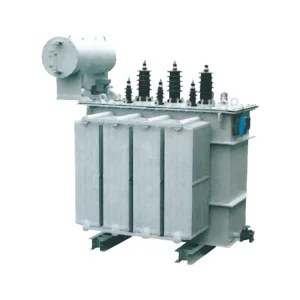
China S11 Type 35kV/6-10kV Series Power Transformer Factories, Company
-
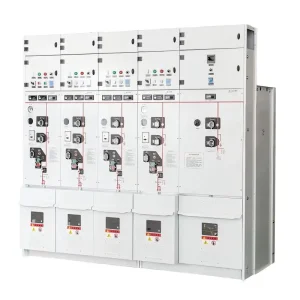
China HBXGN-12(F) Environment-friendly gas insulated metal enclosed switchgear Factories, Companies
-
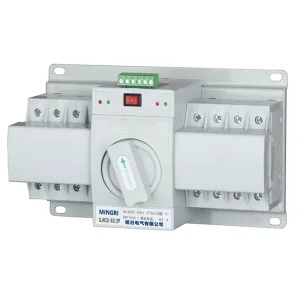
OEM SJKQ1 Manual/Automatic Dual-Use ATS Automatic Transfer Switch Factories, Companies
-
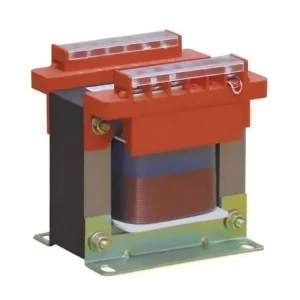
High-Quality Reliable BK Series Control Transformers from China Suppliers – Efficient Power Solutions for Factories Suppliers, Manufacturer
-
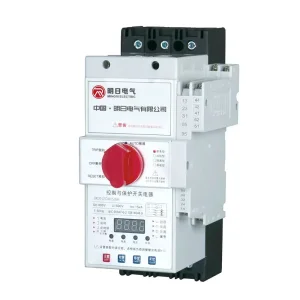
High-Quality China SJKCPS Control and Protective Switching Device - Reliable Supplier and Factory for Motor Control Solutions Manufacturer, Factories
-
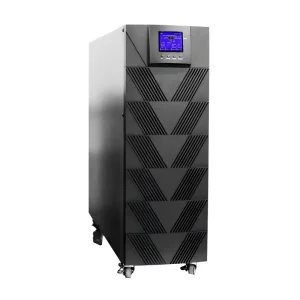
ODM MCL31 Series Low Frequency UPS Technical Supplier, Factories
-
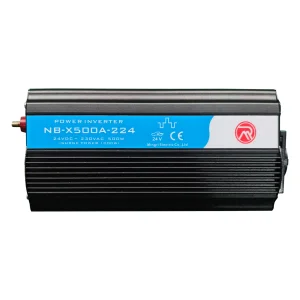
China China X500 DC to AC Power Inverter 500W with EU Socket, USB Ports - Trusted Suppliers & Factory Solution Suppliers, Company
-
ODM HR5 Fused Disconnect Switch - Reliable Circuit Protection from China Suppliers & Factory for 100-630A Loads Manufacturer, Factory