High-Quality on Load Transformer Manufacturer & Factories
Authoritative engineering intelligence on On-Load Tap-Changing (OLTC) transformers, cast-resin distribution units, vacuum-break switchgear, and integrated prefabricated compact substations for mission-critical industrial applications worldwide.
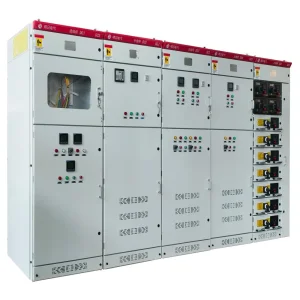
Flagship Medium & Low Voltage Equipment
Engineered to IEC 60076, IEEE C57, and GB standards. Featuring integrated on-load voltage management, high short-circuit withstand capabilities, and hermetically sealed modular architectures.
On-Load Tap-Changing (OLTC) Dynamics & Voltage Regulation Physics
An in-depth thermodynamic and electromagnetic assessment of voltage stabilization across fluctuating grid conditions without network disconnections.
Seamless Voltage Transition Architecture
The primary functional directive of an On-Load Tap Changer (OLTC) transformer is dynamic bus voltage stabilization during active power transmission. Unlike de-energized tap changers (OCTC), which demand total disconnection of the load to shift transformer turn ratios, an OLTC regulates the primary-to-secondary turns ratio $N_p / N_s$ seamlessly under load. Modern units employ the Jansen switching principle utilizing transition resistors to limit circulating circulating currents while transferring load between adjacent taps within 40 to 60 milliseconds.
Vacuum Interrupter Arc Quenching
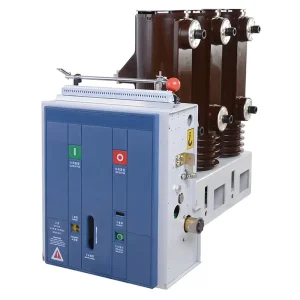
Legacy OLTCs broke the arc within transformer mineral oil, causing continuous carbonization and dielectric degradation of the fluid, necessitating frequent offline oil filtering. High-specification Chinese manufacturing incorporates vacuum interrupter technology inside the diverter switch compartment. Arcing is hermetically encapsulated inside alumina ceramic vacuum bottles ($10^{-5}\text{ Pa}$), eliminating oil soot, extending contact life to 300,000+ operations, and dramatically lowering total lifecycle ownership costs.
High-Permeability Grain-Oriented Core
Flux density leakage during on-load switching induces severe electromagnetic forces across high-voltage and low-voltage windings. By deploying high-permeability grain-oriented (Hi-B) cold-rolled silicon steel sheets (0.23mm to 0.27mm thickness) with step-lap mitred joints, our factory designs restrict no-load excitation current to < 0.8% and lower no-load acoustic noise profiles below 52 dB(A), strictly meeting IEC 60076-10 tolerances.
Electromechanical Interlock & Short-Circuit Withstand Capacity
Under IEC 60076-5 standards, an on-load transformer must endure both dynamic thermal stress and mechanical electromagnetic peak force ($I_{dyn} = 2.55 \times I_{sc}$) without structural displacement. Mingri Electric utilizes radial and axial clamping plates composed of laminated densified wood and non-magnetic stainless steel, maintaining winding pre-stress to prevent axial collapse during abrupt external three-phase terminal faults.
Localized Application Scenarios & Grid-Edge Engineering
From volatile utility-scale solar ramp rates to hyper-dense artificial intelligence data centers, explore how dynamic tap regulation secures uninterrupted operation.
1. Utility Renewable Generation & BESS Facilities
Photovoltaic and wind farm outputs fluctuate violently due to cloud shading and wind gusts, triggering severe reverse power flow and overvoltage across collector buses. Conventional transformers cannot counter these rapid shifts without tripping breakers. Our on-load step-up substations (e.g., ZGS11-Z.T series) continuously trim voltage excursions, maintaining point-of-common-coupling (PCC) voltage within strict utility compliance windows (typically ±2.5%) without inverter curtailment.
2. Hyperscale AI & HPC Data Centers
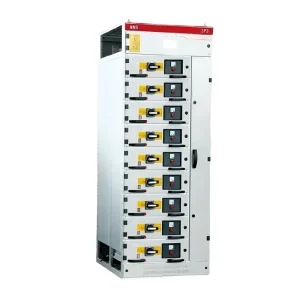
Modern AI computing clusters utilizing multi-megawatt GPU server halls impose instantaneous step-load swings between 20% and 100% capacity within tens of milliseconds. These step loads induce transient secondary voltage sags that can crash computing racks. On-load power transformers integrated with electronic controllers and withdrawable low-voltage switchgear (such as MNS and GCS panels) guarantee stable busbar voltage, preventing micro-outages and thermal trips.
3. Heavy Metallurgical & Chemical Industries
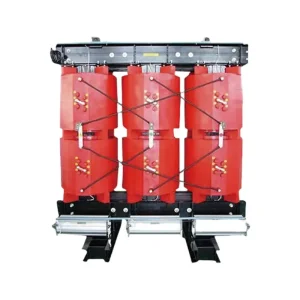
Electrolytic chlor-alkali production, electric arc furnaces (EAF), and mining crushers produce non-linear, harmonic-rich, highly unbalanced inductive currents. Mingri Electric's cast-resin dry transformers [SC(B)13 series] and heavy-duty tap regulators withstand harmonic spectrums up to the 31st order without excessive dielectric overheating, certified for K-factor 13 and K-factor 20 industrial operational profiles.
| Transformer Architecture | Insulation Medium | Tap Switching Mode | Loss Efficiency Class | Fire & Explosion Safety | Typical Industrial Target |
|---|---|---|---|---|---|
| SC(B)13 Resin Dry-Type | Epoxy Quartz Vacuum Cast | On-Load Vacuum Diverter (OLTC) | EN 50588-1 Tier 2 Compliant | F1 Self-Extinguishing | Urban Substations, Data Centers, High-Rise Buildings |
| Hermetic Oil-Immersed | Inhibited Mineral / Synthetic Ester | Multi-Step In-Tank Vacuum OLTC | IEC 60076 Peak Efficiency | O-1 / K-3 Class Available | Utility Distribution, Renewable PV Collector Substations |
| Underground Compact Sub (YBD) | Eco-Dielectric / Gas-Sealed | Remote Automatic SCADA OLTC | Low-Loss Amorphous / High-B | Submersible / IP68 Rated | Municipal Green Spaces, Coastal Resorts, Dense Metro |
| Air-Insulated Modular (SM6/KYN28) | Composite Atmospheric Air / Vacuum | Motorized Auto-Tapping Regulators | IEC 62271-200 LSC2B-PM | Internal Arc Classified (IAC AFLR) | Heavy Industrial Facilities, Rail Transit, Mining Substations |
Supply Chain Resilience: The Yueqing Manufacturing Advantage
How geographical clustering, total vertical integration, and advanced robotics establish decisive cost, speed, and quality advantages for international EPC contractors.
Vertical Upstream Cluster Integration
Situated in Yueqing, Zhejiang—the global capital of medium- and low-voltage electrical equipment—our manufacturing facility eliminates complex multi-tier supply chains. Oxygen-free electrolytic copper drawing, CNC laser-slotted silicon sheet lamination, vacuum resin casting plants, and precision toolmaking for switchgear enclosures are clustered within a 15-kilometer radius. This compressed footprint reduces core raw material transit times to zero-delay lean pull schedules.
Hermetic Vacuum Degassing & Pressure Casting
The insulation reliability of dry-type on-load transformers depends on bubble-free resin casting. Mingri Electric utilizes automated German Hedrich vacuum casting chambers operating under 0.1 mbar vacuum. Epoxy resin formulation blended with dynamic alumina micro-fillers ensures homogenous thermal conductivity, completely mitigating internal void formation and keeping partial discharge measurements well below 5 pico-Coulombs (pC) at 1.5 times rated system voltage ($1.5 U_m$).
Automated Full-Scale Routine & Type Testing
Every on-load transformer leaves our Yueqing factory with a serialized CNAS-accredited digital test certificate. Our in-house testing floor features a 400kV lightning impulse test generator, automated power analyzer benches for no-load ($P_0$) and load ($P_k$) loss measurement, SF6 leak spectrometry, and temperature rise heat-run test beds capable of handling custom engineering orders up to 40.5 kV and 25 MVA ratings.
Lead Time Compression vs. Global Benchmarks
While Western European and North American lead times for specialized on-load tap changing transformers have stretched past 50 to 80 weeks due to skilled labor and raw core shortages, our vertically integrated plant in Yueqing consistently delivers certified, tailor-engineered 10kV–35kV OLTC transformers within 8 to 14 weeks from drawing freeze, accelerating energization milestones for fast-track EPCs.
Worldwide Grid Modernization & Regulatory Alignment
Balancing varying regional standards, environmental mandates, and power quality requirements across critical geographical markets.
North America (IEEE C57 / DOE Conservation Standards)
The push to revitalize legacy grid infrastructure and connect gigawatt-scale data center corridors has strained legacy equipment inventories. Mingri Electric custom-builds medium-voltage equipment conforming directly to IEEE C57.12.00 standards, integrating UL-compliant components, dual-winding secondary configurations, and bi-directional communications supporting DNP3 and Modbus TCP protocols for seamless US utility integration.
European Union (EU Ecodesign & F-Gas Regulations)
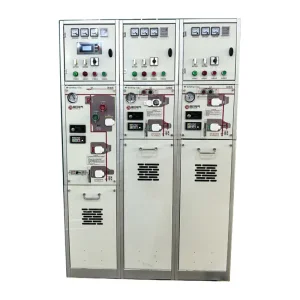
European Commission Regulation (EU) No 548/2014 and its Tier 2 revision strictly regulate transformer no-load and load loss caps. Simultaneously, stricter F-Gas directives penalize high-GWP gases. We answer this mandate by supplying ultra-low-loss dry transformers matching EN 50588-1 Tier 2 thresholds, alongside environmentally friendly gas-free switchgear (like HBXGN eco-gas and solid-insulated GXGN-12 RMUs) eliminating SF6 altogether.
Middle East & North Africa (Extreme Thermal Ambient)
Desert environments characterized by +55°C ambient temperatures, solar radiation indices exceeding $1000\text{ W/m}^2$, and heavy saline-dust deposits demand custom de-rating and reinforced encapsulation. Mingri Electric delivers heavy-duty galvannealed steel enclosures, IP55-rated compartmentalized ventilation, tropicalized insulation resins, and forced-air (AF) cooling fans equipped with automated variable-frequency controls.
Engineering Roadmap: The Next Era of Voltage Control
Pioneering innovations in power electronics, biodegradable insulation fluids, and edge-computing predictive telemetry.
Solid-State Electronic Tap Changing (SS-OLTC)
Transitioning mechanical contact systems to hybrid thyristor-assisted or fully solid-state topologies. Eliminating mechanical diverter movement allows tap transitions in sub-cycle speeds (< 20ms) without electrical arcing, enabling real-time flicker compensation for sensitive microelectronic wafer fabs and precision robotics.
Bio-Based Synthetic & Natural Ester Fluids
Replacing conventional mineral oil with non-toxic, 100% biodegradable synthetic and natural esters (K-class liquids with flash points > 300°C). Ester fluids tolerate higher moisture levels without compromising dielectric breakdown voltage, extending thermal insulation life and simplifying substation fire suppression containment systems.
Embedded Optical Fiber DGA & Thermal Telemetry
Integrating fiber-optic Bragg grating (FBG) temperature sensors directly inside core windings alongside real-time Dissolved Gas Analysis (DGA) sensors detecting micro-levels of $H_2$, $CO$, and $C_2H_2$. Onboard edge controllers leverage AI diagnostic models to calculate insulation degradation and predict required tap-changer service windows.
Autonomous Microgrid Self-Balancing Control
Equipping OLTC motor controllers with autonomous peer-to-peer telemetry to cooperate directly with downstream smart circuit breakers (e.g., SJKM3E) and intelligent automated transfer switches. Substations self-coordinate reactive volt-VAR dispatch to stabilize multi-feeder microgrids operating under islanded conditions.
Worldwide Local Support & Compliance Assurance
How Mingri Electric coordinates technical advisory, digital factory acceptance testing (FAT), and field-service deployment globally.
Encrypted Digital Remote FAT Services
To assist international engineering project teams, we provide encrypted high-definition live-streamed Factory Acceptance Tests (FAT). Clients witness live lightning impulse tests, temperature rise measurements, insulation resistance validations, and mechanical operation of the on-load tap changers with real-time multi-angle camera views and calibrated instrumentation feeds.
Full Single-Line Diagram Customization
We don't just sell standard catalogue units; our dedicated engineering department configures busbar arrangements, current transformer ratios, protection relay settings, and enclosure dimensions strictly around client Single-Line Diagrams (SLD). 3D BIM/CAD STEP models are provided within 72 hours for seamless architectural switchroom integration.
Global Field Engineering & Warranty
Backed by international technical partners, Mingri Electric provides comprehensive lifecycle warranties, on-site commissioning supervision, certified spare parts inventory (including auxiliary coils, motor drive mechanisms, and vacuum bottles), and 24/7 dedicated engineering hotlines for international EPC contractors.
Frequently Asked Questions: Technical & Procurement
Clear answers to common engineering questions regarding on-load transformer selection, maintenance intervals, and integration.
An On-Load Tap Changer (OLTC) adjusts the transformer turns ratio while the transformer is actively energized and supplying continuous load current to the system. It uses internal transition resistors or vacuum interrupters to bridge across adjacent tap steps without causing short circuits or opening the load circuit. In contrast, an Off-Circuit (De-Energized) Tap Changer (OCTC) strictly requires the entire transformer to be completely de-energized and disconnected from the electrical grid before any tap position can be mechanically repositioned.
In traditional oil-break tap changers, the switching arc is extinguished inside insulating oil. Every tap operation causes thermal cracking of the oil molecules, producing free carbon, hydrogen, and acetylene, which lowers the oil's dielectric breakdown voltage and requires periodic filtering every 5,000 to 10,000 operations. Vacuum-break OLTCs enclose the arc inside sealed ceramic vacuum chambers; no carbon particles enter the insulating liquid or surrounding environment. As a result, vacuum OLTC mechanisms regularly operate up to 300,000 operations before diverter contact replacement is required.
Cast-resin dry-type transformers (such as the SC(B)13 series) utilize solid epoxy resin mixed with silica filler to encapsulate high- and low-voltage coils under vacuum. They contain zero combustible oil, rendering them inherently fire-safe, non-explosive, and self-extinguishing (Class F1 certified). This makes them mandatory for installation inside indoor substations, high-rise buildings, underground mass transit hubs, commercial centers, and hyperscale data centers where fire-suppression regulations prohibit oil-filled equipment.
Yes. Modern industrial applications involving high-capacity Variable Frequency Drives (VFDs) and silicon-controlled rectifiers generate significant harmonic distortion (THDi). Standard transformers experience severe eddy-current stray loss heating under non-sinusoidal currents. Mingri Electric engineers K-factor rated transformers (K-4, K-13, and K-20) with transposed conductor windings, subdivided neutral busbars sized at 200% rating, and electrostatic shielding between primary and secondary windings to mitigate common-mode noise.
Every completed unit is shipped with comprehensive technical dossiers including factory routine test reports (winding resistance, voltage ratio, phase displacement, short-circuit impedance, load/no-load losses, applied AC voltage, and induced overvoltage withstand), third-party CNAS/KEMA type test certificates, schematic connection diagrams, motor drive wiring schematics, operational manuals, and signed Certificate of Conformity (COC) documents.
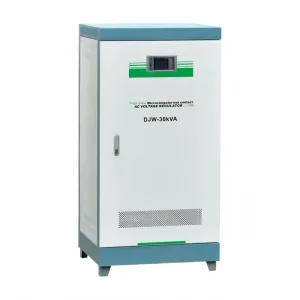
Our OLTC transformers are supplied with microcomputer-based automatic voltage regulation panels (such as the DJW/SJW series or integrated RTU controllers). These units support standard substation automation communication protocols—including IEC 61850, Modbus RTU/TCP, and DNP3. Remote SCADA dispatchers can view real-time tap positions, adjust target busbar voltage bandwidths, trigger manual tap shifts, and monitor trending alarm logs across plant networks.
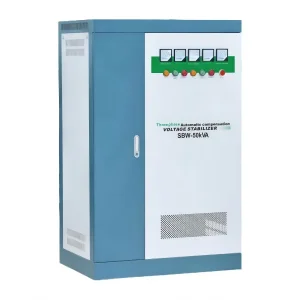
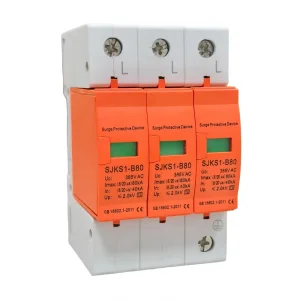
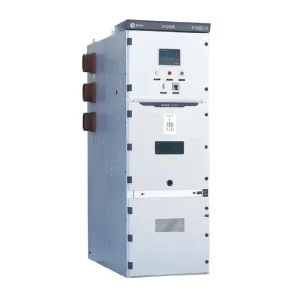
Auxiliary Switchgear, Substations & Protection Hardware
Explore complementary medium-voltage breakers, underground transformer kiosks, automatic voltage regulators, and surge protection devices designed for end-to-end grid reliability.