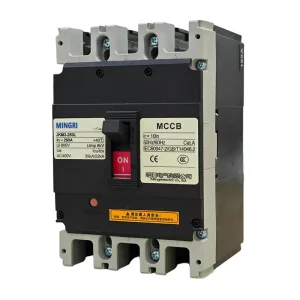
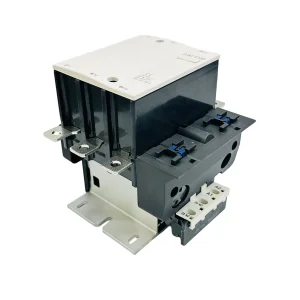
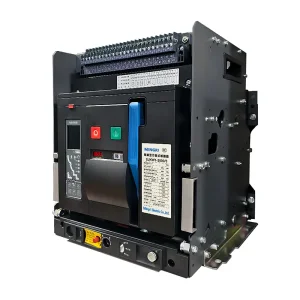
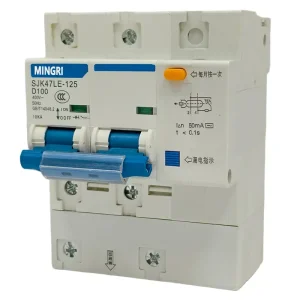
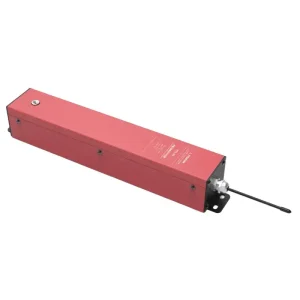
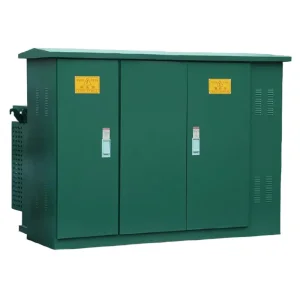
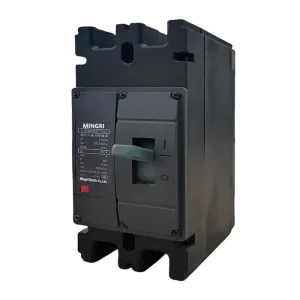
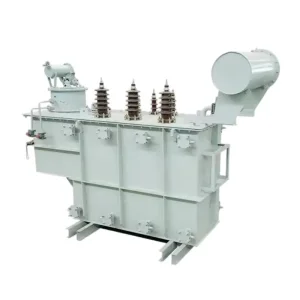
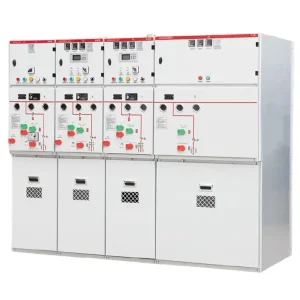
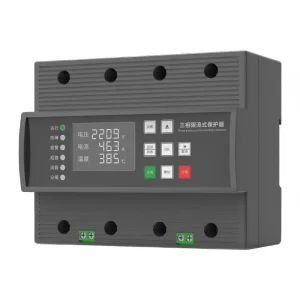
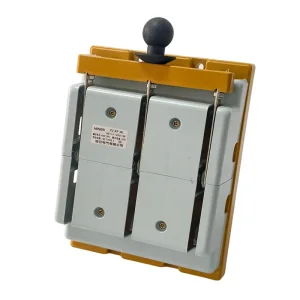
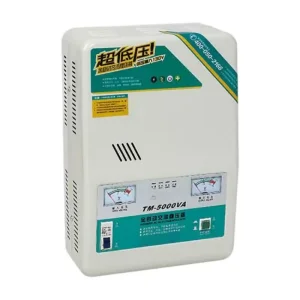
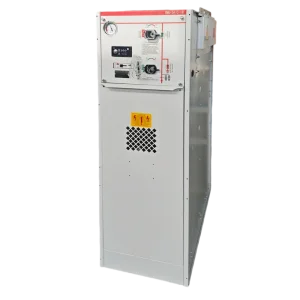
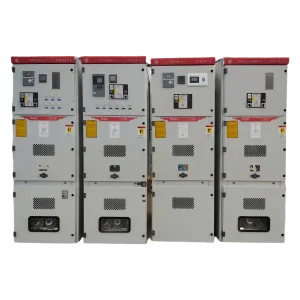
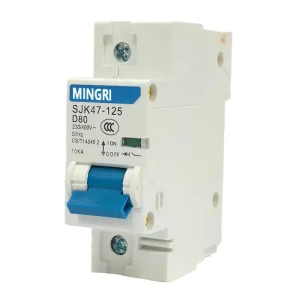
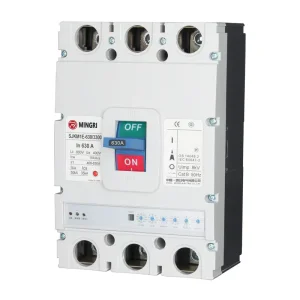
Integrated Switchgear & Protection Apparatus Showcase
Explore our industrial electrical hardware, medium-voltage distribution cells, and protective switchgear engineered to operate seamlessly with line-load inductive systems.
Comprehensive Engineering Guide: Input & Output Line Reactors
A rigorous technical breakdown of magnetic core behavior, harmonic impedance attenuation, and motor insulation safeguarding in variable frequency drive (VFD) applications.
Input (Line) Reactors: Harmonic Mitigation & Mains Defense
An AC input line reactor is an inductive filtering element placed in series between the utility power feeder and the rectifier front-end of an adjustable speed drive (ASD) or variable frequency drive (VFD). Rectifier inputs exhibit severe non-linear current waveforms, drawing current only at the peaks of the AC voltage cycle.
Without an engineered line reactor, standard 6-pulse diode bridges regularly generate Total Harmonic Current Distortion (THDi) exceeding 80% to 120%. This high harmonic spectrum injects unwanted distortion back into the common coupling point (PCC), triggering nuisance trips of upstream circuit breakers, overheating distribution transformers, and disrupting sensitive instrumentation.
- Impedance Rating Selection: Available primarily in 3% and 5% impedance ratings calculated at the rated drive input kVA. A 3% reactor dampens mains voltage surges and reduces THDi to approximately 35%–45%, while a 5% reactor achieves THDi suppression down to 28%–35%, satisfying IEEE 519 compliance protocols.
- Mains Transient Suppression: Absorbs high-energy line spikes originating from utility power factor capacitor switching, lightning induction, and grid load reconfigurations.
- DC Bus Capacitor Longevity: Dampens current crest factor (peak-to-RMS ratio), keeping DC link electrolytic capacitors within safe operational thermal ranges.
Output (Load) Reactors: dV/dt Suppression & Cable Capacitance
Modern inverter stages deploy Insulated Gate Bipolar Transistors (IGBTs) switching at frequencies from 2 kHz to 16 kHz. These rapid transitions yield voltage rise rates (dV/dt) exceeding 10,000 V/µs. When pulses propagate down motor lead cables, characteristic transmission line impedance mismatches trigger reflected wave phenomena.
This standing wave reflection doubles the peak voltage ($V_{peak} \ge 2 \times V_{dc}$) at the motor terminals. For a 480V installation, peak voltages can spike over 1,600V, causing rapid dielectric puncturing of motor turn-to-turn phase insulation and electric discharge machining (EDM) fluting across motor bearings.
- dV/dt Waveform Softening: The inductive output reactor restricts the edge rate of switching pulses, clamping voltage gradients to safe thresholds below 500 V/µs in full accordance with NEMA MG1 Part 31 standards.
- Mitigation of Cable Charging Currents: Long motor cable runs (>30 meters to 300+ meters) introduce distributed phase-to-ground stray capacitance. The output reactor attenuates the capacitive inrush peak currents, eliminating inverter overcurrent trip errors.
- Motor Thermal Degradation Reduction: By restoring sinusoidal current characteristics, load reactors reduce high-frequency stator eddy-current losses, resulting in motor operating temperature drops of 10°C to 20°C.
Advanced Chinese Manufacturing & Global Supply Chain Dominance
Why Tier-1 global industrial engineering firms and EPC contractors choose our high-capacity Yueqing manufacturing ecosystem for custom reactors and switchgear assemblies.
Material Metallurgy & Precision Core Assembly
Our manufacturing infrastructure exploits premium high-permeability, cold-rolled grain-oriented (CRGO) electrical steel sheets (M4 and M5 grades). Precision laser cutting ensures micro-gap tolerances across stacked magnetic limbs.
Distributed air-gap engineering breaks magnetic saturation boundaries, guaranteeing linear inductance stability even under 150% to 200% momentary load currents during heavy-duty motor starts. Coils are wound using oxygen-free Grade-A copper foil or aerospace-rated electrical aluminum conductors to maintain minimal skin and proximity losses under elevated harmonic carrier frequencies.
Automated Vacuum Pressure Impregnation (VPI)
Acoustic resonance and moisture permeability represent the primary failure points of standard inductive iron-core reactors. Our plant implements an automated dual-cycle Vacuum Pressure Impregnation (VPI) line.
Units undergo high-vacuum moisture extraction down to 10 Pa followed by high-pressure immersion of solvent-free Class H (200°C thermal grade) polymerizing epoxy resin. The cured assembly delivers superior mechanical bonding of windings, complete void elimination, exceptional thermal conductivity, and operational noise profiles below 55 dBA.
End-to-End Vertical Integration & Cost Agility
By leveraging the concentrated industrial hub of Yueqing, Zhejiang, we synthesize silicon steel slitting, conductor drawing, CNC sheet metal fabrication, and automated testing rigs under one coordinated production framework.
This vertical synthesis minimizes external transit delays, guarantees rapid prototype turnarounds within 7 to 10 days, and yields a structural 25%–35% cost efficiency over European and North American suppliers without compromising electromagnetic quality or insulation safety factor.
Localization Support, Engineering Compliance & Certifications
Ensuring cross-border interoperability and field performance certification with key global regulatory frameworks, grid codes, and industrial directives.
| Standard / Directive | Governing Region | Engineering Focus & Scope | Compliance Implementation |
|---|---|---|---|
| IEC / EN 61558-2-20 | European Union / International | Safety of reactors, power supply units and inductors | Dielectric strength testing, thermal cycling, clearance/creepage distances. |
| UL 508 / CSA C22.2 No. 14 | North America (USA & Canada) | Industrial Control Equipment standards | UL recognized Class H insulation materials, flammability rating UL 94V-0. |
| IEEE 519-2022 | Global Utility Interconnects | Harmonic limits at the Point of Common Coupling | Custom 3% and 5% impedance sizing to meet rigorous harmonic injection tables. |
| IEC 60076-6 | International Electrotechnical Commission | Power transformers and series/filtering reactors | Strict short-circuit withstand capability and acoustic sound-level guarantees. |
| RoHS 3 & REACH | European Union & North America | Restricted hazardous substances in electrical insulation | Heavy-metal-free varnishes, lead-free terminations, non-toxic flame retardants. |
Regional Voltages & Grid Adaptations
Global operations demand versatility. Our engineering department calculates core flux densities according to regional operational voltage bands and frequency variations:
- North America: 460V - 480V, 575V - 600V at 60 Hz networks with high momentary fault current capabilities.
- Europe & Asia: 380V - 415V, 690V at 50 Hz operations, catering to TN-S, TN-C, and IT isolated grounding topologies.
- Mining & Heavy Marine: 690V and 1,140V specialized networks requiring extended tracking index (CTI > 600) insulation spacers.
Localized Field Service & Digital Engineering Files
We eliminate deployment friction for international engineers by delivering complete, audit-ready engineering submission packages:
- Instant 3D CAD models (.STEP, .IGES) for switchgear and control cabinet mechanical integration.
- Finite Element Analysis (FEA) thermal and electromagnetic dissipation simulation sheets.
- Factory Acceptance Testing (FAT) with fully documented calibrated test bench traces for every dispatch.
Industry Trends: Wide-Bandgap Devices & Smart Power Quality
Analyzing the evolution of inductive reactors amidst high-frequency Silicon Carbide (SiC) switches, renewable energy hybridization, and digital twin monitoring.
Next-Gen SiC and GaN Switching Demands
As industrial automation transitions toward Silicon Carbide (SiC) and Gallium Nitride (GaN) active front-ends and inverters, switching frequencies escalate into the 20 kHz to 100 kHz domain. Traditional laminated iron-core reactors experience dramatic hysteresis and eddy current heating at these frequencies.
We are advancing the market through the integration of amorphous alloy ribbons and nanocrystalline composite cores. These advanced materials lower magnetic core losses by up to 70%, facilitating ultra-compact dV/dt filters and sine wave filters capable of withstanding extreme nanosecond switching wavefronts.
IoT-Enabled Smart Condition Monitoring
Modern mega-facilities and mission-critical installations require predictive asset maintenance. The newest generation of our smart reactors incorporates embedded PT100/NTC thermal RTD probes directly within the core gap hot-spots and central winding layers.
Coupled with external Modbus or IO-Link transceivers, our reactors provide real-time thermal trend logging, early warnings of harmonic overcurrent conditions, and preventative fault alerts via facility SCADA systems before thermal runaway can occur.
Eco-Resins & Decarbonized Production Footprint
With corporate carbon accountability taking center stage in enterprise procurement, our production line uses plant-derived bio-epoxies and high-efficiency vacuum curing chambers that reduce thermal cure cycles by 40%.
Additionally, our low-loss core geometries reduce operational electrical energy dissipation over a 20-year continuous operating cycle, actively contributing to facility-wide Scope 2 carbon emission reduction targets.
Mission-Critical Localized Application Scenarios
Field-proven performance across extreme operating environments, severe duty cycles, and mission-critical enterprise infrastructure.
Mining, Aggregates & Slurry Pumping
In subterranean and open-pit mining environments, slurry pumps, ventilation fans, and ball mills are driven by massive VFDs located hundreds of meters away from the actual motor installations due to volatile atmospheric hazards.
Deploying our 5% output reactors suppresses high-voltage reflection waves across these extended trailing cables, preventing dielectric breakdown in harsh, humid, and vibration-prone mine shafts while eliminating premature motor stator replacements.
Hyperscale Data Center HVAC & Chiller Plants
Data centers demand relentless 99.999% uptime. The rapid cycling of high-tonnage centrifugal chillers, precision air handlers, and cooling tower pumps introduces substantial harmonic noise onto the facility's internal electrical bus.
Our 3% and 5% input line reactors attenuate current harmonics, safeguarding sensitive compute servers, dual-conversion UPS systems, and microgrid sync equipment from harmonic voltage flat-topping and neutral line overheating.
Offshore Oil Platforms & Marine Propulsion
Marine vessels and offshore rigs rely on islanded, isolated generator grids (IT networks) where harmonic distortion has immediate catastrophic consequences. Unfiltered harmonic pollution causes generator excitation hunting, excessive neutral currents, and navigational radio interference.
Our ruggedized marine-rated input reactors, treated with anti-corrosive saline-resistant Class H varnishes, provide steady harmonic attenuation and withstand up to 50G shock and vibration thresholds in accordance with DNV and ABS naval guidelines.
Technical & Engineering Procurement FAQ
Direct technical answers to common application engineering, sizing, and procurement inquiries from systems integrators and electrical engineers.
Complete Industrial Power Distribution Portfolio
Discover our heavy-duty circuit breakers, intelligent automatic fire-suppression modules, and turn-key prefabricated substations.