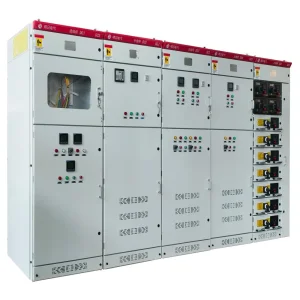
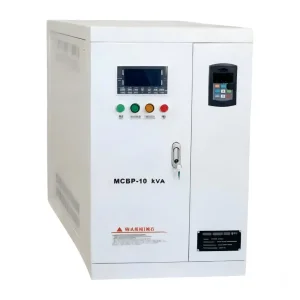
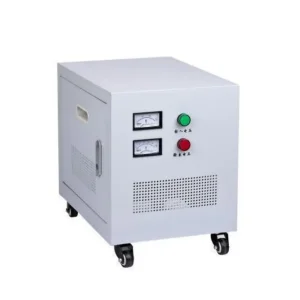
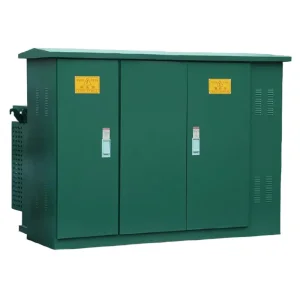
Certified Primary Distribution Assemblies & Ancillaries
OEM/ODM qualified switchgear components, protective circuit breakers, and specialized conversion modules manufactured under ISO 9001, IEC, and CE testing protocols.
1. HR5 Fused Switch Architectural Anatomy & Electromechanical Principles
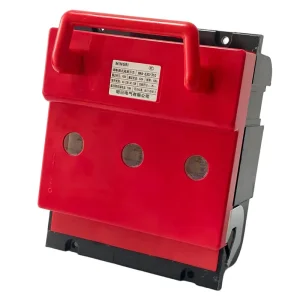
The HR5 series fused switch disconnector represents an essential cornerstone within low-voltage (LV) electrical distribution systems, operating primarily at rated operational voltages ($U_e$) up to AC 690V and rated operational currents ($I_e$) spanning from 100A up to 630A at standard industrial frequencies of 50/60 Hz. Built explicitly to bridge the operational gap between thermal isolation and high-fault current interruption, the HR5 combines the visible break safety of an industrial knife disconnector with the ultra-high interruption capacity of standardized high-rupturing capacity (HRC) low-voltage cartridge fuse-links (typically NH00, NH1, NH2, and NH3 configurations according to DIN 43620 and IEC 60269 standards).
From a mechanical standpoint, tier-1 manufacturing of HR5 fused switches diverges heavily from generic knife switches via the incorporation of spring-loaded over-center toggles and dead-man operating kinematic mechanisms. In conventional manual switches, the speed of contact separation and make-and-break performance is entirely dependent on operator velocity—introducing catastrophic risks of sustained arcing when opened under load. The HR5 mechanism utilizes an internal stored-energy spring assembly ensuring independent manual operation: once the physical handle passes an angular threshold of approximately $35^\circ$, the dual compression springs instantly drive the contact jaws into the fully engaged or fully isolated state at velocities exceeding 3.5 m/s. This snap-action performance reliably suppresses transient thermal expansion and achieves deterministic arc extinction within cold de-ionizing arc-chute chambers.
Arc Quenching Dynamics
Features segmented de-ionizing steel splitter plates embedded within unsaturated polyester resin (DMC/SMC) housings. The magnetic blast field draws the arc directly into the splitter matrix, quenching thermal plasma within 8–12 milliseconds.
Galvanic Contact Engineering
Primary stationary contact fingers and dynamic knife blades are formed using high-conductivity electrolytic T2 copper (≥99.95% Cu) with a heavy silver electro-plating layer (≥15 μm), mitigating terminal degradation under sustained cyclic loads.
Phase-Isolated Barrier Architecture
Integrated inter-phase insulating phase-separators and transparent front protection shields provide IP20 finger-safe terminal isolation. This structural mitigation suppresses phase-to-phase flashover during prospective fault surges up to 100kA.
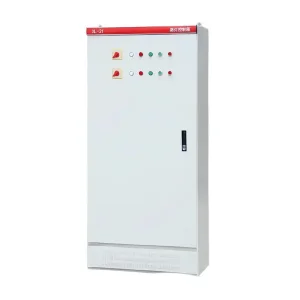
Thermal management inside enclosed switchgear assemblies depends strictly on the switch's internal resistance profile. High-integrity HR5 factories calibrate contact clamping pressure using calibrated Belleville disc spring washers. This structural layout counters the natural copper-relaxation effect induced by thermal cyclic expansion, maintaining a constant normal contact force of 180N to 240N across the knife jaw interface. Consequently, path resistance remains well below 35 micro-ohms per phase, dramatically curbing ambient heat generation inside non-ventilated low-voltage compartments such as XL-21 distribution boxes or withdrawable MCC cabinets.
2. Global Corporate Sourcing Demands & Supply Chain Economics
For international Engineering, Procurement, and Construction (EPC) consortiums, original equipment switchgear fabricators, and multinational utility operators, procuring HR5 fused knife switches is no longer merely a transactional BOM-line acquisition. In an industrial landscape characterized by unpredictable raw copper indices, geopolitical logistics disruption, and tightened site commissioning schedules, strategic supply chain managers prioritize manufacturing partners that demonstrate rigorous Total Cost of Ownership (TCO) predictability, raw material traceability, and vertically integrated tooling capabilities.
Tier-1 sourcing decisions heavily rely on three primary procurement vectors:
Direct Material Indexing
Verified manufacturers employ transparent hedging formulas indexed against the London Metal Exchange (LME) for electrolytic copper and global indices for thermosetting Dough Moulding Compound (DMC). This safeguards procurement budgets from sudden 25%+ price spikes during long-cycle execution phases.
In-House In-Line Production
Low-cost assembly workshops typically outsource stamping, heat treatment, and plastic injection, resulting in batch-to-batch mechanical variance. High-grade factories integrate high-tonnage stamping presses, automated silver electroplating lines, and automated CMM dimensional inspection directly under one roof.
Bespoke Mechanical Adaptability
Global specifications frequently call for diverse mounting arrangements: front-panel rotary mechanisms, external lateral door handles with interlocks, or rear-busbar terminations. Leading manufacturers provide CAD-ready parasolid models and configurable terminal adapters to streamline panel engineering.
3. Macro-Industry Solutions: Application Scenarios & Load Profiles
The application matrix for HR5 fused disconnect switches spans harsh industrial, energy generation, and continuous-process commercial domains. Because an HRC fuse acts as an unmatched current-limiting device ($I^2t$ let-through energy is restricted to a fraction of a circuit breaker’s mechanical tripping latency), HR5 assemblies provide exceptional back-up and isolation protection in networks with high prospective short-circuit levels.
Heavy Metallurgy & Smelting
Resistant to aggressive chemical particulates and ambient thermal spikes up to 55°C. Serves as primary motor isolation for slag conveyors, ball mills, and electric arc furnace cooling fans under inductive AC-23A conditions.
Renewable Energy & BESS
Deployed on the low-voltage side of central step-up transformers in solar utility farms and battery energy storage containers. Provides fast short-circuit isolation for multi-string central inverters.
Tier-III/IV Data Centers
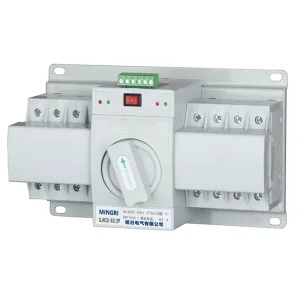
Integrated into switchgear power input line-ups, upstream of Automatic Transfer Switches (ATS) and uninterruptible power supplies (UPS), offering visual air-gap safety isolation for live-bus maintenance procedures.
Prefabricated Compact Substations
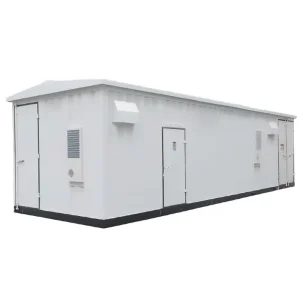
Installed widely in European-style (YB series) and American-style (ZGS series) compact outdoor substations to govern outgoing distribution lines, protecting localized residential and urban networks from cascading faults.
HR5 Series Standard Engineering Specifications Matrix
| Parameter Designation | HR5-100 | HR5-200 | HR5-400 | HR5-630 |
|---|---|---|---|---|
| Rated Operational Current ($I_e$) | 100 A | 200 A | 400 A | 630 A |
| Rated Operational Voltage ($U_e$) | AC 380V / 660V | AC 380V / 660V | AC 380V / 660V | AC 380V / 660V |
| Rated Insulation Voltage ($U_i$) | 800 V | 800 V | 800 V | 800 V |
| Rated Impulse Withstand Voltage ($U_{imp}$) | 8 kV | 8 kV | 8 kV | 12 kV |
| Rated Conditional Short-Circuit Current | 100 kA (500V) / 50 kA (660V) | 100 kA (500V) / 50 kA (660V) | 100 kA (500V) / 50 kA (660V) | 100 kA (500V) / 50 kA (660V) |
| Applicable DIN Fuse Size (IEC 60269) | NH00 / NT00 | NH1 / NT1 | NH2 / NT2 | NH3 / NT3 |
| Utilization Category | AC-22B / AC-23B | AC-22B / AC-23B | AC-22B / AC-23A | AC-22B / AC-23A |
| Housing Dielectric Strength (DMC) | ≥ 12 kV/mm | ≥ 12 kV/mm | ≥ 15 kV/mm | ≥ 15 kV/mm |
4. Technical Roadmap, Digitalization & Future Product Horizons
While the physical foundation of fused knife switches is rooted in established electromagnetic physics, modern industry trends are aggressively transforming the HR5 topology into an intelligent, digitized network node. The integration of Industry 4.0 paradigms across electrical switchgear demands real-time predictive failure monitoring, localized thermal telemetry, and mechanical state reporting.
IoT Wireless Temperature Sensing
Next-generation HR5 units feature surface-acoustic-wave (SAW) or micro-passive RFID sensors embedded right at the knife contact terminals. This allows SCADA networks to continuously track thermal drift and contact resistance anomalies long before localized overheating leads to runaway insulation flashovers.
Micro-Switch Status Interlocking
Modern revisions integrate gold-plated auxiliary micro-switches rated for dry circuits (5mA at 24VDC) to provide instantaneous mechanical status feedback (Open / Closed / Blown Fuse) directly to remote PLCs, suppressing system downtime through rapid automated fault tracing.
Bio-Based Halogen-Free Polymers
In adherence to stringent European RoHS and circular economy mandates, leading production laboratories are substituting legacy phenolic formaldehydes with recyclable, halogen-free, bio-derived polyamides and reinforced DMC composites exhibiting zero toxic emissions during thermal arc incidents.
Furthermore, the emergence of hybrid solid-state isolation represents a key evolutionary leap. By mounting ultra-fast semiconductor thyristor bridges parallel to the mechanical contacts of the HR5, opening operations divert the initial microsecond high-energy transient through the solid-state circuit, extinguishing the arc magnetically before contact separation completes. This virtually eliminates contact erosion, elevating mechanical life cycles well past 20,000 switching operations without degradation.
5. Factory Quality Verification, Testing Protocols & Global Compliance
Procuring from recognized Chinese electrical engineering epicenters—such as Yueqing, Zhejiang—requires discerning buyers to audit factory testing infrastructures rigorously. A legitimate HR5 manufacturer maintains accredited in-house test stations alongside third-party type test certifications issued by global testing authorities such as KEMA-DEKRA, TÜV Rheinland, ASTA, or the China National Center for Quality Supervision and Test of Low Voltage Electrical Apparatus.
IEC 60947-3 / GB/T 14048.3
Rigorous type testing verifying operational performance under AC-23A conditions, including 5x rated making capacity and 4x rated breaking capacity at a low power factor (cos φ = 0.35).
Dielectric Withstand Testing
Factory-level 100% routine verification applying power-frequency withstand voltages of 2500V to 3500V for 60 seconds across open knife gaps, validating air-clearance and creepage integrity.
Salt Spray & Environmental
Neutral salt spray (NSS) environmental chambers subjecting metallic linkages and zinc-dichromate steel frames to continuous 96-hour corrosion exposure without red rust formation.
High-Speed Photometric Analysis
Optical high-speed photography capturing arc trajectory inside prototype arc chutes to optimize magnetic splitter blade angles and gas escape chimney baffling.
Technical Q&A: Frequently Asked Engineering & Sourcing Questions
Direct answers to critical procurement, selection, and field installation queries regarding HR5 fused disconnect switches.
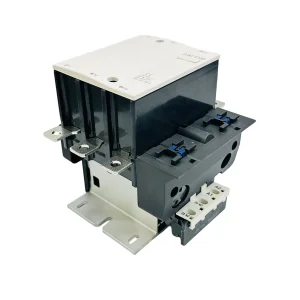
Integrated Substation, Switchgear & Automation Portfolio
Complete your power delivery architecture with fully type-tested low-voltage switchgear panels, prefabricated package substations, and automated transfer infrastructure.