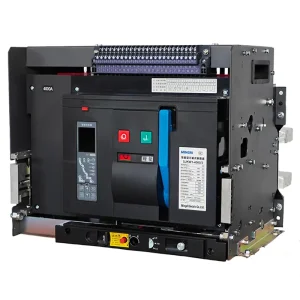
Integrated Dry-Type Distribution & Protection Hardware
Explore high-voltage vacuum breakers, reduced-voltage transformers, and intelligent current protectors manufactured to rigorous IEC and ANSI specifications.
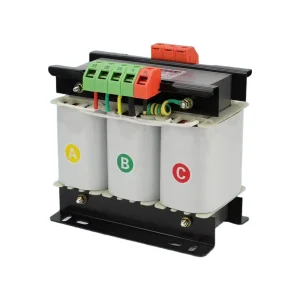
China QZB Series Auto-coupling Reduced-voltage Starting Transformer Factory, Companies
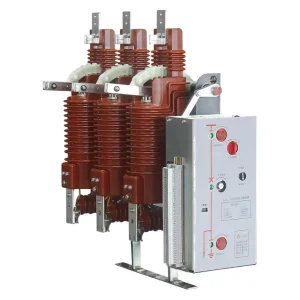
Wholesale Compact VSY2-12GD High Voltage Vacuum Circuit Breaker - China Suppliers & Factory for 12kV Power Distribution Manufacturers, Factories
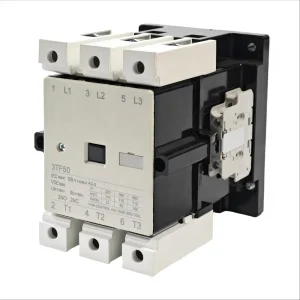
ODM CJX1 (3TF) Series AC Contactors 9-400A 690V Suppliers, Company
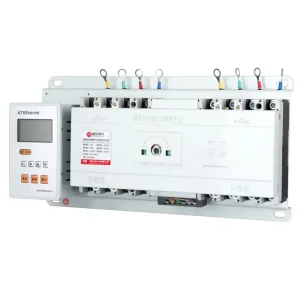
ODM SJKQ2Z ATS Switch Dual Power For LV Power Manufacturers, Factory
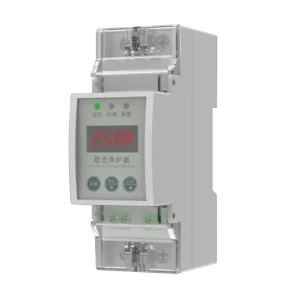
China Electrical Fire Current-Limiting Protector - Economical Type Manufacturer, Companies
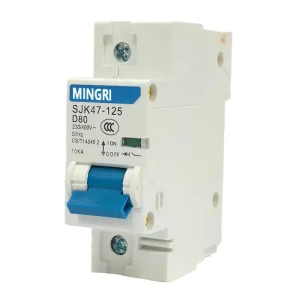
Wholesale SJK47-125 MCB Miniature circuit breaker DIN Rail Mountable Factories, Company
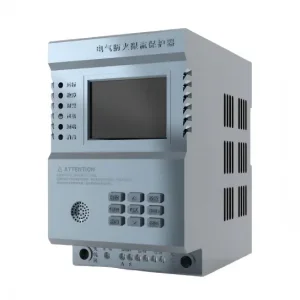
OEM Single Phase Current Limiting Protector 20-80A 220VAC - China Factory Supplier for Enhanced Electrical Safety Manufacturers, Manufacturer
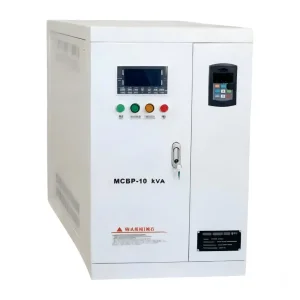
OEM MCBP Series Variable Frequency Power Supply Manufacturer, Factory
Engineering Architecture of Modern Dry-Type Power Systems
A comprehensive examination of dielectric performance, thermal dissipation kinetics, and resin encapsulation integrity in dry-type electrical installations.
Vacuum Cast Resin (CRT) Chemistry
Utilizing high-purity bisphenol-A epoxy resin enriched with fused silica fillers, vacuum casting ensures absolute void-free encapsulation. The dielectric withstand margin reaches partial discharge thresholds below 5–10 pC, mitigating micro-fracturing under rigorous thermal shock cycles spanning -25°C to +180°C operating environments.
Vacuum Pressure Impregnation (VPI)
Engineered for high-harmonic stress environments, VPI architecture leverages Nomex® Class H (180°C) or Class C (220°C) aromatic polyamide insulation. Deep vacuum cycles evacuate all moisture and trapped gas pockets before solventless silicone varnish saturates the multi-layer core, offering unsurpassed moisture and chemical resistance.
Non-Flammable Ecological Safety
Unlike oil-immersed units posing dielectric fluid contamination and fire explosion hazards, dry-type topologies eliminate fluid leakage risks entirely. In compliance with IEC 60076-11 F1 (fire resistance) and C2 (climatic resistance) criteria, they release zero toxic halogenated gases during flame impingement.
Strategic Manufacturing Advantages in China's Electrical Hub
How Yueqing's centralized high-voltage ecosystem drives technological sophistication, cost-effective scaling, and streamlined international logistics.
End-to-End Vertical Supply Clustering
Situated within the electrical manufacturing powerhouse of Zhejiang, our facilities capitalize on direct access to ultra-high-grade grain-oriented silicon steel (CRGO), high-purity electrolytic copper windings, and automated laser core-cutting lines within a 30-kilometer perimeter, drastically compressing production lead times.
High-Precision Automated Fabrication
Production centers deploy robotic vacuum-casting ovens under constant closed-loop PLC thermal regulation, automated CNC foil winding machines, and impulse testing cells. This level of automation curtails labor-induced variances, enforcing strict dimensional and mechanical tolerances across bulk overseas purchase orders.
Cost Benchmark vs. Western Equivalents
By coupling lean manufacturing paradigms with localized raw material procurement, Chinese dry-type manufacturing achieves a 28% to 42% cost efficiency advantage over North American and Western European equivalents, while exceeding stringent IEEE C57.12.01, IEC 60076, and CE low-voltage safety benchmarks.
Emerging Technologies Transforming Dry-Type Architecture
Analyzing global shifts toward decarbonization, IoT sensor integration, and amorphous alloy cores within modern distribution grids.
Amorphous Metal Cores: Slashing No-Load Losses by 70%
Traditional silicon steel cores exhibit baseline hysteretic and eddy current losses. The rapid expansion of amorphous alloy ribbons—possessing a random, non-crystalline atomic structure—diminishes core excitation energy requirements drastically. Amorphous dry-type transformers achieve up to 70% reduction in no-load losses, enabling utilities to align directly with Tier 2 EcoDesign (EU 2019/1783) and DOE 2016 efficiency mandates.
Embedded Fiber-Optic & AI-Driven Health Telemetry
Modern substations demand autonomous monitoring over physical maintenance rounds. High-grade dry transformers now integrate embedded gallium-arsenide fiber-optic thermal probes directly inside the high-voltage winding resin layers. Combined with edge-AI gateway modems, vibration frequency monitors, and predictive thermal degradation algorithms, operators receive real-time remaining useful life (RUL) metrics via Modbus TCP or IEC 61850 protocols.
Localized Applications & Macro Industry Solutions
Engineered to operate reliably under extreme atmospheric, environmental, and duty-cycle conditions across diverse infrastructure verticals.
Hyper-Scale AI & Cloud Data Centers
Modern server racks require non-linear power distribution capable of dampening 3rd, 9th, and 15th order harmonic overtones without thermal runaway. K-factor rated (K-13, K-20) dry-type transformers, integrated with low-voltage switchgear panels and fast-acting ATS dual-power switches, ensure 99.999% uptime with minimal footprint in congested mezzanine spaces.
Utility-Scale Solar & BESS Step-Up
In renewable installations, equipment faces intense solar irradiation, inverter PWM high-frequency switching transients, and cyclic loading. Our combined photovoltaic substations and cast resin units provide high impulse insulation levels (BIL up to 200 kV) and electrostatic shielding to safeguard against DC grid back-feed transients.
Marine, Offshore & Chemical Environments
Vessels, offshore substations, and coastal petrochem refineries expose electrical distribution gears to corrosive salt fog, aggressive chemical gases, and dynamic mechanical vibration. Utilizing C3-class climatic and E3-class environmental resin coatings guarantees ingress safety and anti-tracking resistance under condensing humidity.
Global Enterprise Procurement & Specification Benchmarks
A comparative engineering evaluation matrix outlining critical criteria for project managers, consulting engineers, and EPC contractors.
| Evaluation Parameter | Cast Resin Dry Type (CRT) | Vacuum Pressure Impregnated (VPI) | Conventional Oil-Immersed |
|---|---|---|---|
| Fire Safety & Flammability | Self-extinguishing, zero liquid fuels, zero fire containment pit required. | High flame retardancy (Class H/C insulation), non-explosive design. | Combustible dielectric fluid; requires blast-walls, containment pits, and deluge systems. |
| Maintenance Overhead | Virtually zero; occasional surface dust inspection and torque checking. | Low; visual dust check and periodic atmospheric varnish monitoring. | High; regular DGA oil sampling, dielectric breakdown tests, desiccant replacement. |
| Harmonic Tolerance (K-Factor) | Exceptional with tailored multi-conductor transpositions (up to K-20). | Superior harmonic endurance due to flexible Class H resin saturation. | Moderate; hot spot formations degrade mineral oil insulation rapidly. |
| Environmental Contamination Risk | None; completely dry, leak-free, recyclable core materials. | None; solid varnish, free of polychlorinated biphenyls (PCBs). | Severe hazard of groundwater and soil contamination on rupture or seal failure. |
| Indoor Footprint & Weight | Ultra-compact footprint; directly installable adjacent to load centers. | Lightest weight profile; optimal for retrofits and elevated floor substations. | Large clearance requirements and substantial foundation reinforcement. |
| Applicable Global Standards | IEC 60076-11, IEEE C57.12.01, EN 60076-11, GB/T 10228. | UL 1562, IEEE C57.12.51, NEMA ST-20, IEC 60076-11. | IEC 60076-2, IEEE C57.12.00, NFPA 70 Article 450. |
Frequently Asked Questions on Dry Type Specifications
In-depth responses curated by power distribution engineers addressing real-world queries in commercial, industrial, and utility procurement.
Medium-to-Low Voltage Switchgear & Substation Systems
End-to-end electrical distribution products engineered to interface seamlessly with our dry-type transformer installations worldwide.
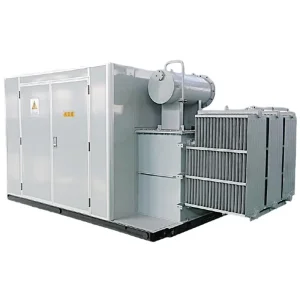
ODM ZGS11-Z.T Integrated Photovoltaic Step-up Substation Manufacturer, Companies
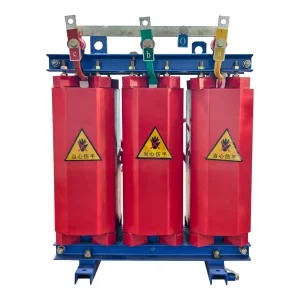
Wholesale China SC(B)11 10kv Resin-Insulated Dry Casting Transformer - Reliable Suppliers & Factory Solutions Suppliers, Supplier
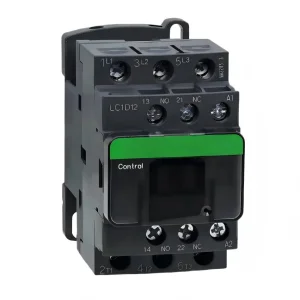
China China LC1D Series AC Contactor Suppliers - 50/60Hz, 660V, 300A Factory Direct for Industrial Applications Factories, Factory
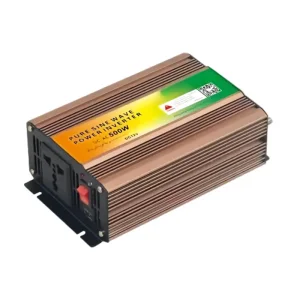
China MCC Series Pure Sine Wave Inverter Suppliers, Manufacturers
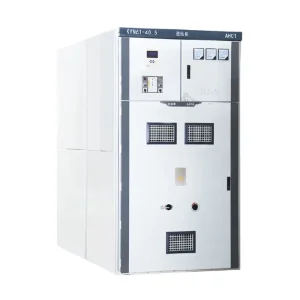
ODM KYN61-40.5 Armoured Moving Type AC Metal Enclosed Switchgear - High-Voltage Solution from China Suppliers and Factory Manufacturer, Factories
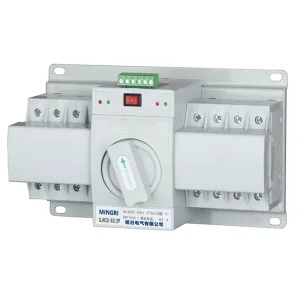
ODM SJKQ1 ATS Automatic Transfer Switch - Reliable Power Solution from China Suppliers & Factory Supplier, Company
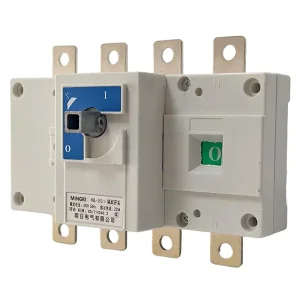
Wholesale HGL Load Isolation Switch 63A-3150A - Reliable China Suppliers & Factory for Industrial Power Solutions Suppliers, Company